The winners of the British Fantasy Awards 2026 were announced at Fantasycon. Find out all the details on our blog.
For all things fantasy, horror, and speculative fiction
-
Announcement:
Ask an Expert: October 2026
In this monthly column, we pose your questions to an expert in a specific field of speculative fiction and the wider ‘industry’. For Spooktober, we’re dipping into the world of tarot with tarot for creativity coach Chelsey Pippin Mizzi.
This month: Using the tarot for creativity, with Chelsey Pippin Mizzi
Name: Chelsey Pippin Mizzi
Specialism: Tarot for creative coaching
Website: tarotforcreativity.com
Follow: Instagram | Substack
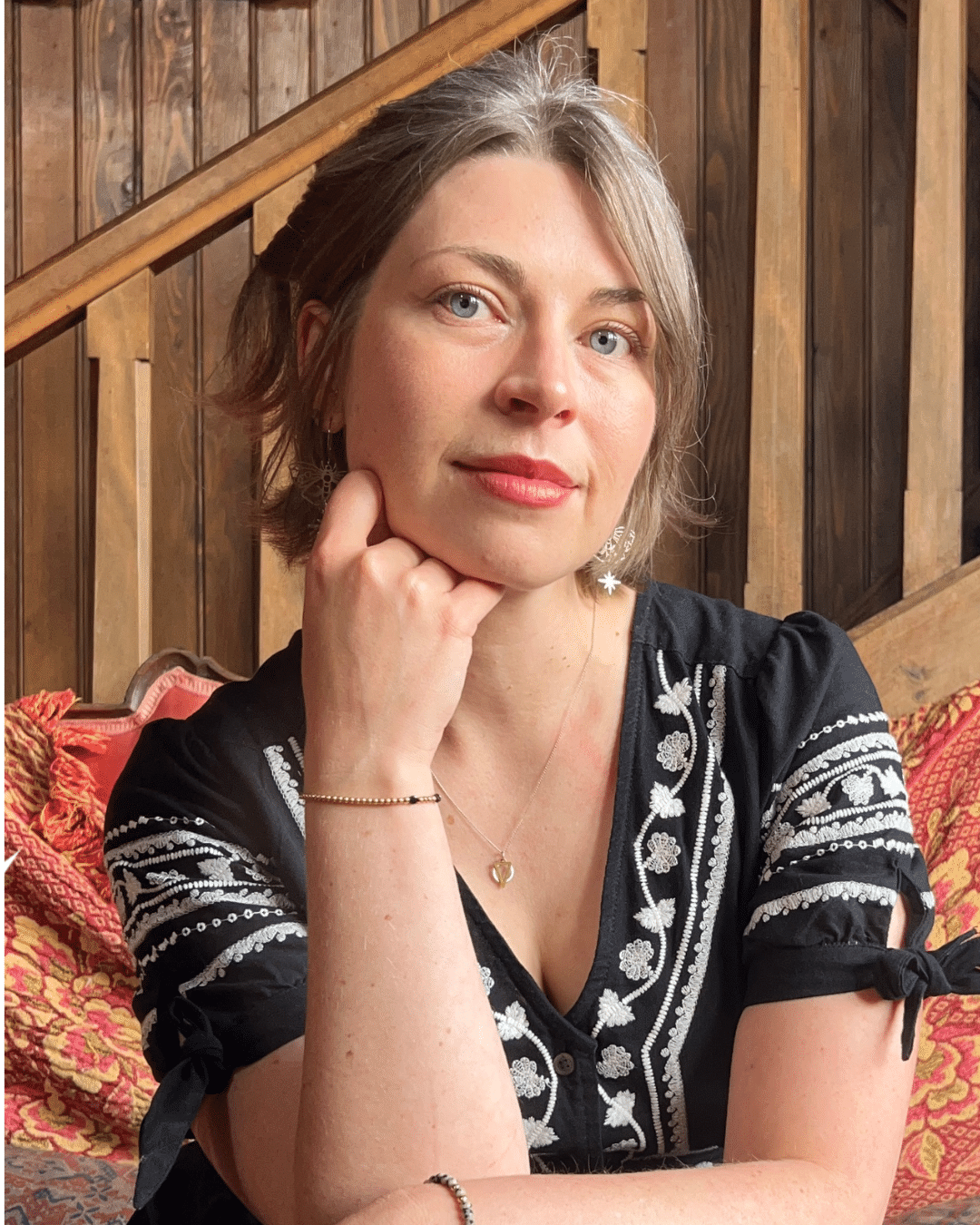
Chelsey Pippin Mizzi is an author, tarot reader, and creative mentor supporting writers, artists and small business owners to unblock and unlock creative magic.
Her books include The Tarot Spreads Yearbook – a #1 Amazon bestseller; Tarot for Creativity – runner-up for Best Tarot Book at the 2024 TABI International Caromancy Awards; and most recently, The Shadow Path. Her writing and tarot work have appeared in New York Magazine, Literary Hub, Craft Magazine and other titles. In September 2026, her tarot-inspired art was exhibited at the European Cultural Center in Paris during Paris Fashion Week.
She also publishes The Shuffle, a bestselling Substack exploring the intersection of spirituality and creativity through weekly journaling sessions, tarot-led interviews with creatives, and regular insights on creative living.
What do you mean when you say “using the tarot for creativity”? Is it about doing readings for us as an artist or is it more about guiding the work/characters/etc?
Yes to all questions! The tarot is an incredible versatile tool that can flex to how you use it. I’ve personally used it to inspire short fiction (this Devil-card inspired flash was published in Horror Tree), poems (here’s a free workshop on writing poems with the tarot) and art (my Empress-card inspired mixed media project was recently featured in a Paris gallery).
In my work, I break the tarot’s creative applications into three umbrella categories:
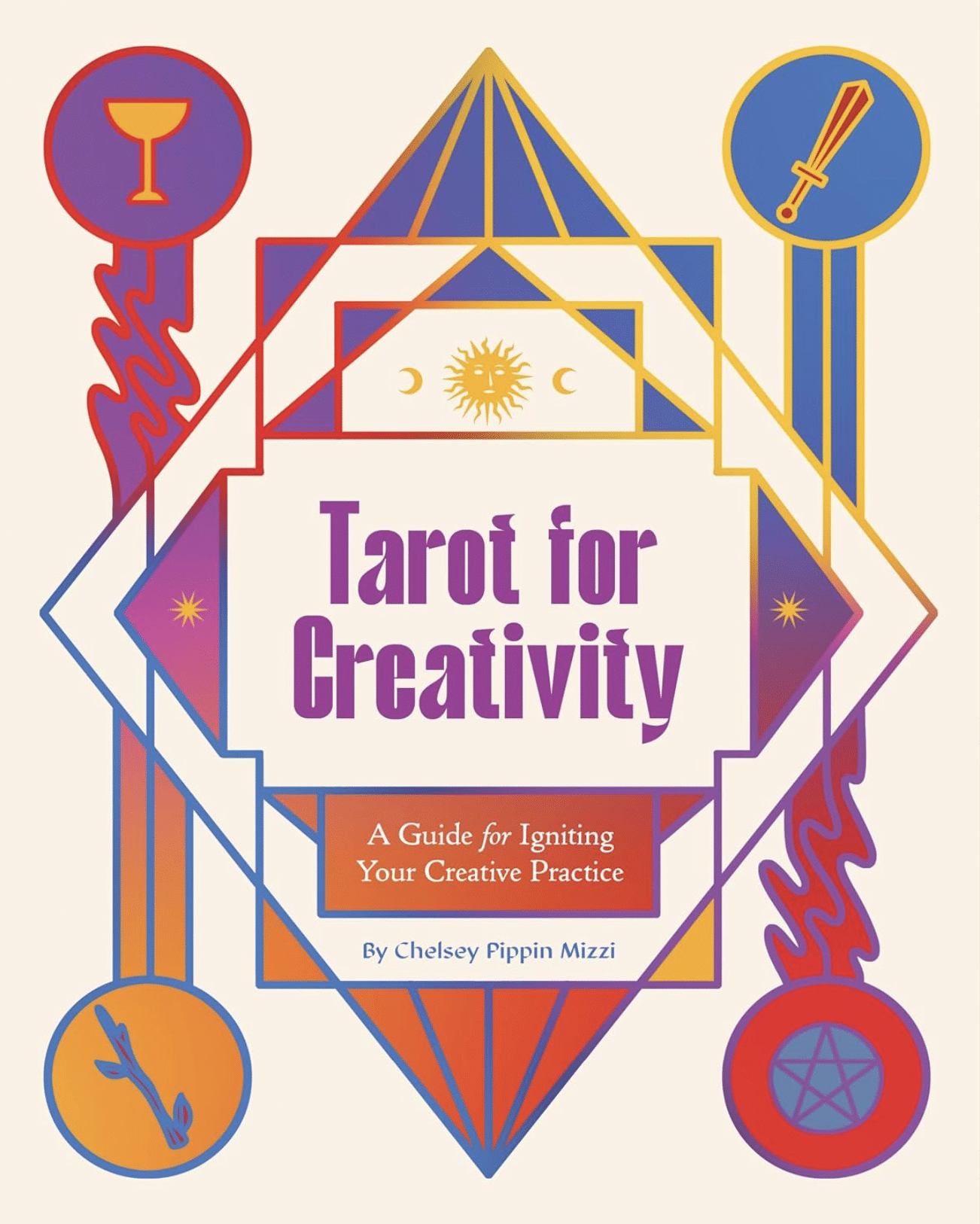
The tarot can help us SPARK ideas—we can use it to brainstorm for characters, themes, visuals, and vibes we want to include in our work. I work with a lot of writers and artists who come to me for idea generation sessions when they’re at crucial points in a project. We might draw cards to uncover a character’s secret or ideate around tricky plot holes. We might pull cards and look for specific visuals or themes that we want to bring into the work. We might pull cards to inspire our social media posts for the next month, or a new offer we want to see in our business. (If you’re looking for a wide range of ways to practice creative exploration through the cards, my book Tarot for Creativity is a great place to start. If you’re a writer looking for specific prompts for using the tarot to explore character and plot, or to generate scenes, my ebook A Writers’ Guide to Crafting Stories with the Tarot is the one for you.)
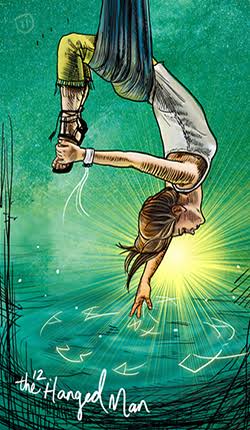
The cards can step in to SOOTHE us in moments of creative block, burnout, and doubt. The tarot is exceptionally good at mirroring our struggles back to us and offering us gentle nudges in new directions when we feel stuck. I personally find that thinking of the cards as a conduit for conversation with my creativity helps me to reflect on and recalibrate when I’m feeling creatively drained or stuck. I’ve got an essay in this upcoming anthology about how a specific card, The Hanged Man (pictured card from the Light Seer’s Tarot), helped me to sit with the discomfort of feeling blocked.
And the tarot can help us SUSTAIN a creative practice, whether that’s making for making’s sake, or moving toward a specific creative goal. Using the tarot to journal has absolutely made my journaling practice feel more creative and expansive—pulling a new card every day brings novelty to an act that once felt rote, and I love coming to my notebook for regular conversations with the cards.
Readers of my books have told me that working daily with the prompts and interpretations I offer has helps them reconnect and rediscover their creativity in surprising ways that keep on giving. I find it powerful to choose a card that represents certain projects, and return to it throughout the creation process. I’m also a big fan of choosing a “creative muse” card each year, to guide me on my creative journey and help keep me focused on what I want from my creative life.
Where would you recommend someone start to use tarot for creativity?
For writers, I think starting is as simple as pulling a card or two and asking yourself what story you see unfolding. Let it inspire you and go from there. Practice dabbling with the tarot as a creative tool before diving straight in to expecting it to solve story problems.
Earlier this year, I joined in on a 1000 words a day challenge for two weeks, and used tarot cards to write 14 exploratory stories—it was fun, low pressure, and really generative. You can see some of the prompts I used here.
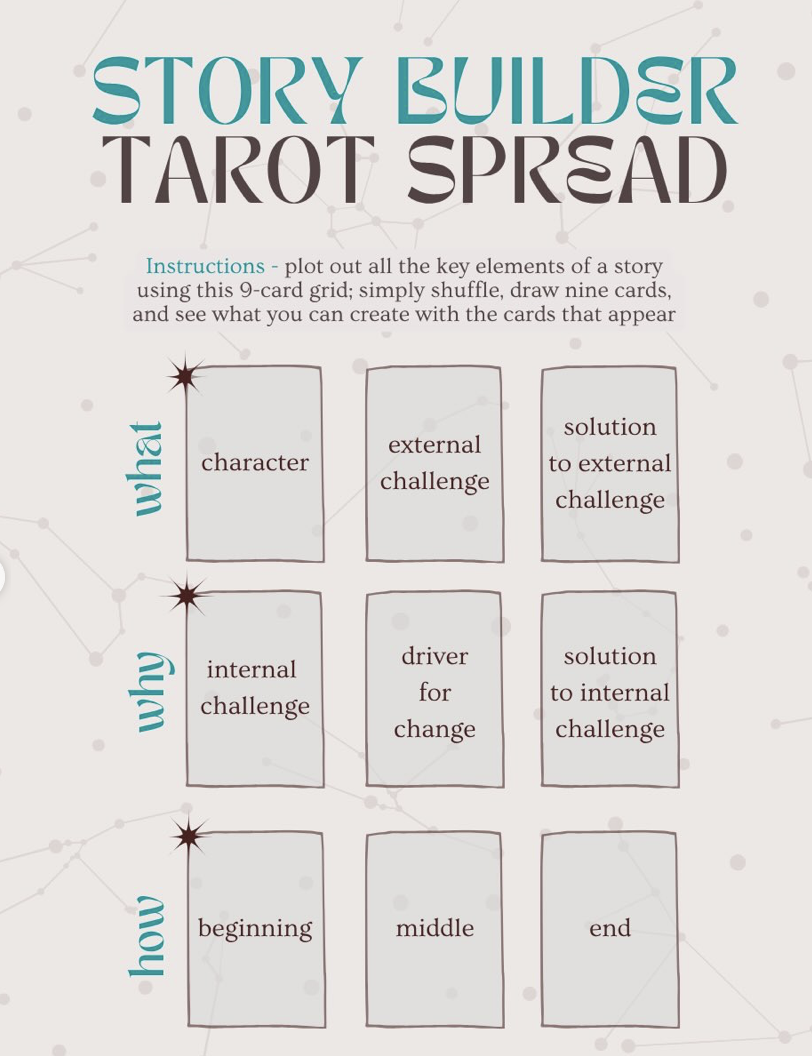
What are some of the ways someone could use tarot in their creative writing? For instance, are there spreads for getting out of a creative rut, figuring out where to go with a plot, or working out a character motivation? And are there any books or resources you’ve written that you’d recommend?
A tarot “spread” is just a series of cards assigned to specific prompts, and they can be SO great for reflecting on/brainstorming story and character ideas. Here are a few of my favourite tarot spreads for writers.
My ebook, A Writer’s Guide to Crafting Stories with the Tarot, also includes 30 days of tarot-inspired writing prompts.
Is there a particular deck you would recommend for a beginner?
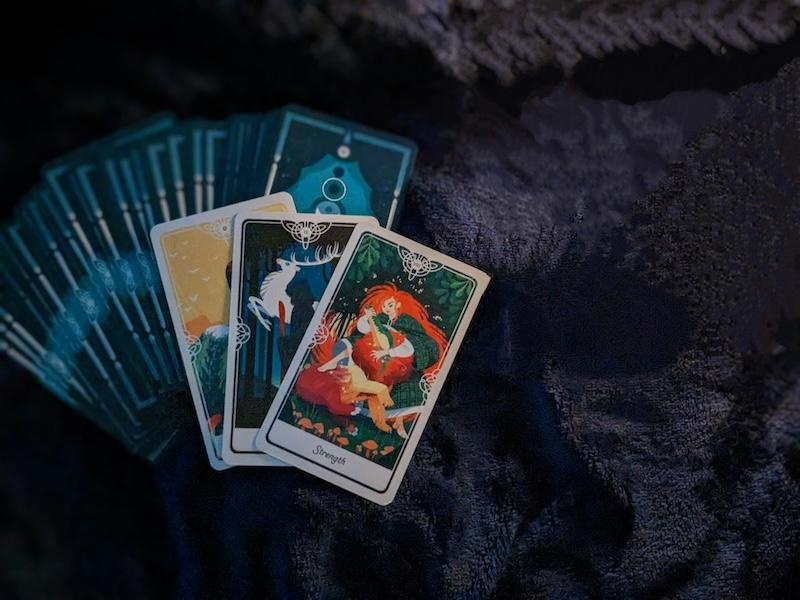
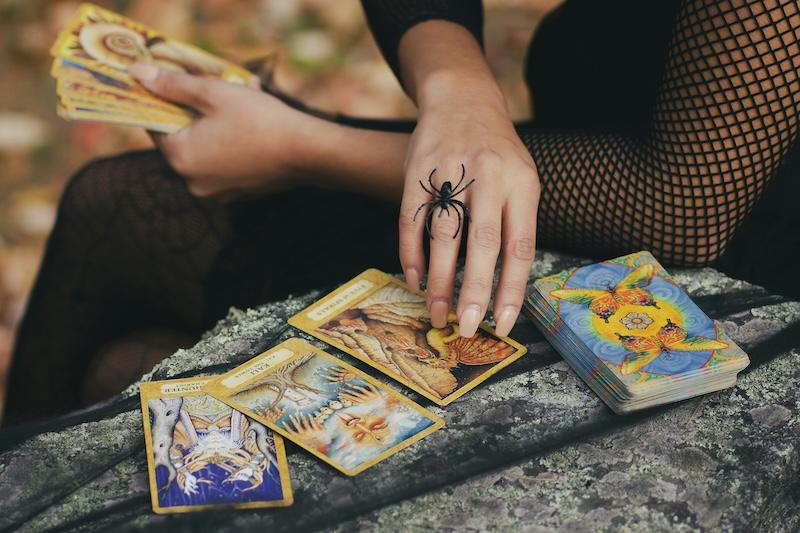
I always recommend learning with a Rider-Waite-Smith pack (pictured), illustrated by Pamela Colman Smith. This deck is the foundation for most other modern decks, and all 78 cards are fully illustrated, which means you can focus on learning to read through the context and mood of the images rather than memorising prescribed meanings of cards from a book.
THAT SAID, if the imagery of the RWS turns you off, or another deck just instantly makes you feel inspired, there’s no hard and fast rule here.
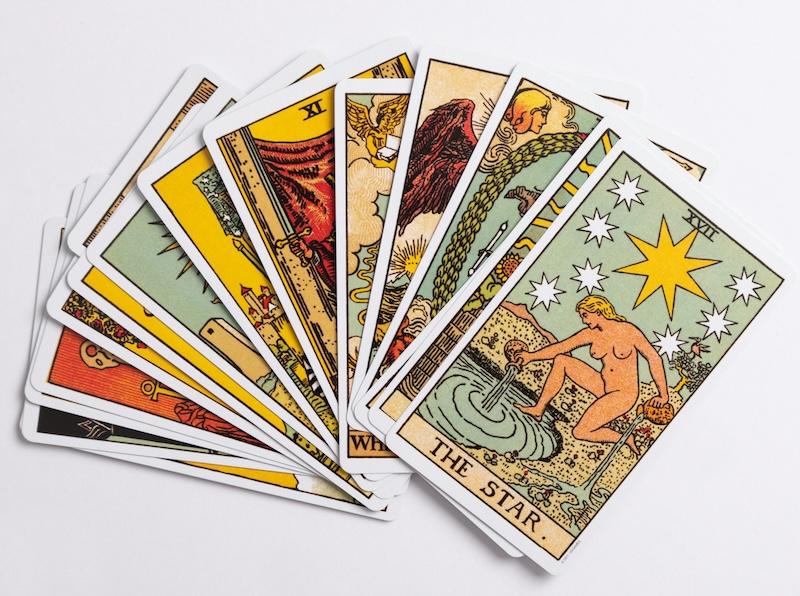
(Photo of Rider-Waite-Smith cards by Viva Luna Studios on Unsplash)
How do you consider fantasy fiction and spiritual beliefs are linked? Fantasy writers often draw from folk legend and real life historical beliefs about magic, reinterpreting them for today. Do you think writing speculative fiction could be seen as a form of witchcraft?
First, I think all writing—all creative work—can be a form of witchcraft. Storytelling is magic and magic is storytelling… We bring people, worlds, ideas to life through story; we transform ourselves, our characters, the world through story.
I also think that more personally, we can think about our writing life as a magickal practice. Building a world can be glamour magick; honouring a tradition, spirit, or deity that we follow in personal practice by infusing our fictional worlds with it can be an act of devotion; finding the right words to bring our vision to life is a spell; a character moodboard can be an altar; finding the right words, a spell.
What’s the most interesting reading you’ve ever drawn and what did you learn from it?
One that always comes back to me is a reading I did for a novelist who was stuck on the love interest B-plot of her coming of age novel. We pulled a big spread exploring where this arc was getting stuck, and ended up realising (thanks to the King of Cups) that the more compelling B-plot wasn’t about the love interest at all—but the main character’s father!
What advice do you have for authors who want to integrate real world belief systems like tarot into their fiction?
Get clear about how you want the system to benefit your story first and foremost. That will help you tailor your research questions (and rabbit holes) to be useful rather than totally derailing. If you keep in mind how the system serves your story, that will also help you decide where and how you might deviate or fictionalise.
Do you have any favourite uses of tarot in fiction?
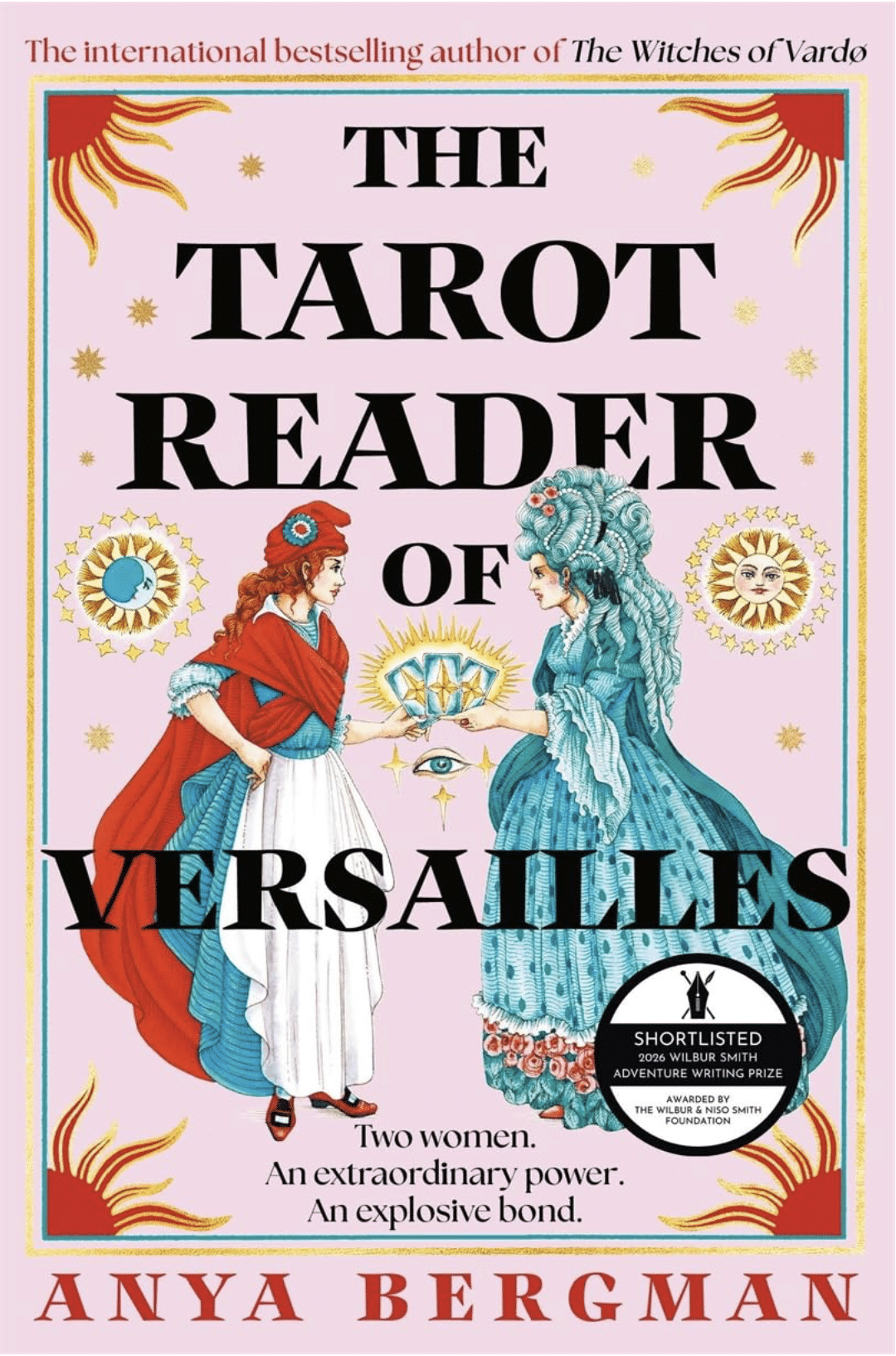
- The Tarot Reader of Versailles by Anya Bergman is EXCELLENT—it’s not just about tarot; it leans on the tarot for structure and inspiration by following the Major Arcana storyline.
- One Dark Window by Rachel Gillig is a great example of a magic system that draws inspiration from the tarot while also making important deviations in order to serve the story.
- The Cloisters by Katy Hays is another fun take on the tarot in fiction.
Do you have any favourite cards you’ve used in fiction?
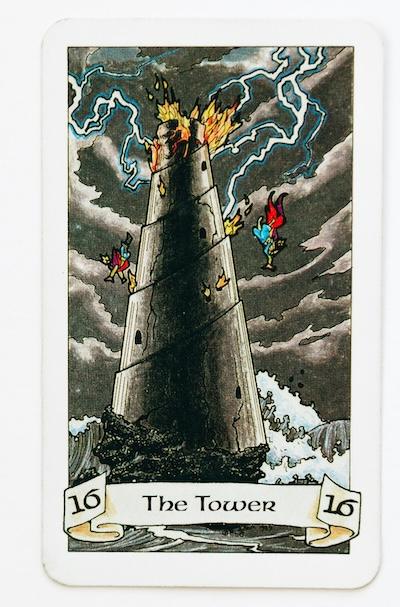
I think the stereotypically “scary” cards in the tarot—the Tower, Devil, Death, Ten of Swords—are the most evocative for fiction writing. These are the ones that push us and our plots and characters to the limits; they bring the drama, and the pay-off!
We have many open-minded community members but also many skeptical ones, too. What do you say to those who think divination and tarot is hogwash? Is there still room for them to use these practices to help their storytelling?
You don’t need to believe in the tarot as a spiritual tool to use the images to generate ideas. Treat it like any other prompt deck or tool, and you’ll still get loads out of it!
Read previous columns
Ask an expert
- September 2026: Selling at conventions, with David & Claire Cartwright
- August 2026: Accounting for creatives, with Chris Pitsillides
- July 2026: Writing for children, with Eric Huang
- June 2026: Writing asexual characters, with Lexy Hudson
- May 2026: Subgenres of Sci-Fi, Fantasy and Horror, with Tiffani Angus and Val Nolan
- April 2026: Staying creative while life happens around you, with Shona Kinsella
- March 2026: Writing comedy and being funny, with Richard Sparks
- February 2026: Writing romance, with PS Livingstone
- January 2026: Writing TTRPGs and working with existing IP, with Alasdair Stuart
- December 2025: Creative coaching, with Dr Rachel Knightley
- November 2025: Crowdfunding, with Fio Trethewey and Georgia Cook of The Holmwood Foundation
- October 2025: Creating darkness, with Daniel Willcocks
- September 2025: Working with book bloggers, with Kayleigh Dobbs of Happy Goat Horror
- August 2025: Websites for creatives, with E.M. Faulds
- July 2025: Anthologies, with Dan Coxon
- June 2025: Self-publishing, with AK Faulkner
- May 2025: Indie presses, with Black Shuck Books’ Steve J Shaw
- April 2025: Being a traditionally-published author with Adrian Tchaikovsky
- March 2025: SFFH artwork with Jenni Coutts
Ask an agent, with Laura Bennett:
Leave a Reply