The shortlisted works across all 13 categories of the British Fantasy Awards have been announced! Find out who’s in the mix over on our blog. Winners announced at Fantasycon in October.
For all things fantasy, horror, and speculative fiction
-
Announcement:
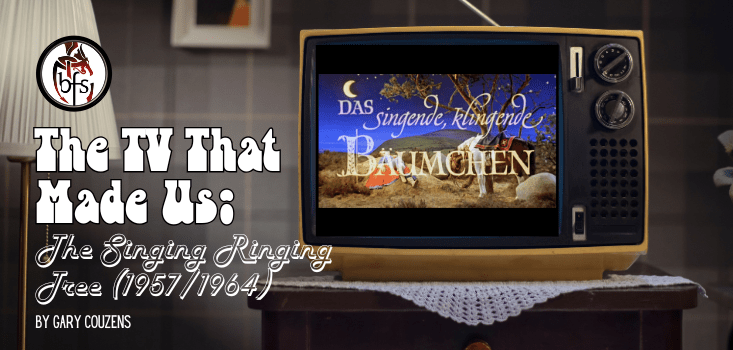
The TV That Made Us: The Singing Ringing Tree (1957/1964)
In his semi-regular column on the classic TV that made us SFFH fans, Gary Couzens revisits an unusual East German folk tale that scared two generations of British youngsters.
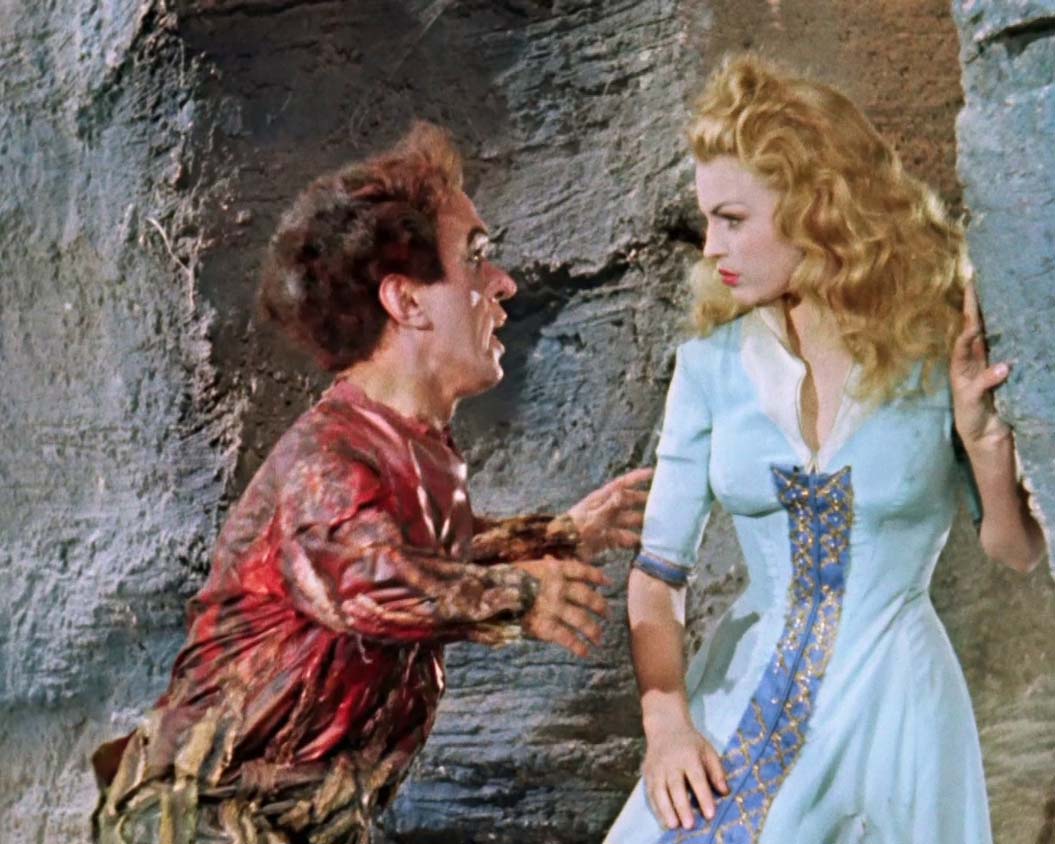
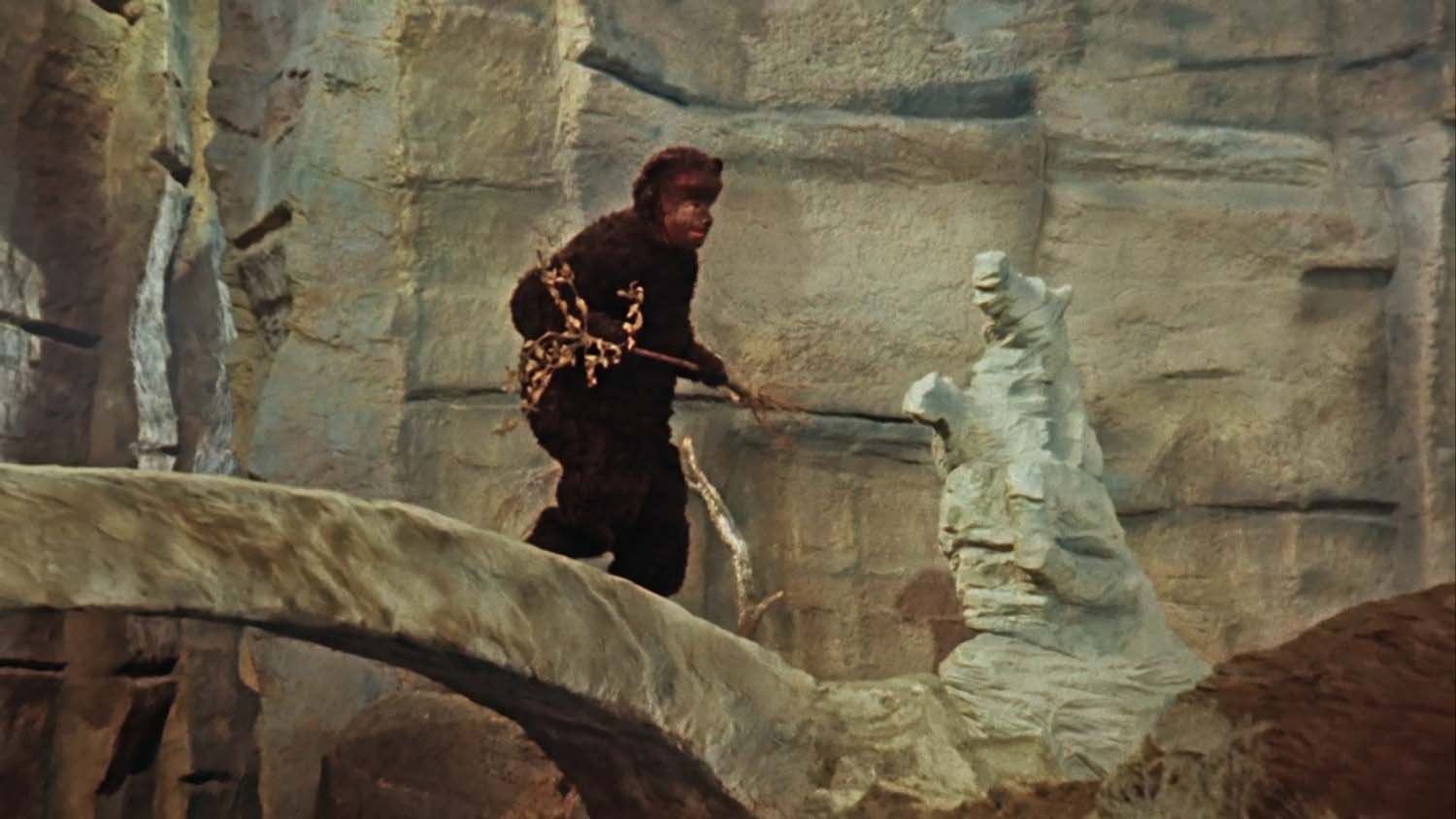
A handsome prince (Eckart Dux) has travelled for many days when he arrives at court aiming to win the hand of the King’s beautiful, haughty daughter (Christel Bodenstein, a former ballet dancer). He presents her with his gift, a box of pearls, but she spurns him, tipping the pearls out over the floor. When the prince asks what she would accept as a gift, she tells him to bring her back the legendary singing ringing tree. After a long search, the prince finds a dwarf (Richard Krüger) who strikes a bargain with him. The prince can have the singing ringing tree, but it will only sing and ring if the Princess truly loves him. If she doesn’t, and it remains silent, he will be transformed into a bear…
Foreign Films for British Kids
The first foreign-language film many British children would have seen, though obviously not in its original language (more of that later) would have been in the form of a serial broadcast on the small screen.
In the 1960s, BBC often brought in programming from overseas. It was cheaper than producing homegrown drama, and it did expose young viewers to material from many different nations, in the spirit of education as well as entertainment. This was the case even with films from the Eastern Bloc at a time of Cold War. International tensions were symbolised by the long wall which split Berlin, the capital of a formerly-united Germany, in two.
Some of the programmes had been made as serials in their home countries, but others were feature films which the BBC divided into episodes, usually three of around twenty-five minutes each. Those made in languages other than English weren’t dubbed, let alone subtitled, but had a specially-written English narration added.
Sneaking World Cinema into the Schedules
One strand was Tales from Overseas, which in 1965 showcased Australia’s The Stranger, which I have previously covered in this series. Also shown, in a second run in 1969, were Mario from Austria, The Golden Tent from Mongolia, The Lost Summer from the then Soviet Union. Also shown, from the United States, was The World of Stuart Little, narrated by Johnny Carson, based on E.B. White’s 1948 novel which later formed the basis of the 1999 film where Stuart (a mouse) was voiced by Michael J. Fox.
These were all shown on BBC1 on Thursdays during children’s viewing hours, between the return from school and the early evening news. At the same time there was the more geographically specific Tales from Europe, which in the space of a few years included Rumpelstiltskin and The Tinderbox (both German), Pan and The Last Passenger (both Dutch), White Feather, The Millionaire and Crooks’ Island (all Polish), Glamador (French), Paw (Danish), The Village Matadors and Maximka (both Russian), Here Comes Peter and The Ark(both Swedish), The Limping Boy (Hungarian), The Windmill (Bulgarian) and Heidi (Swiss).
But one of the best known, and a serial memorably scary to two generations of British youngsters, was The Singing Ringing Tree.
The Production
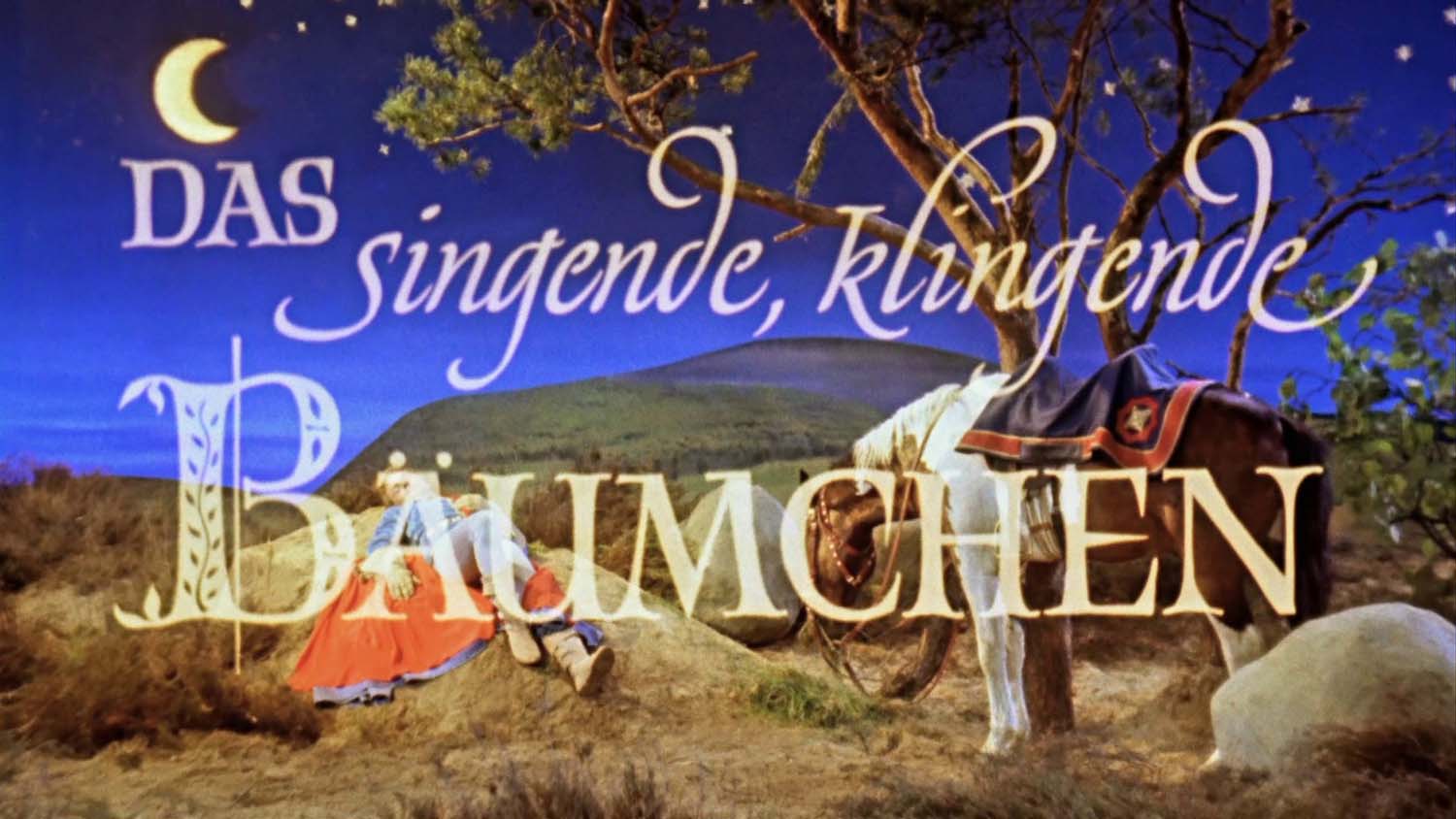
The film (Das singende, klingende Bäumchen in the original German) was a 73-minute feature film, made behind the Iron Curtain in 1957, in the then German Democratic Republic or East Germany. It was based on the fairy tale “The Singing Ringing Tree, or the Punished Presumption”, initially collected in 1801, and has similarities to the Brothers Grimm story “The Dwarf, the Fox and the Princess”. Directed by Francesco Stefani, from a script by him and Anne Geelhaar, it was made entirely in the studio in Potsdam.
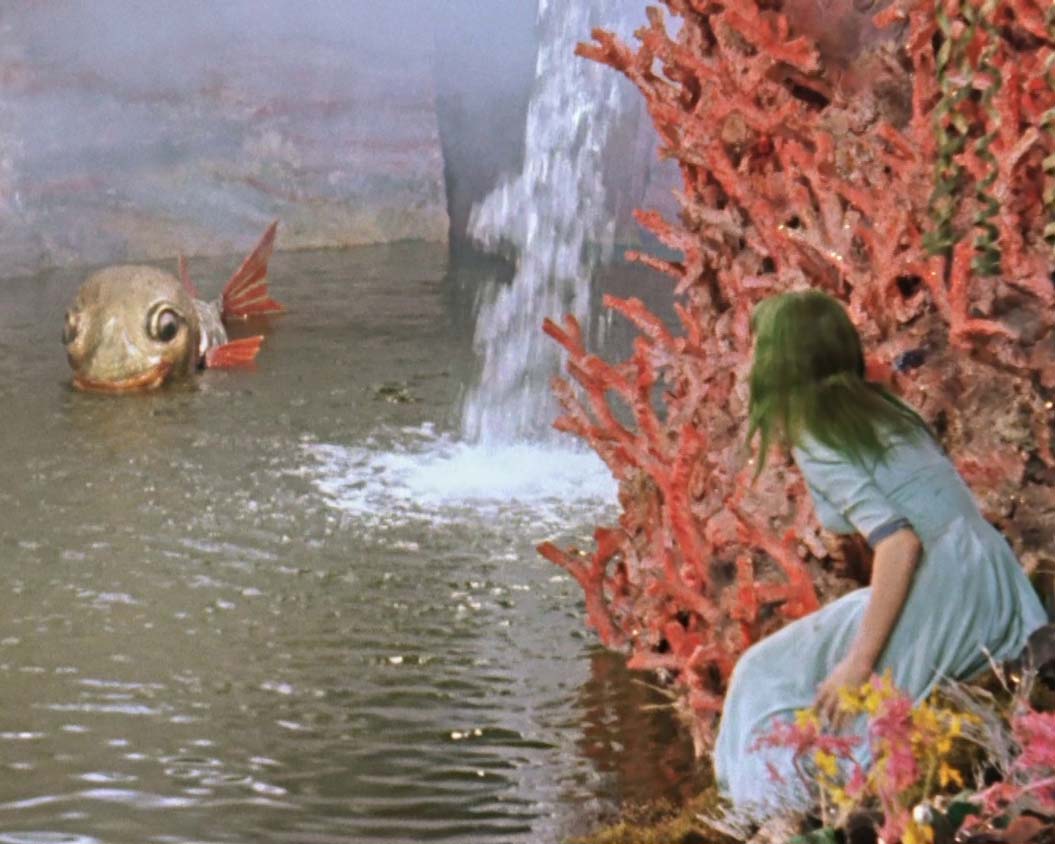
From the outset, the production emphasises its artificiality, with an often flattened perspective and a cyclorama sky which in the opening scene features a stylised sunset and an equally stylised crescent Moon and stars. The artifice extends to other aspects of the production, which features not one of the most realistic giant fishes ever committed to celluloid.
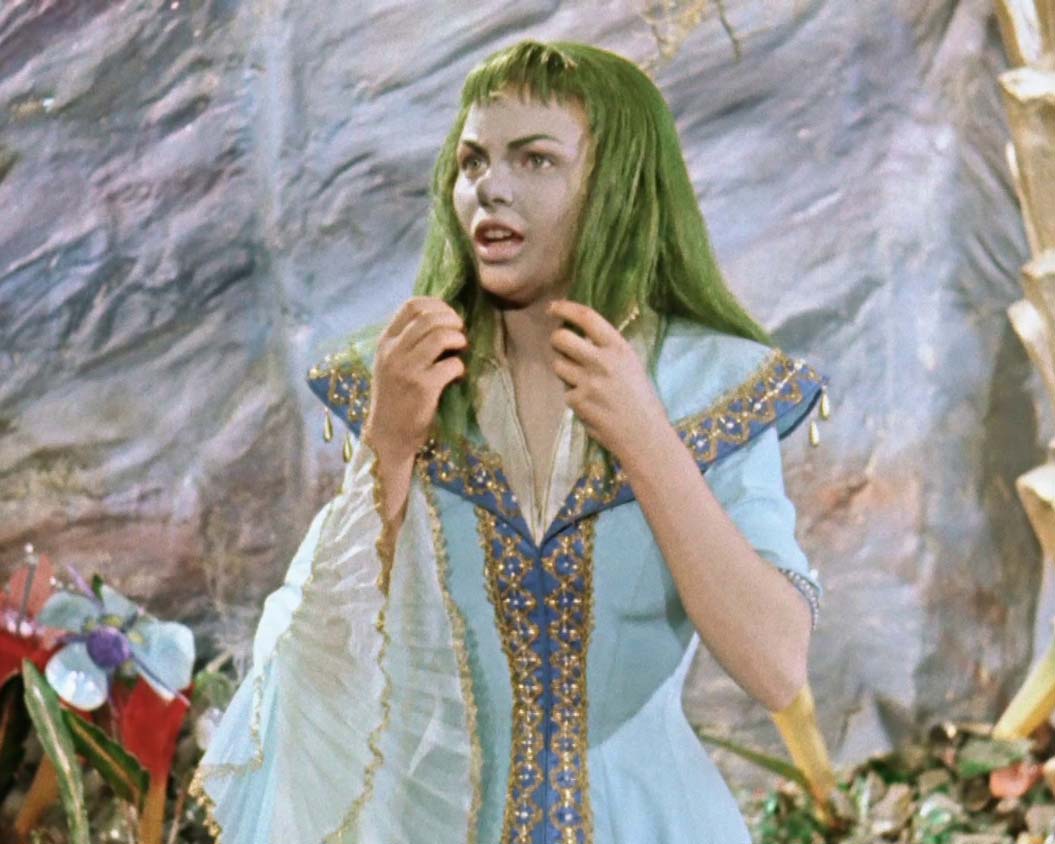
The Prince and Princess are on-screen for most of the story, particularly in what became the second episode, where she has her own humbling transformation, her blonde tresses becoming what looks like green seaweed. (Christel Bodenstein was actually a brunette.) All is resolved at the end, and we can safely assume everyone lives happily ever after.
The Singing Ringing Tree was made for DEFA (Deutsche Film-Aktiengesellschaft), the state-owned film studio, and was one of the many Märchenfilme they made for young audiences based on folklore and fairy tales. Others that they made included The Devil from Mill Mountain (1954), The Tinderbox (1959), Rumpelstiltskin (1960), Little Red Riding Hood(1962) and The Devil’s Three Golden Hairs (1977). As well as The Singing Ringing Tree, The Tinderbox and Rumpelstiltskin had been other BBC Tales from Europe, first broadcast in 1964 and 1966 respectively.
While East Germany was a Communist state at the time, filmmakers were given freedom, and access to studio resources, to make these films. Clearly the state didn’t consider films for children based on fairy tales and folklore to be politically undesirable, and potentially they would promote East Germany to the outside world. The Singing Ringing Tree was made in DEFA’s largest studio in Potsdam, which had in the past housed Fritz Lang’s silent science fiction epic Metropolis (1926) and had also been where Josef von Sternberg had made The Blue Angel in 1930, making Marlene Dietrich a star.
The Singing Ringing Tree premiered in East Germany on 13 December 1957, so in time for Christmas. It made its way to the West, or rather the then West Germany at least, on 14 September the following year.
The BBC Translation and Broadcast
A few years later, the BBC acquired the film. It was divided into three episodes with the English narration written by series deviser and producer Peggy Miller (who had worked as a translator during World War II) and read by Antony (Tony) Bilbow. Bilbow, who was at the time a presenter of the BBC2 discussion programme Late Night Line-Up, went on to be a scriptwriter and a presenter of the BBC show Film Night and as I write this is still with us at age ninety-eight.
The Singing Ringing Tree’s first episode was broadcast on Thursday 19 November 1964 on BBC1 at 5.30pm. It became the most repeated Tale from Europe on the BBC, shown six more times between 1966 and 1980 long after the series title had come to an end. Although the film had been made in colour, British viewers initially saw it in black and white, as no UK channel was broadcasting in colour at the time. BBC1 began its colour service on 15 November 1969, which was partway through the serial’s second repeat, which had begun on the 5th. So only the third episode of that run was officially shown in colour, though as the BBC had shown some programmes in colour unofficially before the official launch date, maybe some youngsters did see The Singing Ringing Tree that way then. (While Radio Times did not list the first two episodes as being shown in colour, some newspaper television listings did say that the second episode was broadcast that way on 12 November. They don’t indicate that episode one was on the 5th, but it’s possible that it might have been.)
The first official all-colour broadcast began on 13 October 1971. That was the first time I saw the serial, having just turned seven, though like most people I still saw it in black and white as colour sets were still very much in the minority in British households. The BBC’s tapes of their version, with newly-done credit sequences and story-so-far recaps at the start of the second and third episodes, no longer exist, but off-air audio recordings enable Tony Bilbow’s narration to be preserved. The Germans, East or West, didn’t get to see it on their television sets until 1977 and 1988 respectively.
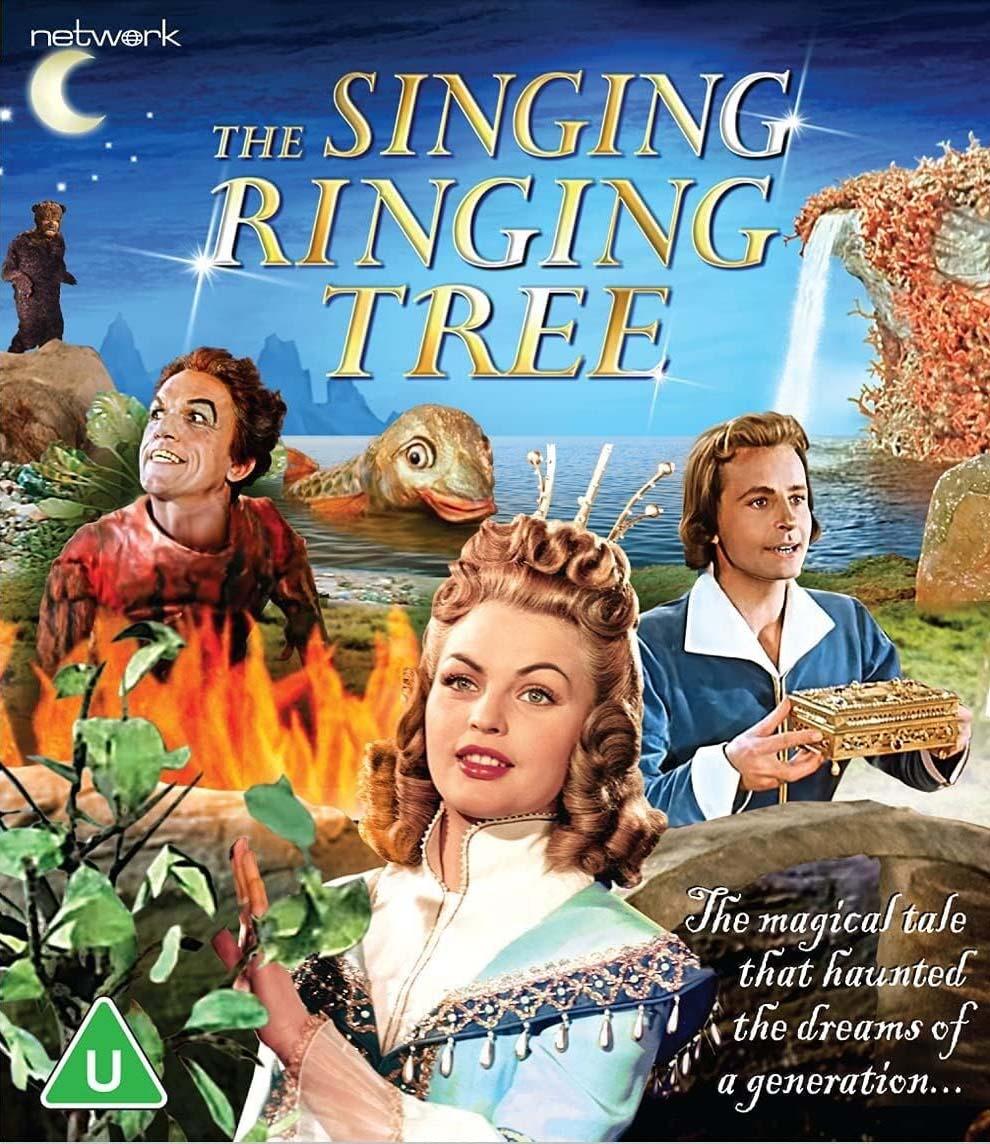
Although the serial has not been shown on the small screen for forty-six years now, it remains engraved on the memories of many British people of a certain age. In 1991, Charlotte Keatley adapted the story for the stage. The film has been available (in its feature-length, English-subtitled form) for British cinemas since 1991, and it was released on VHS and DVD in 2002 and on Blu-ray in 2021 by the now-defunct Network Entertainment. Both feature the film in both its cinematic widescreen ratio and also in 4:3 as it was shown on television, with a choice of the original German soundtrack with English subtitles and Tony Bilbow’s English narration.
Do you remember watching The Singing Ringing Tree? Let us know what you thought in the comments below ⬇️
Title photos taken by the author as screen grabs; other images from IMDb.
Meet the guest poster