The shortlisted works across all 13 categories of the British Fantasy Awards have been announced! Find out who’s in the mix over on our blog. Winners announced at Fantasycon in October.

For all things fantasy, horror, and speculative fiction
-
Announcement:
From Pen to Print: Emma Burnett on Ex Partum
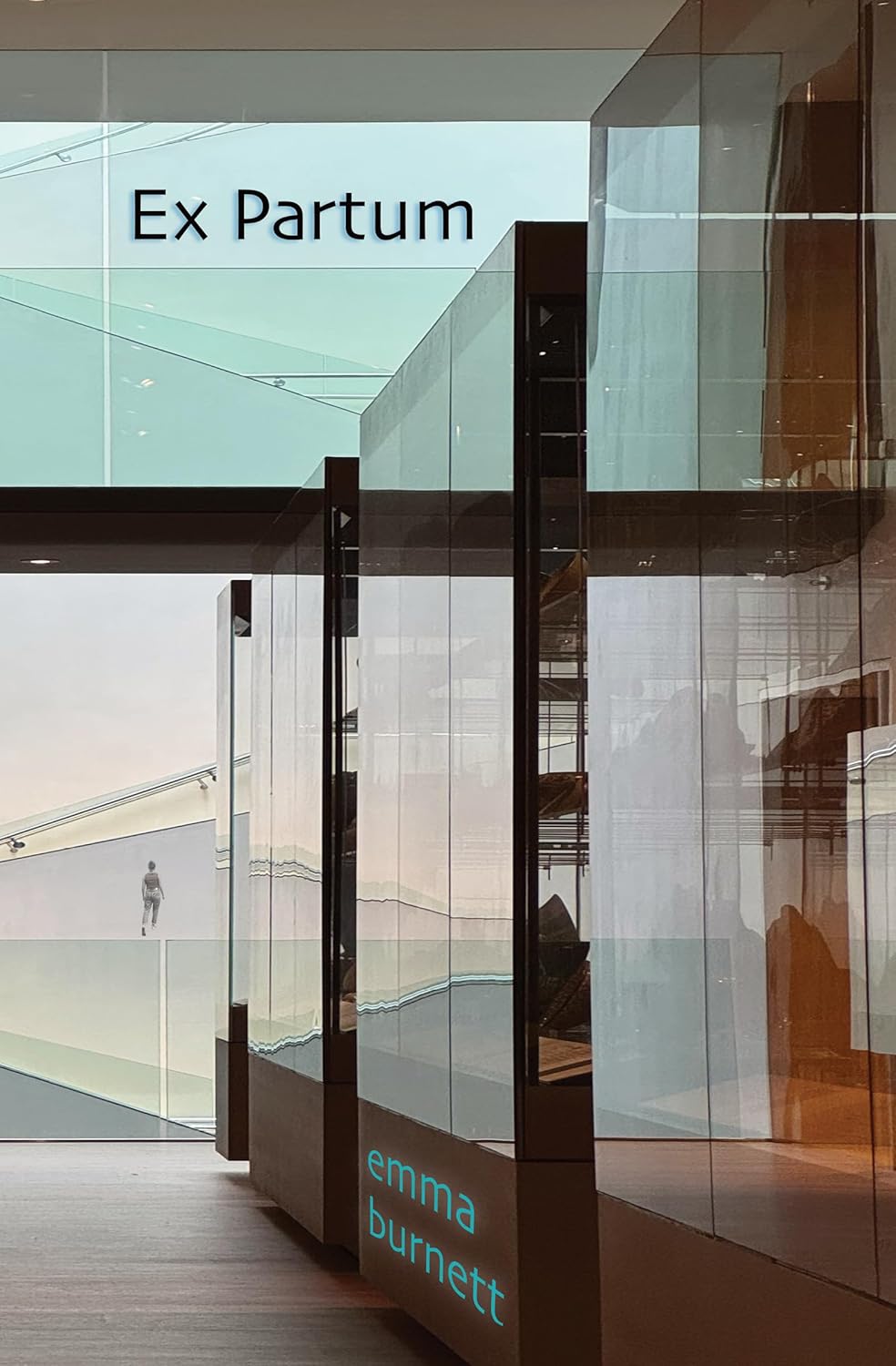
Emma Burnett’s “short story gone awry” is now a novella that’s out through Atthis Arts. She’s channelled the energy of parenting young kids, the dystopian now, predatory capitalism, food scarcity, and more to create something for, she says, “humans”.
Name: Emma Burnett (she/her)
Based in: the UK
What genres/subgenres are you drawn to?
Ooooh, yes, basically all of them at different times in my life, for all sorts of reasons.
Is writing your full-time focus, or do you have a day job as well? What do you do?
From what I can tell, I do what most people do these days: I hustle. I am a co-director at a consultancy, focusing on community assets, food, and farming. I am the lead coach at Oxford Judo. I do cat fostering. And I write. When I’m not doing these things, I introvert.
The Book: From Pen to Print
What was the genesis of this book? Where did you get the idea from?
Ex Partum was a short story gone awry. I sat down to write something that had been bubbling away in my head for a while. I thought it’d be maybe 3k, which usually tops the charts on my short story word count. I resurfaced about 10 hours later with 17k written and a manic look in my eyes (I actually don’t know that the latter bit is true, but I assume). I finished the rest over a few more days. Then I crashed and burned for a week. I cannot recommend this approach to novella writing low enough. It was utterly mad.
Most of my writing centres on food and power, is in some way dystopic, and in the past year or two I’ve been drawn to stories that centre family. I think this book embodies, like, basically all of that.
How many drafts did you go through before you felt it was ready to query? How long did that take you?
Ok, I know this one exactly. Six drafts. I did a full copy, then I let it sit for about a month. Then I revised. I do this with almost every story I write, though it’s not always for a month. I find it easier to edit my own work when it doesn’t feel so close. So, that’s one. Then I edited it, with a fresh eye. Two. Then I sent it to three people, close writer buddies who I have worked alongside for years. I made edits off the back of their crits. Then I sent it to one more buddy, whose writing and opinion I value a lot, and made another round of edits off that. Then I subbed. Top to tail, the whole thing probably took me about three months.
Did you work with beta and/or sensitivity readers? How did you find them? How did you incorporate their feedback?
Absolutely yes. Some of that was when I sent it out to beta readers—I asked specifically for feedback in areas that I felt unsure of, and also anything else they might pick up on. Some happened later, during edits through the publishing process, and that was really helpful because it was a totally different group of people, who knew my work much less well, and they picked up on things I hadn’t and neither had my crit readers.
In terms of how I incorporated their feedback… I did it like an academic does a paper. I made a spreadsheet. I had tabs for each reader, columns for the page number, the comment, and how I resolved it. Some had loads of rows of comments, some only a few. They all got addressed one way or another.
I have heard that some writers can get funny about sensitivity reads, but if I’m honest, if you can’t deal with feedback that creates internal conflict, you’re the sensitive one.
What was your querying process like? How long did it take?
I don’t want to make anyone sad here, but… it took me a day.
But, no wait, don’t leave. It also took me three years. I reached out to a few editors before I’d finished, people whose work I admired, and told them I had something on the go. They told me to keep them updated. I kept them updated. I made sure the draft I sent over, when it was ready, was so clean you could slide across it in socks.
I’ve worked really hard to be part of the spec fic ecosystem. I have written and had published over a hundred short stories. I slush for magazines. I pootle about in various discords and on Codex. I’m, you know, present. I think this helps, because people know my work is good, I don’t cheat, and I’m happy to grind through the process. So, by the time I yeeted out Ex Partum to the few publishers who I’d communicated with, it wasn’t so much cold calling as, like, warm bathing.
Once it was in the hands of your publisher, what was the process to get it ready for release?
It feels like ebbs and flows. Originally, the release date felt so far away, but then there were edits and sensitivity reads, and then blurbs and a cover to sort, and it all just had to fit in and around normal life. Atthis Arts was really supportive—this is my first solo book, so my first rodeo, and I came rolling in like a wrecking ball of questions.
And now your book is unleashed on the world! How are you feeling?
I think this is the bit that’s a bit sad. I’m not feeling much of anything. It’s not that it’s not super cool, it is super cool. It’s just that it’s a looooong process to get a book out, and by the time it’s released into the wild, you’re on to your next project/book/job/life crisis.
But, but… I felt like this with my PhD, too. All these little steps that get you from A to B to Dr. When it’s over, you barely notice. It just feels bureaucratic. Did you send in final corrections, did you sign the paperwork, did you rent the graduation gown? But sometime later, someone asks what your title is, and you say ‘Doctor,’ and then there’s this bright spark of recognition, of celebration. I’m kind of hoping that will happen with this book. Later, there will be a brain party.
What would you like us to know about this book?
I tried really hard to write in the experience of being a new parent. It’s a world of exhaustion, of unreliability, of painful resilience. It’s deliberately slow. It’s deliberately small. Go with it. Let the intimacy, and the mess, and the tightness just wash over you.
Who’s the ideal reader for this one? What sort of things do they like to read about?
Gosh. Ähm… Parents of young children, or even of older ones, those who remember the weird pace of life and time in that phase. People who understand about the day-to-day frustrations of living in a dystopian now. Folk who worry about predatory capitalism, and what it will target next. Those who worry about food and agriculture and the divorcing of people from the land. Anyone who feels trapped and wants a glimmer of promise that things can change.
Humans.
Your Writing Process
Are you a plotter or pantser or somewhere in between? How do you do your first draft?
I want so badly to be a plotter. You plotters out there, you’re so sensible. I’m a pantser and it burns like chilli peppers, those really hot ones. Flash of excitement and where does that lead? Who the shit knows. Probably down some alleyway and then the MC is very confused about why they’re there, and you have no bloody clue.
A prayer: God/s/esses/lets, give me the sensibility to plot.
How do you approach writing? Are you the type of writer who needs to treat it like a job? Is there a particular time of day you find best for you to write?
I write when I write, which is an exceedingly useless thing to say except that it’s true. I just ride vibes. When a story pops into my head, I try to get it down. Sometimes I can’t—I’m working, or I’m away, or I’m in the shower—and I lose it entirely. That happens. But most of the time, if it’s a thing that needs saying, or a story that desperately wants out, I’ll get it down.
Geek out about stationery: do you use a notebook? A specific type of pen? Or are you computer all the way?
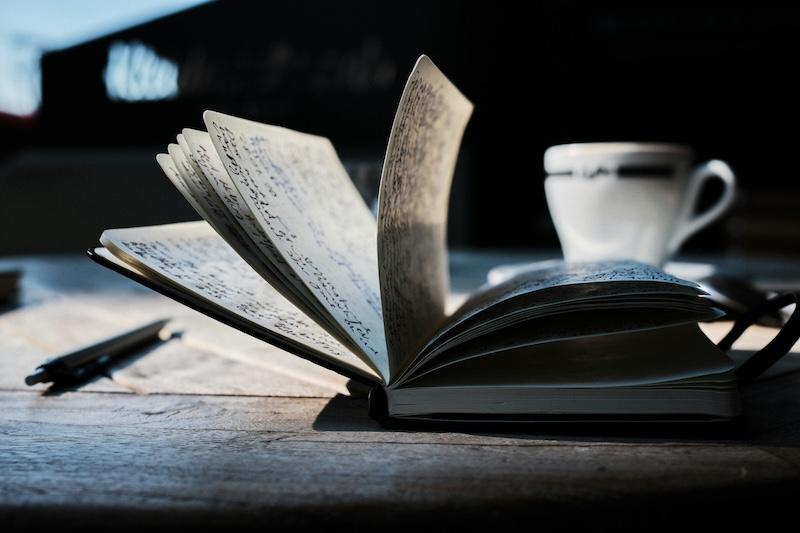
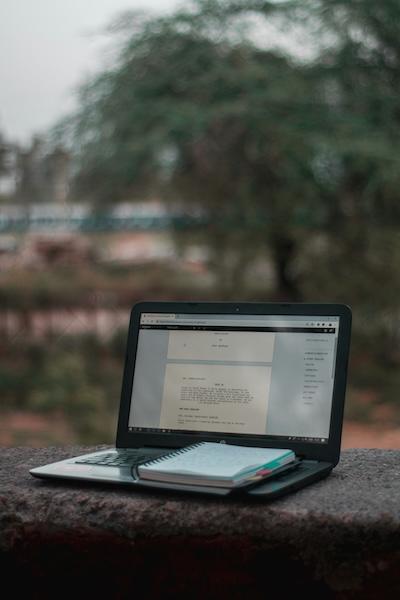
Ok, yes, I will geek out about this, because I’ve absolutely done some experimenting in this space. I thought it would be interesting to find out if I write differently in different media, so I sometimes write on my phone, sometimes in a notebook or on post-its, sometimes on a writing pad (I have one of those ReMarkable things), sometimes on my computer. I’ll even use different programmes for different moods—Word or Google Docs or Scrivener. The approach I take does seem to shape the story, which is kind of wild.
(Photo by Aman Upadhyay on Unsplash)
Is any of that different for editing?
I find editing much more contained. And I often dread it, although once I’m in the flow, it generally feels good.
Most of my editing happens in Google Docs. It’s where I like to gather comments, and I find it a mostly clean space, where you can work on a story in iterations. I’m working on a novel right now, and it deffo helps to flip between the tabs with crits and the current draft.
Where do you work? Do you have a comfy, creative space at home or are you someone who has to grab the moment wherever it comes?
I work at home. It’s the place where all my stuff is, and none of the people are.
What’s your writing soundtrack?
Zero. Nothing. Maybe some cats. But the ideal soundtrack is turned off.
Do you have a writing ritual?
My writing ritual is to write. It’s also to ignore emails and my phone and also people around me. I think maybe my Rite of Writing is a thinly veiled attempt at not doing other life things.
Where can we follow you / find out more about your work?
I’m super findable on the interwebs, but if you’re on bluesky, I’m at @slashnburnett. If you’d like to stalk my many, many stories, you can find them on my website. And if you’re just really keen to pick up a copy of Ex Partum, you can find links here.