The shortlisted works across all 13 categories of the British Fantasy Awards have been announced! Find out who’s in the mix over on our blog. Winners announced at Fantasycon in October.
For all things fantasy, horror, and speculative fiction
-
Announcement:
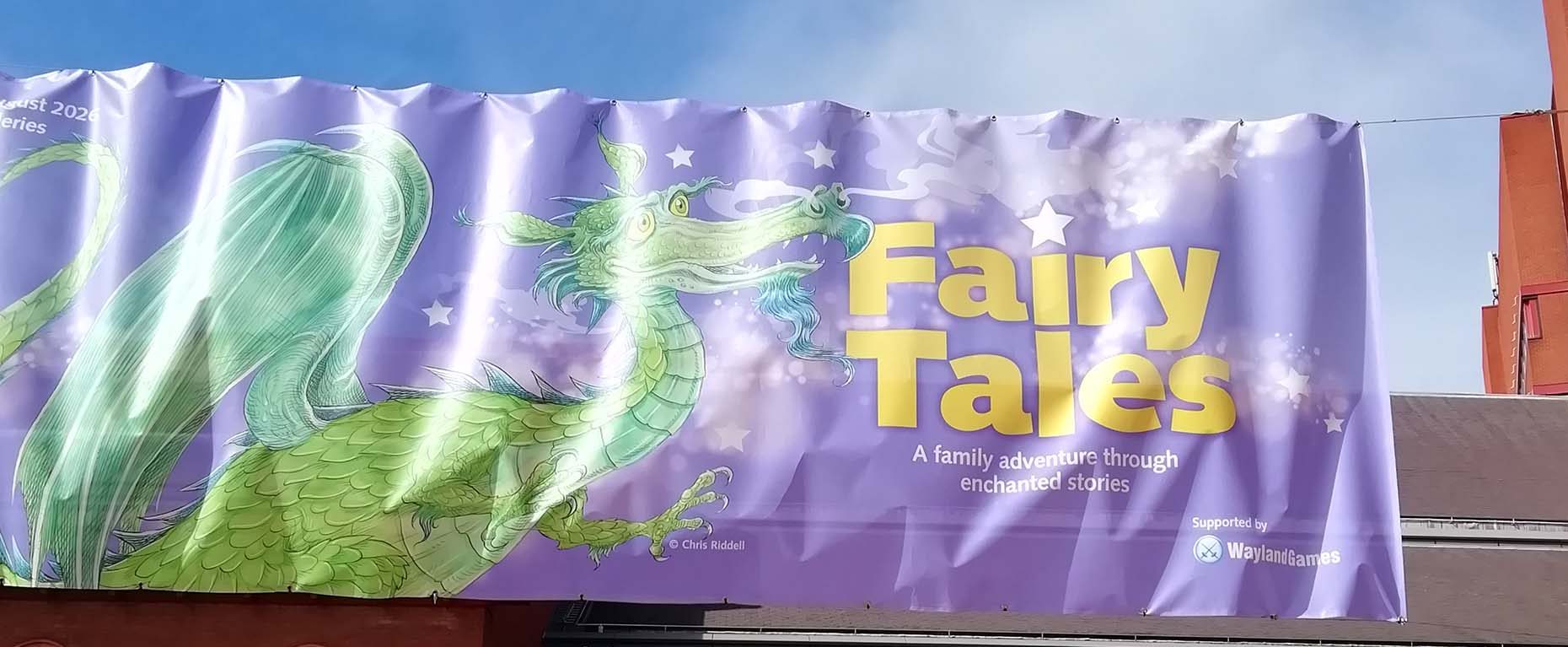
Exhibition Review: “Fairy Tales” at The British Library
Allen Ashley heads to St Pancras again to review the in-person exhibition “Fairy Tales” at The British Library. All photos included were taken by Allen on-site.
tl;dr
- Fairy Tales at The British Library, 96 Euston Road, London NW1 2DB
- In-person / in real life exhibition
- Open daily from 27 March 2026 to 23 August 2026
- Exhibition admission charges vary – peak and off-peak; pre-booking advised
Magic Objects
I have to be careful when I visit the British Library as I tend to end up buying several paperback anthologies of obscure old “weird fiction” by forgotten writers, or else early-mid twentieth century science fiction stories. Usually edited by Mike Ashley, no relation. I will leave you to guess whether I managed to come back empty-handed this time…
Once Upon A Time
Fairy tales are likely the first examples of fantasy that we all encountered. The best-known ones are as deeply embedded in western literature as Biblical tales and Ancient Greek myths.
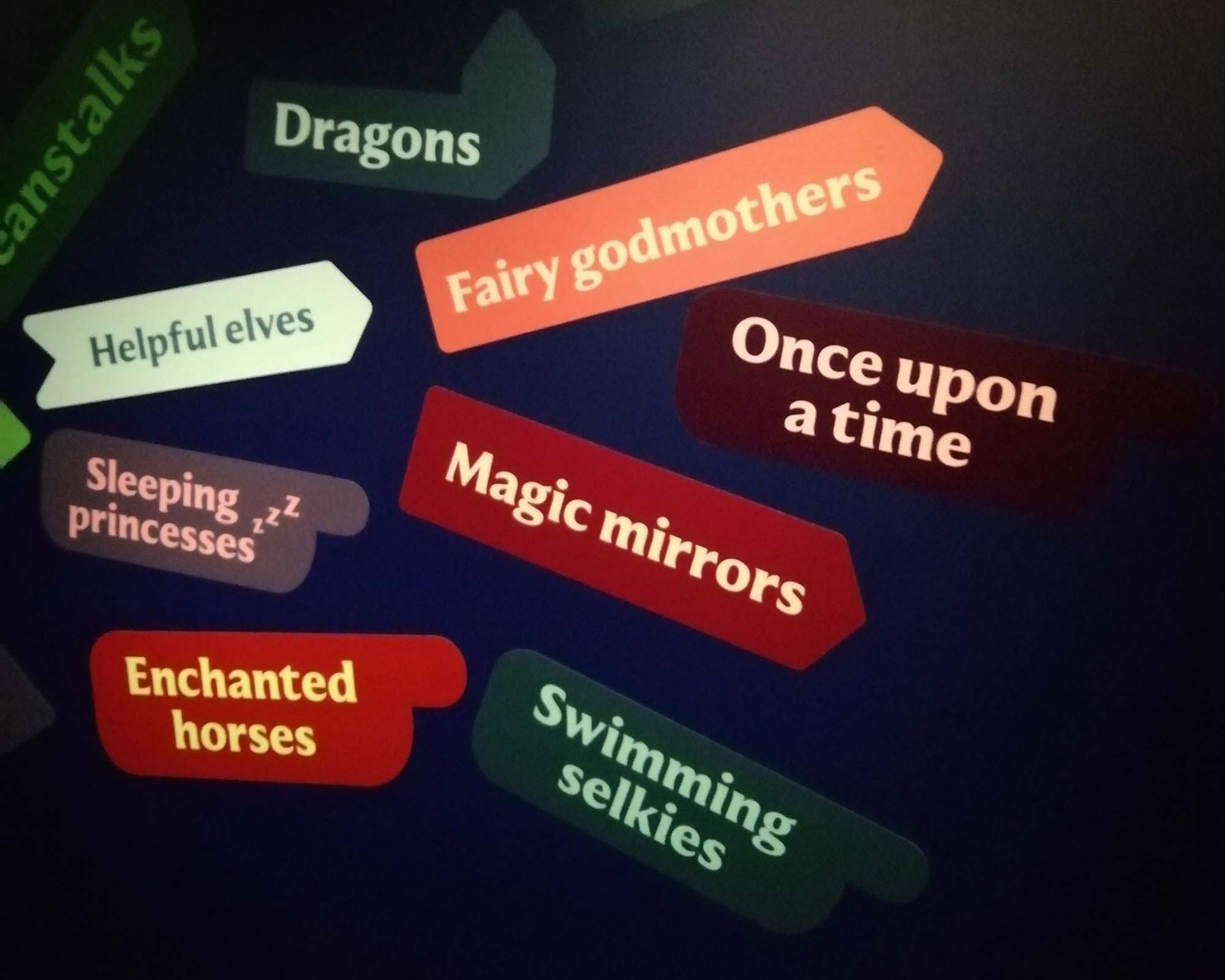
I had known about this upcoming exhibition for several months but I had then become a little concerned when I saw the tag, “A family adventure through magical worlds and enchanted stories.” Would it be just for kids? Only one way to find out: go forth into the unknown kingdom! With that in mind, I booked a ticket for 3pm on a Tuesday afternoon, with the supposition that any school parties would have long departed.
Let Me Tell You A Story
The exhibition makes a nice, gentle start with a mock-up of a fireside, complete with audio narration by a “Grandma” type figure and shadow puppetry animation. Much of the labelling is in that recognisable rhymed couplet, semi-doggerel style one associates with “olden” tales. For example:
“Long, long, ago as the nights turned cold,
By the warm firelight, tales were told”
Quite a fun touch by the curators there.
The first room proper correctly sets out the proposition that fairy tales and folk tales share much common ground and are present in human cultures across the world. And have been for centuries. In one cabinet, illustrating this, we have several old books as representative examples of fairy stories in European culture from authors such as Charles Perrault, Hans Christian Anderson, the Brothers Grimm and Madame D’Aulnoy – who with her 1697 French language “Contes des Fees” gave us the term which in English was translated as “fairy tales”. On display, we have a precious, brown-edged 1735 Dutch edition of her tome. Alongside this is a letter in German from Jacob Grimm complaining to his publisher about tardiness in printing! Be careful with those emails to NewCon and Luna Press, folks, you never know where they might end up…!
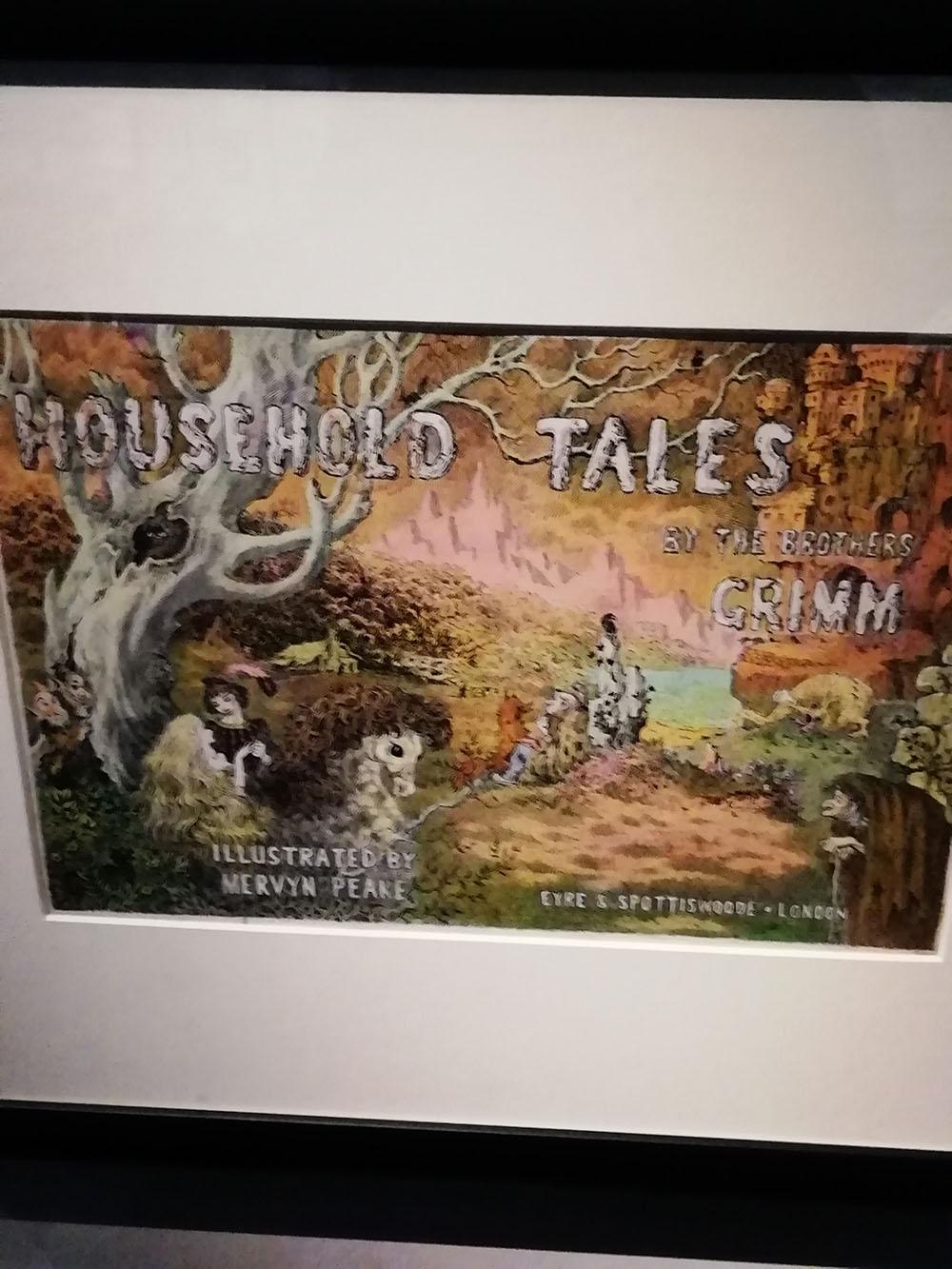
One of the joys here is a beautiful, pastel, deceptively dense illustration by Mervyn Peake from 1943-46 for the cover of “Household Tales by the Brothers Grimm”. I think I had a paperback edition of this back in the 1980s.
Journey To Another Land
But elsewhere in this room we take a global view of fairy/folk tales, with examples such as the Australian indigenous / Aboriginal tale “The Roughtail Lizard Dreaming”; “The Fate of the Children of Lir”, from Ireland, 1765 edition; a modern retelling of “Two Volcanoes” from Mexican (Aztec) legend; versions of Anansi “the trickster spider” from Afro-Caribbean legend; and in the next room, the “Arabian Nights”, which gave us Aladdin and his lamp. Later on, we also get “Baba Yaga” from Russian and Slavic traditions.
Fairy tales have been written for popular consumption for hundreds of years but even back then the authors were often referencing older, handed down tales.
We are also reminded of fairy tales’ unbreakable link with live theatre via a poster for the British work “Pantomime – Puss in Boots” at Drury Lane Theatre, London.
Black Forest Gate-Oh!
We are “Into the woods” now and have displays relating to Red Riding Hood, including a rather cuddly toy wolf; and a delectably sugary walk-into Gingerbread House from “Hansel and Gretel”. This is both plastic and robust enough to be appealingly modern but also true to the original tale with its sugar cane aesthetic. Instagrammable if you have a decent flash.
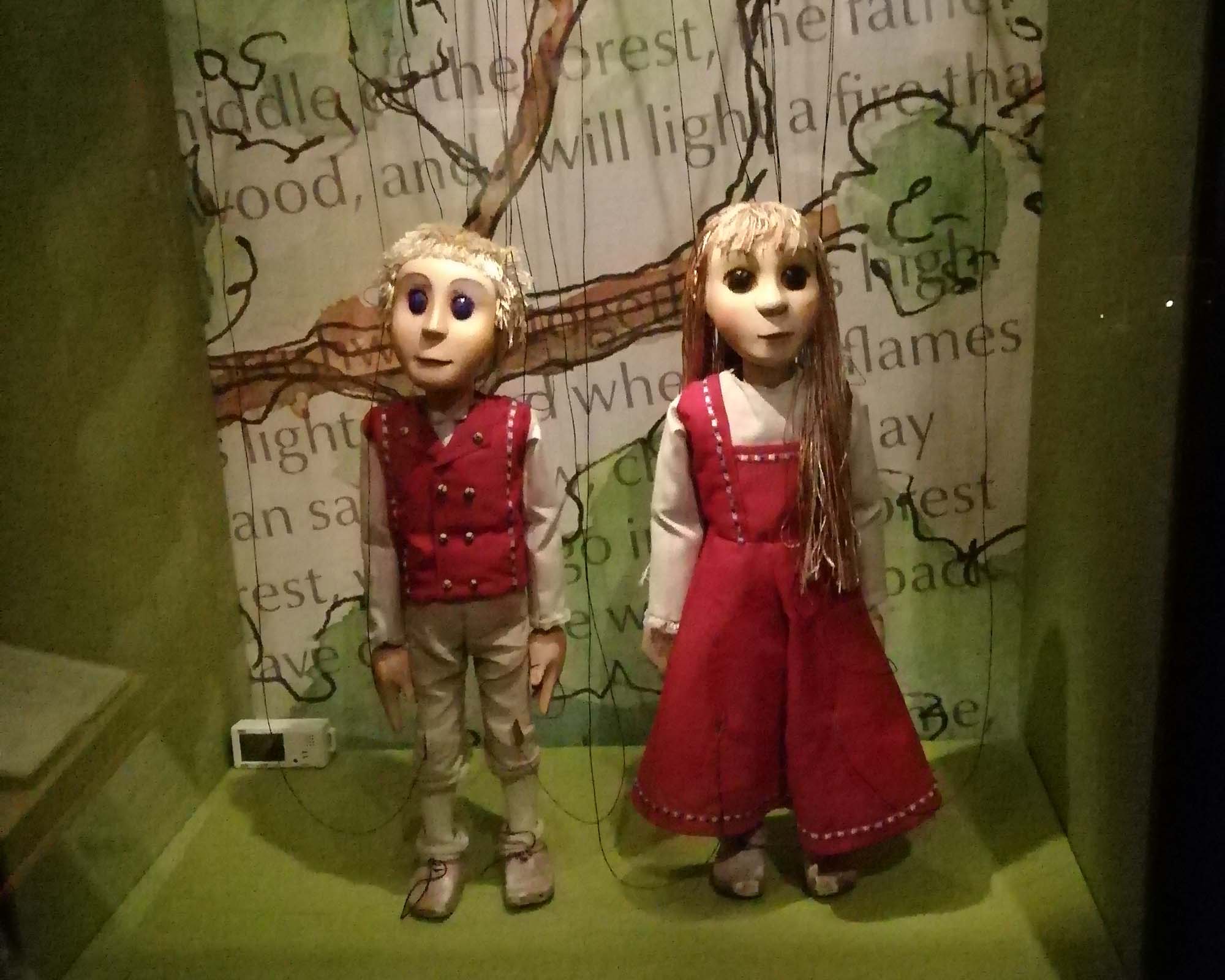
We have a few puppets on display throughout the exhibition. My favourites included a pair of beautiful marionettes of Kai and Gerda from Hans Christian Anderson’s much-overlooked classic “The Snow Queen”. These are from 2006 and on loan from the Little Angel Theatre in Islington. There’s also a lovely edition of “The Surprising History of Jack and the Bean-stalk” from London c1820, with a colourful fold-out illustrated frontispiece. The British Library maintains its remit of holding and displaying historically important and enlightening literature.
Be Your Own Hero
As we move on, we are asked to consider the nature of villains – witch, wolf, stepmother, giant, ugly sisters, trolls, ogres (e.g. Shrek) – as well as how heroic some of our heroes actually are – is the aforementioned Jack lazy, selfish or smart? This is done quite gently but at least encourages readers and listeners to look beyond the binary good and evil stereotypes.
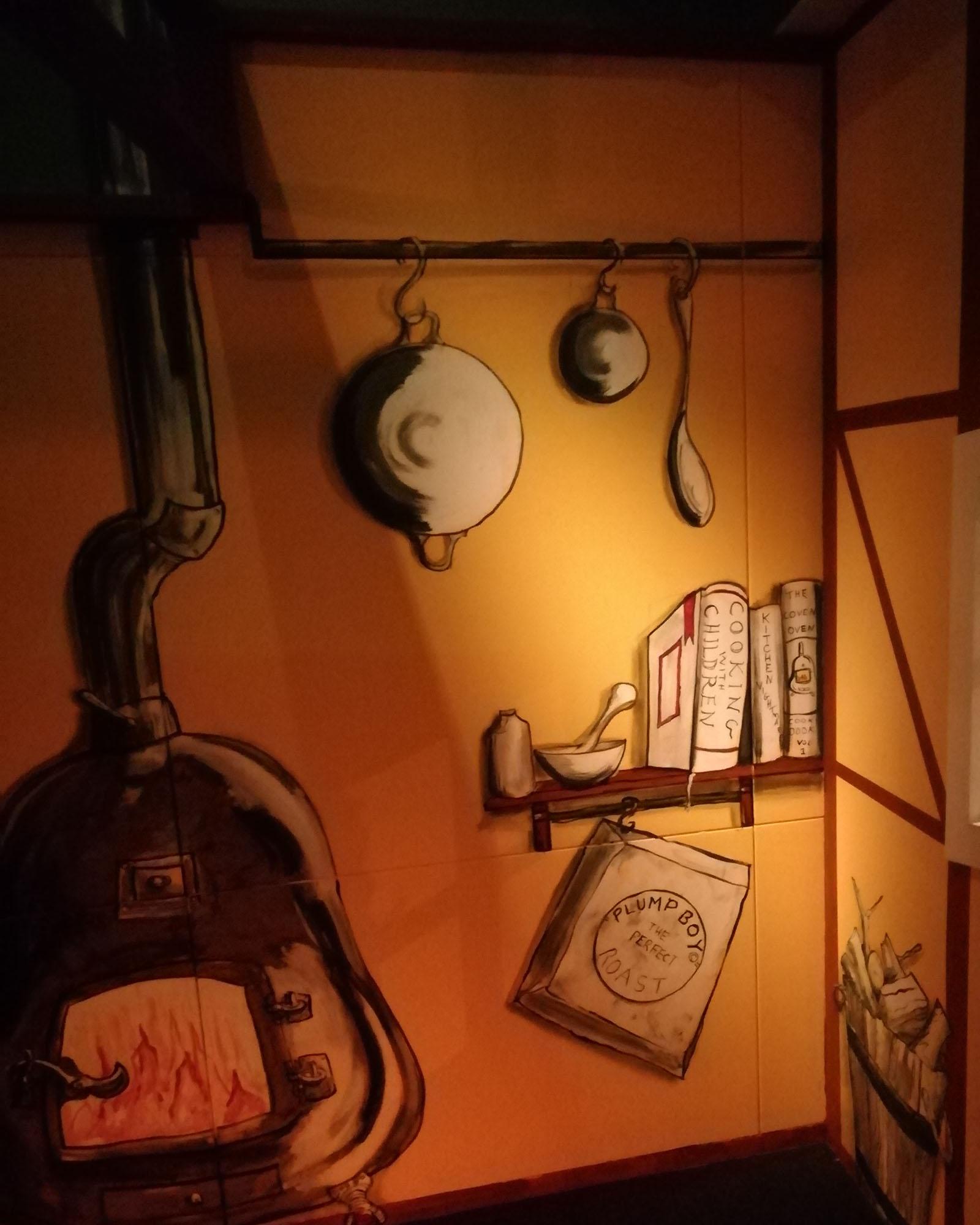
“At the palace” focuses on “Cinderella” (“Ashputtel” in Grimms), a tale that may well have its true roots in ancient China. On one side, we have the kitchen and the cooking pot or cauldron, but close by we have wall illustrations of the sweeping staircase with a lit-up glass slipper in a Perspex case.
Spells And Curses
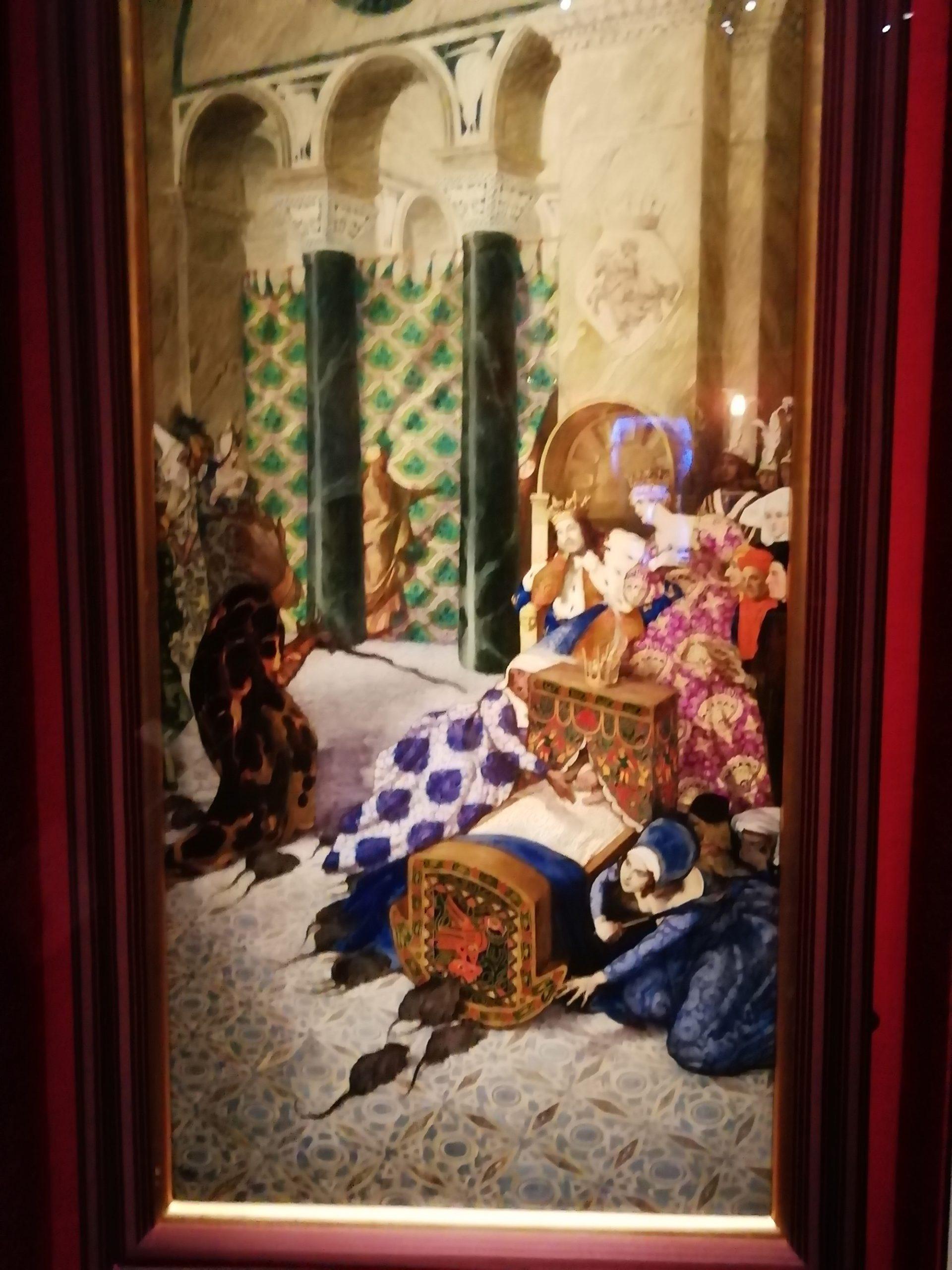
Moving on, we are now asked to consider spells and curses and indeed the use of magic which can be for good or ill or of questionable purpose. One of the delights here is a painting by Leon Bakst, “Panel 1 Sleeping Beauty” – Paris 1913-1922, which shows the scene as the court comes under the fateful spell, with the king like a playing card and the queen modelled as if Britannia or La Libertee. Even better, in the next room, adjacent to the large house of fun warped mirrors, we have fairy tale tiles by Edward Burne-Jones and Lucy Faulkner telling the tale of “Beauty and the Beast”. From 1863, as the Pre-Raphaelites stepped away from Classicism and King Arthur for a while and took on European folk tales. This is amongst the very best work associated with the William Morris workshop from the Victorian era, an absolute fireplace delight.
Ch-Ch-Changes
Transformations are at the heart of many classic fairy tales (such as the aforementioned “Beauty and the Beast”) and as we move on, we are invited to consider the fate of selkies and mermaids, notably Hans Christian Anderson’s / Disney’s “Ariel”.
I didn’t notice it on my first walk-through but there is a table set up with three different sized porridge bowls. I then waited for ages but the talking bear family never appeared, only some projected shadows. I think the museum could have made a lot more of the “Goldilocks” story, maybe giving it a bit of the same treatment as the Gingerbread House. A missed opportunity for more engagement.
The Inner Child
If you are thinking of taking your younger relatives with you, there are child-centred activities such as the slide which forms part of the piled mattresses in “The Princess and the Pea” exhibit. There’s also a dressing-up area near the mock-up of the forest close to the palace.
The Gingerbread House will have great appeal – take a few steps back and spot the witch on its roof.
Later on, there’s a talking magic mirror, an animated genie, fairground house of fun warped mirrors, and a troll bridge to run over (complete with audio responses). This last proved hugely popular with a couple of family groups just ahead of me. There is a seating area in which to calm down (if you are capable!) and read a few examples of fairy tales. Here I found a young British Muslim mother reading to her toddler with perfect storytelling diction, proving that fairy tale books are in safe hands for future generations.
I think one’s experience of the exhibition will inevitably be flavoured by whether you encountered, or indeed brought with you, anybody between two and ten years old.
It’s a Family Affair
So, this is an exhibition that has plenty of content for both children / families as well as the more knowledgeable and erudite adult visitor. On balance, the Library has defaulted to a somewhat safe and celebratory stance on fairy tales, so go to enjoy rather than bring your microscope or Freudian lens. There’s one film still from “The Company of Wolves” but if you want the depth of Angela Carter’s “The Bloody Chamber”, you will need to shell out £17 for a hardback in the shop. I saw no mention of Bruno Bettelheim or Marina Warner and other serious revisionists of the genre. That’s fine, let’s keep it light and PG. I might have missed a couple of cabinets, but I was a little disappointed to not see displays invoking Oscar Wilde’s “The Happy Prince”, Carlo Collodi’s “Pinocchio” or anything by Hoffman.
The book’s the thing
However, I am glad to note that most of the content has been books and artwork associated with them rather than, say, a rolling video of “Frozen”. Not knocking the latter, of course, but pleased to see that the British Library is still focused on honouring and celebrating the history of written literature and sharing many of the treasures it holds.
Recommended.
Meet the guest poster