The shortlisted works across all 13 categories of the British Fantasy Awards have been announced! Find out who’s in the mix over on our blog. Winners announced at Fantasycon in October.
For all things fantasy, horror, and speculative fiction
-
Announcement:
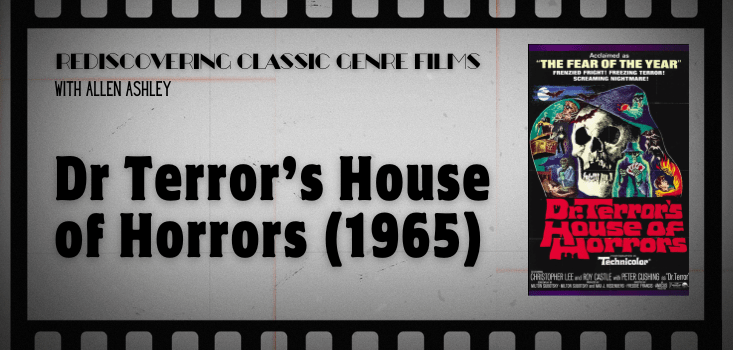
Classic Genre Films: Dr Terror’s House of Horrors (1965)
Allen Ashley is training his eye on classic genre films for us, looking at not just the film but the context in which they were released. Here’s the latest instalment in his blog series.
Dr Terror’s House of Horrors (1965)
Director: Freddie Francis
Colour
94 minutes approx running time (on DVD)
(All images taken from imdb.com)
(Note: Time stamps are of author’s own noting)
Content warning: This article discusses cultural stereotyping.
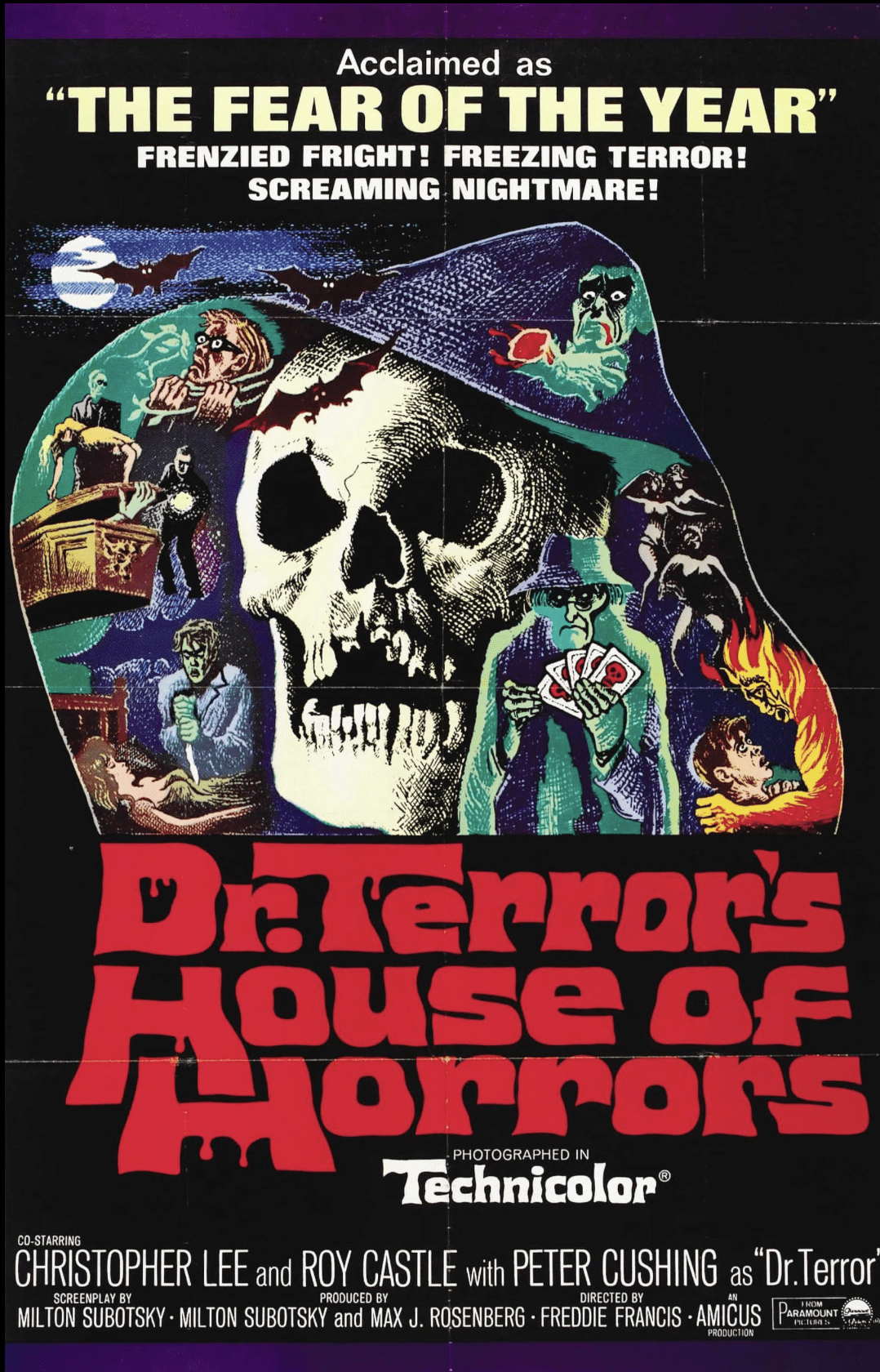
Despite its title, “Dr Terror’s House of Horrors” might these days be considered “cosy horror”, if there is such a thing. Audiences back in the 1960s were more easily spooked, although the game-changing “Psycho” (dir. Alfred Hitchcok, 1960) had already come and gone.
The main interest in this particular film is its narrative structure. It is a series of stories linked by an overarching framing device. It’s more like a themed anthology than a filmed novel and, thus, appeals to those of us who gravitate towards short-form work.
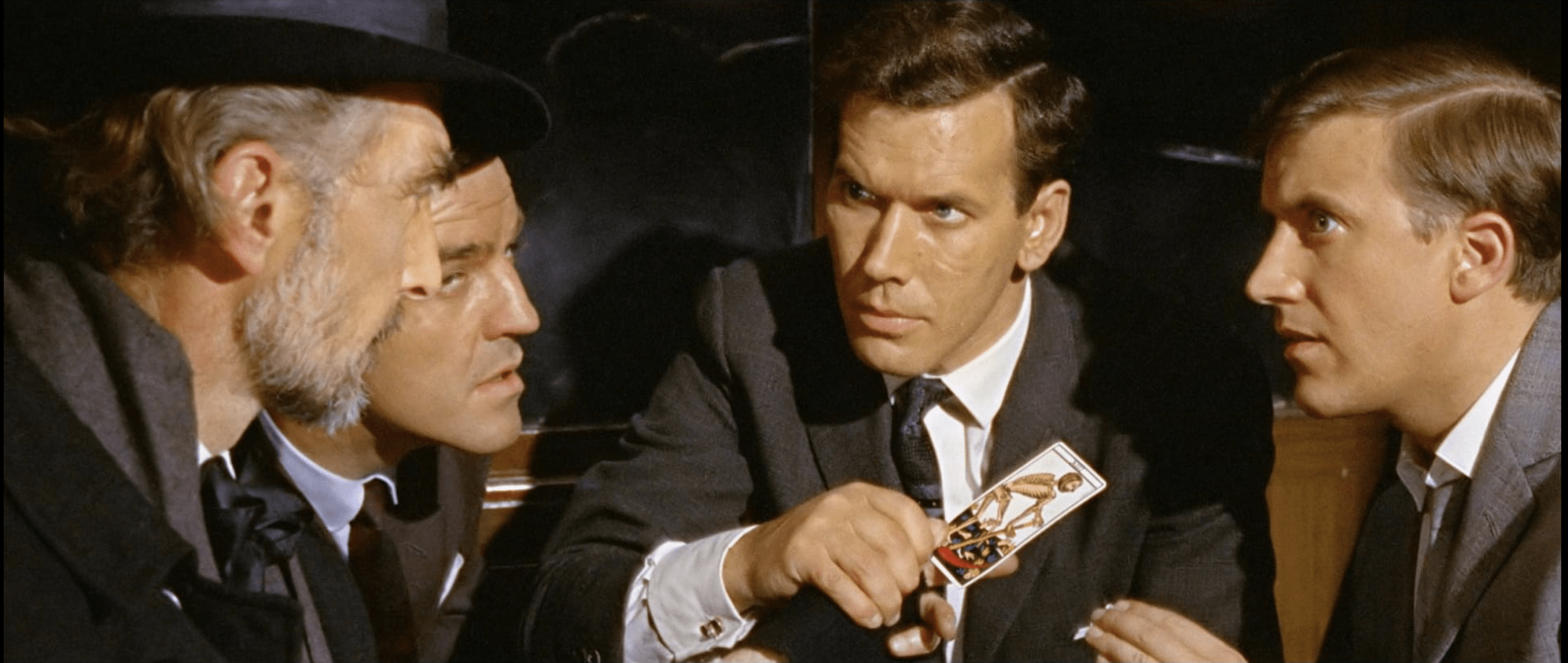
Then there’s the cast. From the late 1950s through to the early 1970s, three male actors bestrode the horror film genre. One was Vincent Price, about whom I wrote in article six. The other two are present and correct here: Christopher Lee and Peter Cushing. Lee is at his patrician best as a snobbish, self-important art critic. Cushing is the title character Dr Terror, AKA “Doctor Shreck”, which allows him to indulge in some Germanic accenting of speech as he deals Tarot cards to his fellow passengers and tells their fortune, despite Lee’s carping, “astrologists, spiritualists, table-tappers” (c8m). Cushing has a gentle demeanour that is understatedly creepy, breathing softly on the carriage window, fingerless gloves holding a brown leather Gladstone medical bag.
Room in the Carriage
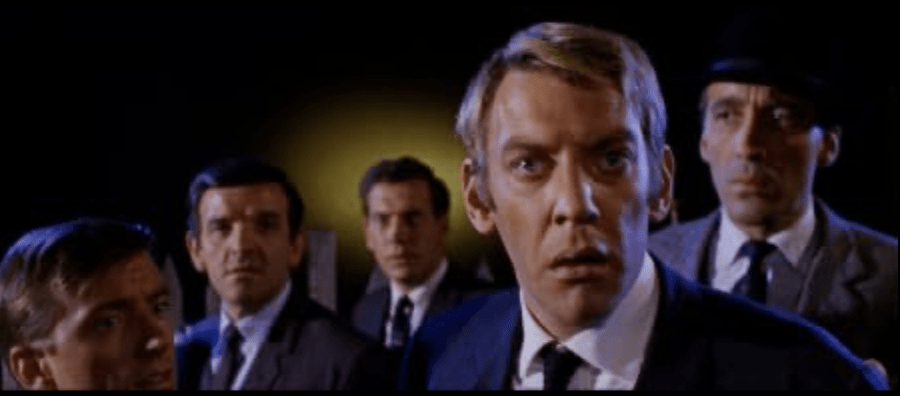
So, here’s the set-up: the 7.59 train is heading off to the (fictional) town of Bradley. Train carriages came in different shapes back in the sixties and this is one where the compartment was self-contained—no corridor, no route to the buffet car or the toilet. It makes for a superbly claustrophobic location as five youngish white male travellers assemble, with Cushing’s Doctor a late addition. Of course, if the film were being made these days one would expect a more diverse cast but no one would have blinked at this selection over sixty years ago. Or would they? Amongst the travellers (all right, victims), we have musician turned comedy actor Roy Castle, a young Donald Sutherland, and soon to be Radio One pop picker Alan Freeman. Yes, the man who later did a great job of selling us the infamously static electricity producing “Brentford Nylons”!
Old Sins, New Sins
This quintet of stories is inevitably a mixed bag. The first one, “Werewolf”, starring Neil McCallum, is strong on atmosphere and creepy moments—sullen servants staring through windows, a coffin lid moving of its own accord (c19m), and the commonplace horror notions of the sins of the fathers being visited upon the son—as well as the old classic of, maybe it would all have been OK had you not insisted on investigating the dark, forbidding cellar…
The second story “Creeping Vine”, starring Alan Freeman, gets down to business straightaway as a couple returning from holiday find the, as stated, mysterious creeping vine ascending their outside wall. The plant violently resists cutting. Yes, it’s basically a rip-off from “Day of the Triffids”, but on a more domestic scale; though still doom-laden for humankind. The best blink and you’ll miss it moment comes when a botanist analyses a sample of the flora under the microscope and declares that the plant has a brain, with the orange tinted slide looking just like a human cerebrum (c34m).
Not So Handy
In the fourth section, “Disembodied Hand”, Christopher Lee plays a snooty art critic riven with guilt for his part in the demise of the artistic career of Eric Landor (played by Michael Gough, AKA “The Celestial Toymaker” to all you Whovians).
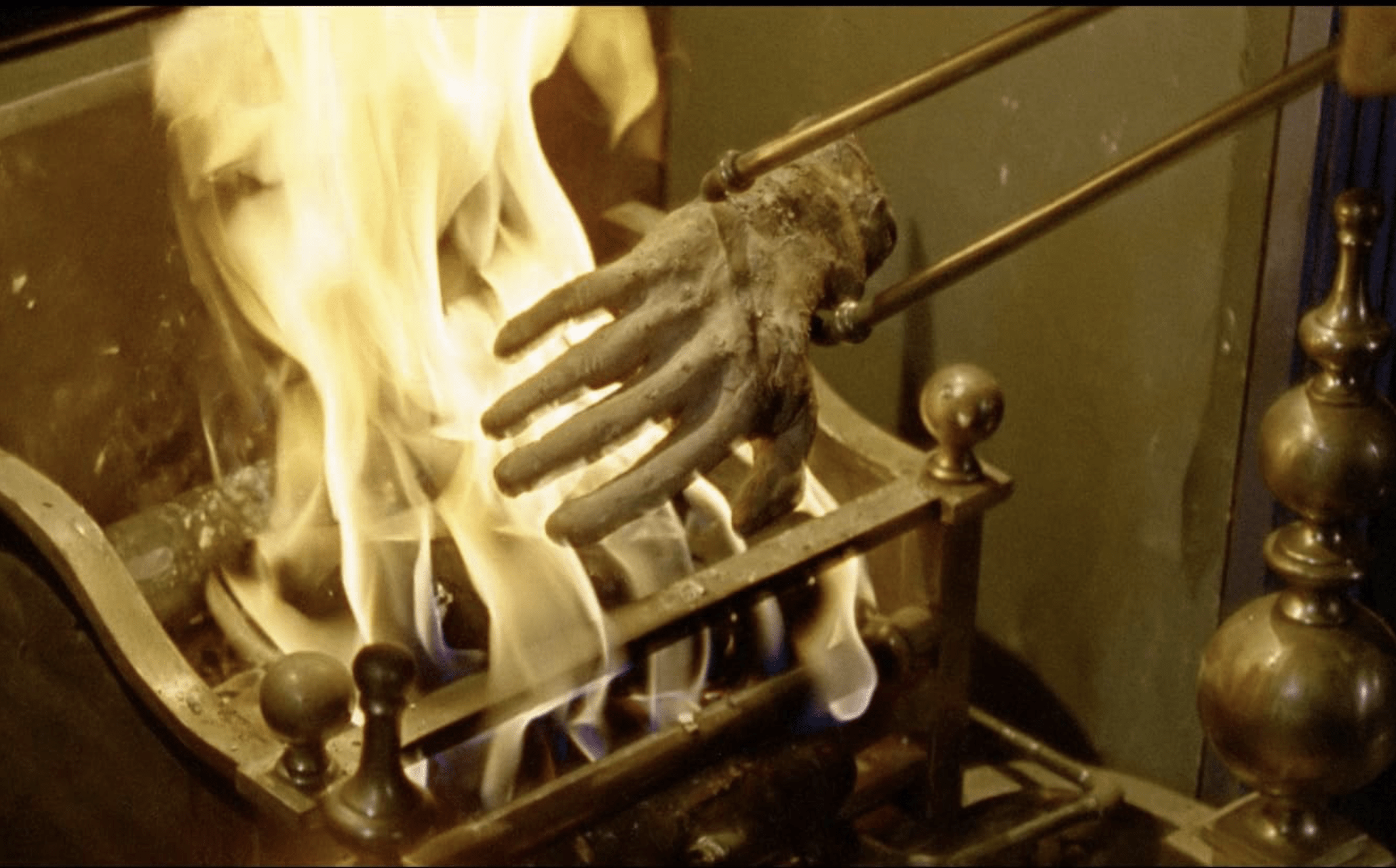
It’s all quite Grand Guignol as Lee is persistently pursued by a “Thing”-like disembodied hand. In classic horror tradition, you can stab, burn or drown the evil “creature” but it will still come back to persecute and punish you. The best moment is around minute 70 as Lee opens the door, sees no one, returns to his chair, and the camera offers us a low-level shot of the appendage skittering spider-like across the floor.
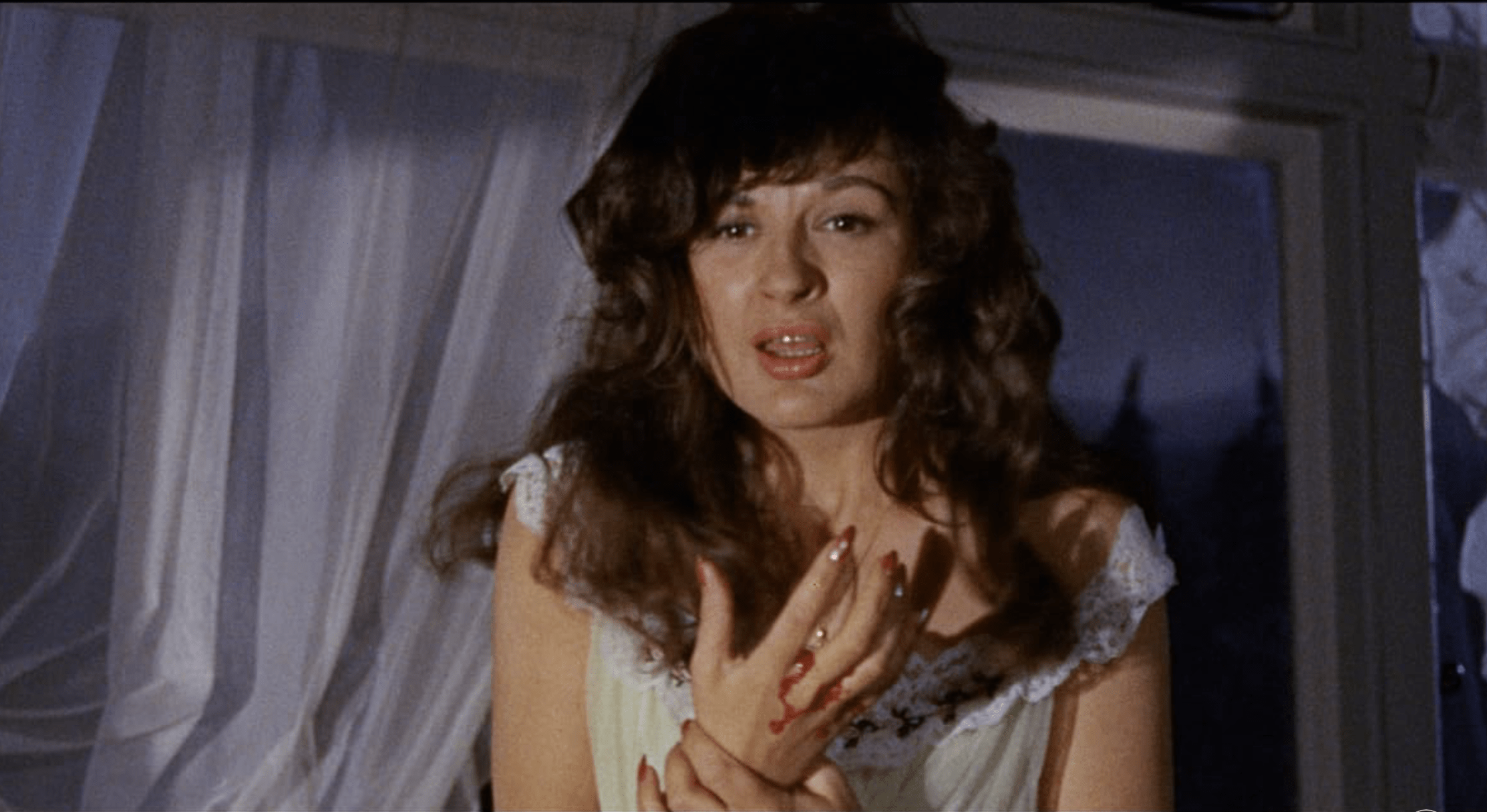
Segment five, “Vampire”, is a fast-paced fall from grace and my favourite part as Donald Sutherland rapidly descends from smitten newlywed to mad, murderous husband in fewer than 15 minutes. This is the best example of what can be done by essentially filming a short story and maintaining that pace and focus, which so often gets diluted in longer form.
There’s a moment at about 78 minutes where Sutherland’s French wife Nicole (played by Jennifer Jayne, pictured) is wearing a white shift, her brown hair loose, stood by the window gazing out longingly into the night and it’s an image that says, ‘Amicus horror film’ without any further explanation needed.
Thou Shalt Not Steal
Which brings us to the central story, “Voodoo”, in which Roy Castle basically plays a version of himself—a wisecracking jazz trumpeter—under the alias “Biff Bailey”. He and his band get the opportunity to have a residency at a club in the West Indies. Which leads to an awful and awkward moment at about minute 43 when Castle attempts the worst white man doing a “West Indian” accent that you’ve ever heard. That part should have been cut, even in 1965. Once at the club in Haiti there’s a comic interlude as the resident local calypso singer turns out to be Stepney boy Kenny Lynch (here called Sammy Coin)—one of the first British black musicians to achieve success in the UK. He had a hit with a cover of Carole King’s “Up on the Roof”. Castle / Bailey becomes obsessed with the local voodoo music, transcribing it with the aim of incorporating into his Soho club set.
There’s a certain amount of uncomfortable exoticism attached to the depiction of the voodoo scenes, set in a clearing in the jungle, women dancing and vocalising lasciviously, the men all bare-chested and wearing large white loincloths.
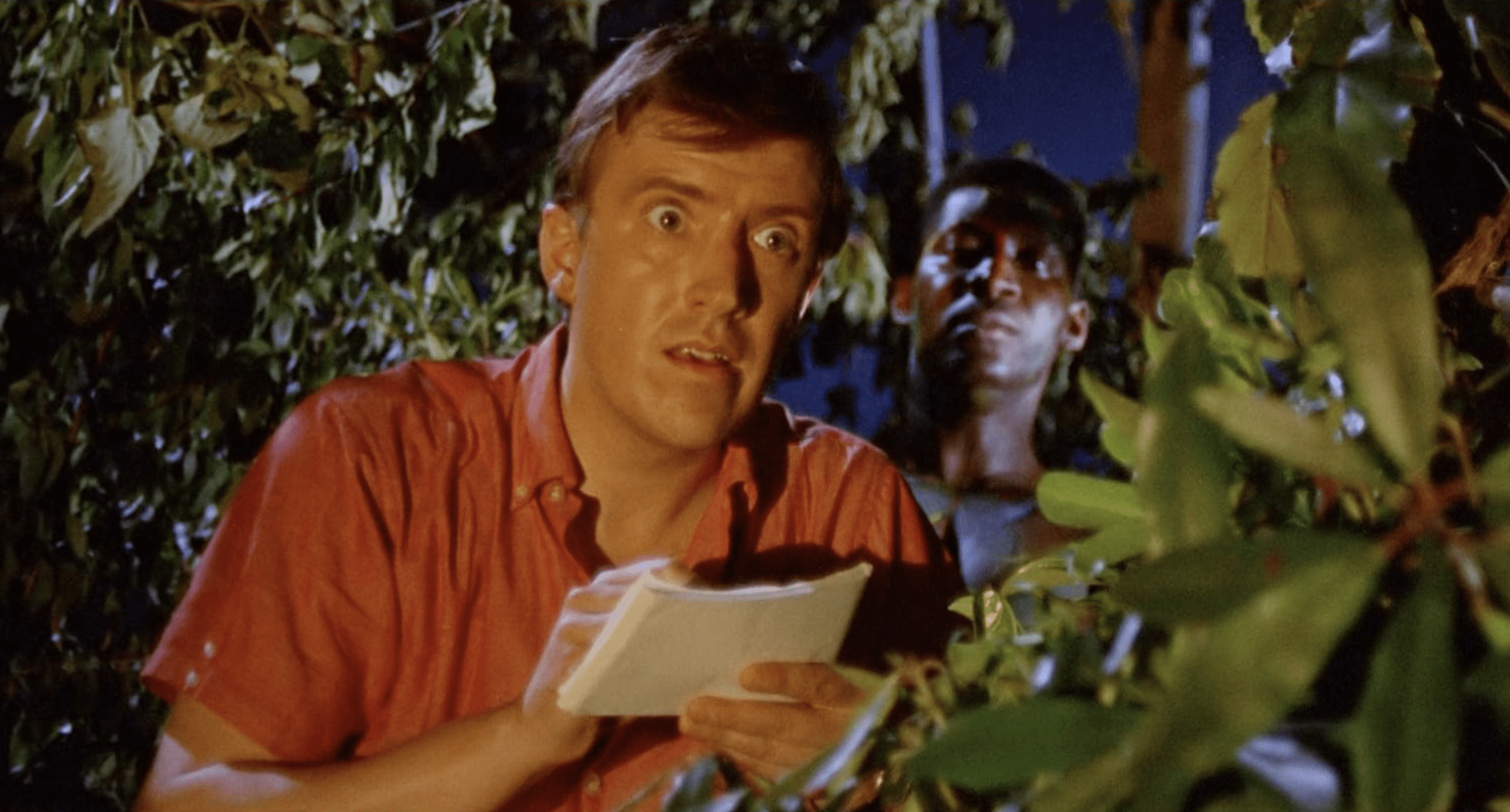
The spying Biff Bailey (pictured) is nabbed and brought before the high priest and warned not to steal the sacred music of the god Dambala. But back in London, Biff feels emboldened to play the music and mock the ancient god… with catastrophic consequences.
That’s how it runs. One can’t go back and change the past and each artwork tends to reflect its time of creation, knowingly or unknowingly. It’s clear that Castle’s character Biff Bailey is in the wrong here and has stolen culturally sacred music for personal gain. And suffers badly because of that. One could even contend that scriptwriter Milton Subotsky was ahead of the game here as the appropriation of black music by white artists became a much more contentious and visibly discussed issue during the 1990s and 2000s. But one might still find the portrayal of apparent nocturnal “voodoo” practices somewhat uncomfortable. As with anything from a different time, watch knowingly is perhaps the best advice.
Future Compendiums
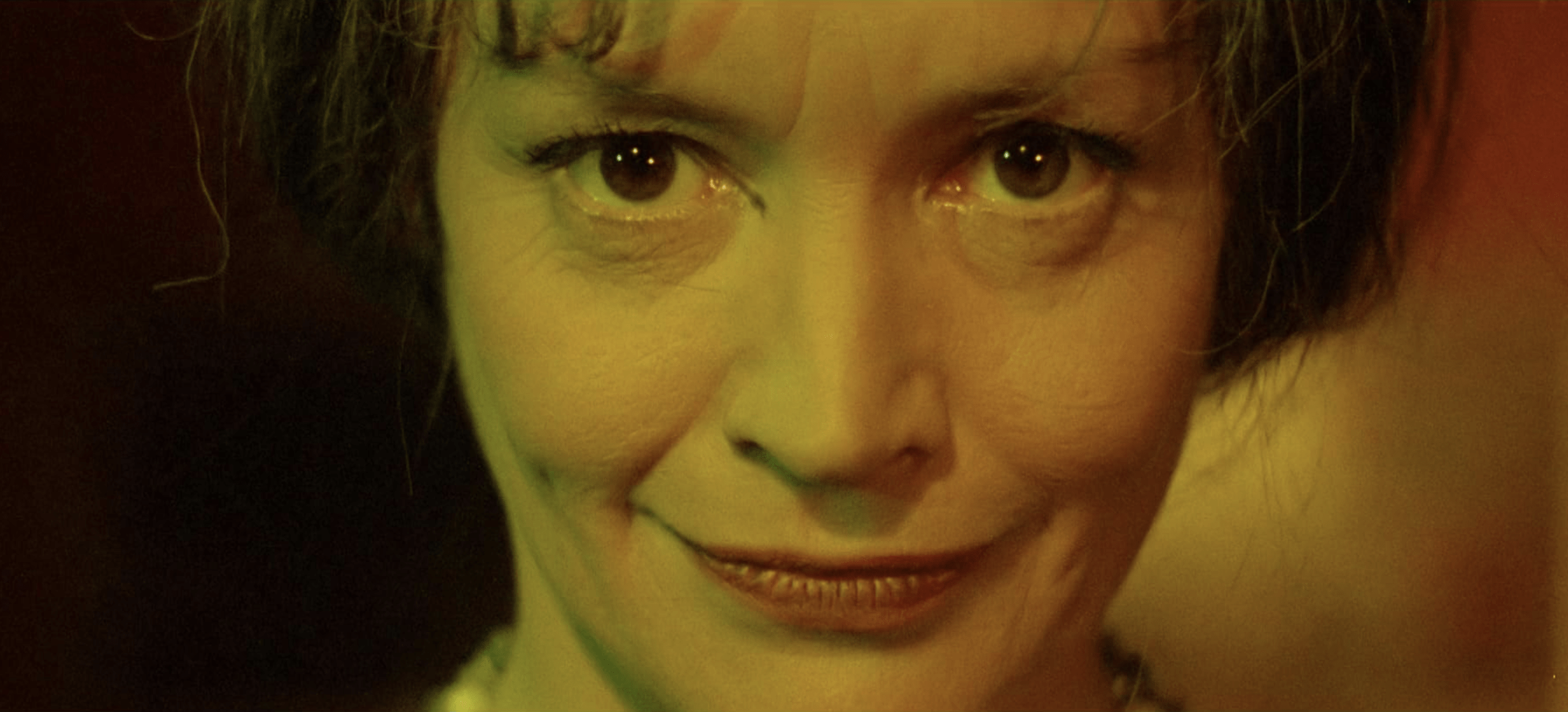
(Pictured: Ursula Howells)
This movie passes an enjoyable hour and a half. The Roy Castle segment hasn’t aged well, as described above, but otherwise the film is cosy and no one will be surprised when Lee’s character asks, “Who are you?” and Cushing/ Dr Terror responds, “Have you not guessed?” before disappearing as the train enters a tunnel (c91m).
I would like to see this style of anthology or compendium film revived—seriously, we’ve done enough sitting in the cinema for three hours whilst just one chunk of “Lord of the Rings” plays out; let’s have a bit of variety. All my stories are available for filmic optioning. Just saying…
Will do a fantasy or SF piece next time, just to keep us all on our toes.
What did you think of Dr Terror’s House of Horrors? Let us know in the comments below ⬇️
Meet the guest poster

4 responses to “Classic Genre Films: Dr Terror’s House of Horrors (1965)”
Ive seen that film several times and it’s always great fun. The Alan Freeman and Christopher Lee tales are my favourites. Great review, as entertaining as the film itself. And yes, please bring back the portmanteau horror film!
Thanks for your response, Terry. Yes, like I said, it would be great to see portmanteau films make a comeback rather than epics or prequels and sequels all the time!!!
Scary stuff, great to revive the old films. Well done, Allen
Thanks very much, Lesley.
Yes, that’s my self-imposed remit – pick out the classics and celebrate them!