The shortlisted works across all 13 categories of the British Fantasy Awards have been announced! Find out who’s in the mix over on our blog. Winners announced at Fantasycon in October.

For all things fantasy, horror, and speculative fiction
-
Announcement:

What Even Is Fantasy As A Subject?
Dr Gabriel Elvery, recently awarded their PhD, continues their series on the Fantastic Academic by looking at what it’s like to study Fantasy.
In the last blog we discussed why someone might be drawn to studying Fantasy on a personal level, and thought about how our relationship with the genre might develop depending on our intellectual proclivities.
…But we didn’t clarify what exactly studying Fantasy is, and took the concept for granted as something we are familiar with as readers, or fans.
This might seem backwards, but acktshuwally I can pretend I had a plan all along by telling you that this is how studying Fantasy feels!
Like any academic topic, studying Fantasy complicates our understanding of it. To avoid cliche iceberg analogies, let’s compare studying Fantasy to growing potatoes. Simple flowers at the top, but pull it up and there are many tubers underneath—connected but separate, some more viable than others. All are improved with salt, olive oil and by air-frying at 200C for 40mins—apologies, that’s just potatoes… I’m hungry.
What I mean to say is that there is no one way to define Fantasy, but the definitions tend to be connected or overlap.
This is perhaps overly philosophical to start with, so let’s start by looking at what studying Fantasy is in practical terms. To keep things simple, we’ll approach this at postgraduate level, in an institution. Undergrads, PhDs and independent scholars need different types of advice, though may be able to apply some of the below.

What Is “Studying Fantasy”?
When I mention “studying Fantasy” in casual conversation, it’s usually assumed that I’m a bard/rogue learning to write stories. That is one route of many. The below pathways are not exhaustive, but here are some common options into Fantasy academia.
Fantasy and creative writing
Studying Creative Writing is practice based. It typically includes workshops with the majority of assessments being practical. This form of study focuses on writing as a craft. Texts are studied from the perspective of writers for writing.
If you are interested in writing Fantasy, be aware that not all institutions have the capacity to support you. It is safest to find a course with dedicated modules, or a department that includes tutors with ‘genre’ expertise, such as at the University of Lancaster.
If you can’t access the expertise you need, you could try writing Fantasy as part of your independent practice on a non-genre focused course. If so, I’d recommend finding a community of practice for support—our very own BFS, for example.
Fantasy literature
You can study Fantasy Literature as a subject as you would study English Literature. This is more theory based: you will be researching, analysing and writing about texts rather than writing them. This kind of course can help develop your academic writing skills and put you in a position to participate in scholarly networks and events. One option is the Fantasy MLitt at the University of Glasgow.
(Photo by Christopher Stites on Unsplash)

Fantasy through other disciplines
If you can’t access a course dedicated to Fantasy, you may be able to study Fantasy when you have the freedom to select reading material and assignments. Examples include programming a Fantasy video game in Computing Science, analysing a Fantasy text in a Comp Lit class, or writing about the cultural impact of Fantasy literature in Sociology. Always seek advice from your tutors, and prepare to work harder to find secondary sources to support your research.
But PLEASE—What Does ‘Fantasy’ Mean?
I know it has taken a lot for us to get here, but an academic’s point is never late, nor is it early. The point arrives precisely when it means to!
To finally address the definition… The definition of Fantasy is not static; it’s contextual, relational, exploratory and functional. Much like the Facebook relationship status of my late teens, the answer is: it’s complicated. Learning about the definition of Fantasy might look like this:

- You’ll come to the topic with preconceptions about what Fantasy is.
- You’ll learn how more experienced scholars define Fantasy and to what end.
- You might practice using these different theories as analytical tools.
- You’ll begin to form your opinions about these theories, learning to interrogate them.
- You’ll eventually form your own evolving, more informed, opinion about what Fantasy is to you. You might agree with a scholar but add critiques, combine different view points, or formulate a functional definition of your own.
If the meta of what Fantasy is doesn’t interest you, that’s ok! Not everyone is an artificer, nor must they be. The most important thing for an early Fantasy scholar is to be able to understand entry-level definitions, to pick one appropriate to your topic, articulate it, and cite sources to back it up.
(Photo by Jeff Finley on Unsplash)
Fantasy Theory for Beginners: An Incomplete Reading List
I had no idea about any of this when I started my journey. It felt like I was starting a triathlon from the bottom of the pool. If you feel similar, allow me to cast ‘water walk’ and help you skim the surface: Below is a short reading list so that if you’d like to dip your toe into the world of Fantasy scholarship you will have a better idea of what you’re getting into than I did!
Fantasy is community
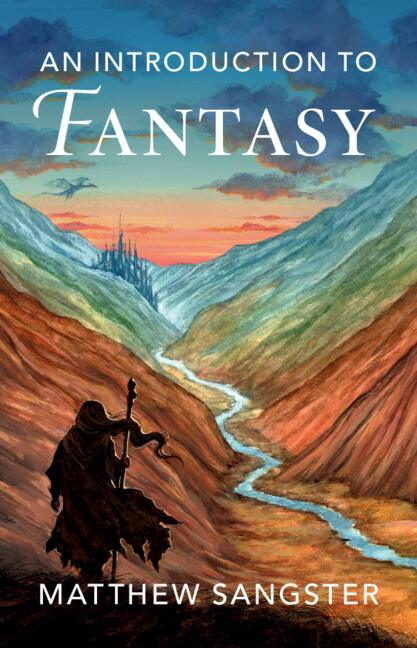
An Introduction to Fantasy, Matthew Sangster, 2023
An excellent starting point to help unpick the complexities of Fantasy. Sangster describes defining Fantasy too prescriptively as a practice that “misses the point,” taking an approach which “sees Fantasy as an assemblage of individuals, groups, cultures and ways of thinking, as well as an ever-growing body of texts and artworks” (p. 432). Sangster’s book approaches the topic with nuance, noting the many complexities and entanglements that conceptualise Fantasy as part of dynamic conversations in multimedia landscapes. This book covers so much ground—including literature, video games and even cosplay—that it’s a great starting point for finding a niche academic thread to pull on.
Fantasy contends with habits of whiteness
Race and Popular Fantasy Literature, Helen Young, 2016
This is a book that you must read before attending any Fantasy conference, lest you become part of the problem rather than the solution. Young’s innovative and important work identifies and critiques the domination of Fantasy by “White bodies, voices, and stories”, illuminating how “that history of domination shapes what can be done, and how easily, by any actor in the genre-culture network” (p.11). Young covers a wide variety of topics including Tolkien, racialised monsters, Urban Fantasy and digital communication. This book also has an excellent example of how to select and justify a definition of Fantasy in a practical way by drawing from literary theory (pp. 4-5).
Fantasy is a linguistic world
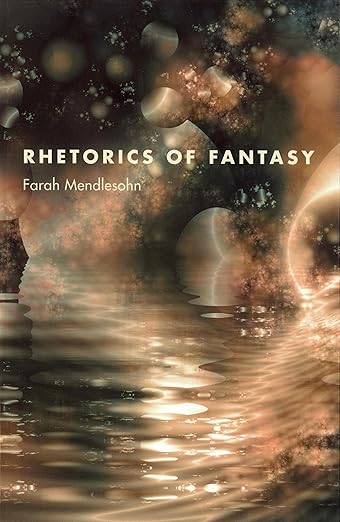
Rhetorics of Fantasy, Farah Mendlesohn, 2008
Mendelsohn is careful to note that this volume does not give definitions of Fantasy, but provides “critical tools” for its analysis, specifically considering the linguistic strategies involved in the “consensual construction of belief” which characterises this kind of fiction (p. xiv). This book provides practical and accessible frameworks as a means of exploring the construction of Fantasy texts, including the categories: “the portal-quest, the immersive, the intrusive, and the liminal” (p. xiv). If you have trouble coming up with topics, all you need to do is choose a category, apply it to an appropriate primary text with a sprinkle of interpretation, and *hey presto* you have an essay! This book is a gift to budding Fantasy students.
Fantasy is a fuzzy set
Strategies of Fantasy, Brian Attebery, 1992
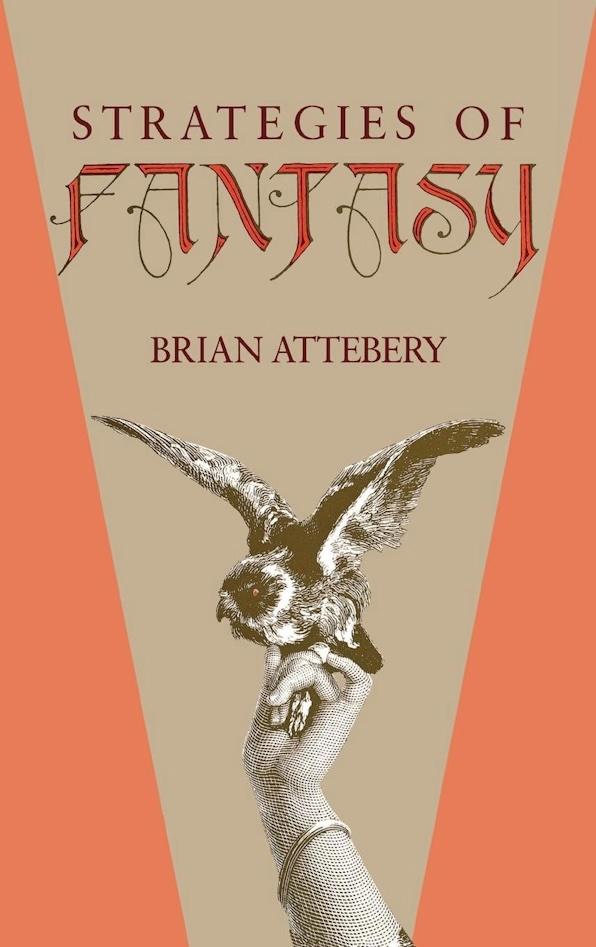
This book is BELOVED by Fantasy students, not only because it’s clear, highly-readable and useful, but also because people ADORE arguing about it. Attebery guides us through various ways of understanding Fantasy as a mode, genre and formula before detailing and critiquing different theoretical approaches. The thing about this book that really gets people going is Attebery’s argument that Fantasy can be characterised as a ‘fuzzy set’, claiming that “the genre of Fantasy is the set of texts that in some way or another resemble The Lord of the Rings” (p. 14). Make of that what you will, but the dude has a point.
Fantasy is any departure from consensus reality
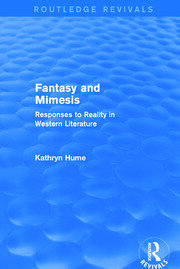
Fantasy and Mimesis, Kathryn Hume, 1984
Hume considers fantasy (note the small ‘f’) as an impulse forming one part of any kind of literature, alongside mimesis. Mimesis mimics reality, Fantasy departs from it. To function, texts generally need both in different ratios. This theory is useful for deconstructing fantasy elements in a text and considering how fantasy is used, why and to what effect. Hume’s work can also be a useful way to study texts that aren’t generally categorised as Fantasy. Furthermore, the book has useful summaries of other definitions presented as diagrams, for those more spatially minded (pp. 9-11, pp.18-19, p. 23).
Join Me In The Halls?
The above is just a small selection and I’m sure I’m missing some really important ones, so let me know in the comments what your faves are. Also, get in touch if this blog ignited any burning questions you’d like me to write about in the future.
Hopefully, this has given you an idea about how to approach defining Fantasy, and a taste of what it means to study it. Should you study it though? That’s a question for another blog…

Meet the guest poster