The shortlisted works across all 13 categories of the British Fantasy Awards have been announced! Find out who’s in the mix over on our blog. Winners announced at Fantasycon in October.
For all things fantasy, horror, and speculative fiction
-
Announcement:
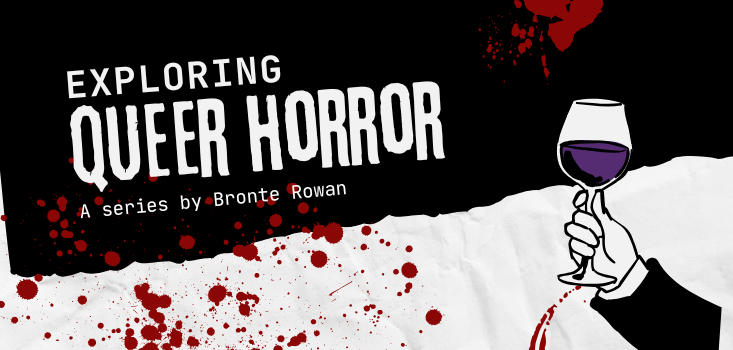
Exploring Queer Horror: Virginia Woolf’s Orlando
In his new essay series on queer horror, Bronte Rowan—gothic scholar and co-chair of the Horror Writers Association’s UK chapter—dives into Virginia Woolf’s 1928 text Orlando, and discovers sexuality, gender and time are fluid—and so are we!

Welcome, everyone. Take a seat in my cozy, queer library. Choose any of the fluffy rainbows to sit on, and we’ll serve you a warm cup of tea while we have a chat about queer speculative fiction.
Last time we met, we talked about the history of queer characters in our favorite genres. Now, we finally get to let our first book guide our little talk!
Ready? Great.
Then open up your copy of Virginia Woolf’s Orlando, published in 1928 to, surprisingly, no backlash – despite its overtly queer themes.
We’ll start with the incredibly powerful first line; there is a lot in there that we need to talk about. Let’s read it aloud together.

“He – for there could be no doubt of his sex, though the fashion of his time tried to disguise it […]”.
Yes – this is going to be utterly queer, and personally, I’m here for it already.
Not only Orlando, but also Marmaduke Bonthrop Shelmerdine, whom Orlando ends up marrying, is ambiguous when it comes to gender. The message here is clear: Love who you want to love.
Even today, the comment section on any social media post about this would be filled with hatred.
So, I asked myself why this didn’t cause a scandal back then.
The sad truth is, LGBTQIA2S+ people are accepted in literature – as long as there’s magic, horror, or any fantastic element that serves as an explanation.
Yes, visibility matters, but at what cost does this come?
It doesn’t matter what marginalized group it is – strong women, successful BIPOC, queer folk – in many stories, we aren’t just characters.
We are the monsters, even if, sometimes, readers root for us.
We, the othered, are amongst those fantasy creatures that have been sending shivers down the spine of readers for centuries – Dracula’s weapon are his fangs, ours is love that many others don’t understand.
Werewolves shift from human into non-human animals, and all of us exist somewhere on a spectrum between male and female that may or may not align with what’s on our birth certificate.
This began a long time ago, when male actors would portray female ones, too, in ancient Greece – be who you want to be, as long as you claim that your deviation from everyday societal norms is declared fictional.
However, transformation in general is a central theme in Woolf’s Orlando, and that’s what makes it work.
Not only is gender fluid, but so are the characters’ attitudes towards life, as well as societal norms that are portrayed in the novel.
In chapter 5, we learn that,
“[…] stealthily and imperceptibly, none marking the exact day or hour of the change, the constitution of England was altered and nobody knew it.”
Everyone in the story changes – even the most mundane, everyday people. What stays the same is Orlando’s name; names have power, and changing one’s name to something one has chosen on their own in order to reflect your true identity is a powerful act in itself.
In the context of the novel, however, I read Orlando’s name not as one that was given at birth, but one that describes this elusive character perfectly – regardless of gender.
These two themes merge into what we, as queer authors and readers, must consider if we want to change the world for the better.
What, as a community of queer people and their allies, do we want for our future generations?
300 years is a long time. It has only been about a quarter of a century since gay marriage was first legalized in any single part of this world.
Then there are the horrendously high crime rates – everywhere in the world, not just in countries where queer rights are supposedly protected.
Any queer person will confirm that going on a date is particularly nerve-wrecking.
Can I hold hands with a person in this place?
Can I kiss them without getting any judging looks, or worse?
This is where Pride comes in. June was Pride month, and part of Pride is visibility. If there is one thing I may ask of you, it is to incorporate books by queer authors, and stories with representation, in your reading.
[Ed note: Bronte did submit this during Pride, but Lauren didn’t publish it in time!]
If you yourself write, don’t assume that every character in your story is straight and, most of all, not all of us queer people look and act the same.
Until we get there, be loud, be proud, and read queer stories.
Book club discussion
In order to get our book club started, I’ll always prepare a set of questions for you – one about your perception of the novel, one about the themes I mention, and one about the historical and/or cultural context of the novel.
- How is queerness incorporated in the narrative without it being made the main character’s central identity trait?
- Orlando is a writer. What message do you believe Orlando’s writing carries about the fluidity of time?
- Let’s end with a fun and easy question – Share a Pride Month memory of yours with us that made an impact! Something funny, something sad; something at a parade, or just something you saw on tv or read about. I’ll share mine in the comments.

Recent reading recommendations
The final section of this column will always be a list of queer fiction I recently read. Here are some queer stories I enjoyed this month.
Theresa Derwin – God’s Vengeance
This was perfect for Pride Month. Theresa herself is bi, and in her dystopian novella, we meet a diverse cast of characters who reflect what society should be – every colour, every hue, of the rainbow. There are some other warnings in there that we should listen to – this is one you’ll have to read yourself.
Tracy Fahey – “I Write Your Name” (published in I Spit Myself Out, Sinister Horror Company, 2021)
How Tracy plays with time in here, jumping between present tense to past tense, perfectly underlines the arguments I made above – time is perhaps as fluid as gender, and we need to anchor ourselves to each other now, so as not to be lost in the waves of bigotry that are approaching the shore of our safe haven.
Eric LaRocca – Wretch: or, The Unbecoming of Porcelain Khaw
I devoured this one. The prose is both sharp and beautiful (think purple prose meets noir writing in the best way possible), and we learn about losses that queer people must live with. Is life fair? No. Does LaRocca’s novel reflect that while also giving us a shimmer of hope? Yes!
Next time, I’ll be talking about queer coding in Shirley Jackson’s The Haunting Of Hill House!
Meet the guest poster