The shortlisted works across all 13 categories of the British Fantasy Awards have been announced! Find out who’s in the mix over on our blog. Winners announced at Fantasycon in October.

For all things fantasy, horror, and speculative fiction
-
Announcement:
An Introduction to Queer Speculative Fiction
Kicking off a new essay series on queer horror, Bronte Rowan—gothic scholar and co-chair of the Horror Writers Association’s UK chapter—looks at the intersection of marginalised identities and dark fiction, and introduces his first text for analysis.
Queer fiction is a broad term for texts written by a marginalised group of people who may not share much more with each other than that, in some way, they do not adhere to the limits imposed by a heteronormative society. As the late Anne Rice stated so aptly, “None of us really changes over time. We only become more fully what we are.”
Unfortunately for many of us, being who we are isn’t always possible for fear of rejection, losing your job, your home, your family, or, in the very worst cases, even our lives.
That’s where literature comes in.
Due to its fantastic nature, speculative fiction has often been neglected by most literary scholars—and whoever it is that decides whether a book is worthy of being added to what is commonly referred to as “the literary canon”.
However, with this column, I shall be analysing how and why people err here, delving into what Joyce Carol Oates calls “that dark, chaotic, unfathomable pool of time” in her stellar, queer, and feminist Gothic novel Bellefleur (1980), which aptly emphasised the importance of freedom. Most of all, I shall also be dealing with the simply questions of who?, and what?
Closer to reality than you think
It is true that, at first glance, speculative fiction is the genre that is the furthest from reality of them all—but then, Margaret Atwood’s The Handmaid’s Tale (1985) has now moved to the “current events” shelf. And while we might never be rescued by a dashing prince (those of us who want to can hope!), or fall through a mirror and end up in an upside-down world (not too far from reality at this point, though), there are aspects of speculative fiction that anchor it to reality more so than any other genre. One must merely learn to correctly interpret the messages embedded in those narratives.
Take, for example, vampires. They’ve always been queer—scholars just rarely admitted that fact—and even Dracula (1897) has queer underthemes. When LeFanu’s Carmilla (1871-72) was published, it was only permitted to keep the sapphic themes because Carmilla was seen as a monster.
Drawing on that, Djuna Barnes depicted her queer people as grotesque in Nightwood (1936), and this theme went on for a long time—until in the second half of the 20th century, when a new wave of speculative fiction hit the market, and things slowly began to change. Whether Shirley Jackson’s characters in The Haunting of Hill House (1959) are queer coded is no longer an easily disputed theory, and that vampires do not care about gender is an acknowledged fact. In 1977, with Angela Carter’s The Passion of New Eve, we moved into gender-defying narratives.
Most of all, we must not forget about the often neglected BIPOC texts, such as Octavia Butler’s Fledgling (2005), in which being “different” is what gives you power, and romantic relationships are so ahead of their time that, even in 2026, society hasn’t arrived there just yet.
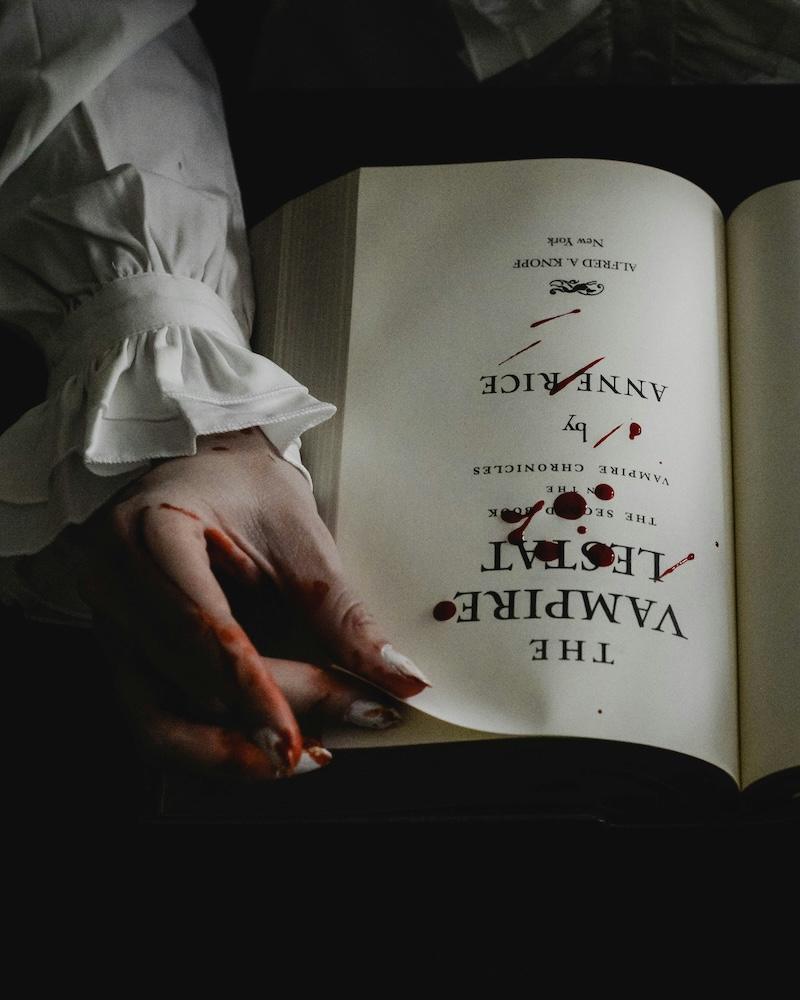
(Photo by Loren Cutler on Unsplash)
It’s not just queer characters
The fact that many classic horror authors are or were queer themselves gets overlooked even more often. Susan Hill, later in her life, entered a relationship with a woman; Anne Rice didn’t believe in gender; and we acknowledge it with Oscar Wilde only because he received a long prison sentence for it.

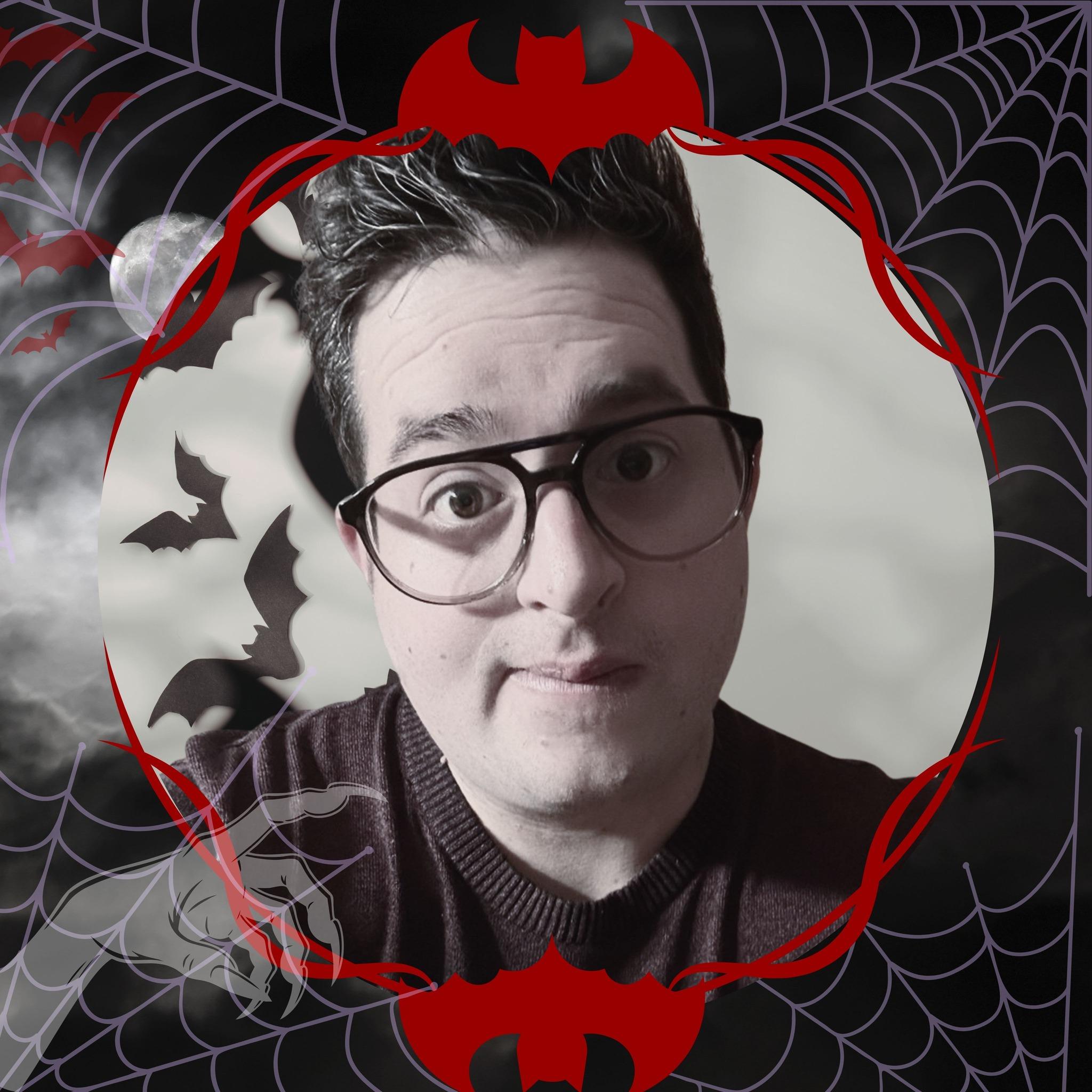
In many parts of the world, even in what we consider to be our supposedly advanced civilisation, people still have to hide who they are, and I’m glad that fiction gives them the freedom to explore. Today we have writers like Eric LaRocca (pictured), Gwendolyn Kiste, William Joseph Martin, and so many others paving the way for a new generation of unapologetically queer authors. It is in the footsteps of all these authors throughout history, from ancient times to the present, that I strive to follow both as a reader and a writer.
An invitation and a call to arms
So before we start with our journey through the history of queer speculative fiction, let me introduce myself.
I read, write, and live Gothic fiction. To me, like so many others, it has always been an outlet for emotions you’re not supposed to have, or daydreams that others would consider nightmares. In my fiction, I aim to give a voice to the othered, for no one deserves to be silenced. I want to write about what I’ve always wanted to read. To tie in with that, I am thankful to the British Fantasy Society for allowing me to take you along with me on my journey through the history of queer fiction.
One of the earliest known instances of queer love can be found in ancient Greece. Where Sappho reaches through time and space to apply her name the love between two women millenia later, Achilles’s love story is revived in that time and space, not too long after people were jailed for loving the wrong person. In the middle of a time where people have to think twice before revealing their true identity, that’s where you’ll find this column.
We will be reading one book per month, and I invite you to discuss it with me in the comment section. Please, do get in touch with suggestions, let me know if you’d like to be interviewed, or if you’ve got an upcoming release. We will be starting our journey with a classic—first, come along as I analyse Virginia Woolf’s Orlando: A Biography (1928), with a protagonist who not only moves through time and space, but also through gender.
And finally, a note that I’m always learning. If anywhere in this text you find language or a point of view that could be made more inclusive, please reach out to me.
I am looking forward to writing for you, reading with you, and to sharing a safe space in which we can exchange ideas, thoughts, and great recommendations with each other!
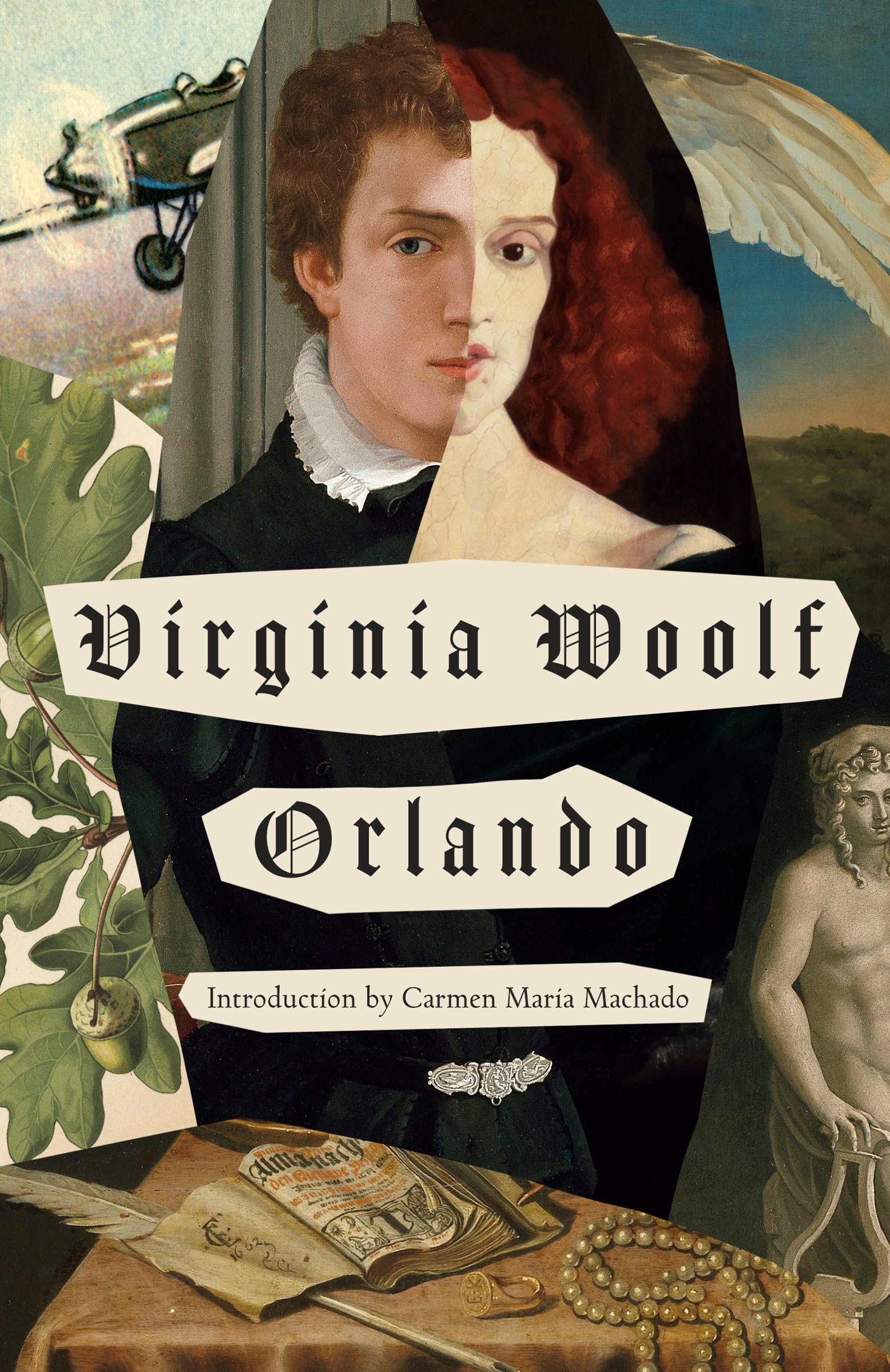
To finish off with another quote, one by an iconic queer ally, Dolly Parton:“Find out who you are, and do it on purpose.”
Meet the guest poster
One response to “An Introduction to Queer Speculative Fiction”
This is a fantastic piece. Thanks for starting this off. I assume Clive Barker and Billy Martin will appear but obviously loads more. I reas Carmilla as a 17 year old and actually did my BA Dissertation on Nineteenth Century Horror and Sexualities. The most they would allow as a title in the ’90s. But it was great to look at the queerness in Dracula, Carmilla, Jekyll and Hide and … Can’t remember the other one lol. If we could get advance notice of the texts I’d love to do a read along