The winners of the British Fantasy Awards 2026 were announced at Fantasycon. Find out all the details on our blog.

For all things fantasy, horror, and speculative fiction
-
Announcement:

Folk Horror: Community and Authority, Part 1
As part of her ongoing series examining the elements of folk horror, Stephanie Ellis considers the role a community plays in the genre’s success (or otherwise).
Central to folk horror are the people—the ‘folk’—whether they be of hamlet, village or similar. Sometimes, the members take central stage; sometimes, they appear as a shadowy crowd, a threatening presence to the story’s protagonist. In some instances, the head of this hierarchy tends to be traditional.
Take for instance the villages seen in the Unholy Trinity of Folk Horror: Lavenham in The Witchfinder General; the village on Summerisle in The Wicker Man, and Chapel Folding in Blood on Satan’s Claw. Villages like Lavenham and Chapel Folding place authority in the hands of the local lord of the manor and also in the church. Summerisle, an island setting, is defined by the rules of the local lord/laird of the castle and the pagan rites he has instigated. He is the ultimate conductor of ceremonies.

Patriarchy rules the folk
What this small sample shows is the relatively narrow—and patriarchal—social structure that exists in these places. Status is fed from traditional authority via:
- Land ownership
- Religion
- Patriarchy
Authority figures often personify the conflict within the story. They are what the incomer or rebel will find themselves pitted against. This figure might be overt, i.e. central to the tale, or they might simply lurk in the background. But there is always this sense in a folk horror of someone or ‘something’ pulling the strings, even undermining and subverting that more obvious authority.
In Blood on Satan’s Claw, which is set during the turbulent years of 17th Century England, authority is an extremely important aspect of the story and is clearly defined. The Judge is in overall charge and is viewed with respect by the villagers…
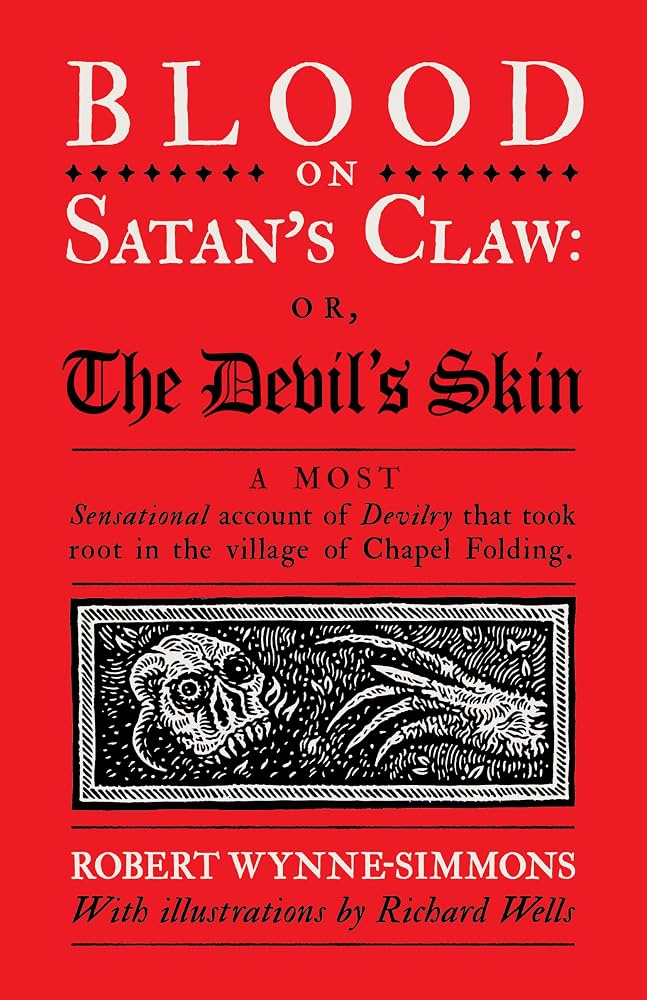
“Then suddenly … the Judge announced that … must leave straight away. Although they were all afraid of him, the villagers did not want him to go. In their eyes their own Squire and magistrate was a poor deputy to such a man. The Judge had stature. Middleton did not.”
Blood on Satan’s Claw, p. 86

So here is the Judge, then the squire—but there is also the local vicar, somewhat ineffective and despised by the children and villagers for his perceived weakness.
Religion provides the structure
(Photo by Mikita Karasiou on Unsplash)
The challenge to authority in this story comes from the conflict with the Devil, his ‘taking’ of Angel Blake and the subsequent murders and disappearances carried out at his behest. The women—even the young girl, Angel—are pawns, and it is the men who save them. As the village descends into chaos with wild accusations of witchcraft against the innocent, it is for the Judge to restore order, rid the village of its curse:
“The Judge came forward and placed himself in front of the Currell Stone, where he could clearly be seen by those in the chapel. He was not to be put off by the hideous growl from within. A torch was lit, and the great cross of the Crusader’s Sword was revealed. The superstitious folk inside the chapel were for a moment taken aback by the appearance of this powerful Christian symbol and let out a cry. Their terror was what the Judge counted on.”
Blood on Satan’s Claw, p. 208
Whilst the story focusses on confronting and destroying evil, little power is given to the traditional authority figure of the church. Reverend Fallowfield is manipulated and portrayed as weak and ineffectual:
“He had failed them. He hid his Bible and prayer book in the bag he brought with him, removed every vestige of clothing that might show him to be a priest, and fled the place.”
Blood on Satan’s Claw, p. 144
One aspect of the ‘livings’ found in Britain, the allocation of a parish to a minister, is that historically it was often the gift of a landowner or aristocrat. Such livings might be given to youngest sons or people who could buy them. Belief often had little to do with the incumbent taking up their position. It was a practise to be abused, bought and sold, and so it is quite easy to believe in such pathetic specimens of religion. In this instance, his name of ‘Fallowfield’ is more than apt.
A gender divide sets fires
Also set in this period, the Witchfinder General, with its loose storyline of the very real actions of witchfinder Matthew Hopkins, condemns women as witches too; he and his assistant abuse their position of authority to rape and assault Sara.
Patriarchal rules are also seen in Shirley Jackson’s short story, ‘The Lottery’, set in a small village of 300 souls. At the ‘gathering’, the men arrive first, women follow. A local businessman runs the event, although “much of the ritual had been forgotten or discarded”, everything reduced to a simple, mundane occasion with a shocking consequence.
Evidence of the patriarchal nature of this event is clear when one of the men is unable to attend and draw the ticket on behalf of his family:

“Who’s drawing for him?”
The Lottery, by Shirley Jackson
“Me, I guess,” a woman said, and Mr Summers turned to look at her.
“Wife draws for her husband,” Mr Summers said. “Don’t you have a grown boy to do it for you, Janey?”
“Horace’s not sixteen yet,” Mrs Dunbar said regretfully. “Guess I gotta fill in for the old man this year.”
There is no overarching position of power, authority is simply with the men—normal, everyday husbands, brothers, sons—and in a way the mundanity of the steps of the ritual, the normality of the people, makes this a truly horrifying story.
Authority is to be respected—and feared
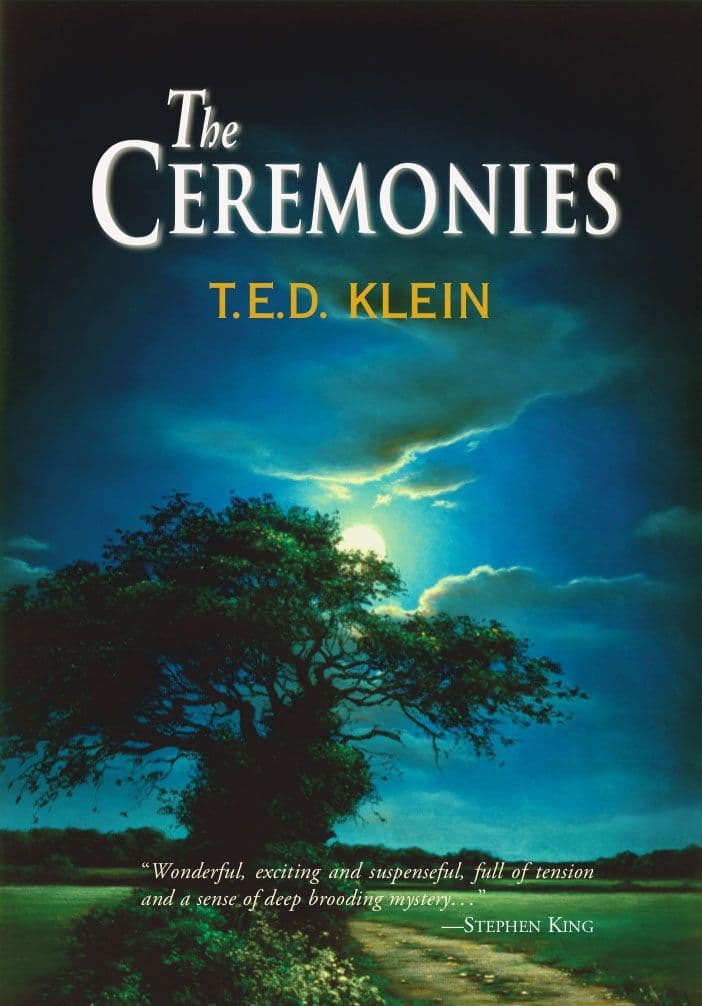
In T.E.D Klein’s The Ceremonies, the farming community of Gilead are members of a fundamentalist sect, the Brethren of the Redeemer. The people are farmers, working the land with their hands as much as machinery. The Poroths are a young farming couple in this sect who take in an outsider, Jeremy Freirs, to earn some money. Sarr Poroth was “a farmer, a tiller of the earth, a toiler in the vineyards of the Lord. It was the one truly worthy occupation he knew of, in God’s eyes and his own, offering a life of piety and independence, a life close to nature.”
And as with ‘The Lottery’, the patriarchal nature comes through from this religious view. When Sarr’s wife, Deborah speaks out, this comment is made to her husband:
‘The Holy Spirit’s in her, we all know it is, but there’s still much she’ll have to be taught.”
The Ceremonies, by T.E.D Klein
“Don’t worry, Brother Joram. I’ll teach her to weep.”
Do the women have any say in the matter? There are some stories with a matriarchal society, and I’ll look at some of these next time.
Read the other blogs from Stephanie Ellis’s folk horror series:
Meet the guest poster