The shortlisted works across all 13 categories of the British Fantasy Awards have been announced! Find out who’s in the mix over on our blog. Winners announced at Fantasycon in October.

For all things fantasy, horror, and speculative fiction
-
Announcement:
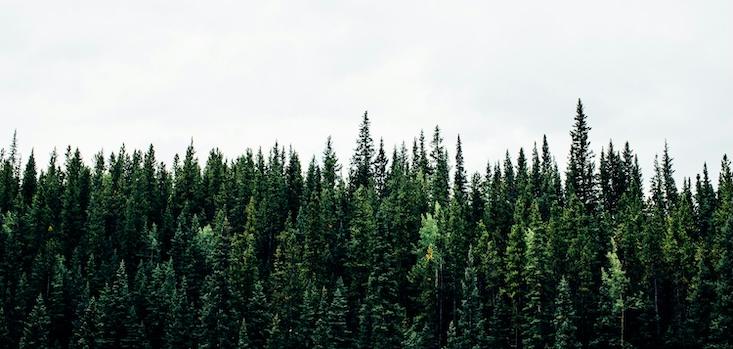
Folk Horror: Into the Woods
As part of her ongoing series examining the elements of folk horror, Stephanie Ellis has us talking to trees. What is hiding in the sacred groves, and where might it be leading you?
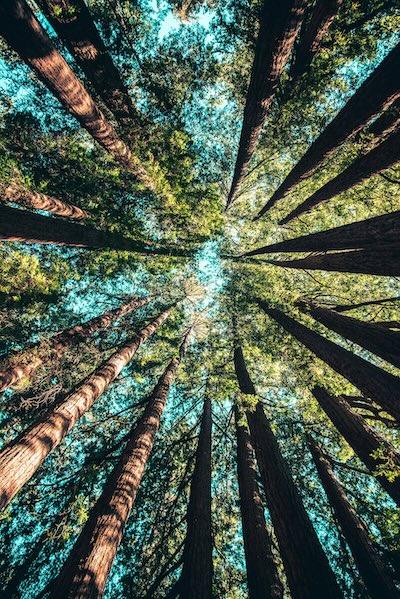
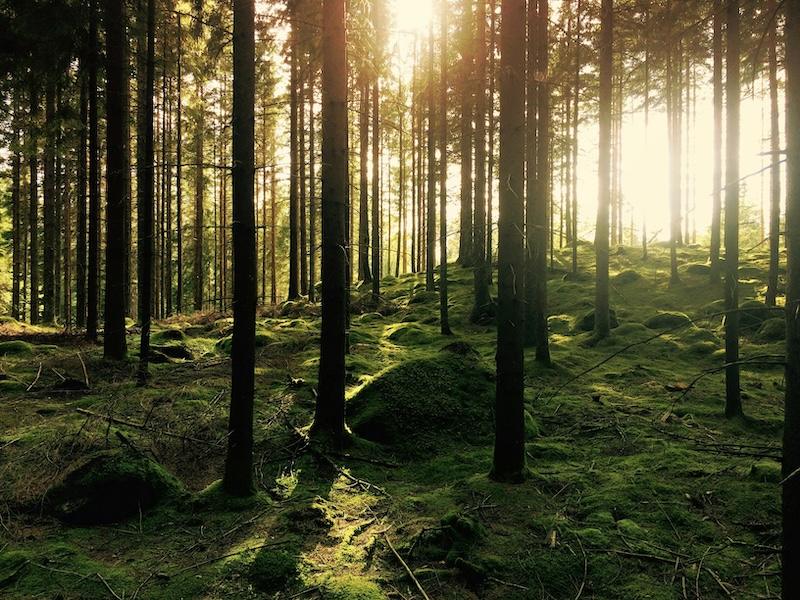
This green and pleasant land—I use the term loosely considering that at the time of writing, it has been yet another day of torrential rain in Wrexham—was once pretty much covered with woods and forests. Their inhabitants, from tree to plant to creature, its glades and boundaries have featured in everything from ancient ritual and belief systems to evolved folklore and modern mental health initiatives.
Sacred groves were supposedly sites of worship for the druids. Pliny the Elder (c. AD 24/25) recorded their lore in his works on natural history, equating them with the leaders of religious ceremony and magicians when in reality they were probably just practising folk medicine (1).
(Photo by Casey Horner on Unsplash)
Central to Norse mythology is the world tree, Yggdrasil: a giant ash running through the Nine Worlds, from the world of the Aesir to the cold of Niflheim. The irrepressible Frazer’s The Golden Bough (2) traces the ancient worship of trees down to the place of the Maypole in folk custom. The woods are home to the myth of Pan, the Green Man and Herne the Hunter, to legends of almost mystical outlaws such as Robin Hood and to the warnings of the Brother’s Grimm. It is no surprise that as a place which often marks a boundary, and also hides much, it induces isolation and so has become a favourite setting for many a folk horror writer to explore.
The sense of the woods being a border, a way to somewhere ‘other’ is shown in Arthur Machen’s The White People with its curious book recounting how the young writer goes on a walk and finds herself in a ‘dark wood of creeping thorns’ going ‘on and on in that dark place’ until she comes out to a bare place of stones and hills. The woods have allowed her to step into another world where she meets ‘the beautiful white people’ (3). The Village (M. Night Shyamalan, 2004) also includes an explicit representation of this border as the village in question is surrounded on all sides by a forest in which terrifying creatures are believed to reside.
Isolation breeds folk stories
Jug Face (Chad Crawford Kinkle, 2013) takes place in an isolated backwoods setting where the community worships a creature in a pit which has healing powers. In return for this, a sacrifice is taken, the person chosen if their face appears on the jugs made by Dawai, a form of lottery if you like. It’s a film which appears to have flown under the folk horror radar somewhat but I would recommend. More known for its tree-bound setting is Adam Nevill’s The Ritual, with its intrepid hikers traversing a vast Scandinavian forest where naturally they get lost. And of course they find an isolated old house which in turn leads to them becoming caught up in an ancient ritual. Although I have the book, I remember the sweeping cinematography of the film which showed the extent of the forest through which they trekked. It is another world entirely to the civilisation left behind.
(Photo by Zoltan Tasi on Unsplash)
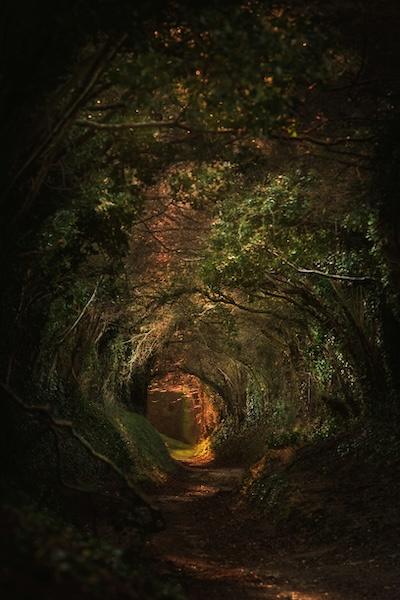
The isolating aspect continues in Algernon Blackwood’s “Ancient Lights”. A surveyor takes a shortcut through a copse which the owner wants cut down, upon entry “the wind ceased shouting and a stillness dropped upon the world”. He gets lost on what should be a quick walk and the wood becomes a creature which torments him, changing paths, closing in. He learns after it is known as the Fairy Wood (4).
Likewise, “The House in the Wood” by H.F.W. Tatham. Here the wood is ‘forbidden ground’ to a boy staying nearby, but the lad is tempted in by a mysterious figure. The woods bring distance to normality, ‘the cottage, and his grandfather, and all the country that lay outside the wood, appeared to him to be very far away, and even in a sense unreal if not non-existent’ (5). Needless to say, his journey into the woods leads him into danger. It is clear the boy had paid little heed to the warnings in Grimm’s Fairy Tales. My novel, The Woodcutter, takes the story of Little Red Riding Hood and twists it with its legendary Woodcutter who makes grisly offerings to an ancient oak.
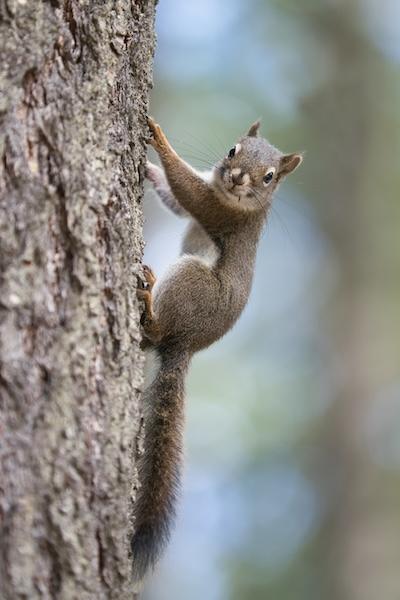
LJ McMenemy’s heroine is likewise tempted into the woods in the short story “No One Knows the Old Ways Anymore and It Will Be the End of Everything”. Here, a squirrel lures her on, deeper into the forest whose trees name themselves to her until she comes, eventually, to an ancient oak. All sense of time is suspended as the trees explore her mind for any memory of the ritual they need her to perform, ‘the knowledge necessary to free the spirits and set them loose on this world in need’ (6). There is a nod here to those earlier vague mentions of druidic ceremony and tree worship, whilst the squirrel reminds me of Ratatoskr, who runs up and down Yggdrasil as a messenger.
(Photo by Chandler Cruttenden on Unsplash)
Choose your tree species carefully
Then there is the lore associated with individual tree species. Many trees have links with witchcraft, both protective and occult, for example uncut holly in hedges prevents witches from gathering in fields beyond it and Willow, too, is thought to repel them (7). There is also the story of the Oak King and the Holly King and their battle for supremacy, not as old as you’d think, but entertaining nonetheless. I have used this piece of folklore as part of my new folk horror, Mother’s Night (Rise of the Hare Witch), with the battle becoming part of a Yule ritual in typical Five Turns World style. Trees are always important to me in both reading and writing folk horror. With so much folkloric history associated with the trees, they are perfectly situated not just to isolate, but to bleed into belief and ritual. Set your story in a wood or involve it in some way and I’ll read it.
The wood is my favourite place to walk with its muffled sound, the gentle light, the peacefulness. And yet I can see their darkness too. The shapes they make, the faces that appear in the bark, the strange rustlings heard, their originators unseen, the fading light. And the sense of time. To meet an ancient tree is to feel as if you have stepped beyond the present, been cut off from all else. Wander alone in a wood and your isolation is complete. There’s an outline ahead, a cottage? No, just a ruin, but a figure moves …
References
- Blood and Mistletoe, Ronald Hutton
- The Golden Bough, James George Frazer
- The White People, Arthur Machen
- The Mammoth Book of Folk Horror, ed. Stephen Jones
- Wildwood, Tales of Terror & Transformation from the Forest, ed. William P. Simmons
- Hiding Under the Leaves, ed, Donna Scott
- Witch’s Forest, Sandra Lawrence
Read the other blogs from Stephanie Ellis’s folk horror series:
Meet the guest poster