The shortlisted works across all 13 categories of the British Fantasy Awards have been announced! Find out who’s in the mix over on our blog. Winners announced at Fantasycon in October.
For all things fantasy, horror, and speculative fiction
-
Announcement:
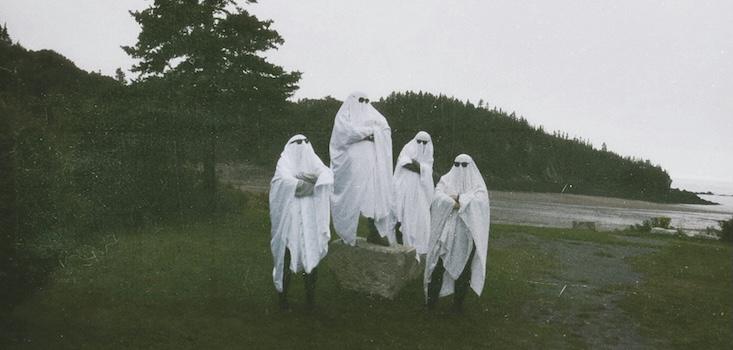
Ghosts, Workshops & Writing Inspiration: The UK Ghost Story Festival
Nicolette M. Ward reports from The Quad in Derby, recounting her weekend at the UK Ghost Story Festival last month
A crowd gathers in Derby’s QUAD building, clutching coffee, notebooks, and tote bags full of books. Conversations drift between ghost lore, writing advice, and the occasional vampire reference.
It can only mean one thing: the UK Ghost Story Festival has returned.
Visiting the Ghost Story Festival in Derby is a bit like meeting an old friend. You know roughly what to expect, but there are always surprises waiting—new stories, new ideas, and perhaps a few unexpected ghosts. That sense of anticipation is part of the joy.
This year was my third visit to the festival, and it was as enjoyable as ever. I’m not entirely sure where I first heard about it; it may have been one of the last things I saw on Twitter before leaving that particular corner of the internet behind for good. In previous years the festival has taken place at Derby’s excellent Museum of Making, which is worth visiting even if you’re not attending the festival itself. This year, however, the event returned to QUAD, a venue that long-time attendees assured me was its original home.
I usually buy a weekend ticket and then spend an agonising amount of time deciding which of the many workshops, talks, and panels I want to attend. It’s a wonderfully difficult problem to have. The range of events reflects the care that organiser Alex Davis puts into ensuring there is something for everyone.
The festival programme also includes events outside the main venues, such as organised walks around Derby exploring local ghost lore. Unfortunately, mobility issues mean these aren’t something I can personally take part in, but I’m reliably informed they’re excellent.
I like to make a long weekend of it by arriving on Thursday and leaving on Monday. It makes the train journey home far easier than attempting to travel on a Sunday, when services can be… unpredictable.
This year I booked myself onto fifteen events. I could easily have attended more, but I also wanted to leave time to relax, eat, and do a little writing of my own—some of it inspired by ideas that emerged during the workshops.
A new addition this year was Dracula’s Bazaar, which ran throughout the weekend. Sensibly, I avoided it until Sunday so that I didn’t spend all my money before reaching the book stall. I showed impressive restraint this year: only a few pieces of jewellery and three books made it home with me.
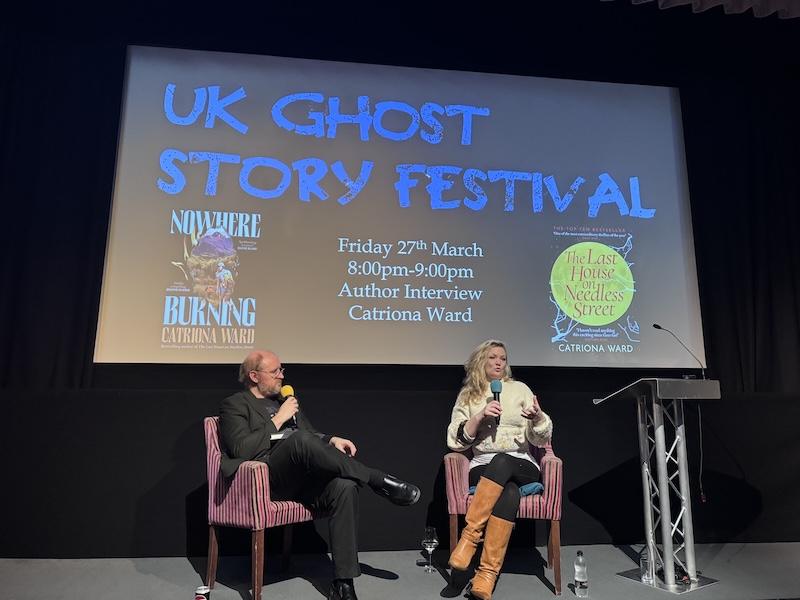
I enjoyed everything I attended, but a few highlights stand out.
Dan Webber’s talk, Queer Reflections of Dracula, was my first event of the festival and a perfect way to start the weekend. I’ve always had a soft spot for vampire stories, but until this talk I didn’t know much about Hamilton Deane, whose name I’d heard mentioned at the festival in previous years.
As Dan explained, Derby has an important connection to Dracula as the site of the world premiere of the first authorised stage adaptation on 15 May 1924. Written by Hamilton Deane, this production established the iconic image of the elegant, caped vampire that remains familiar today.
The talk also produced some excellent viewing recommendations for future writing retreats, including Gayracula and Love Bites (1988). Dan also made a surprisingly convincing argument that the “sweet transvestites from transsexual Transylvania” in The Rocky Horror Picture Show could be interpreted as vampires. It’s certainly a theory I’m willing to entertain.
Saturday began with a workshop from Kristina Adams titled Balancing the Power of Three: Plot, Character, and Worldbuilding. I have a soft spot for anything that references Charmed, so the title alone had already won me over.
Kristina also writes as K. C. Adams, author of the Afterlife Calls series, which is set in and around Nottingham—my hometown—so I couldn’t resist picking up the first book, The Ghost’s Call, which will be accompanying me on my next writing break.
One of the key points Kristina made during the workshop was that “people don’t remember plot—they remember what they connect with.” That idea resonated strongly with me. Worldbuilding has always been one of my favourite aspects of writing, though I’ll admit I sometimes get so lost in it that I forget to actually write the story itself. The workshop provided some useful strategies for balancing those elements and left me with several new ideas.
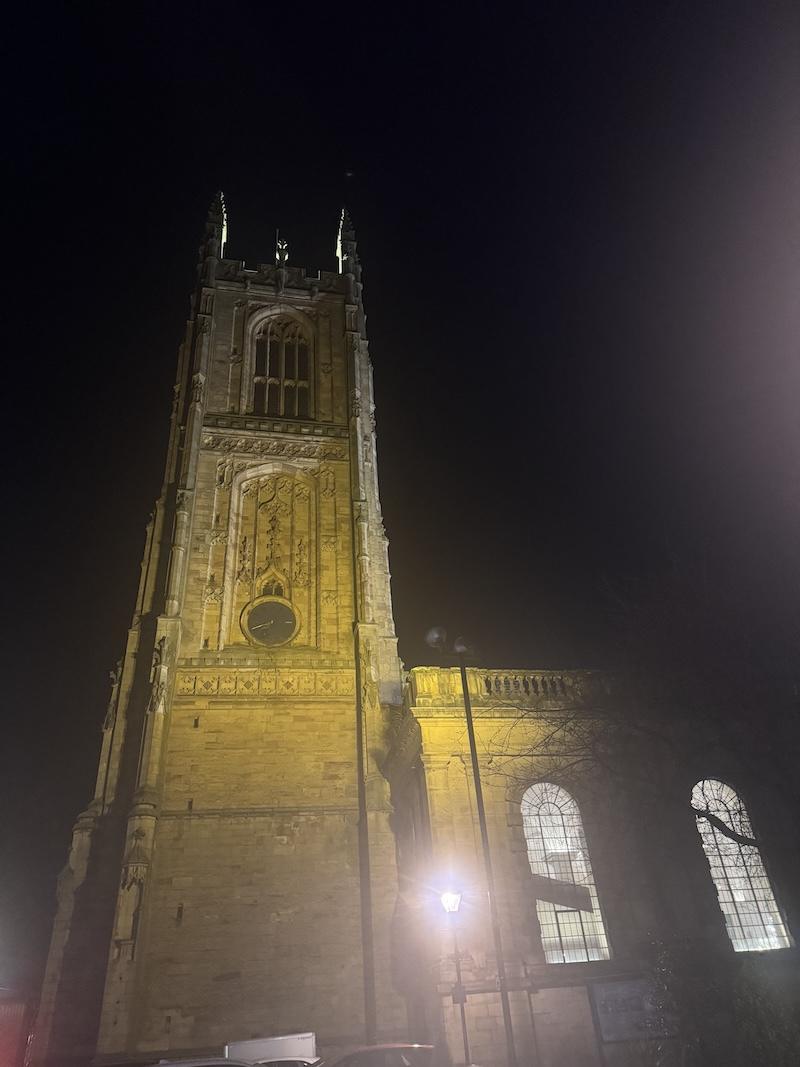
(Image: Derby Cathedral in the misty evening)
My final highlight was Alex Davis’s workshop, Ghosts of the Future, which I attended on Sunday. I try to attend at least one of Alex’s workshops whenever I come to the festival, and they are always inventive.
This session explored how ghost stories might evolve in a future shaped by new technologies and forms of storytelling. Alex posed some fascinating questions to the group: could aliens or other non-human beings be ghosts? Could ghosts interact with or influence technology?
We were given a series of futuristic images and asked to choose one as inspiration for a short piece of writing. First we described what we saw, then we wrote from the perspective of the ghost, and finally from the perspective of the living person encountering it.
My own piece took an unexpected turn, featuring a city that resembled an elven forest from legend, the spirit of a being named Qui-Song who no longer recognised the transformed landscape around them, and a character called Eleanor who crossed the grass using tentacles as she made her way to a pool where she planned to fish.
Not exactly what I expected to write at a ghost festival, but that’s part of the magic of the event. The festival rarely gives you exactly what you expect, and that’s precisely why it’s so enjoyable.
In the end, though, it’s not just the workshops, talks, or panels that make the UK Ghost Story Festival special. More than anything, it’s the people.
Alex Davis, who organises the festival each year, the volunteers who help it run smoothly, the authors and creatives who share their work, and the attendees who come together to celebrate ghost stories all contribute to the atmosphere.
For me, the festival is many things: a chance to learn, to write, to meet friends old and new, and to spend a weekend immersed in the strange and supernatural.
And like any good friend, it’s something I’m always happy to visit again.
If you enjoy ghost stories, writing workshops, and spending time with fellow lovers of the strange and supernatural, the UK Ghost Story Festival is well worth a visit.
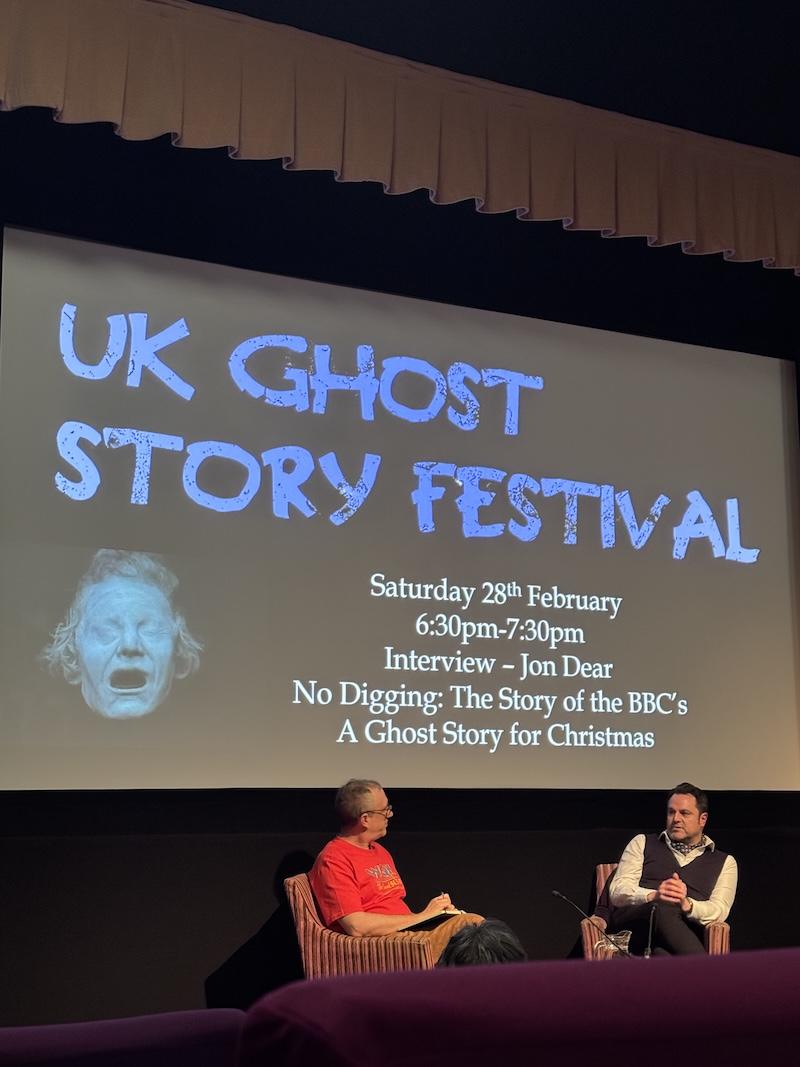
(Image: film and TV historian Jon Dear is interviewed by Mark Norman)
Meet the guest poster