The shortlisted works across all 13 categories of the British Fantasy Awards have been announced! Find out who’s in the mix over on our blog. Winners announced at Fantasycon in October.
For all things fantasy, horror, and speculative fiction
-
Announcement:
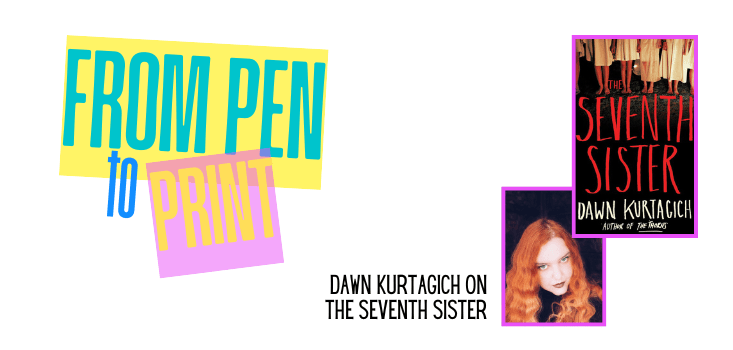
From Pen to Print: Dawn Kurtagich on The Seventh Sister
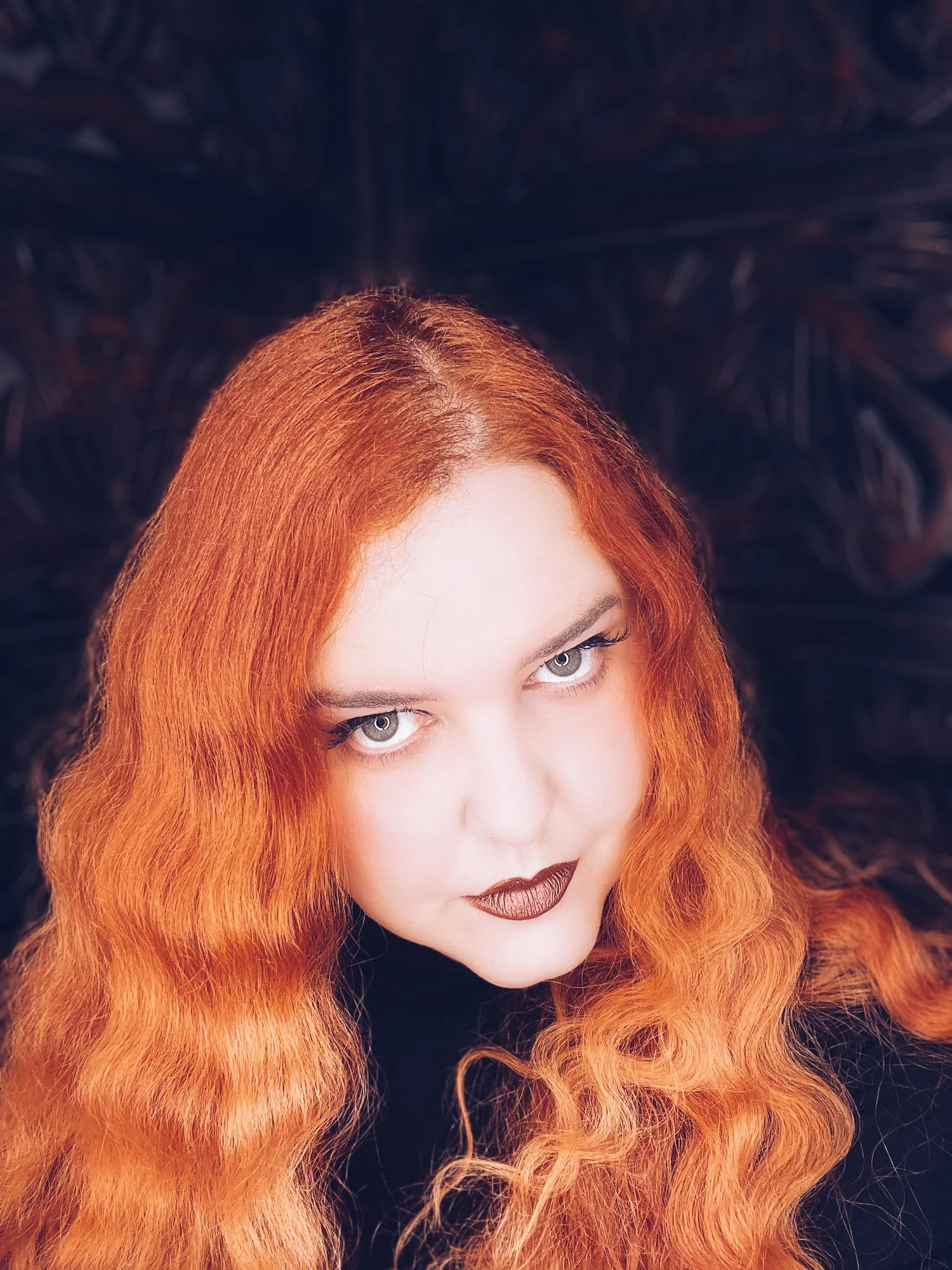
Though she bounced into the horror scene through YA, disabled Wales-based author Dawn Kurtagich is well and truly making her name in the psychological gothic these days. With her latest, The Seventh Sister, marking a foray into folk horror, she talks us through her process.
Name: Dawn Kurtagich (she/her)
Based in: North Wales
What genres/subgenres are you drawn to?
Horror, Fantasy, Literary—almost all subgenres there-of. Particular favourites in horror: supernatural, gothic, folk and literary horror.
Is writing your full-time focus, or do you have a day job as well? What do you do?
I am a full-time, disabled author.
The Book: From Pen to Print
What was the genesis of this book? Where did you get the idea from?
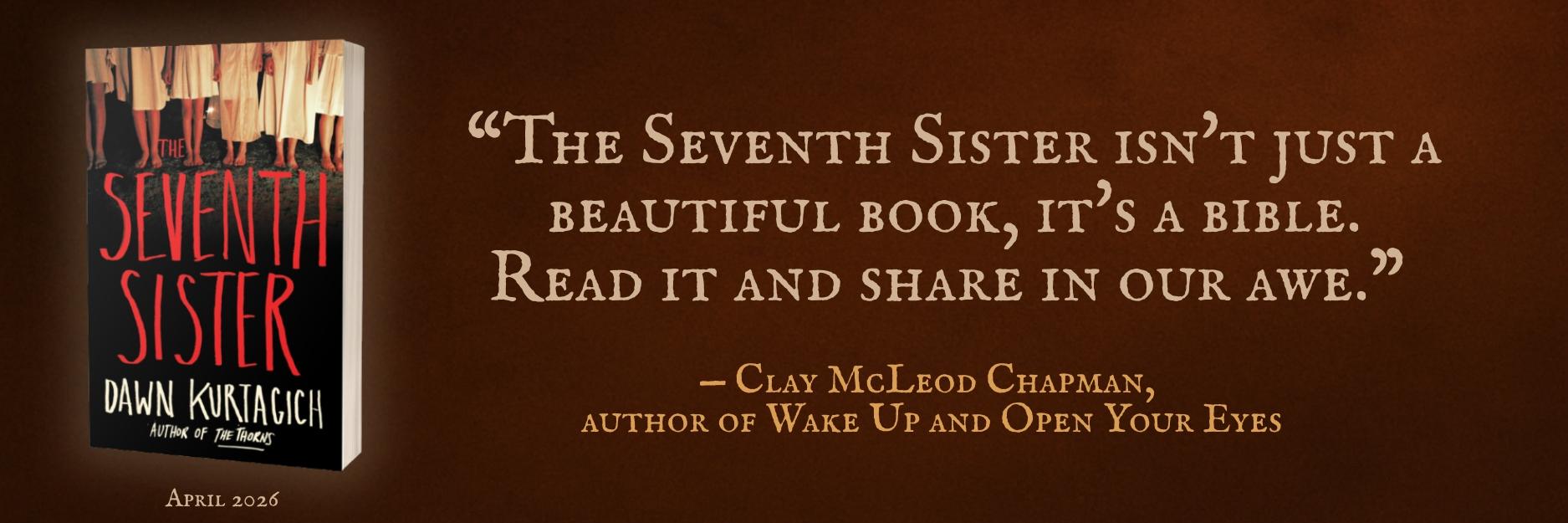
The title THE SEVENTH SISTER popped into my head, unbidden, and an image of the other six sisters being reluctant to talk about her. I began wondering who the seventh sister was, why she was spoken of in whispers (or not at all), and what had happened. From there it twisted into something else. Something more.
How many drafts did you go through before you felt it was ready to query? How long did that take you?
This novel was written under contract. When my agent and I went on submission with my psychological thriller, THE THORNS (at the time titled Devil’s Thorn), my now editor wanted to know what else I was working on. I had just finished kneading out the kinks in the idea that would become THE SEVENTH SISTER, so I told her about it. Later, when her offer came in, it was for two books with a line attached: “I want The Seventh Sister”.
I edit as I work, a compulsive tick I can’t seem to shake. I thoroughly enjoy the editing phase of creation, and I like my work to be as good as it can be as I go along. So, by the time I reached the end of Draft 1, most of the book was pretty polished—the beginning of the novel more polished than the end. I did a round of edits on the novel, and after that, it went to my editor.
Did you work with beta and/or sensitivity readers? How did you find them? How did you incorporate their feedback?
I generally let a friend and fellow author read my work. Depending on our mutual deadlines, we read for each other. Outside of that, there isn’t usually a lot of time. When there is, I might ask another one or two author friends whom I trust to have a look and give me feedback.
When writing to contract, there’s often not a lot of time to get reads from other very busy authors because deadlines overlap. Outside of those times you’re in contract there’s more room, and then my agent will read as well.
What was your querying process like? How long did it take?
I had always written, but I decided to pursue it with intention when I was nineteen. In 2010, I signed with a young and genuinely brilliant agent who had no experience, but who was with a reputable agency. She was clever, tenacious and spirited. However, due to some personal difficulties, she left the industry and ghosted all her clients, and so I quickly was back at square one.
One liver transplant later, I began querying the manuscript I had begun to write while in liver failure and finished after my transplant. That manuscript received ten offers of representation. I signed with a passionate agent (two, actually) and we went on submission after a brief round of edits; 25 hours later, we had our first pre-empt. That novel was my debut, THE DEAD HOUSE, and was published in 2015.
From first beginning my journey in earnest to getting that book deal, it took roughly 7-8 years. And that first manuscript that signed me with my first agent? It came out in 2025: The Thorns.
I’m now with my third literary agent after my second agent retired.
Once it was in the hands of your publisher, what was the process to get it ready for release?
When I handed THE SEVENTH SISTER into my editor, I waited for my edit letter to arrive. The first edit is the developmental edit, which is the big-picture look at your novel. It looks at your pacing, structure, plot, character, tone, etc—the larger issues that might need tweaking before going into line editing and copyediting, which is much more of a narrow focus. My developmental edit letter was five pages long, but I’ve seen authors talk about receiving edit letters in the dozens of pages—the horror!
Thomas & Mercer works fast, so we were done with developmental edits within a month and eight days (three rounds, progressively shorter). After developmental edits were in, I did line edits (checking line level issues for clarity, voice, etc), copyedits (checking grammar, punctuation, spelling checks, consistency in style and making sure everything matches the publisher’s house style), proof reads (a final read by the author), pass pages (the pages laid out as they will be in the print edition, and the very last chance to make any changes before printing), and reader queries (any queries caught by the publisher’s reader). All of this was done in less than two months.
And now your book is about to be unleashed on the world! How are you feeling?
THE SEVENTH SISTER is now out in the world, and I’m delighted. I’ve long loved folk horror, and I’m proud to have added my feral sisters and their forest god, Daudir, to its canon. There hasn’t been much time to stop and breathe, and with another novel coming from me in 2026, that’s unlikely to change. Five books in the past three years feels a little surreal; I’m looking forward to a brief pause. But honestly? Give me a week “off” and I’ll probably be back at it again.
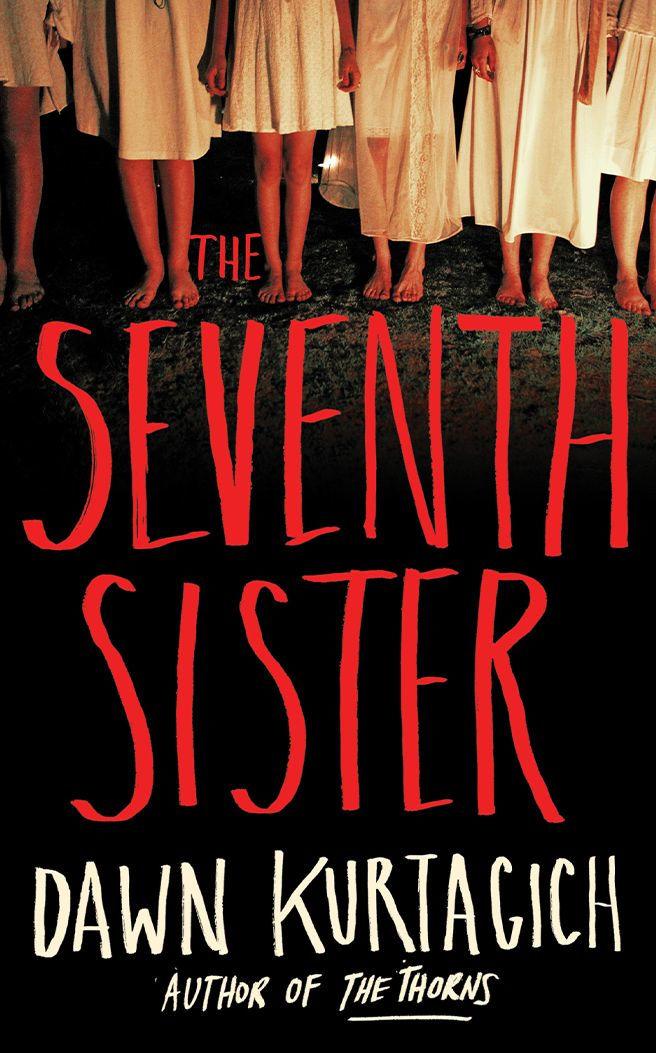
What would you like us to know about this book?
Sisterhood so fierce it conjured a god.
THE SEVENTH SISTER follows the third of seven sisters as she receives an unaddressed envelope containing only a dried juniper berry. She doesn’t need a letter to know exactly what the message is. She can feel it in the way her body quakes with horror.
With no option but to return to her childhood island home, she must face her surviving sisters and the forest God they left behind. A forest God who has finally called them home.
Told in dual timelines, THE SEVENTH SISTER is a novel of grief, isolation, faith, devotion and love. If you enjoyed Yellowjackets, Lord of the Flies, Pine or The Wicker Man, you may enjoy this.
Who’s the ideal reader for this one? What sort of things do they like to read about?
You might like this book if you enjoy the following genres: folk horror, gothic fiction, literary horror, or dark fantasy with feminist themes.
Your shelves may include: The Loney, Pine, Little Eve, House of Hollow, The Hazel Wood, We Have Always Lived in the Castle, and Our Wives Under the Sea.
You’ll enjoy film and TV like Midsommar, Yellowjackets, The VVitch, and The Wicker Man.
You may love this one if you’re drawn to stories where memory is unreliable, where sisterhood is a force of nature, childhood belief systems turn dangerous, with isolated settings (islands, forests, remote houses), folk ritual, grief that mutates rather than heals, and feral, morally complex female characters.
You might like this if you search “cosy horror” and “folk horror” on BookTok, and have a thing for decorating with plants and bones.
Your Writing Process
Are you a plotter or pantser or somewhere in between? How do you do your first draft?
I’ve been every kind of writer, yet every book seems to want something different from me. Each time I begin, it feels like the first time all over again. Recently I thought I had my “system” down pat. A detailed plot and a chapter by chapter guide, so I could create freely within the boundaries of that plan.
Except my newest book refuses to be plotted in such a tight manner. So, this one gets stepping stones instead. Little signposts, and nothing more.
I do wonder if I’m capable of pantsing like I used to when I first began. The editing phase was brutal when I did it this way, and the final product took five times as long to reach. These days, I get the same high of exploration from my plotting sessions (or as I like to call them: dreaming sessions) as I used to from drafting from nothing.
How do you approach writing? Are you the type or writer who needs to treat it like a job? Is there a particular time of day you find best for you to write?
I treat nothing like a job. I have obsessions, and I have play, and I have curiosity. As soon as it feels like a job, I resist it. I respond far better to curiosity than obligation. That said, I do have a kind of structure. Every weekday, I log onto a video call with a close author friend, and we work (or sometimes don’t) alongside each other. It’s an anchor, and a joy, and it gives me just enough routine to keep going.
There is a side of me that is compulsive too. Who likes order, who likes to track things, who likes to keep score of wordcounts and progress. She lives alongside the chaotic monkey in me who wants to play and have no pressure and who wants to explore the next intriguing tree. Somehow, and I don’t know how, they have come together to make a functional novelist.
As for time of day? Whenever the monkey allows.
Geek out about stationery: do you use a notebook? A specific type of pen? Or are you computer all the way?
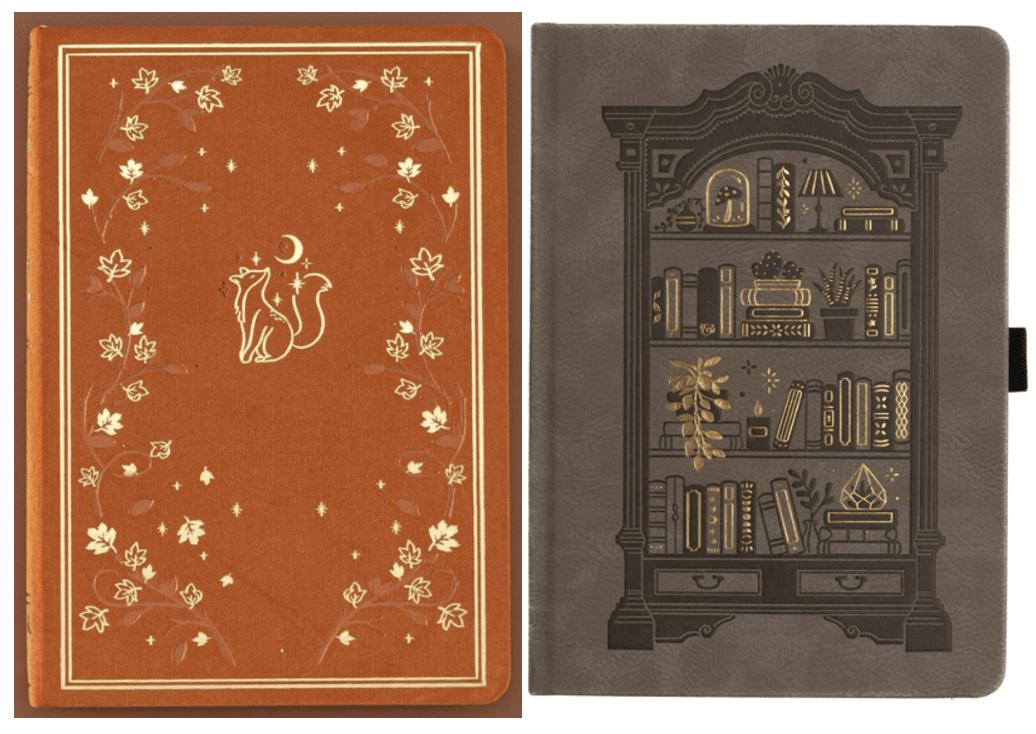
Oh, I could talk about this endlessly! I am 100% a stationery gal. This is where my chaos monkey and my compulsive side mesh perfectly.
I used to be an avid bullet-journaller and used both Notebook Therapy B5 dotted journals and Archer & Olive B5 dotted journals. They are truly amazing books, and I still use them for other purposes.
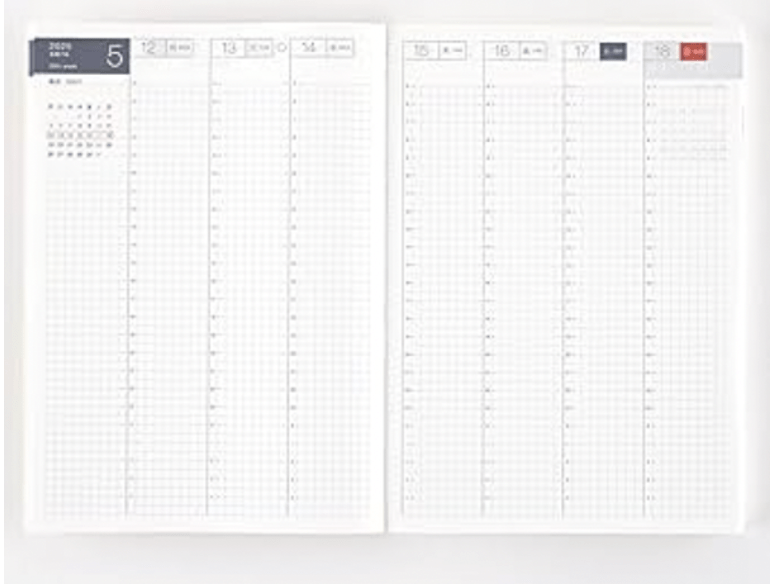
Now, I live in a much-loved Hobonichi cousin. Last year I used both a Hobonichi Techo and a Hobonichi Weeks, but I found that I wasn’t keeping up with two separate journals, and I got myself a cousin partway through the year. It was a game changer.
Without my journals, I truly would be all chaos-monkey and no coherent work. Thankfully, I’m just a little bit obsessed with journalling, ink and stationery.
Speaking of ink and stationery: I am currently using a bronze TWSBI Eco fountain pen, which is inked with Jacques Herbin Café de Iles as my main use pen. I also have a purple TWSBI eco inked with Jacques Herbin Violette Pensee, and a yellow TWSBI eco inked with Jacques Herbin Ambre de Birmanie. I have a vanishing point that I received as a gift, currently inked with a plain black, but I’m having some trouble with it and suspect I need better ink.
I use a computer a lot, but there’s something so needed for me about pen and ink. Sometimes I begin drafting by hand before I ever touch a keyboard.
Is any of that different for editing?
I don’t edit by hand, but there was once a time that I did. It became very messy!
Where do you work? Do you have a comfy, creative space at home or are you someone who has to grab the moment wherever it comes?
I work in my writing chair, which is a literal cloud, and also at my writing desk. Sometimes, I write in my car, when I feel I need a bit of air, and usually parked at the lake in the mountains.
What’s your writing soundtrack?
I have several curated playlists, one of them specifically for when I want to get into that delicious, meditative zone where I focus in and the world disappears. It’s mostly film scores that make me feel deeply.
Do you have a writing ritual?
I have a few. Most of them are secret. 😉
Where can we follow you / find out more about your work?
I’d be delighted to connect on Instagram, where I’m most active.
But you can also find me on my Substack where I send out monthly newsletters (also where I host giveaways), Facebook, TikTok, goodreads and my website.
The Seventh Sister is out now through Thomas & Mercer