The shortlisted works across all 13 categories of the British Fantasy Awards have been announced! Find out who’s in the mix over on our blog. Winners announced at Fantasycon in October.
For all things fantasy, horror, and speculative fiction
-
Announcement:

From Pen to Print: Anna Orridge on Parch Marks
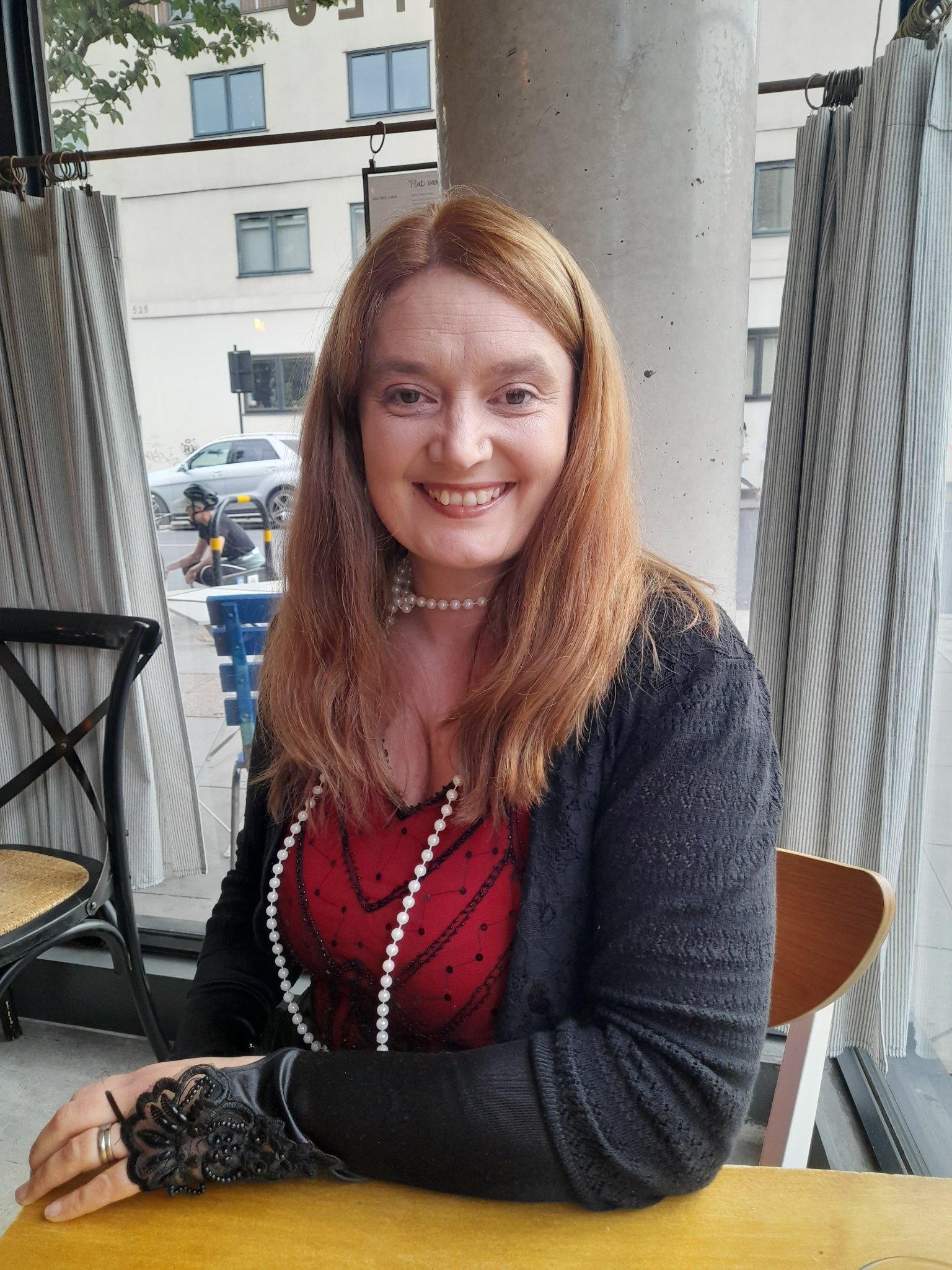
Inspired by anxiety over how the climate crisis might affect the places she loves, eco horror and cli-fi author Anna Orridge channelled Time Team to create her latest tale. She tells us more about Parch Marks, out now through GoldSF.
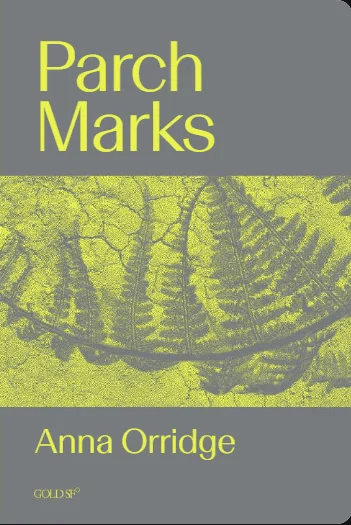
Name: Anna Orridge (she/her/hers)
Based in: Croydon, UK
What genres/subgenres are you drawn to?
Cosmic horror, eco horror, cli-fi, British weird.
Is writing your full-time focus, or do you have a day job as well? What do you do?
I’ve got a day job; I’m an advisor for an environmental charity
The Book: From Pen to Print
What was the genesis of this book? Where did you get the idea from?
I was in York, the city where I went to university and which has embedded itself more in my imagination than anywhere else I have lived. I started thinking and worrying about how the climate crisis might affect the places I loved. I’ve always been deeply drawn to archaeology and pre-history, so I was also reflecting on how humans have coped with dramatic changes in climate and landscape in the past. Time Team was one of my favourite programmes as a teen, and that was one of my main sources of inspiration too. The excavation of Must Farm, a superbly preserved Bronze Age site, provided me with quite a rich source of research.
How many drafts did you go through before you felt it was ready to query? How long did that take you?
I think it was the fifth draft. It had been brewing by this point for a long time—possibly seven years? But it went through some really dramatic changes in terms of plot and characters, and I tend to hop between projects.
Did you work with beta and/or sensitivity readers? How did you find them? How did you incorporate their feedback?
I actually did not have beta readers for the first couple of drafts, but I got a structural and developmental edit from author and editor Dan Hanks after GoldSF, the publisher, asked me to make some changes to the draft I’d submitted. I found Dan’s feedback invaluable, and incorporated a lot of his feedback regarding narrative beats. There was not very much of his feedback that I disagreed with in honesty, but I couldn’t incorporate all the recommendations because I had a very hard upper word limit. Before I revised and resubmitted, I also got some invaluable advice on the opening chapters from three critique partners I work with on a regular basis. All comments were valid, but you do of course have to exercise some personal judgement as to which may be down to personal taste and quirks, and which are fundamental weaknesses in the prose.
What was your querying process like? How long did it take?
It was incredibly short, because I only ever submitted it to one publisher (Gold SF, an imprint of Goldsmiths University Press). This is not the way things normally work, but the call for submissions was very specific: feminist sci fi. I had to do a Revise and Resubmit, which took me about eight weeks, and it was accepted after that.
Once it was in the hands of your publisher, what was the process to get it ready for release?
I did one very thorough edit, with the assistance of members of the GoldSF team. I completed one more edit after that, mostly for fiddly stuff with punctuation and formatting. Then the team took over for the final stages.
And now your book is out in the world! How are you feeling?
In honesty, I do feel apprehensive. There’s never quite that rush of elation I used to imagine a book launch would unleash. However, I am proud of the work that went into it and I hope it will get people thinking about heritage and how it might be used and abused in our very unstable future.
What would you like us to know about this book?
The protagonist of Parch Marks, Eva, is an archaeologist turned TV presenter, who makes the journey from London to York in order to take part in the excavation of a very strange Bronze Age massacre site. There are parch marks which bewilderingly resemble giant, coiling ferns rather than building foundations. Then Eva and the other archaeologists discover similar markings on their own skin.
Who’s the ideal reader for this one? What sort of things do they like to read about?
I think this would appeal to readers of historical fiction as well as speculative and cli-fi. Oddly enough, readers of folk horror might find some things in there to appreciate too.
Your Writing Process
Are you a plotter or pantser or somewhere in between? How do you do your first draft?
I am definitely somewhere in between. I tend to pants at the beginning and then do some plotting once I hit a slump. My plotting is not a detailed process—I wish I was the type who makes huge timelines with post-it notes and such like, but I just don’t seem to have the will. I do my first draft longhand usually.
How do you approach writing? Are you the type of writer who needs to treat it like a job? Is there a particular time of day you find best for you to write?
I certainly can’t treat it like a job. For me, that would destroy the joy. I tend to end up whipping out a pen in random places—buses and park benches—and scribbling for as long as I can. I actually find I work best in places with a bit of ambient noise. Silence overwhelms me. I think I tend to work best mid-afternoon.
Geek out about stationery: do you use a notebook? A specific type of pen? Or are you computer all the way?
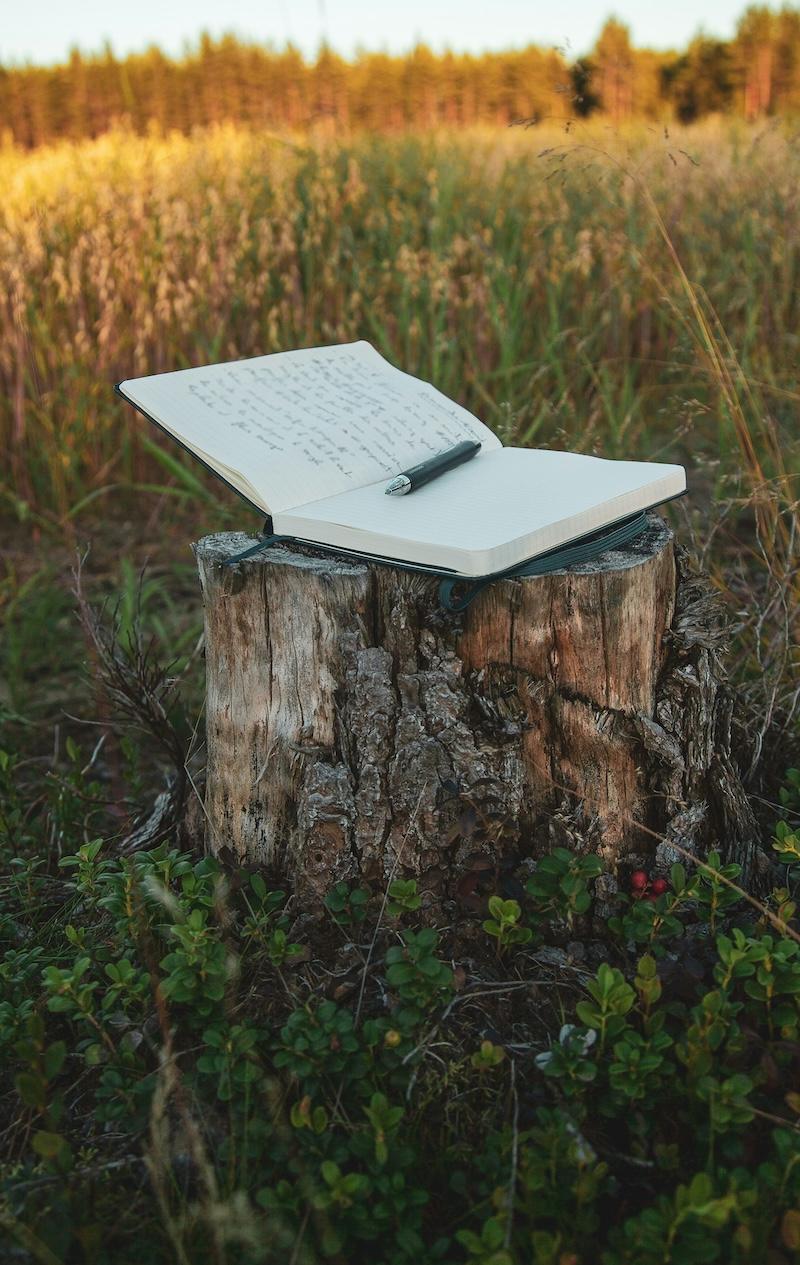
I do use a notebook, but I’m not too fussy about pens. I prefer the Berol handwriting ones. I’d love to use a beautiful artisan fountain pen but I know full well I’d end up breaking the nib or losing it. After the first draft, I do pretty much stick to the computer.
(Photo by Nicolas Messifet on Unsplash)
Is any of that different for editing?
I will occasionally print out a short story to edit, but with long form it’s always on a computer.
Where do you work? Do you have a comfy, creative space at home or are you someone who has to grab the moment wherever it comes?
I usually work at my desk at home. It’s not incredibly comfy, although I do like my swivel chair. To be honest, if I was surrounded by beautiful objects I’d end up gazing at them instead of writing.
What’s your writing soundtrack?
If not my own disconsolate wailing, then I’ll actually often go with ambient music from YouTube. The pieces often have titles like ‘Dark Academia: A Rainy Autumn Cottage’ or ‘You’ve Found Shelter in the Nuclear Winter’. I don’t think they are musically excellent, but they do tend to give me that bit of unobtrusive background noise I need to work.
Do you have a writing ritual?
I’m afraid not. I think anything like that would just end up giving me yet another excuse to procrastinate.
Where can we follow you / find out more about your work?
- My main platform is on Bluesky: @anna-orridge.bsky.social
- I also talk about my writing on Mastodon: @GreyElm@mastodon.online
- You can also find me on Instagram: @annaorridge
- I have a webpage as well: annaorridge.com