The shortlisted works across all 13 categories of the British Fantasy Awards have been announced! Find out who’s in the mix over on our blog. Winners announced at Fantasycon in October.

For all things fantasy, horror, and speculative fiction
-
Announcement:
Strange SFFH Music: Spirit’s Future Games
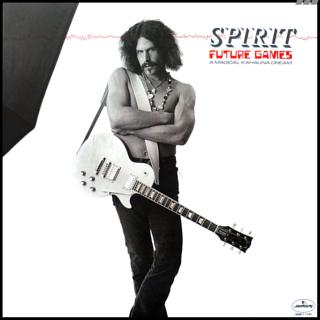
In this latest of a semi-regular series looking at the weird and wonderful of speculative-leaning music, Geoff Holder puts Spirit’s 1977 Star Trek-sampling album Future Games on the stereo.
Artist: Spirit
Album: Future Games
Released: 1977
Style: West Coast psychedelia, collage/sampling
‘Are you real, I mean I’m not imagining you am I?’
‘We’re real enough.’
‘You speak English. Earth people?’
‘From the Federation.’
—Track 8, “Would You Believe”
Children of the BFS, do you want a totally bizarre psychedelic rock album chock-full of Star Trek dialogue? Of course you do!
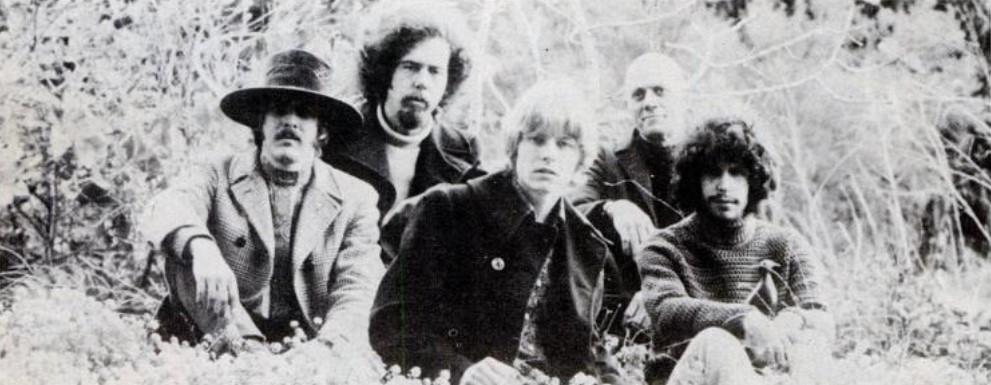
Spirit had been a mainstay of West Coast rock since the late Sixties. At the age of 15 the band’s leader and guitarist (real name Randolph Wolfe) was re-baptised Randy California by a certain Jimi Hendrix. The other mainstay of the group was Ed Cassidy, a much (much) older former jazz drummer and California’s stepfather. Where California was a standard longhair of the period, Cassidy was nicknamed “Mr Skin” after his strikingly bald noggin. The rock’n’roll Kojak’s massive drum kit dominated the stage of Spirit’s energetic live shows.
After numerous personnel changes and several albums whose quality ranged from magnificent to mediocre, in 1977 Spirit released Future Games – A Magical Kahuna Dream. The album was a commercial failure.
Probably because it is utterly bonkers.
Imagine if you will a Seventies psych album with twenty-two tracks, none of which are longer than five minutes and some of which are only seconds in length. Vocals and guitar lines fade in and out to no obvious purpose, weird sound effects intrude hither and yon, while musical ideas that could have sustained half an LP are discarded all too quickly, including some sublime melodies.
This curio of an album is a dense, confusing mess, and that’s partly because interwoven among the psychedelic guitar lines and jazzy folk-rock arrangements are spoken excerpts from the detritus of American pop culture: dialogue from TV series (including Kermit the Frog), CB radio, interviews, and radio shows. In fact it could be said to be an early example of the collage album genre, comparable to works by Faust or predating the sample-heavy output of later groups such as Cabaret Voltaire and Pop Will Eat Itself.
And then there’s the Trek connection. Oh sweet baby Klingons.
A Rather Strange Enterprise
Randy California was a noted aficionado of science fiction. And for some reason (perhaps a re-run turned up on TV during the recording of the album?) he fixated on the episode “Turnabout Intruder” (1971) from the third season of the original series. It’s the one where Captain Kirk’s former girlfriend Janice Lester uses a thingummy machine to transfer her consciousness into Kirk’s body, and vice versa. If you go back and watch it, don’t expect greatness. The Shatner pretending to be a woman is… well, just don’t go there.
“Bionic Unit” near the beginning of the album is a pleasing piece of pop psychedelia full of Star Trek imagery – phasers, beaming down, science fiction screens, communicators, even a mention of the Romulan cloaking device. But it’s on side two things really go to Trek Town. Kirk and Bones get extensively sampled on the tracks “Gorn Attack” and “Hawaian Times”, as well as in two short interlude pieces. “Star Trek Dreaming” adds Chekov and Sulu to the mix, along with a long piece of Kirk’s dialogue about being hijacked in space. Finally in “The Romulan Experience” a narrator describes a battle between the Enterprise and a Romulan warship, concluding the Romulan captain and Kirk are very much alike.
For some reason Paramount did not retaliate with lawyers. Perhaps they were not aware of the album, or possibly they didn’t care what a bunch of weirdy-beardy hippies got up to.
Overall the whole thing is either a right mess or a masterpiece, depending on the degree of your tolerance for whackiness. I do remember my flatmates’ reaction upon first listen: “What the hell is this?”
If you are an aficionado of going where no one has gone before, it’s definitely worth a listen. There are at least two great songs on there (including an eccentric version of Dylan’s “All Along the Watchtower,” complete with backwards drums and banjo), while I’m certain some will enjoy the evident Hendrix inspiration in the guitar licks. My view is that with a bit more focus Future Games could have been truly great. As it is, it’s baffling, infuriating, and frequently quite lovely.
(Image: William Shatner in the 1971 Star Trek episode “Turnabout Intruder”, from IMDb)

Randy California did not have the best of luck in life. He was badly injured in a horse riding accident, suffered from illness and mental health issues and had an on-off relationship with drugs. He once took an ill-advised dip in the Thames, swallowing too much of the polluted waters.
He quit his native Los Angeles for Hawaii, his love for which is referenced on Future Games (and in the subtitle, A Magical Kahuna Dream). In 1997, both California and his 12-year-old son Quinn were caught in a riptide while surfing; he managed to get Quinn to safety but was unable to save himself from the undertow. The rescue effort was called off because of poor weather conditions. California’s body was never recovered. He was 45.
If you want to check out more of Spirit, I recommend Spirit (1968), The Family That Plays Together (1969), Clear (1970), Spirit of 76 (1975) and, especially, The Twelve Dreams Of Dr Sardonicus (1970), which is full-on juicy psychedelic gloriousness that beautifully captures the period. Man.
‘Course Mr. Chekov?’
‘127 mark 8.’
‘Sulu, set speed at warp factor 2.’
‘Warp factor 2 sir.’
—“Star Trek Dreaming,” Track 10
Meet the guest poster

One response to “Strange SFFH Music: Spirit’s Future Games”
Nice article, Geoff. Great to be reminded of one of the lesser appreciated psychedelic bands of the late 60s/ early 70s. “Future Games”, along with “Potatoland” which also has spoken word interventions, is an outlier in their canon and also somewhat ahead of its time in its use of sampling and cut-ups. Of course, their high water mark is always going to be “Twelve Dreams of Dr Sardonicus”. Tracks such as “Mr Skin”, “Animal Zoo” and the early eco protest song “Nature’s Way” remained in their setlist until the end. The passing of Randy California at such a young age is particularly sad. He would be lauded these days had he survived the tragic accident.