The winners of the British Fantasy Awards 2026 were announced at Fantasycon. Find out all the details on our blog.
For all things fantasy, horror, and speculative fiction
-
Announcement:
Meet Greta Colombani
Every Friday, we meet a member of the BFS and peer deep into their soul (or, at least, a form they filled out). Want to be featured? Email us: online@britishfantasysociety.org
Name, including preferred pronouns:
Greta Colombani (she/her)
Which region are you based in?
I’m currently based in Oxfordshire, UK, but I was born and raised in the fog of the Po Valley in northern Italy.
If you write, which genre:
Sci-fi, fantasy and horror
If you don’t write, what do you do?
Besides writing, I am an independent scholar and an organiser of literary and cultural events. I have a PhD in English from the University of Cambridge, where I wrote my thesis on communication with the Other World in British Romantic poetry. My research interests focus on early nineteenth-century British literature and representations of supernatural, ghostly, animal, and queer otherness.
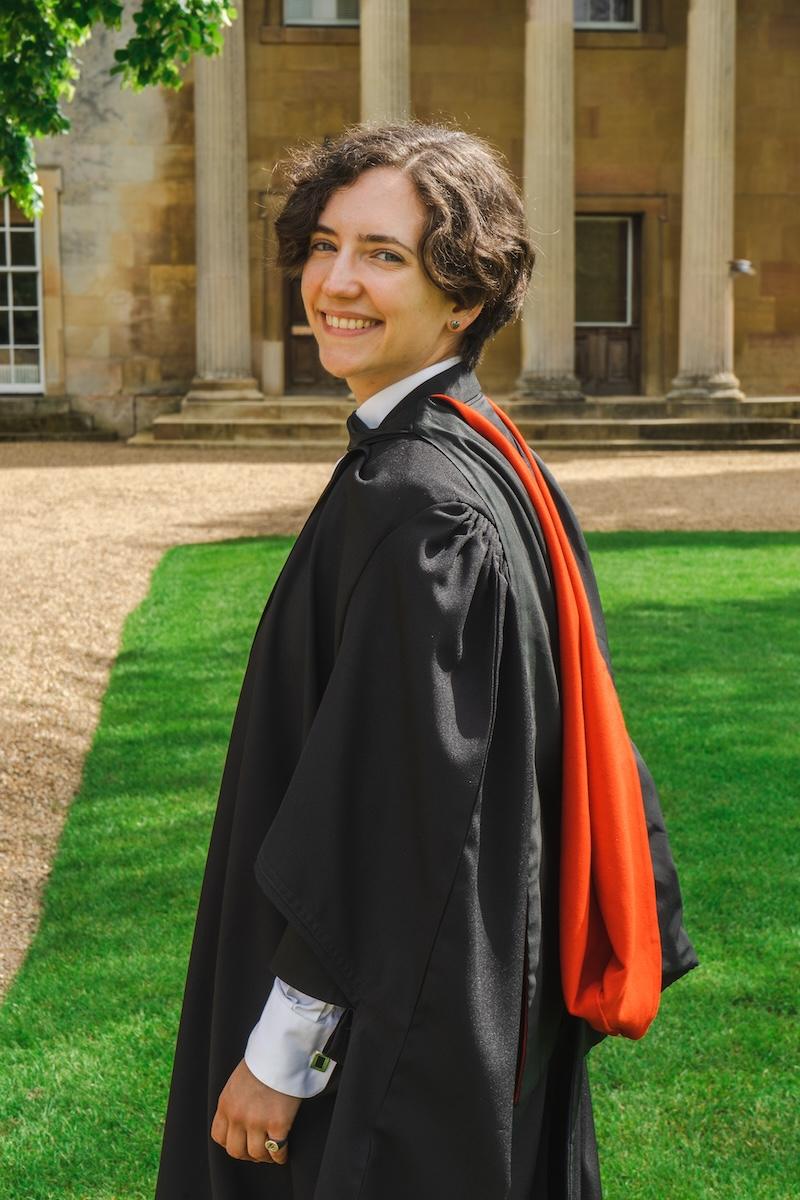
Having only recently re-emerged from the belly of the beast (aka academia), I now devote part of my time and energy to public engagement and the organisation of cultural events, for example for Il Corno, a Neapolitan literary panuozzo bar in Oxford’s historic Covered Market, as well as for… the BFS itself! I am in fact the BFS in-person events organiser for Oxfordshire & Berkshire, ta-da.
Are you drawn to any specific SFFH sub-genres?
Most speculative genres and sub-genres intrigue me in one way or another. But vampires are always a plus. Vampires are the best.
Your influences
Tell us about the book/film/thing that got you into SFFH: What was it? How old were you? What impact did it have on you?
Two things.
First, vampires. (Every time I say “vampire” in these answers drink… some blood). I don’t remember exactly how or why I got into vampires, but ever since I found out what a vampire was I just felt an irresistible connection.
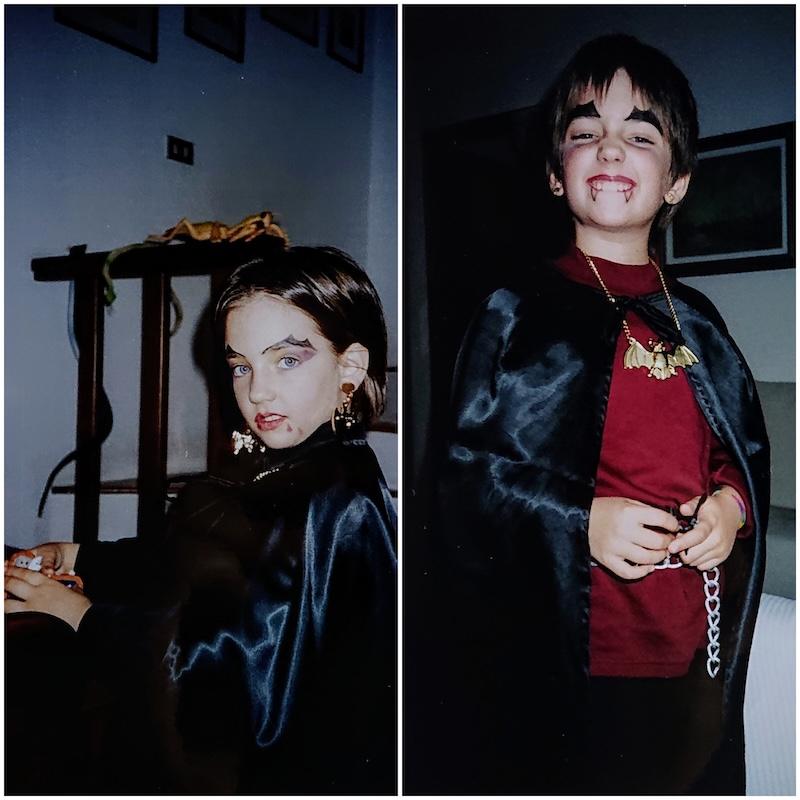
As a child, every year at Halloween, I couldn’t wait to dress up as a stylish bloodthirsty creature of the night (see photos), the first official photo dating back to when I was only five years old. One of my most treasured childhood relics is a video of me playing at being vampires with my grandfather and brother (it wasn’t even Halloween) and giving a whole lecture on vampirism to my grandfather because he had threatened to suck my blood but hadn’t considered, oh fool, that “since I am Dracula, I’m all white, I don’t have blood inside”. (Okay, controversial statement, I may not have been as well versed in vampire lore as I fancied myself to be at the time—but then again, I was aged four or something).
Second, His Dark Materials by Philip Pullman. I had already read a lot of fantasy books by the time I started La bussola d’oro (the Italian title of Northern Lights), but Pullman’s trilogy was the first to show me how big the stakes of a fantasy work could be. Even if I didn’t fully understand those stakes when I first read His Dark Materials at ten years old, I still got a sense of the boldness and originality of Pullman’s books and simply fell in love with the world and its unique atmosphere. As a happily solitary child that spent a lot of time in her imagination, I remember reading La bussola d’orounder the umbrella on a beach in Lazio and then going for a swim with my inflatable dolphin, pretending that it was my beloved daemon. Since then, I’ve re-read His Dark Materials a few times, the books seemingly growing with me as my understanding of them deepened and expanded and remaining to this day among the literary works that fill me most with wonder and inspiration.
How does that early influence show up for you (in life/writing/agenting/publishing/editing/reading) now?
Well, guess what? I did write a short story about vampires (*everyone pretends to be shocked*). More precisely, about a trans vampire having to navigate her fraught relationship with her “daughter”, a woman she turned, as they embark on a little quest involving a chain letter, an ancient curse, and, of course, a little bit of murder during a snowy December night. It’s in Italian and titled “Dinosauro di Natale” (tr. “Christmas Dinosaur”) and yes, it’s a Christmas story, I will die on this hill.
As for Pullman, hopefully his influence will show when (I’m tempted to say “if” but I won’t for the sake of manifesting it) I start to work properly on my BIG project, help…
Where do you draw your creative inspiration from?
Difficult to say. A bit from everything that is going on outside and inside of me, a lot from what I read and watch, often from the people I love, sometimes from things that almost happened.
The first short story I published (which is also the first one I wrote in English) is a ghost tale titled “Craco”, named for the abandoned town in Basilicata in which it is set. It’s inspired by a trip my partner and I took there, in particular by her plan to have an aperitif somewhere in Craco only to find out that it was completely inaccessible at the time. (In her defence it is literally a ghost town, but there were/are periods when you can visit it, though I remain suspicious of the person who told her they had an aperitif there…).
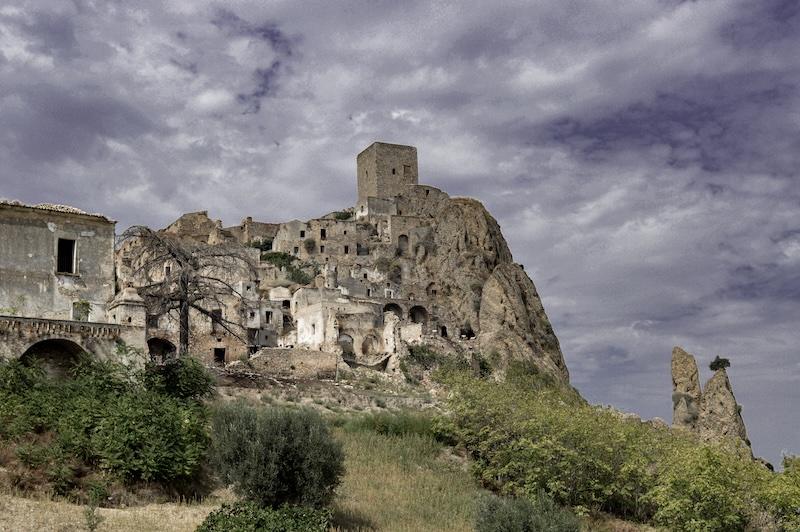
(Pictured: Greta’s photo of Craco which she then used as a “cover” for her short story)
Who do you look to as a genre hero? Why?
Ursula Le Guin and Octavia Butler. They are unrivalled at doing what I think speculative literature at its best does and should do, which is imagining alternative realities that radically call into question the assumptions, norms, and categorisations on which we have been taught to rely to make sense of this world.
Your Work
You’re stuck in an elevator for 60 seconds with that hero, and they want you to describe your work. Give us the pitch.
I don’t like elevators; being stuck in one has been a fear of mine ever since I was a child, I have social anxiety, and pitches are the bane of the world. Anyway, I’ll try my best.
So… I write stories that imagine different ways of being and connecting to others, that inhabit the unsettling, dazzling spaces that open up when boundaries are blurred and binaries transgressed, and that explore what exists—or could exist—beyond what we consider normal, natural, human. Or at least that’s what I aspire to do. And yes, sometimes my writing features vampires and ghosts, other times post-climate-apocalypse raccoons or cosmic jellyfish, and overall there’s a lot of queerness.
What are you working on right now?
I’m writing a Gothic (post-)apocalyptic story about a group of girls leading a secluded life inside the Certosa di San Martino in Naples, inspired by Neapolitan folklore. I’m also working on a creative-critical re-writing of Samuel Taylor Coleridge’s “Christabel”, one of my favourite poems ever.
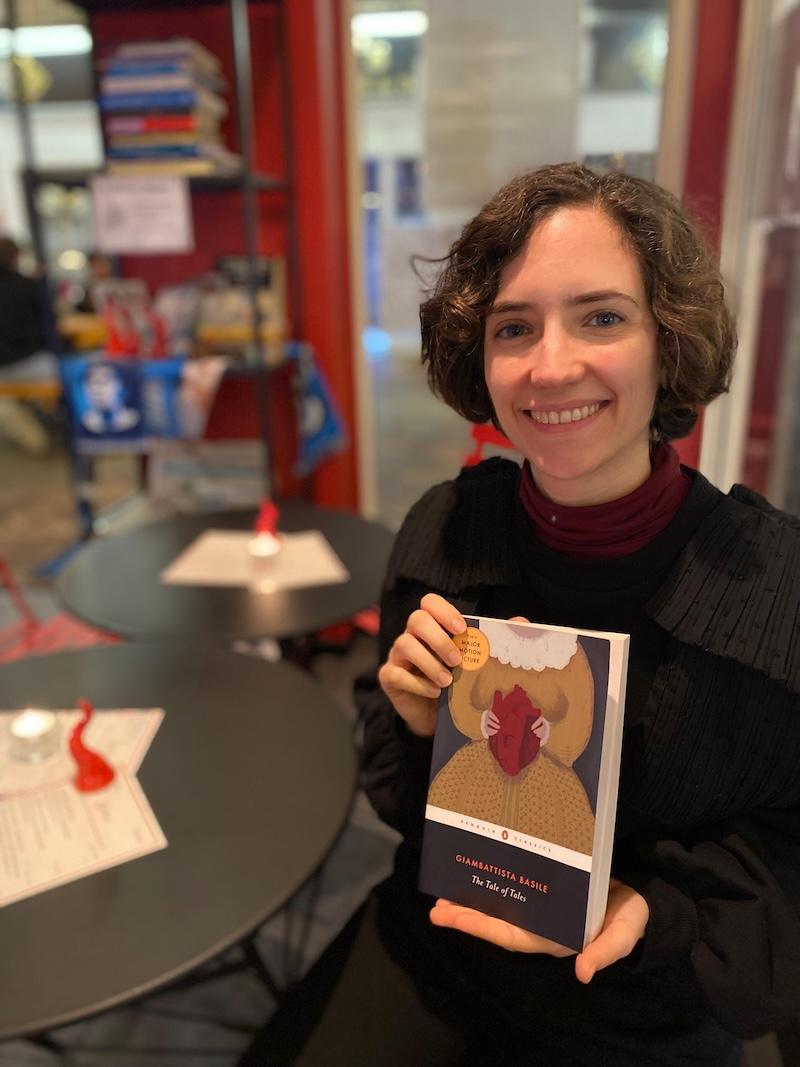
(Pictured: Greta at the Neapolitan Book Club she organised and moderates at Il Corno: this session’s book was The Tale of Tales by Giambattista Basile, a seventeenth-century collection of Neapolitan fairy tales)
Thinking about all the stories/work you’ve done, what sticks out most in your mind? Why?
I’ve recently finished working on my first longer piece of writing and I’m pretty proud of myself for *actually finishing it* even if it took me an eternity (and for sending it to a publisher: the night is dark and full of terrors). It’s a novella set in an unspecified future in an isolated community living among the perennial ice, where people must share their bodies with microscopic prehistoric entities that elude all understanding and classifications. The story focuses on the evolving ambivalent relationship between two girls from the community as they transition from childhood into adolescence, and tackles themes like asynchronous love, the darker side of attachment, moving across borders of different kinds, and the limitations of identity. Let’s say, The Left Hand of Darkness meets Clay’s Ark meets Annihilation meets The Annual Migration of Clouds meets My Brilliant Friend but sapphic. (It’s very clear that I really don’t know how to do this!)
Where and when do you create/are you at your most creative?
When I’m taking a shower. I don’t know why but the creative part of my brain works in the background like crazy while I’m in the shower (and can’t take proper notes, of course, thank you very much).
What’s the best advice you’ve received about creativity?
I should say that you don’t need to be productive all the time, that rest is important, that everyone’s pace and speed is different, etc. But I haven’t been able to fully accept or follow any of this so far, so applications are open for advice on how to deal with unhealthy perfectionism.
What’s your writing soundtrack?
Silence, because I am obsessed with rhythm and need to be able to hear how sentences sound either in my mind or out loud.
The Quick Fire Round
Sci-fi, fantasy or horror?
I can’t choose. In life, at the restaurant, between Pokémon starters. In this case, too.
Quiet or loud?
Quiet. (Also I have misophonia, so don’t you dare chew—or breathe!—near me).
Dark or light?
Obviously dark: The children of the night, what music they make.
Strict lines or genre blend?
I don’t really care if you’re following the rules or breaking them as long as you’re doing it in an interesting way. What an annoying answer.
Awards or bestseller?
When picking out a book I mostly rely on… *my intuition*.
Fiction or non-fiction?
Fiction! I’ve read enough academic books for a lifetime, I need a break.
Poetry or prose?
Prose (but I am deeply in love with John Keats’s poetry and have been since I was 16).
Plotter or pantser?
I don’t really identify as either. I mostly identify as being VERY SLOW at writing.
Reading or listening?
Reading.
Notebook or computer?
Paper tablet for brainstorming, plotting, and taking notes. Computer for writing because I need to put—and feel—a distance between what I’m writing and me.
Favourite SFFH book of all time?
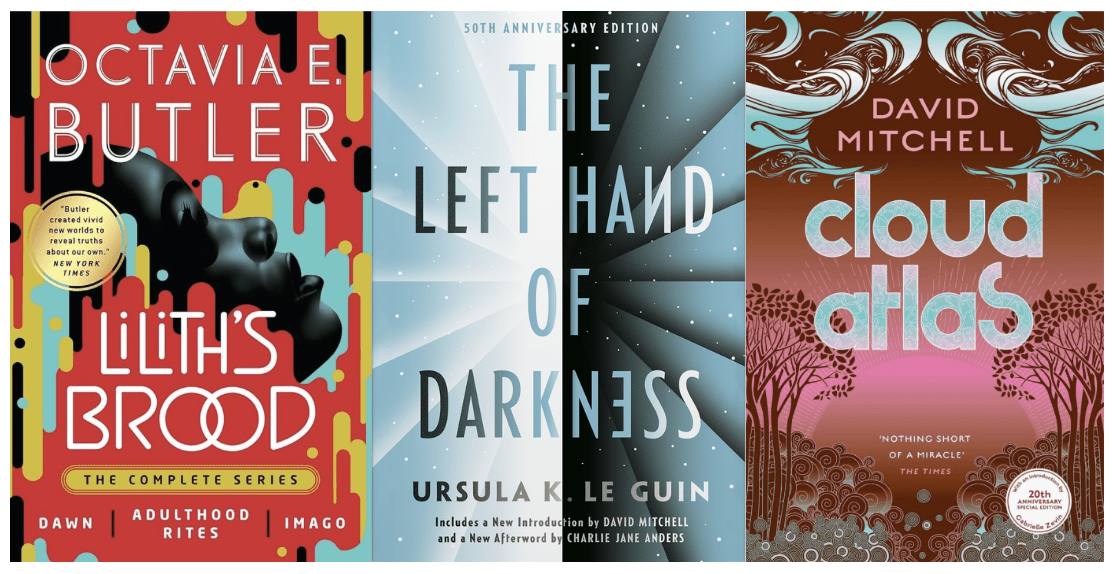
Please have mercy on me. I can do three, okay? And His Dark Materials by Philip Pullman doesn’t count because I’ve already talked about it. So, let’s say The Left Hand of Darkness by Ursula Le Guin, Lilith’s Brood by Octavia Butler, and Cloud Atlas by David Mitchell.
Last book you read?
The Incandescent by Emily Tesh.
Any SFFH author on auto-buy?
Tamsyn Muir, Arkady Martine, Sofia Samatar, Seth Dickinson, Mariana Enríquez, N. K. Jemisin, Shelley Parker-Chan, Diletta Crudeli… Okay, probably too many, poor wallet.
Favourite podcast?
Podcasts are not really my thing, but if you can understand Italian I would definitely recommend Monstrumana, an excellently researched, wonderfully atmospheric podcast on monsters in literature.
The Home Stretch
What’s the best thing about being part of the SFFH community?
That its members (at least most of them, in my experience) are unapologetically weird, proud to be weird, and welcoming of—even enthusiastic about—other people’s different shades of weirdness.
Time to plug your stuff! Where can we find you and your work? What have you got coming up? Consider this your advertising space.
You’ll be able to find my writing—and much more!—on my soon-to-be website, which will be found at gretacolombani.com.
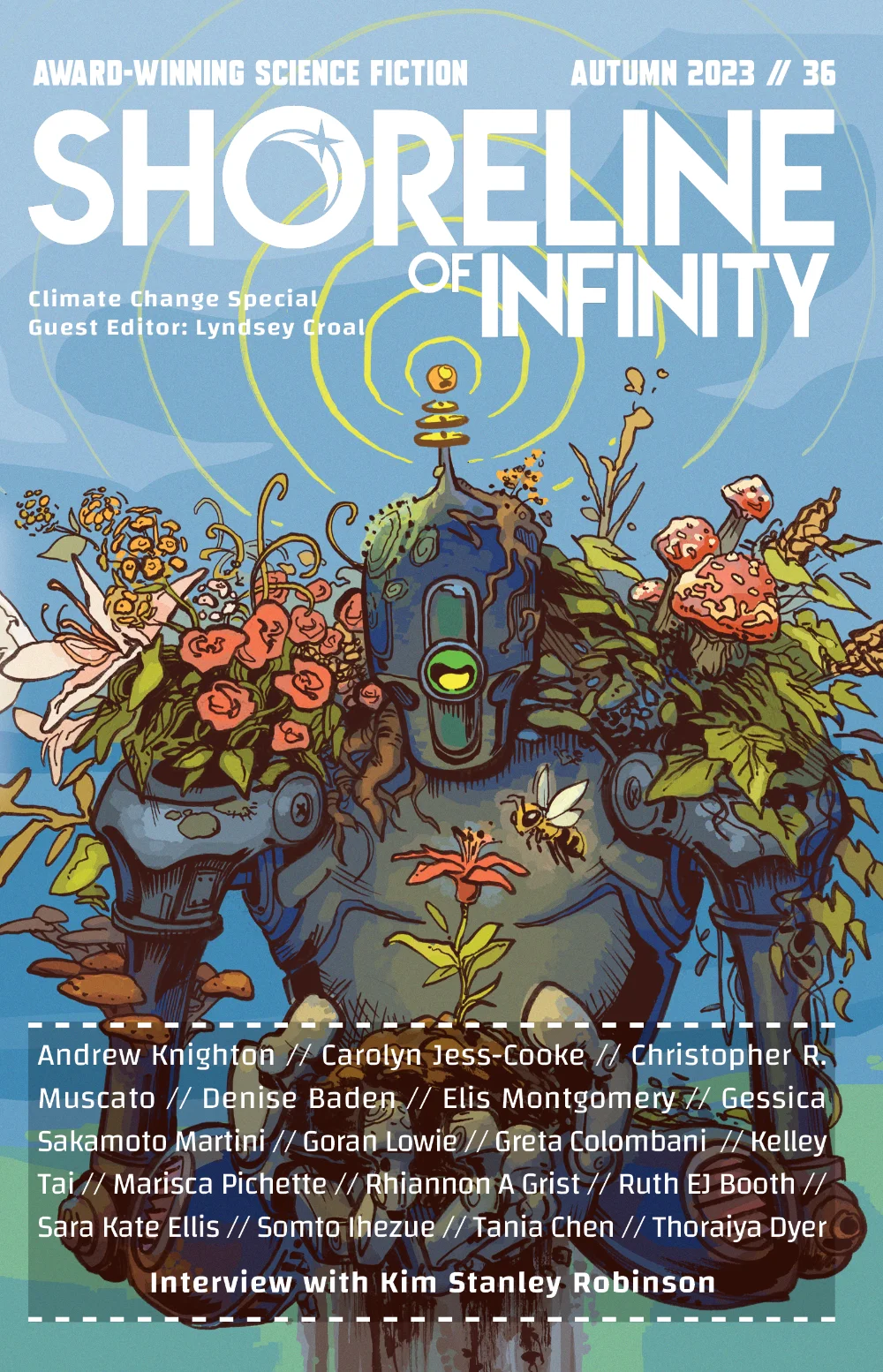
In the meantime, here are the links to the three short stories I have published so far:
- “Craco” (in English) in Litro, about sapphic love, drinking with ghosts, and desperately needing to pee
- “Amaranthine” (in English) in Shoreline of Infinity, featuring large-scale flooding, a world without humanity, and a post-apocalyptic raccoon
- “Dinosauro di Natale” (in Italian) in Malgrado le mosche, about a trans vampire, a dinosaur in a shopping centre, and a lot of blood for Christmas
I also have two other stories forthcoming:
- “We broke up… *not clickbait* | TIME GAP RELATIONSHIP” (in English), a flash fiction that is an ode to lesbian YouTube and breakup videos and will be published in Baffling Magazine.
- “Abbastanza vita nell’universo” (in Italian), a tale of ethological research, interspecies connection, and queer family, featuring a migratory cosmic jellyfish, which will appear in Nabu.
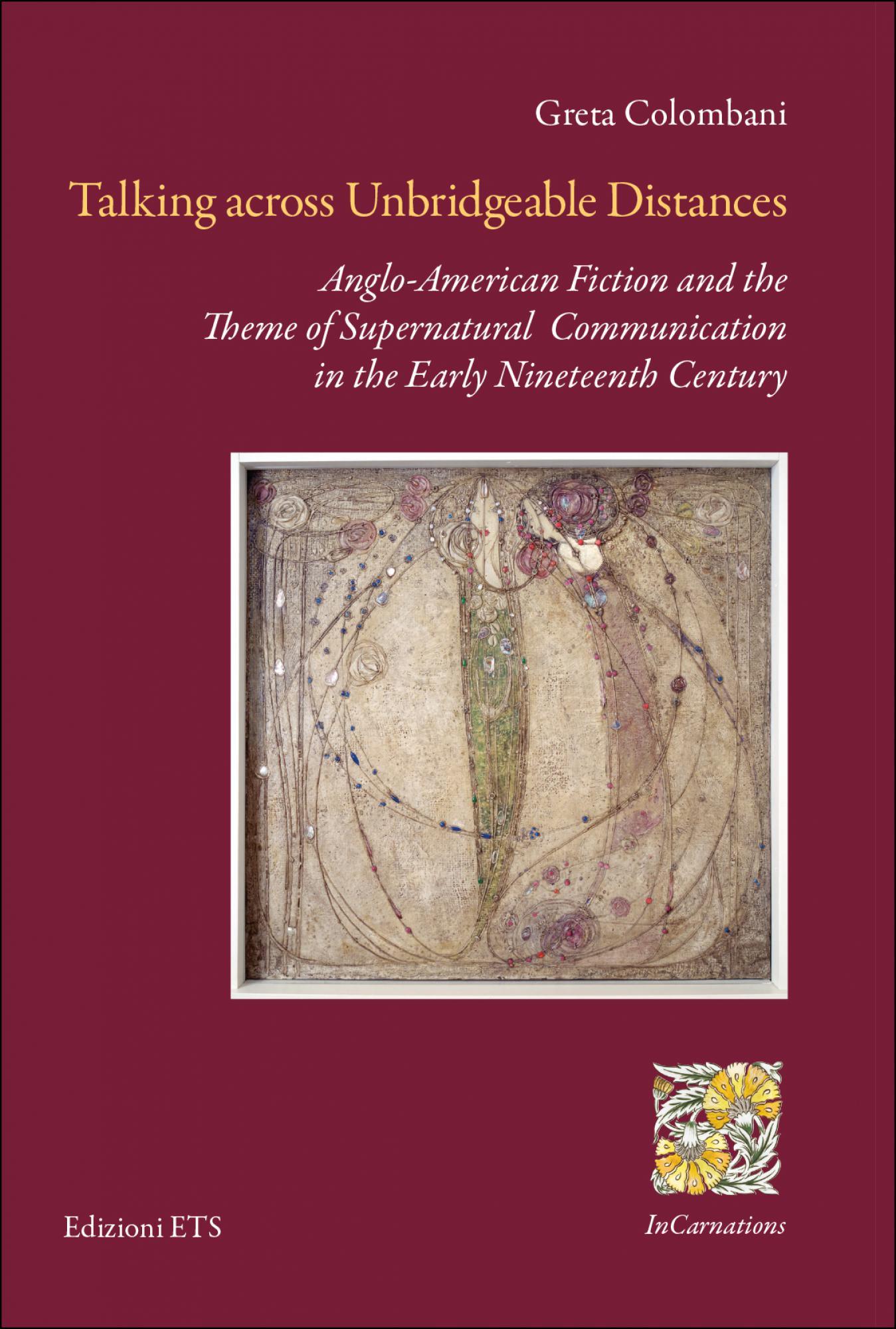
If for some reason you’re interested in my academic stuff, you’ll find it quite easily by searching my name on Google Scholar. I am the author of two monographs—A Gordian Shape of Dazzling Hue: Serpent Symbolism in Keats’s Poetry(2017) and Talking Across Unbridgeable Distances: Anglo-American Fiction and the Theme of Supernatural Communication in the Early Nineteenth Century (2023)—and the co-editor of the volume Nightmares in the Long Nineteenth Century (2025). I’ve also written articles and book chapters on authors like John Keats, Felicia Hemans, Anne Bannerman, Letitia Elizabeth Landon, and H.G. Wells, and on topics such as necromancy, the dangers and rewards of talking with ghosts, the deconstruction of humanity as a performance, snake women and their queer potential… well, you get the idea.
For updates of any kind, news about events I’m organising, or random things that fill me with joy (be it She-Ra fanart, Hannigram memes, pizza, or Jannik Sinner’s triumphs: I contain multitudes), you are very welcome to follow me on social media:
- Instagram (which I use the most)
- Bluesky (where I’m still pretty new and don’t know anyone, so I’m in want of friends)
And last but not least… if you’re in Oxfordshire or Berkshire or anywhere close enough, be on the lookout for the fabulous BFS events I have in store—next one is this Monday, 6 July!—and fill in this form if you’re a writer and would like to be involved.