The shortlisted works across all 13 categories of the British Fantasy Awards have been announced! Find out who’s in the mix over on our blog. Winners announced at Fantasycon in October.
For all things fantasy, horror, and speculative fiction
-
Announcement:
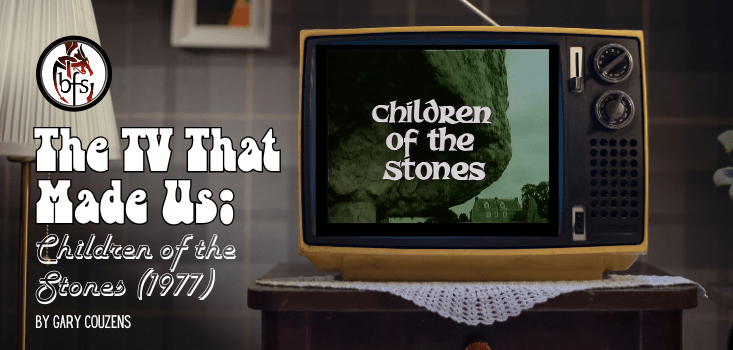
The TV That Made Us: Children of the Stones (1977)
In his semi-regular column on the classic TV that made us SFFH fans, Gary Couzens revisits a well-loved Folk Horror classic from the seventies.
This is the tenth piece in a series on genre television serials which were made for young or not so young viewers, formative for different generations of SF, fantasy and horror fans. Children’s television had dabbled in the fantastic or science-fictional for decades. Doctor Who was, strictly speaking, not a children’s show as it was made by the BBC’s drama department rather than the children’s department and wasn’t shown in children’s weeknight viewing hours but on Saturday evenings. However, it was certainly watched by many children (the present writer from 1971) but it was certainly not a first for the corporation.
Before the for-adults A for Andromeda (1961 and mostly lost) and its sequel The Andromeda Breakthrough (1962, all surviving) there had been writer Nigel Kneale and director Rudolph Cartier’s three Quatermass serials in the 1950s, famously “not suitable for children or those of you who may have a nervous disposition” as the continuity announcer advised us. There was also Stranger from Space, seventeen ten-minute episodes in two series in 1951 and 1952, all now lost, which beat The Quatermass Experiment to the nation’s sole TV channel by over a year.
A Golden Age of TV
However, there’s something to be said for the idea that the 1970s was the peak decade for television serials for children or teenagers, not only in the SF, fantasy and horror genres, stories which challenged their viewers and weren’t afraid to scare or disturb. Maybe there was something in the water back then. I’ve covered some of these serials already and intend to cover more. And one of the highlights of that decade was Children of the Stones.
Ancient Stones
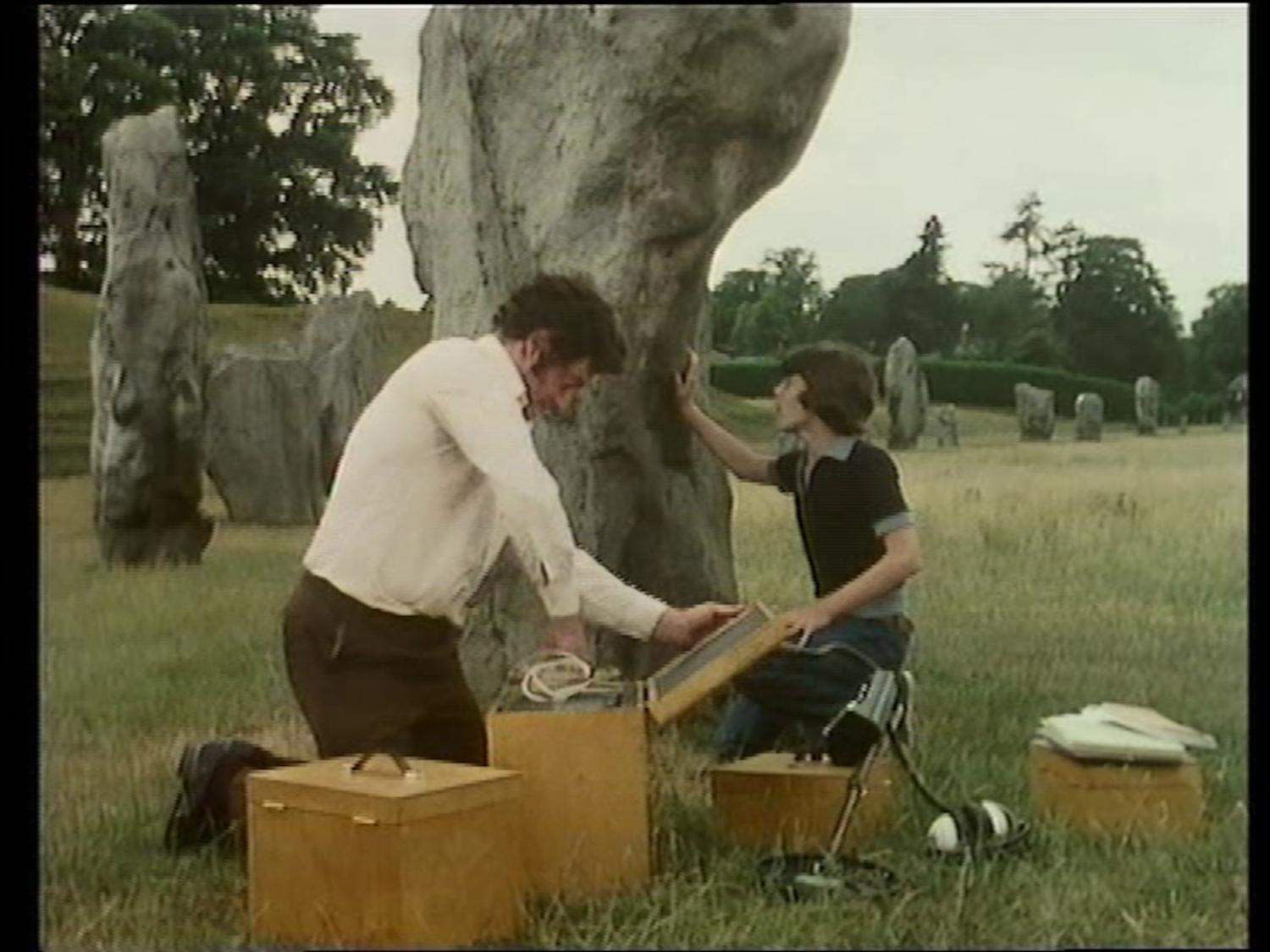
Adam Brake (Gareth Thomas), a widowed astrophysicist, and his son Matthew (Peter Demin) arrive to stay in the village of Milbury, which features a megalithic stone circle. As they settle in, Adam, who is there to do research, meets Margaret (Veronica Strong), whose daughter Sandra (Katharine Levy) is at the school Matthew begins to attend.
Adam and Matthew are welcomed by their landlord Hendrick (Iain Cuthbertson), whose house, Adam finds out, is enclosed by a network of ley lines. However, strange things begin to happen. A painting seems to show a past event where villagers are transformed into stone, and has a disturbing effect on villagers who see it. The locals seem strangely docile, often greeting each other with “Happy day”. The solution to the mystery involves ancient ritual and almost-as-ancient science.
A couple of things leap out now about Children of the Stones. Although it was made for children and broadcast during their viewing hours, with the threat and horror firmly within PG-certificate bounds, there’s a lot of adult interest in it. That word “children” is in the title and there are children or rather teenagers central to the story – the frequent configuration of one boy and one girl – but the adults do a lot of heavy lifting.
They, rather than the younger actors, have as many as five of their names in the opening credits. (Iain Cuthbertson is billed fifth of the five, but he has a “starring” above his name, no doubt for reasons lurking in his contract.) While not going so far as a romance, there’s certainly at least a platonic attraction between Adam and Margaret as the story progresses. You have to wonder how many grown-ups watched the serial on its original broadcast or repeat, and if some of them had to leave work early to catch it, in the days before video recording was available to any except a very small part of the population.
Folk Horror
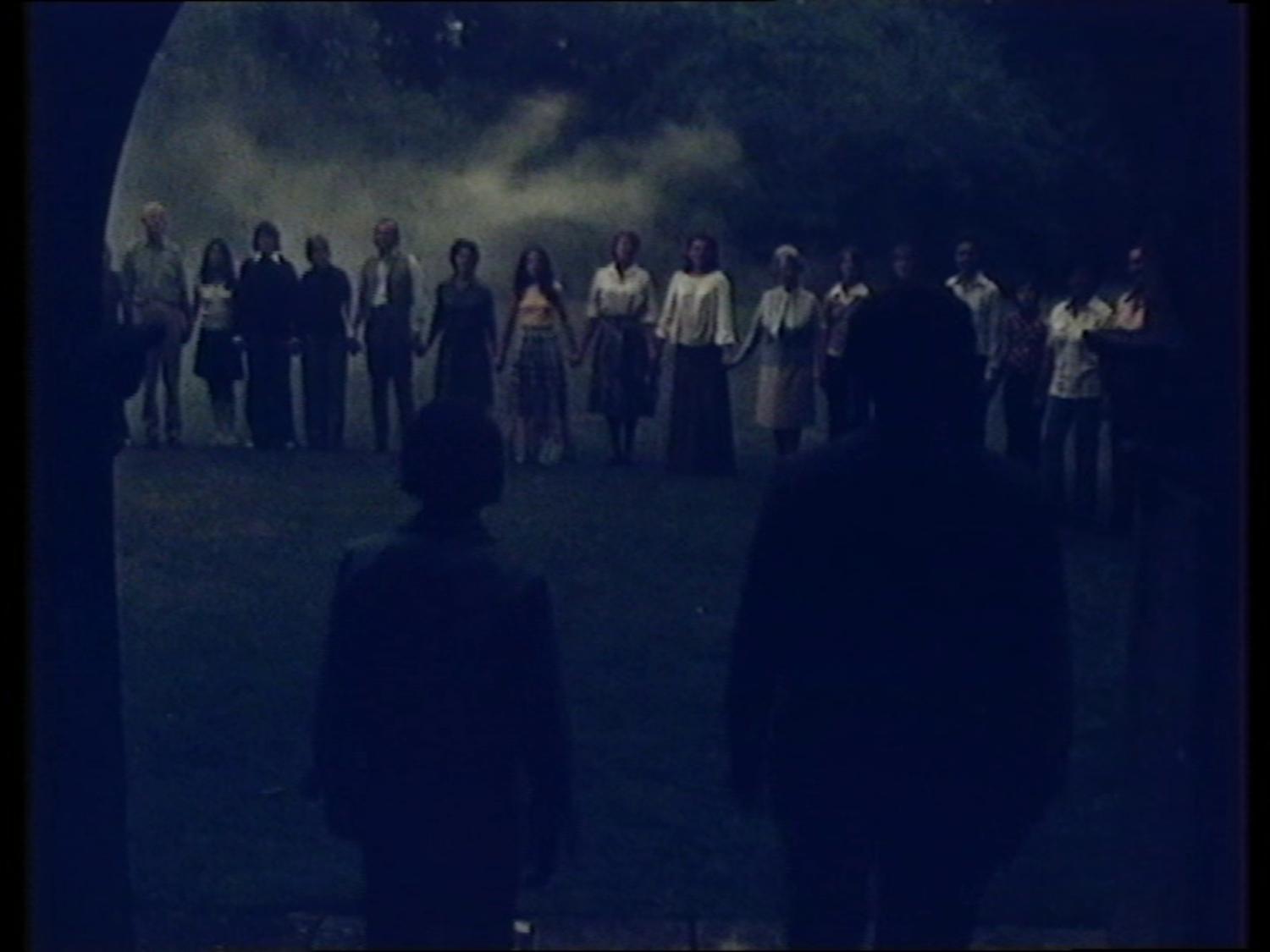
Folk horror is very current in 2026. It wasn’t in 1977 when Children of the Stones was shown. The first recorded use of the term dates to John Fowles’s 1965 novel The Magus. There are other uses on record since then, but the subgenre was popularised by Mark Gatiss in his 2010 documentary series A History of Horror.
Three films which the target audience of Children of the Stones were definitely not old enough to see have been retrospectively identified as the folk horror “unholy trinity”: Witchfinder General (1968), Blood on Satan’s Claw (1971) and The Wicker Man (1973). But folk horror is all over Children of the Stones: the isolated rural location, the use of age-old superstitions and folklore. The serial leavens it with science fiction, with an ancient supernova leaving a black hole behind, and (without spoilers) the possibility of parallel worlds. The story does require the audience to keep up and happily assumes they will be able to, even though you had to be in front of your TV set at the same time every week for seven weeks, or you missed it unless you caught the repeat showing a year later.
Production Notes
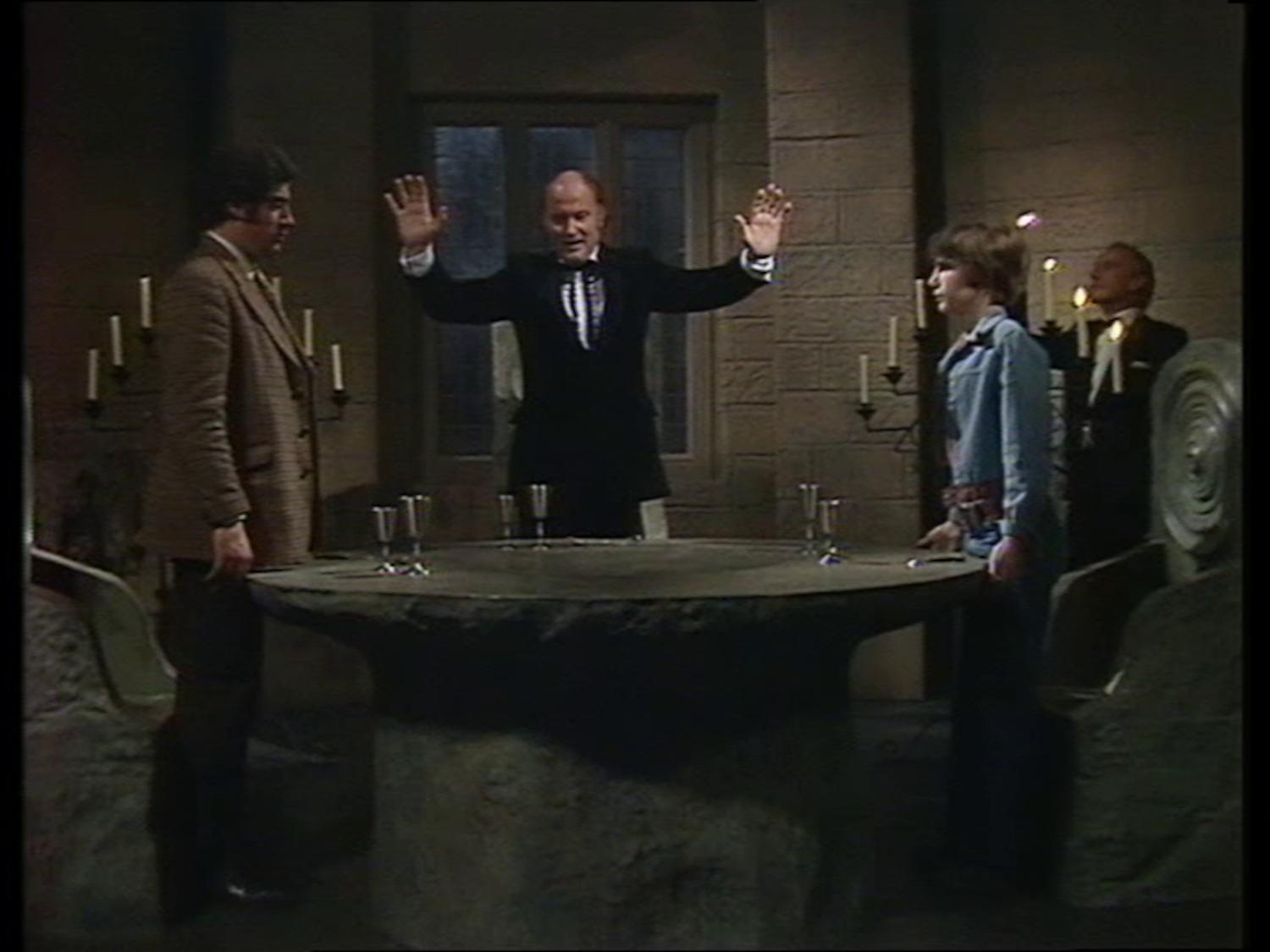
Children of the Stones was made by the Bristol-based ITV company HTV West, as had been Sky two years earlier (covered in an earlier piece for this series). Both serials have personnel in common, particularly executive producer Patrick Dromgoole, who had served the same function on the earlier serial and had also directed three of its seven episodes. Children of the Stones was created and written by Jeremy Burnham and Trevor Ray.
Burnham (1930-2020) had begun as an actor on film and television before moving behind the screen in the 1970s and concentrating on writing, with only a handful of acting roles since. He is the only person to be credited as both a writer and an actor in the long-running TV series The Avengers. Burnham wrote extensively for television with a few feature films such as the 1970 Hammer film Horror of Frankenstein. Ray (1934-2019) also began as an actor. His writing credits were less extensive, but they included uncredited work on the 1970 Doctor Who The Ambassadors of Death and he is credited as associate script editor for the 1968 story The Invasion. Burnham and Ray wrote another children’s serial broadcast in 1977, the five-parter Raven, made for another ITV franchise, ATV. The two men novelised Children of the Stones in 1977 and a sequel novel, Return to the Stones, was published in 2012. In 2020, the BBC put out a ten-part audio adaptation of the original serial as a podcast.
Unlike Sky, Children of the Stones had one director throughout, Peter Graham Scott (1923-2007), also the producer. Scott had worked in the film division of the Ministry of Information during World War II and had entered the film industry afterwards, at first as a film editor, becoming a director for the cinema in 1948 and soon after on television as well. He had worked at the BBC for several years but had become dissatisfied and a meeting with Patrick Dromgoole led to his being given the script of the first episode of Children of the Stones. He didn’t see all the scripts until he had agreed to produce and direct it. One of his final works for television was another children’s genre series, Into the Labyrinth (three seasons, 1980 to 1982), which he produced, directing all but two episodes. This was created by Scott and Bob Baker, who had cowritten Sky for HTV as well as several Doctor Who stories.
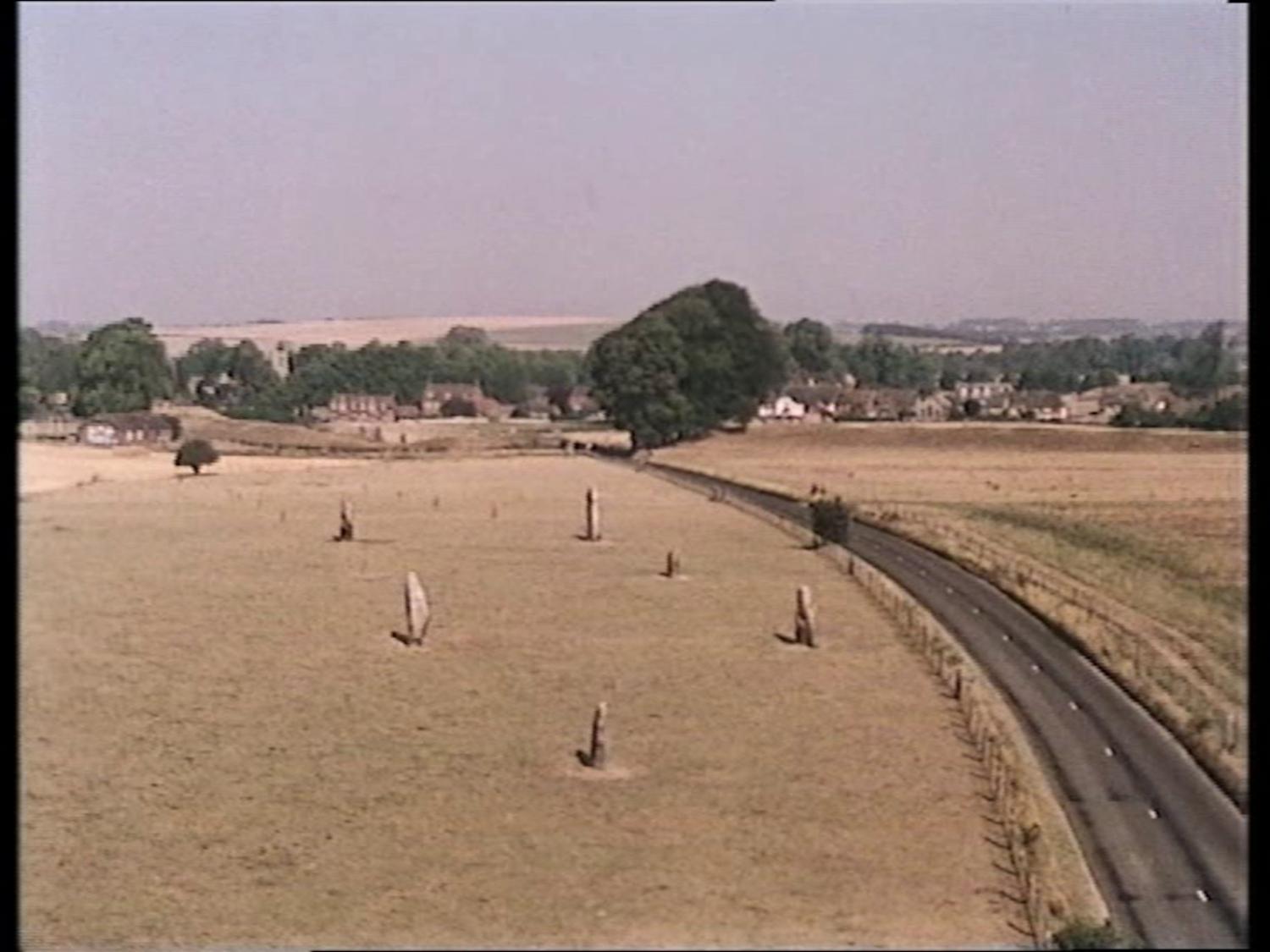
Children of the Stones was shot in the usual combination of videotape for studio interiors and 16mm film for the extensive location work. This took place at Avebury, Wiltshire, over three weeks during the long hot summer of 1976. The existing Avebury stones – the largest circle in the world – were augmented by others made of polystyrene.
As with Sky, this West Country-based production wasn’t afraid of its regional roots. Several of the cast sport local accents, not least Staffordshire-born Freddie Jones. Given that his character is meant to be an outsider to the village, Adam is played by a Welshman, Gareth Thomas, though he doesn’t use his native accent as he had in other productions. His best-known role came a year later, as the lead in the BBC’s Blake’s Seven. Veronica Strong had begun her career in her teens in the late 1950s and she continued to 1983 with a couple of later roles in the twenty-first century. She married Jeremy Burnham in 1966, a union which lasted until his death. Iain Cuthbertson, a Scot, was a familiar face on the small screen, an imposing figure due to his 6’4” stature. Of the children, seventeen-year-old Peter Demin had a short acting career, this being his only lead role. Katharine Levy, fifteen, on the other hand had begun her career in the early 1970s, continuing to the late 1990s, sometimes billed as Kate Levy.
Sidney Sagar’s theme and score, influenced by the Polish composer Krzysztof Penderecki and featuring wordless vocals led by a high soprano, is a highlight of the serial.
Broadcast
The first episode of the serial was broadcast on Monday 10 January 1977, across the ITV network at 4.40pm, preceded by the show which inspired a generation of young film fans, Clapperboard, and followed by an episode of Batman. Young fans of genre television could have skipped Blue Peter on the other side and changed channels and tuned in to a repeat of a repeat run of the 1973 Lizzie Dripping, with future Blue Peter presenter Tina Heath as the young girl of the title who is the only one who can see a witch, played by Sonia Dresdel.
A year later, Children of the Stones had a networked repeat showing on Fridays, beginning on 28 July during the school holidays at the earlier time of 4.15pm. That was the serial’s final showing on free-to-air TV, though it had another showing on the satellite Children’s Channel in 1992. It had a VHS release in 1981 with DVD releases in 2002 and 2011, all now out of print and going for silly money as used copies.
It is rose-tinted nostalgia, and reverse recency bias, to suggest that the children’s television of our childhood is superior to that made nowadays. There has been excellent stuff made more recently, and some of it I hope to cover in other articles. Likewise, from the 1970s and earlier, there are programmes now forgotten which may well be the best thing were they available to us. But it’s certainly true that the best work from the 1970s stands up as well as anything, and Children of the Stones is certainly among them. Happy day, everyone.
Thanks to Richard Meldrum for the loan of the DVD.
Do you remember watching The Children of the Stones? Let us know what you thought in the comments below ⬇️
Title photos taken by the author as screen grabs; other images from IMDb.
Meet the guest poster