The winners of the British Fantasy Awards 2026 were announced at Fantasycon. Find out all the details on our blog.

For all things fantasy, horror, and speculative fiction
-
Announcement:
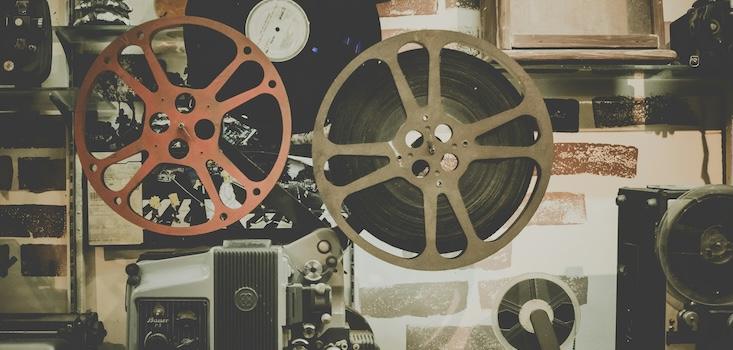
How To Create A Movie In Novel Form
With his debut novel, Movieville, out now through Troubador, author Kimothy Hudson shares his journey from designing museums and hotels to designing stories.
Visual storytelling has always been a passion of mine. This was confirmed one day as I sat watching University Challenge on TV.
Needless to say, as a wee lad, I had no understanding of the questions, but was transfixed by the catchphrases of presenter Bamber Gascoigne. As he was introducing the contestants and the subjects they were studying, Mum – who wasn’t known for her sharp wit – quipped: ‘Kim Hudson – reading comics.’
(Photo below by Dev on Unsplash)
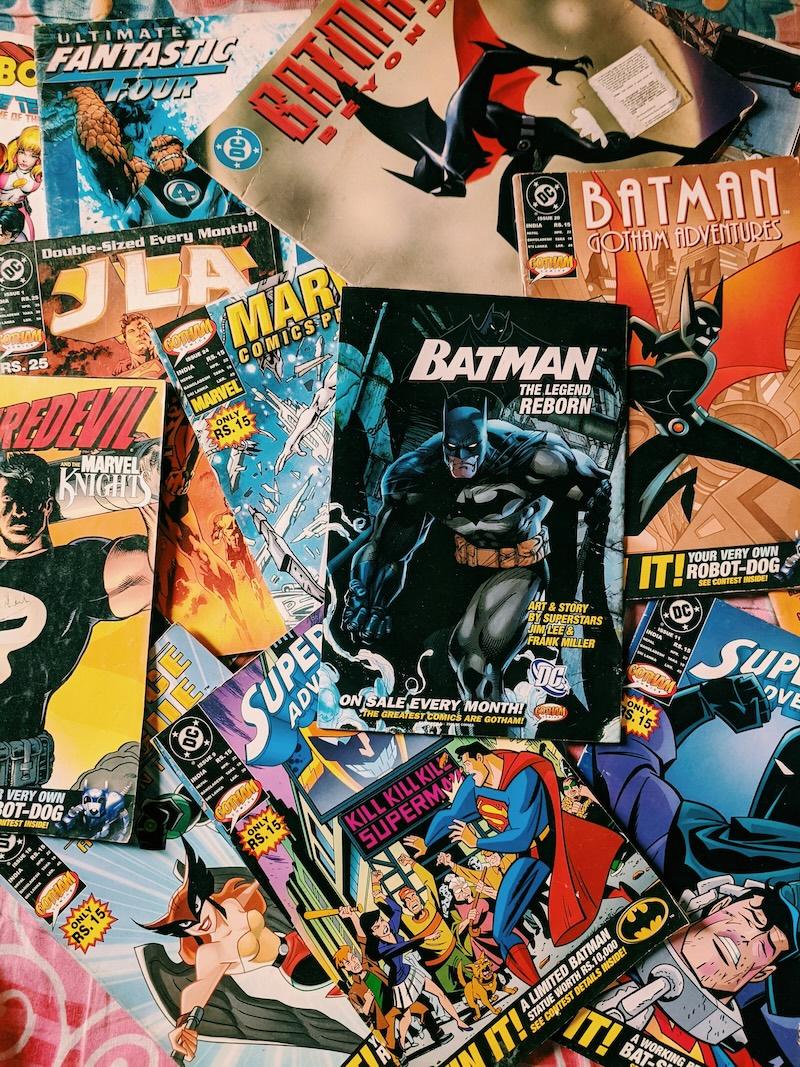
She’d hit the nail on the head. Comics were my first love, and she’d inadvertently foreshadowed my continuing fascination with the medium. That passion, of course, extended to TV and cinema, and specifically fantasy and scifi, and the many associated subgenres. In fact, any genre can be incorporated into the genre we love, one way or another, which makes it pretty satisfying.
But I didn’t just want to read comics.
At the age of five I was drawing my own brand. Then in my early teens, I was creating some impressive comic book covers (I was good at copying) but unimpressive interior art. But I was convinced I would improve when I went to art college, and one day I’d work for D.C. Thompson or IPC or … Marvel! And from there maybe I’d transition into movie-making …
And incredibly, during my final careers discussion at school, there was an opportunity for a job in cinematography, right there. I couldn’t believe I was actually spoilt for choice. So I modestly revealed my plans …
Hitting Reality
My requests were dismissed with a wave of a hand.
The needle slid across the record with a discordant screech.
No art college.
No cinematography.
An apprenticeship at a local cabinet makers was advised. And being unassuming, I didn’t protest. I accepted the job with a tear in my eye and tail between my legs.
For a time, comics took a back seat. With girls now entering the equation, reading Spider-man and trying to create my own comic characters seemed lame and uncool, or so I believed. But, luckily, visits to the cinema with girlfriends increased, and it goes without saying that my attention was glued to the big screen for the entirety of the films. I still drew the occasional cover when home alone, but I was desperate for something to fill the fantastical reading void.
Enter Asimov, Simak, Harrison, Shaw, and Dick, to name a few. That’s when serious SF really exploded for me. And fantasy – Moorcock, Norton, Howard, Anthony – followed closely behind. I loved sub and cross-genres. I was drawn to time-travel – in film and TV, too – and stories set in the near future featuring the effects of groundbreaking technology on mankind.
And PK Dick? It would be remiss not to mention Blade Runner – for me, the most influential film ever. With Vangelis’s beautiful atmospheric music, too. It goes without saying that regular moviegoing had become an essential habit for me.
Creating Worlds
Around that time I began to ramp up my own short story writing, starting with SF then moving onto psychological thrillers. I was also revisiting the comic book scene and was impressed by the advances made in graphic storytelling, the innovative way panels and pages were designed to enhance the feeling of motion.
My reading habits were edging towards thriller/horror; hence a Stephen King spell. A Terry Pratchett one followed, which seems an odd segue. I also later discovered the metafiction of Auster and Murakami, which was another eye-opener, and added to my pool of influencers.
But there was something about Discworld that appealed at the time. Specifically, Moving Pictures. And that decided me. Although I was short-listed for the Ian St James Award with a psychological short story (10k words), I really wanted to create a world and write a series. Not fantasy like Discworld, and not with so many jokes, though tongue-in-cheek and dark humour always feature in my work; I consider them a fundamental of life.
Around the same time I found graphic novels that were aimed at a more mature audience – though I still had a soft spot for the comics of my childhood – and I would’ve loved to have written (and drawn) a novel in visual form.
But that time had gone – I wasn’t going to be working for Marvel after all (darn) – so a narrative novel it was. But it had to be as visual as possible. It had to combine the elements of movies, TV and graphic storytelling.
(But … how?)
Making Text Narratives Feel Visual
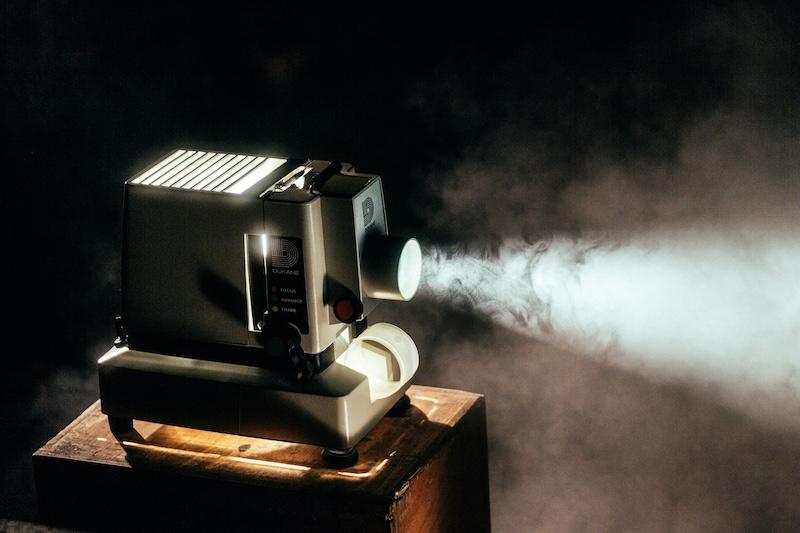
(Photo by Dominique Hicks on Unsplash)
I have a vivid, visual imagination and images appear that I frustratingly can’t transfer well to a drawing board or screen. Some of those images were the sparks of my short stories. Another was the spark of my novel, Movieville.
Now – and maybe this is the crux – as authors were often asked where our ideas come from. Most of mine are from vivid images or brief scenes. But from where? TV, cinema, comics, graphic novels, books, dreams – influence is everywhere, and we absorb it, soak it up like SpongeBob having a moment.
The imagery for Movieville was of an aging burnt-out film critic, bashing away at his keyboard into the night, desperate to write a screenplay that would transcend the B-movies, turkeys and flops he’d had to suffer through during his career. Ashtrays and whiskey tumblers littered his desk and he looked beyond worse for wear.
Problem was, his screenplays were duds. Which made him hammer away even harder. Until …
The Cataclysm.
In which our burnt-out critic was, well, incinerated, but in the process became the Creator. Of a new world. Watching over the heroes, unable to—OK, enough spoilers.
So who was he? Where did the initial image come from?
It Started With An Image
Then it occurred to me – is he a version of me? The frustrations of missing out on art college and cinematography; the lack of focused writing time, the unfinished projects, all due to being steered away from a creative career. But at least I didn’t disappear in a puff of smoke during the creation of Movieville – the world or the novel.
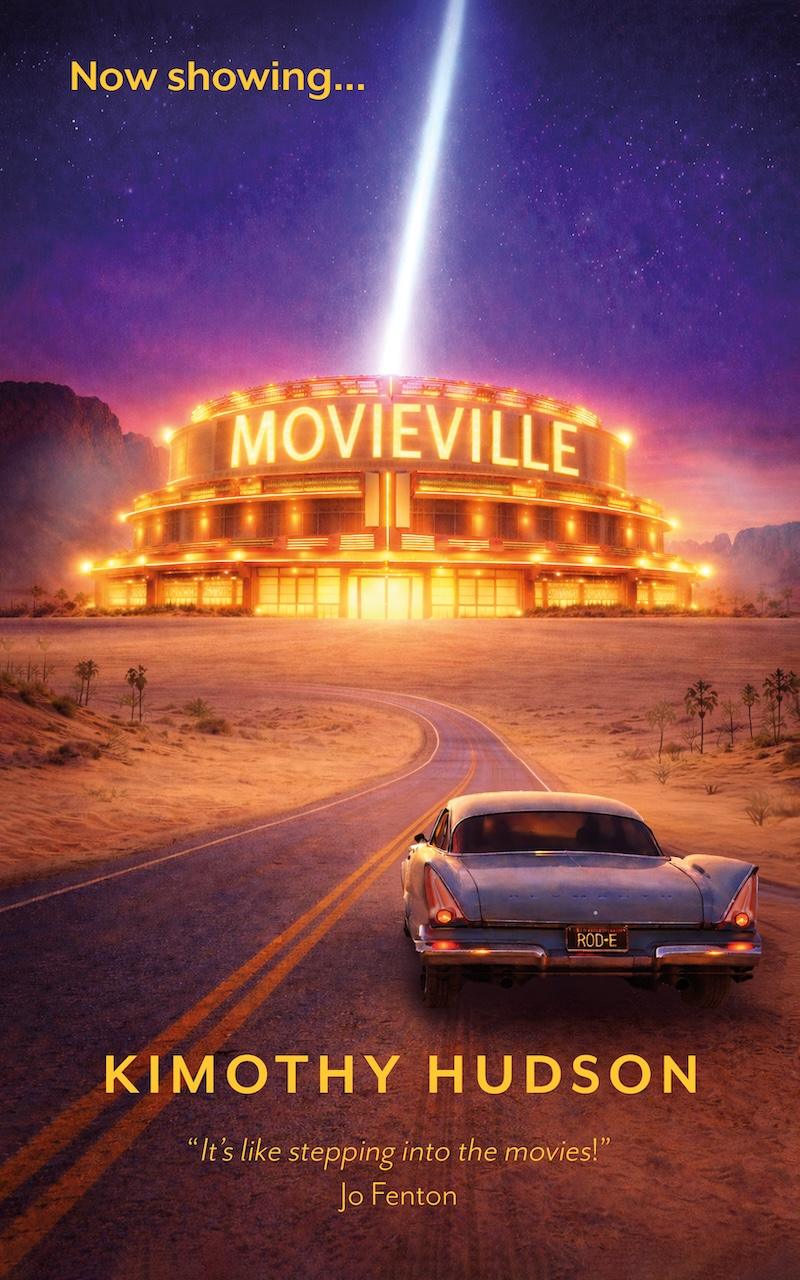
So, in essence, the book is a combination of movies, comics, graphic novels, and narrative SF/fantasy, with lots of sub and cross-genres, but no images. And the non-images aren’t moving.
But most of us create the animation in our minds-eye as we read, and a person who sees in hyperphantasia would view the narrative vividly, as if it were real. The movie references, tropes, parodies, homages and cinematic-like scenes in Movieville will help – hopefully – to make it as visual as possible for those who see in phantasia.
So, after many years in the making, a movie in novel form was born. Or at least that was my aim.
As Mum would say: ’You always were a daydreamer.’
Movieville is out now through Troubador Publishing
Meet the guest poster