The shortlisted works across all 13 categories of the British Fantasy Awards have been announced! Find out who’s in the mix over on our blog. Winners announced at Fantasycon in October.

For all things fantasy, horror, and speculative fiction
-
Announcement:
From Pen to Print: Will Maclean on Solace House
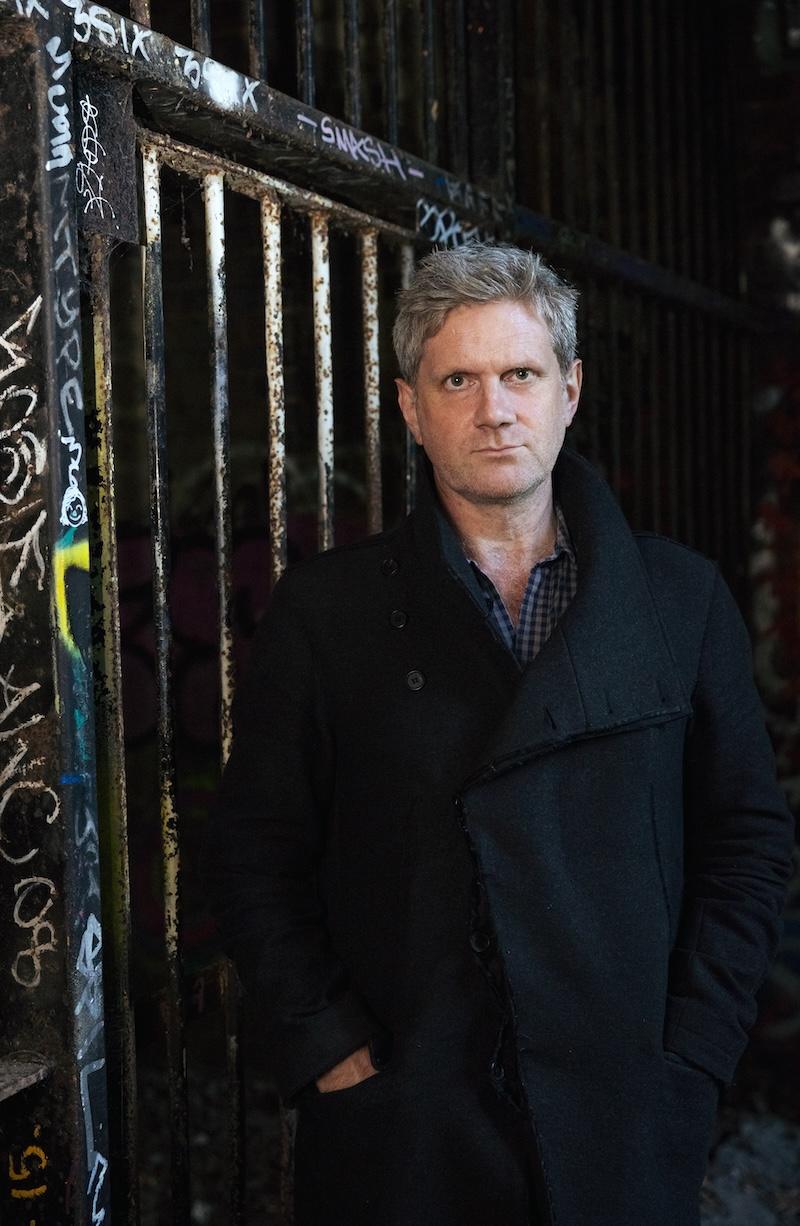
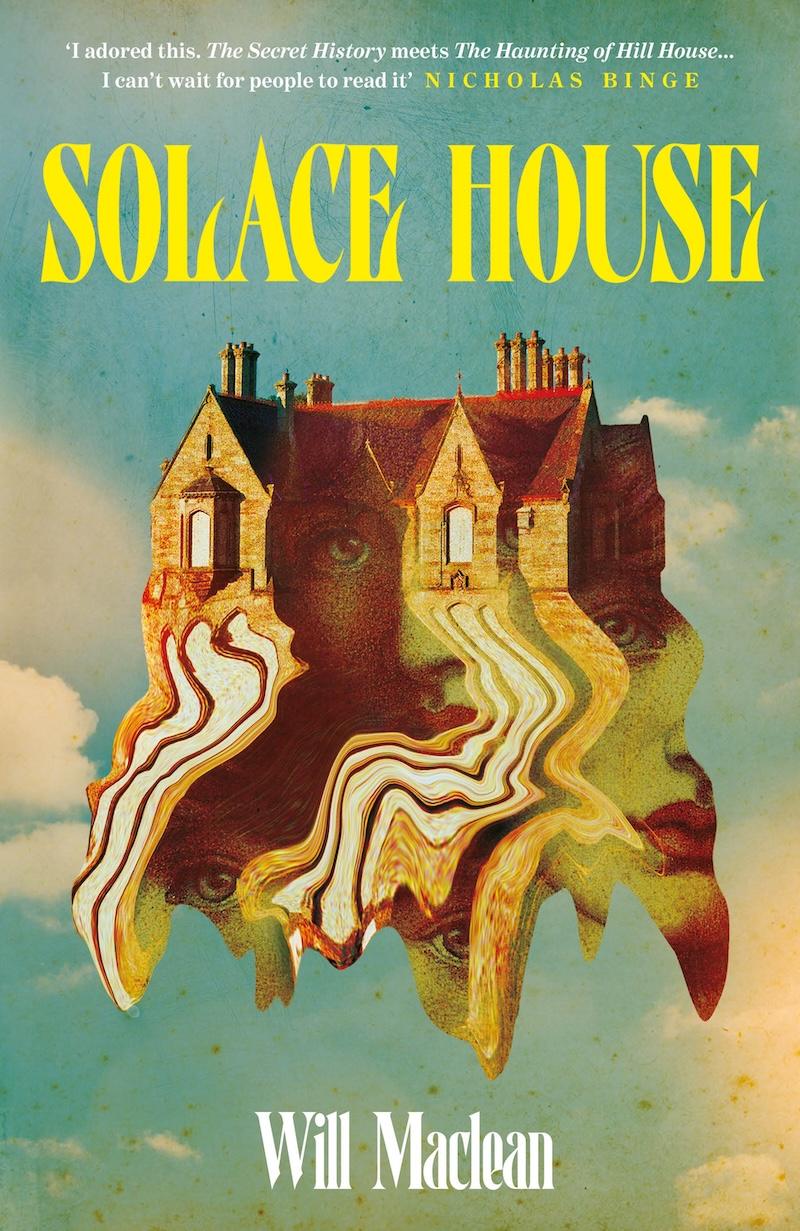
Will Maclean’s ‘difficult second novel’ hits shelves this week, and the writer of the strange and unsettling promises us “something unique, something deeply felt and fought for” with Solace House.
Name: Will Maclean (NOT “William”!) (he/him)
Based in: London
What genres/subgenres are you drawn to?
Anything where new and exciting narratives can flourish. We live in strange and unprecedented times and we need stories that reflect that. I love horror and SF because their concerns tend to be decades ahead of those of what we’d call “literary fiction”. That said, I can – and do! – read just about anything.
Is writing your full-time focus, or do you have a day job as well? What do you do?
I also still have one foot in TV and radio, so work in those whenever I can. I recently wrote some of Danny Robins’s new Uncanny Cold Cases series, which was great fun. Anything like that, when it comes along, is great. I also co-write and co-produce the Broken Veil podcast with the excellent Joel Morris, which is a cottage industry all of its own. Writing – and a creative career – is hard, though, and so I still tend to take on whatever paid jobs come my way. You’ll notice if I ever get to a point where I no longer have to do this, as my productivity levels will go up.
The Book: From Pen to Print
What was the genesis of this book? Where did you get the idea from?
The germ of the idea was during the first lockdown, when I was looking after my daughter, who was only three at the time, and we began painting over people’s faces in magazines. Something clicked in my head and I thought “Who would paint over their own face? And why?”. The rest of it went through a lot of iterations – originally it was going to be about Urban Explorers, and I read up a lot about that, as a culture, but decided against it because the timeframe of the book would have to be much, much shorter, in an age when you can look everything up on your phone. I always wanted to set something in the long, weird summer between university terms, when I was a student, so this seemed the right time to do that.
How many drafts did you go through before you felt it was ready to query? How long did that take you?
MANY MANY DRAFTS. Honestly, this one was a fight from start to finish, this one, because there was so much going on in the narrative. Even right up to almost the end of writing the draft I handed to my agent, I was worried whether everything would work, and it only really all came together at the absolute eleventh hour. It’s five years of your life, so the relief when it finally worked was like indescribable, like vertigo. I had a massive gin and tonic at that point.
Did you work with beta and/or sensitivity readers? How did you find them? How did you incorporate their feedback?
I wouldn’t even begin to know how that’s done, to be honest. I’d be a bit wary of it. I find writing books very liberating because – unlike TV, where stuff is constantly messed with by other people, often to its detriment – you are utterly free to soar, or crash, to create wonderful things, or make mistakes. And I love that. Plus, I was writing here, as I often do, about topics and emotional terrain which I know well, so it wouldn’t cross my mind to ask anyone else about that. I was my own sensitivity reader for this one.
What was your querying process like? How long did it take?
I had to look up the term querying process – from what I can see it means finding an agent? I already had one for this as it’s my second book: the excellent Alex Cochran at Greyhound. The story of how he came to represent me is a long one, but the short version is I met Alex in person and we really got on.
Once it was in the hands of your publisher, what was the process to get it ready for release?
Going through the MS with a fine-tooth comb, over and over, editing and stress-testing all the detail and concepts. This took about a year and half, as it’s that kind of book, but I think it was worth it. It was a long, hard process but I think if someone’s going to do you the courtesy of reading your book, you as a writer have a responsibility to meet the highest level of quality you’re capable of. Again, my editor for most of this was James Roxburgh at Atlantic and he was great – just across every tiny detail.
And now your book is about to be unleashed on the world! How are you feeling?
Honestly? Absolutely elated. I think you’re supposed to be cool about this kind of thing and not get excited, but that would be a betrayal of all the hard work, by me and other people, to get this book out there. I am really, really proud of this book. It’s part of me. As they should be.
What would you like us to know about this book?
Everything there is to know about the book is contained between the covers, and I’d feel uneasy about telling people how to receive, enjoy or interpret it in any way. But I will promise you something unique, something deeply felt and fought for. Every word. This isn’t someone filing 1000 words a day and then clocking off. I lived, breathed and experienced this book for all the time it took to write. I suspect I’ll never stop doing that.
Who’s the ideal reader for this one? What sort of things do they like to read about?
Anybody! I didn’t write it with a specific reader in mind; I just wanted to tell a story that was gorgeous and weird and fascinating and unforgettable, that you could live in for all the time you were reading it. All the reasons I read!
Your Writing Process
Are you a plotter or pantser or somewhere in between? How do you do your first draft?
Again, I had to look up pantser. My understanding of it was late 2000s slang for removing someone’s trousers in a public place as a prank, and I was curious as to why you asked me this, as if I was, like, Johnny Knoxville or someone. Then I looked it up, and all became clear.
I do a lot of plotting, and I will always fly the flag for plot. I find the critical lauding of wilfully plotless books annoying. Plus, plotlessness as a state of mind is impossible. We’re humans. We have no choice but to make story. Plot is a lattice of connection, it’s how your mind works. That said, I do like the material to surprise me – I know roughly where it’s going but I do love that moment where it all takes on a life of its own and steps off a cliff. That exhilaration is also very much part of it.
How do you approach writing? Are you the type of writer who needs to treat it like a job? Is there a particular time of day you find best for you to write?
Treating it like a job is the only way it will become a job. The example I always use is Rene Magritte, who – the story goes – used to commute to his studio with all the office people, get there at 9, paint mad shit, stop at 1 and have lunch, get back to work at 2, paint more mad shit, then go home at 5.30pm on the dot, once again in the commute. Don’t know whether that’s true or not, but I find it useful. No matter what you’re doing, no matter how weird or experimental or dark, this is a job. Take the doing of it seriously.
Geek out about stationery: do you use a notebook? A specific type of pen? Or are you computer all the way?
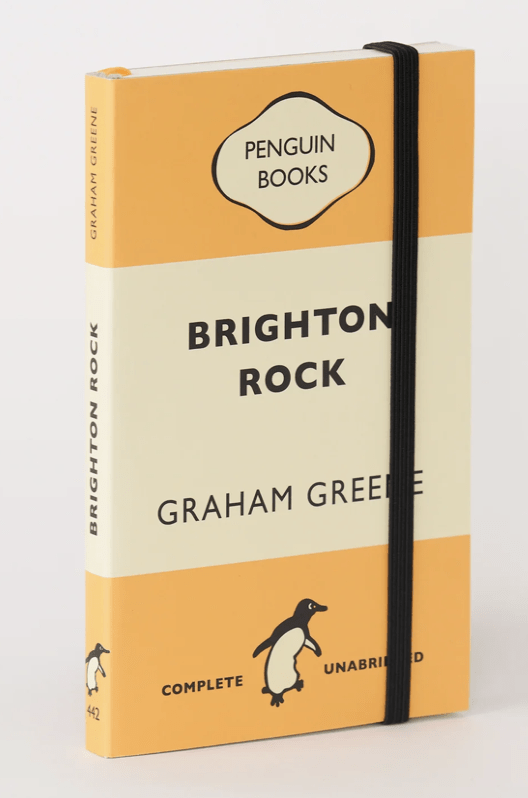
I AM SO GLAD YOU ASKED ME THIS. I use the Penguin Classics range of A5 notebooks for notes and worldbuilding, etc, for each book. The ones that look like Penguin classics on the outside, for titles like The Professor and Not to be Taken. AND THEY’VE DISCONTINUED THEM. I have bought up all I can online, but still. If I get through all of the ones I have, I’ll be bereft.
That’s just for notes/concepts/thrashing stuff out, however. All the hard work writing just goes in a Word doc, same as everyone else.
Is any of that different for editing?
I always write and edit in Word. I wish this was a more interesting answer!
Where do you work? Do you have a comfy, creative space at home or are you someone who has to grab the moment wherever it comes?
I usually write at my desk, which is in a corner of my living room, because I live in London and moving to somewhere with an extra room would cost as much as the Artemis II mission. I’m sitting there now, writing this with headphones on, whilst my daughter watches K-Pop Teen Horseriding Zombie Gymnastics Academy.
I can and do write anywhere though – I think all writers, nowadays, have to.

What’s your writing soundtrack?
YOU DO NOT KNOW WHAT YOU ASK. A vast and curated library of music, which I have chosen because it’s all in that sweet spot of “fascinating and enriching” just before you get to “distracting”. That said, it changes from book to book. Last bits of serious prose writing I did were to Cosi Fanni Tutti’s “2t2” album, but reliable old favourites I come back to are Boards of Canada, Woob, William Basinski, Brian Eno, stuff on the Ghost Box label. Slightly disturbing ambient music, basically. I hope this helps!
I love hip-hop but you cannot listen to it while you write, or at least I can’t.
Do you have a writing ritual?
No! I usually listen to something fun and upbeat like Chappell Roan or Katseye before I start, though, to jolt me into it, and I make a pot of coffee. I don’t imagine this differs radically from other writers.
Where can we follow you / find out more about your work?
Oh, gentle reader, look for me in the patterns of leaves in the spring trees, or the cry of an owl on a summer’s evening, or the endless shifting of the sand dunes. Look for me in the changing of the seasons, and the annoyed face of a cat who’s mistimed a jump onto a tall piece of furniture or countertop and is trying to style it out.
Failing that, I’m on Bluesky and Instagram.