The shortlisted works across all 13 categories of the British Fantasy Awards have been announced! Find out who’s in the mix over on our blog. Winners announced at Fantasycon in October.
For all things fantasy, horror, and speculative fiction
-
Announcement:
From Pen to Print: Philip A. Suggars on The Lighthouse at the End of the World
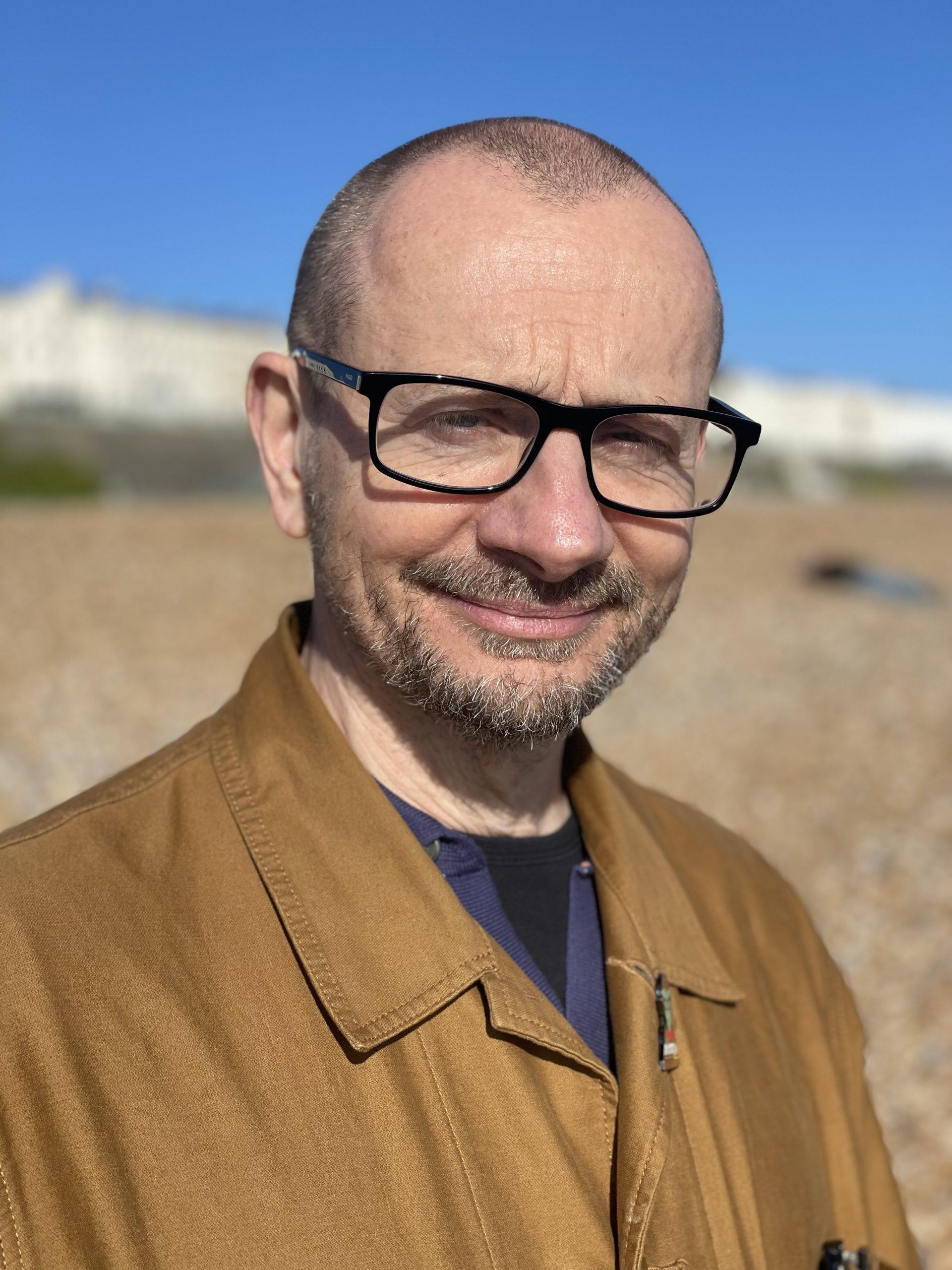
After nearly a decade of slog, Philip A. Suggars can finally see his weird fantasy novel in book stores – and he’s still getting used to it!
Name: Philip A. Suggars (he/him)
Based in: Brighton, UK
What genres/subgenres are you drawn to?
Fantasy, New Weird, Horror, Slipstream
Is writing your full-time focus, or do you have a day job as well? What do you do?
Sadly, writing rarely pays the bills for authors these days. In the immortal words of Ru Paul, “You Better Work.”
The Book: From Pen to Print
What was the genesis of this book? Where did you get the idea from?
Several ideas collided to inspire The Lighthouse at the End of the World. The first was the central image of a girl piloting a living version of London down to the seaside for a holiday, which I dreamt during a nasty bout of flu. The second was a strong urge to write a book with an unapologetically working-class protagonist. And the third was the thought that it might be fun to create a world where the practices of avant-garde artists and political theorists like the Situationists worked as a sort of magic system.
How many drafts did you go through before you felt it was ready to query? How long did that take you?
More than I expected! I did about seven drafts before I sent it out on query. It changed the most during the first three drafts. Once I got picked up by Greyhound Literary, they had some significant notes on the manuscript which meant it needed another draft and then when Titan acquired it there was another round of edits, so all-in-all, probably about nine drafts. The entire process from starting the book to having it in print was probably about ten years.
What was your querying process like? How long did it take?
I do have a deep abiding hatred of literary agents’ websites. All the useful info is always buried about four clicks deep and when each agency has a bunch of agents and you’re trying to sift through a hundred of them the sheer amount of clicking around will give you a repetitive strain injury. (One of the things I love about Greyhound is I grumbled about this to my agent and they changed the website!)
The query process itself is brutal; it was the only time I seriously thought about jacking everything in. My remedy was just to be completely robotic about it. I created a spreadsheet of candidates, updated it regularly and just worked through it, crossing agencies off as I went. Then I got on with enrolling in an MFA and writing another novel. It took me around two years of querying before I got picked up (I was rejected by 40+ agencies.)
Essentially, you just have to dust yourself off and keep getting your manuscript out there while working on something else to protect your sanity.
Once it was in the hands of your publisher, what was the process to get it ready for release?
Titan acquired The Lighthouse at the End of the World in April 2024, so it’s felt like a long process. As I mentioned, there was an editing pass that I needed to do with my editor, but that was pretty light touch and we turned it around in a few weeks. The team at Titan have been absolutely brilliant, I have to say. They’ve all been so supportive and creative. I couldn’t have landed with a better publisher.
And now your book has been unleashed on the world! How are you feeling?
It is odd and has taken me quite a while to get used to it. As an author, you walk around with a novel in your head for so long that it feels like a very internal, personal thing. And then when it’s published it becomes this public object. When the book was chosen as the speculative pick of the month by Barnes & Noble, I suddenly started getting pictures of the book from all over the US. I mean, one minute you’re buying milk in your local Londis and then a mate sends you a picture of your novel in the front window of the Hollywood branch of B&N and it’s completely mind-blowing.
What would you like us to know about this book?
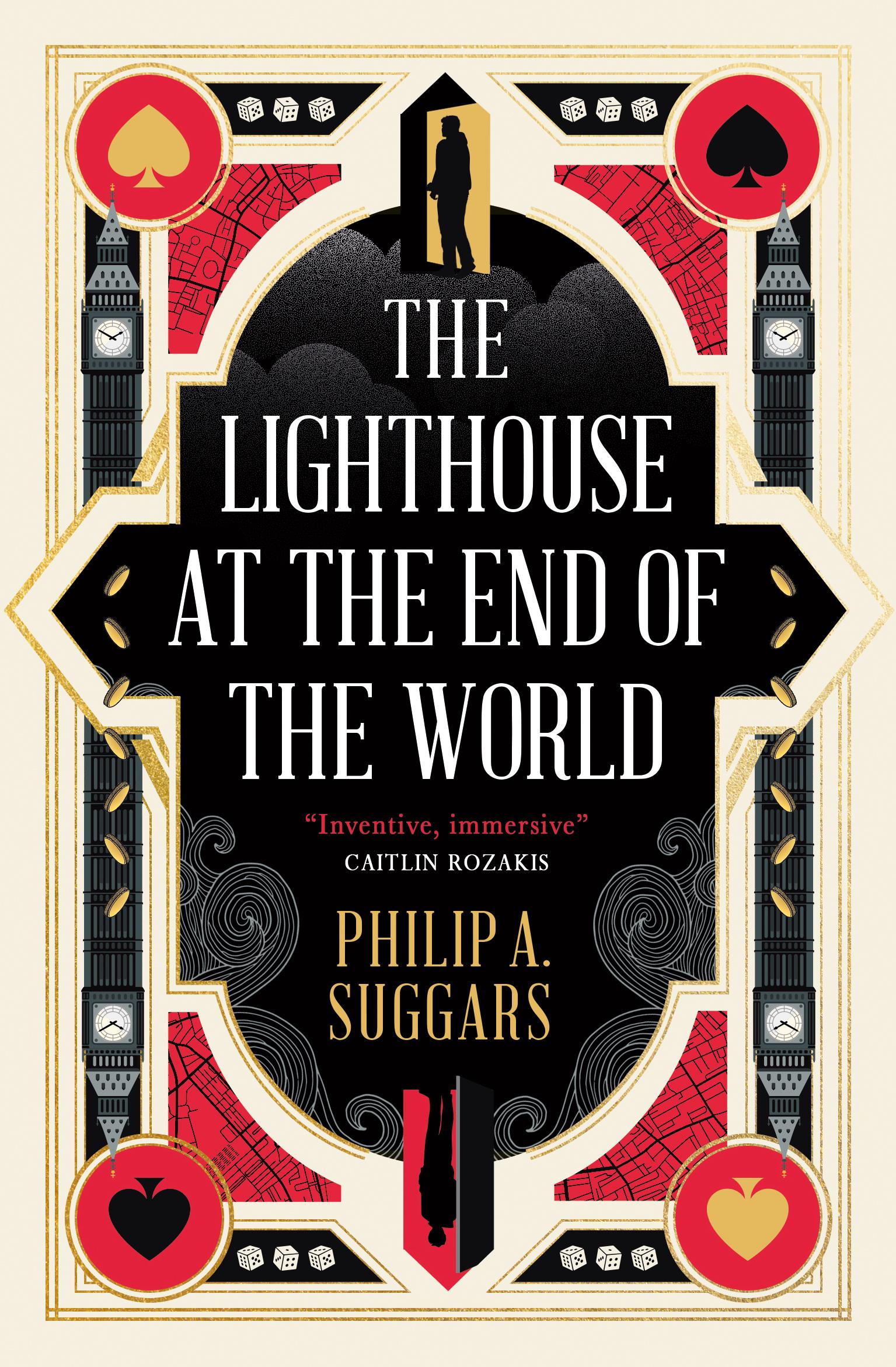
At its heart this is a story about family and choices. Oyster is a young man from a complicated background: small-time con artist, devoted brother, terrible decision-maker. He ends up falling through the floor of our reality into “Greater London”. It’s a world that remixes my own obsessions with baroque British history and Vivienne Westwood-era post-punk and a place where ink beetles carry messages, bewigged clerks police the streets and walking sentient skyscrapers mate and lay eggs. Oyster goes looking for his dad and ends up finding exactly the right sort of adventure for the wrong sort of person.
Who’s the ideal reader for this one? What sort of things do they like to read about?
The ideal reader for this is someone who likes fantasy broadly and enjoys category errors—that is, things that refuse to fit together neatly. Someone who likes the idea of China Miéville but wants more fart gags, or who enjoys V.E. Schwab’s portal fantasies but would like something with a bit more grit under its black nail polish. If you’ve ever picked up a fantasy novel and thought “where are all the people from working-class backgrounds?” then this might be your cup of tea.
Your Writing Process
Are you a plotter or pantser or somewhere in between? How do you do your first draft?
I think each book I write ends up being its own sort of thing.
My first trunk novel, I just totally pantsed and the wretched thing ended up at about 200,000 words long and was unfit for human consumption.
So, when I got around to doing Lighthouse I plotted things out at a high level, but the book was initially a tangled mess, every single idea I’d ever had was in it, because, you know, you’re writing A NOVEL and you might not ever do it again.
I had this great big roll of paper with all the sheets cellotaped together showing what happened when and how things interrelated and what got revealed when, which was enough to get a first draft done. But it still read like a conspiracy theory.
Once I understood that the heart of the story was Oyster finding his dad it simplified everything enormously.
With subsequent books, I’ve tried to plot the main beats loosely and then pants things in between each of the major points. For me, the problem with detailed plotting beforehand is that I don’t have a feel for the emotional tone of the book. Without that, plotting is just moving Lego minifigures around. Conversely, if I pants everything, without at least a rough idea of where I’m trying to land, I end up with a glorious mess.
How do you approach writing? Are you the type of writer who needs to treat it like a job? Is there a particular time of day you find best for you to write?
I set aside time each day before my day job so that I get some words down, as well as time at the weekends where I can just totally focus on writing. One of the things Toby Litt taught me is that being a writer is about the discipline of getting words on the page even when you don’t much feel like it.
Geek out about stationery: do you use a notebook? A specific type of pen? Or are you computer all the way?
There’s a nice stationery shop in Brighton that sells ridiculously expensive notebooks. I always feel like Charlie Bucket pressing my nose up against the glass of a sweet shop window in there, but if I’m starting a new project I’ll treat myself to a new notebook.
When it comes to drafting, I’m electronic all the way. I have a Freewrite which is basically an internet typewriter that syncs with the cloud, but doesn’t really do anything else so it’s really good for getting into flow.
Is any of that different for editing?
When I have a complete draft, I still keep everything electronic, but edit on Scrivener as the Freewrite isn’t any good for that. If I’m feeling particularly louche, I might even buy a new notebook for a new draft if it’s going to be very different.
(Photo by Prophsee Journals on Unsplash)
Where do you work? Do you have a comfy, creative space at home or are you someone who has to grab the moment wherever it comes?
I most enjoy working in café’s. I find that provides the perfect mixture of focus and opportunities to people watch.
What’s your writing soundtrack?
I love listening to music when writing and I do tend to create a playlist for different stages of a project. Generally, I listen to things that don’t have lyrics, simply because the words get into my head while I’m working. So, I listen to a lot of drones and ambient: Stars of the Lid, Alva Noto, A Winged Victory for the Sullen etc. That said, I did put a playlist together for Lighthouse that you can find on Spotify here.
Do you have a writing ritual?
As I said, I try and write early at home on weekdays and then have more dedicated times where I get out of the house during the weekends. When I’m writing a novel, it can be hard to get into the right head space if I’m not doing it every day.
Where can we follow you / find out more about your work?
Follow me on Substack, Instagram or BlueSky, or see my Linktree.