The shortlisted works across all 13 categories of the British Fantasy Awards have been announced! Find out who’s in the mix over on our blog. Winners announced at Fantasycon in October.

For all things fantasy, horror, and speculative fiction
-
Announcement:

Ask an Expert: April 2026
In this monthly column, we pose your questions to an expert in a specific field of speculative fiction and the wider ‘industry’. By popular request, this month we look at how to maintain your creative practice while LIFE happens around you, with BFS Chair and author Shona Kinsella.
This month: Being creative despite LIFE, with Shona Kinsella
Name: Shona Kinsella
Website: shonakinsella.com
Specialism: Being a powerhouse, aka Wonder Woman, aka the Busiest Woman in SFFH
Follow: Instagram | BlueSky | Facebook
Shona Kinsella is a Scottish author of mythic fantasy. Her works include Daughters of Nicnevin, The Heart of Winter, Petra MacDonald and the Queen of the Fae, The Flame and the Flood, and non-fiction Outlander and the Real Jacobites: Scotland’s Fight for the Stuarts. Her short fiction can be found in various magazines and anthologies. Shona was the editor of the British Fantasy Society’s fiction publication BFS Horizons for four years and is now the Chair of the Society. She has been shortlisted for four British Fantasy Awards. She lives near Loch Lomond with her husband and children.
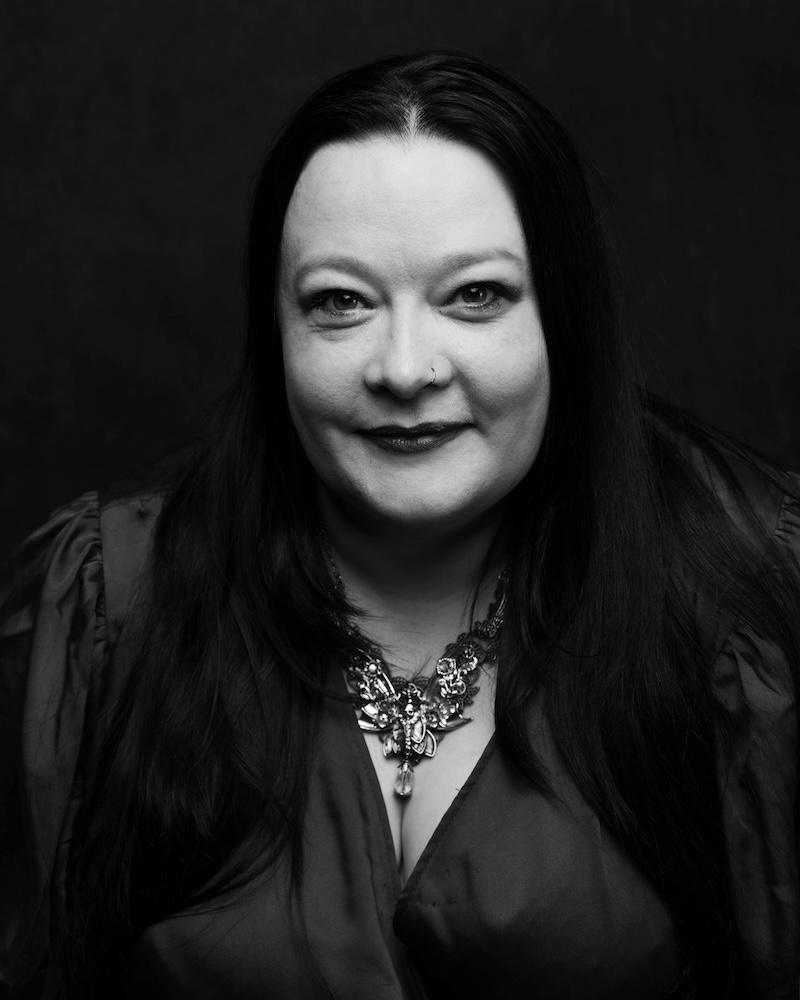
A note from Shona before we begin
I want to start by giving you a little peek into my life—a little bit of context to allow you to weigh up how well these things have or haven’t worked in my case and help you figure out whether or not they might work for you.
I started writing in 2014 after my middle kid was born and the eldest was aged 7. I signed my first publishing contract in 2016, just before conceiving my third kid, who was born at the end of 2016, and my first book came out in February 2017. On that first publication day, I was still recovering from complications with the birth. All three of my children are some flavour of neurodivergent, and I am possibly (likely?) autistic.
Since then, I’ve written eight books and published six. I’ve written numerous short stories, most of which have found a home. I was the editor of BFS Horizons for four years, the lead judge on the short story competition for two, and I’ve been chair of the BFS for almost five years.
I have done this while also dealing with chronic illness. I have been living with fibromyalgia since around 2018, and with PoTS since 2023. I don’t have a day job—frankly, my health won’t allow it—but I do have a busy side-hustle as a freelance editor, which fills about 20 hours a week, on average.
Three Questions On Momentum
- When I have things I have to do for uni, but not many spoons, inevitably I have to make sacrifices and it usually ends up being writing, but then it’s hard to get back into it. How do you manage?
- I have a chronic illness and there are times when I just can’t think or do anything. It makes setting up a regular writing practice really hard. Once I have a rhythm, I can sustain it. But it is so bitty at the moment it is hard to keep focussed and going on my WIP. Any tips or advice? I mean this seems like an impossible question, so feel free to ignore this one!
- As well as finding time for the story, I’d like to ask how you keep the story alive while you’re trucking on to the next open slot for writing? I always get scared I’ll lose it and the characters will leave my mind if it’s more than a month.
Sadly, writing is usually the first thing to give way when life gets too busy for me, too. To keep the work alive while I’m away from it, the thing I focus on is to try and least spend a bit of time thinking about it each day, even if that’s only five minutes in the shower or when I’m lying in bed at night. I try to think about where I left off and where I want the story to go next, perhaps even writing the next scene in my head. That way, when I finally do get to open up that file again, I can slip back into it a little more easily.
In terms of getting back into the habit of finding the time for it (which is another challenge!) I start small. I set a target of half an hour, or 300 words, or one scene—whatever feels most manageable in that moment. And I really commit to trying to get to at least one BFS sprint session a week, as they’re so helpful for me. I know some writers who aim for 100 words a day, or who switch to writing on their phone while on their commute, or other ways of grabbing at small pockets of time and opportunity.
I think these two things work together—the more alive the story feels in your head, the more eager you’ll be to get back to it as soon as you can.
The Productivity Myth
I guess my question is more about how to write productively while life is happening. I have a toddler and a full time job. I get my butt in the chair for ~2 hours a day. (Let’s not mention how much of that time is Instagram/Discord. It varies.) But with the pace of publishing at an ideal of 1 year/polished book, this feels impossible with so little freedom. How do you write more efficiently in the limited spots, and not get left behind?

This is kind of a harsh lesson but I think it’s one that we all (myself included) need to internalise. There really are only so many hours in the day and we have to choose our priorities. Some days writing won’t make it onto the list—the kids are sick/there’s too much going on at home/the day job has been exhausting—and that’s fine. I do not believe that you have to (or should) write every day. I don’t. But, if you really want to write, and to have a career in publishing, you need to find the time to do it, probably more days than you don’t. Maybe it means not watching TV some days, or missing out on a social event. Letting someone else take the kids out for the day while you get your head down. It is not easy, and I don’t mean to suggest that it is, but it can be done. I watch very little TV (less than 2 hours a day), don’t play video games, have hardly any social life, don’t really have any hobbies—other than jigsaws, which I do while watching TV after the kids are in bed at night. So that’s part of it. You don’t have to be as boring as me (!), but you do have to find a way to write consistently.
When my middle kid was a baby and I was just starting to write, my writing time was during nap time on weekdays when the eldest was at school, and I fought to keep that time sacred. No quickly doing the dishes, or sticking on a load of washing, or any of the other day-to-day tasks that can easily take over your life. Now and again something else really was more important and I didn’t get to write that day, but most of the time I stuck to it. When the youngest kid came along, he refused to nap unless he was moving in the pram, so I started getting up at 5:30am to write. Then he started waking up that early too, and there was no way I could push the clock back any farther, so my writing slowed down a lot then. Eventually I enlisted my sister’s help and she took him for a few hours each week so I could have at least one afternoon. I was really lucky to be able to do that.
The other part of it, I think, is putting the phone down (she says, forcing herself to ignore the notification which just popped up on her own). Maybe even put it in another room during writing time—this is a technique that I use when I’m feeling particularly distractible. I’m sure that pretty much everyone has, at some point, lost half an hour or more scrolling mindlessly through social media. You’re happily writing away, a notification pops up and 3 apps later you look up, you’re halfway through a sentence you can’t remember the end of, and half of your writing time is gone. I’ve done this far more times than I care to admit. It’s the way social media is designed to work, and I really believe that it’s terrible for our attention span and our creativity. So if you only have a set amount of time to spend on writing: no phone during that time.
Using the Pomodoro technique (25 minutes focused work, 5 minute break) can be useful and I often do that when I really need to get on with things. This is the principle that our BFS writing sprints are based on and it can be hugely helpful. I find it much easier to ignore that text/email/other distraction when I know I can check it in a set amount of time.
Get an accountability buddy—whether it’s joining the sprint sessions, doing more informal sprints and reporting back on the Discord, or just texting your partner/friend/whoever with your goal and your progress on a regular basis—can be really helpful for keeping momentum up as well, and that mindset of having to be accountable for your time can really help with productivity during your writing sessions.
And finally, the advice I gave above about keeping the story alive in your head between sessions really helps here too. Each night when I’m lying waiting to fall asleep, I’m thinking about the writing I plan to do the next day. I think about it again while I’m in the shower in the morning, while I’m eating breakfast, on the way to school and back, so that when I sit down at my desk, I’m ready to get right into it.
Getting Started & Staying Focused
I’d love advice on task initiation and staying focused whilst battling working memory, rejection sensitivity and executive function issues. In layman’s terms, how to start and continue writing whilst dealing with ADHD or similar experiences?
[follow-up from another member]
Yes, that! Plus, if you do lose focus and go into a phase of avoidance—where you feel like you physically can’t do it and you hate everything about it—have you found any ways to get back into it more quickly than just waiting for another phase of enthusiasm to hit naturally (if that ever happens to you, of course)?
[related question]
Any tips on corralling brain squirrels?
There’s a lot to this question, so please forgive me if I don’t cover everything. Also, it’s worth remembering that techniques which work for one person might not work for another, but it’s all worth trying to see what suits you personally.
Task initiation: The best thing I’ve found for this is accountability to someone who is not me. If I’m only going to do something for myself, I can put it off indefinitely, but if I have to tell someone else how I’ve spent my time, I’ll get on with the work. Nowadays, that external accountability often comes from publishing deadlines, but I have also used friends and family members as accountability buddies, and when I was writing my first novel, I joined a writing group in which we exchanged a chapter a week.
Staying focussed: See the previous section.
Working memory: I bullet journal. The journal is my external brain and I would be lost without it. I write lists, make notes about what I’m writing, what I want to write next, what I need to do for the various different parts of my life each day/week/month. If something isn’t in my bullet journal, there’s a good chance I will forget that it exists. Added to this, if I miss a week or two of journaling and get out of the habit of keeping on top of it, I forget to journal, then everything becomes chaos. Another trick I use is when I finish the writing of the day, I sometimes leave myself bullet-point notes at the bottom of the document, reminding me where I was going/what needs to happen next, etc. Without this, if I’m away from the story for more than a day or two, I can find myself coming back to it with no idea of what I was trying to do.
(Photo by Estée Janssens on Unsplash)

Rejection sensitivity: This one is hard. There’s no real way around it; a writer’s life is full of rejection. I tend to approach every submission with the assumption that it will be rejected many, many times—and strangely, when I receive a rejection it doesn’t sting as much because it’s what I expected. I’m not entirely certain that it’s a healthy coping technique though, and it makes it very hard for me to trust acceptances.
Avoidance: When I hate the thing I’m working on and find myself cleaning the bathroom just to avoid writing, I’ll pivot to working on something else (because there’s always another shiny new idea waiting in the wings). In most cases, I’ll write a short story during these times, giving myself the dopamine hit of a quick win. Often that fills me with renewed enthusiasm for writing. If even working on something else feels like too much, I look for other ways to stay connected with the craft of writing in general—I’ll read books and blog posts and articles about other people’s writing lives.
Any advice on writing with cats?
Get a decoy keyboard/laptop and have it set up next to where you’re working.
I definitely want to know the fundamental “how do you literally sit down and get started?”
I’ve spoken a bit about task initiation above—set yourself goals, have someone to be accountable to, etc—but if you mean in the wider sense of ‘how do you start writing in the first place’, I think I let the sheer joy of it carry me. I really love books. I love stories. I get so excited about whatever idea is at the top of the stew that I can’t wait to sit down and get to work on it. Keeping going when you get to the middle is so much harder…
I’d love to know if Shona divides her days into different tasks, eg 9-10am admin, 10-12 writing etc, or if it varies.
This varies a lot for me depending on what’s going on at the time/how my pain is. In general, on a routine week, I aim to follow this schedule:
- 9:30 – 11:30: writing
- 11:30 -12:30: BFS admin
- 12:30 – 1: my own emails/admin
- 1-1:30: lunch (I often forget to stop to eat)
- 1:30-2:45: editing (for others)
- 2:45-3:45: school pick-up, some focussed time with kids
- 3:45-6: editing (sometimes while also cooking dinner)
If I’m closing in on a deadline, I’m more likely to be writing all day. If I get an editing job with a short turn-around time, I might be editing all day for a week or two. If we’re in the run-up to Fantasycon, BFS stuff takes over—especially the years when I’m running Fantasycon (like this year!), which pretty much requires 30-40 hours a week in the final 6-8 weeks before the convention. If the kids are off school, everything is in the air and I just do my best to fit in whatever has the closest deadline/feels most urgent and join the writing sprints when I can so that at least I know I’ll get that burst of focussed writing once or twice a week.
Finding The Energy
I would like to know tips for coping with tiredness.
I’m not sure how much I can help with this because, if I’m being honest, I’m exhausted all the time. I am someone who does not rest enough. I generally work (either writing, BFS, or editing, or all three) seven days a week. I take my laptop with me on family holidays. When I do take a day off work/away from my computer, I usually spend it catching up on the housework or doing family stuff. The only way I know how to cope with tiredness is to ignore it and keep going—and I’m not sure that’s actually a healthy solution!
Due to having a full time job and having an energy-limiting disability, I have less time for writing and feel like I’m progressing slower, if that makes sense. I also face a lot of pressure to write faster and write more, both from others and from myself because I want to get my work out there. Do you have any tips to navigate that pressure?
This is a tricky one. I think there are maybe a couple of things worth thinking about here. You say you’re feeling pressure from others to write more, write faster—who are these others? Because unless it’s your publisher, then frankly it’s nothing to do with them. If it is your publisher, then it’s worth having a really clear and honest conversation about what you can do and timescales that are manageable for you. I’m lucky because my publisher is very understanding of my situation and is largely happy to negotiate things like deadlines to account for what’s manageable for me.
If the pressure from others is coming from family members, then I would be asking why. Is it because they’re so excited to read your book? Then maybe a conversation explaining how much you appreciate the support but that you find the pressure stressful would help. Is it a spouse, because they’re hoping for extra income? It might be worth telling them just how little most authors earn from their writing—getting a book deal these days is not at all like a lottery win.

The pressure you put on yourself is much harder, and I’m not sure I actually know how to deal with that. I also feel like I’m always running to stand still and I’m never making enough progress, I’m not good enough, I’m not publishing enough, I’m not worthy enough… I think you’ll find that most of us feel this way at least some of the time. When I’m feeling particularly frustrated with my pace, I try to remind myself that I would rather put out a good book a little later than a bad one now because I rushed it instead of doing the best I can.
I have also at times used a ‘done list’. When I get too focussed on all of the things I haven’t done yet, haven’t achieved yet, and so on, I write a list of all the things I have done. It can be things like:
- Had an idea
- Developed the idea until it was ready for writing
- Wrote x words a week for 3 weeks
- Came up with a title I’m happy with
- Researched for the book
Really, you can fill your done list with whatever steps make sense to you, but the point is to remind yourself how far you’ve come already, and that you are capable and competent and will get there in the end.
(Photo by Prateek Katyal on Unsplash)
Coping When Things Don’t Go How You Wanted
I’d be interested in strategies for coping with rejection/failure to meet goals. How do you keep motivated and inspired when it feels like others aren’t interested in your work? (i.e agent rejections, publisher rejections, bad reviews, bad sales etc etc.) Ultimately I think most of us do this to be read by others, so how do you navigate those times where you feel like your hard work isn’t translating and the desire to give up becomes strong?
Rejection is tough, and it is an inevitable part of this career. If you want to be published, you’re going to hear ‘no’ more than you hear ‘yes’—and then, when your work is out there, you’re going to get negative reviews, sometimes ones which are unfair, and you have almost no control over how sales go. I had a short story rejected just a few weeks ago, and I currently have two things on sub that I’m waiting to hear back on.
So it’s really important that you find a way to manage rejection and keep going.
When I was just starting to write, I read On Writing by Stephen King. In that, he talks about sticking rejections on a nail on his wall, and eventually needing to get a bigger nail; I guess I internalised the fact that even the greats go through rejection. Rejection doesn’t mean anything about my writing, just that it’s not for that person at that time. I think that’s a really important lesson to learn, and speaking openly and honestly to other writers about their experiences can help—when you realise, and really take on board, that it’s not you. It’s not personal. It’s all of us. That writer you think is almost a god? They’ve been rejected. They’ve had bad reviews. Go and read some of the one- and two-star reviews of your favourite books/writers and see just how different people’s reactions are to something that you love, and it’ll remind you just how subjective art is.
Having a community of writers (which you’ll find in the BFS, cough, cough) is invaluable. You can compare stories, learn more about how the industry works, learn just how much of it is based on luck (so much of it!), have people to commiserate with, and people to remind you that you are a good writer, that you have a voice worth sharing. My writing friends have held me up on so many occasions, and I wouldn’t be where I am without them.
I’m also ridiculously stubborn—and when it comes to writing, I recommend that. You know that bit in Shawshank Redemption when Andy Dufresne writes to the Board of Corrections every week for years just to get some books for the library? That is me, when I set my mind to it. Andy is my role model in life.
I want to write. More than I want almost anything else in my life. Yes, I also want to be read, and understood, and want people to enjoy and connect with and value my work, but really all of that is in service of me being allowed to continue writing. So even though I get discouraged sometimes, doubt my abilities pretty much all the time, and definitely want to hide and never come out again when I read a bad review—I will always pick myself up, dust myself off, and get back to the next project. Because there is nothing else I would rather be doing.

Read previous columns
Ask an expert
- March 2026: Writing comedy and being funny, with Richard Sparks
- February 2026: Writing romance, with PS Livingstone
- January 2026: Writing TTRPGs and working with existing IP, with Alasdair Stuart
- December 2025: Creative coaching, with Dr Rachel Knightley
- November 2025: Crowdfunding, with Fio Trethewey and Georgia Cook of The Holmwood Foundation
- October 2025: Creating darkness, with Daniel Willcocks
- September 2025: Working with book bloggers, with Kayleigh Dobbs of Happy Goat Horror
- August 2025: Websites for creatives, with E.M. Faulds
- July 2025: Anthologies, with Dan Coxon
- June 2025: Self-publishing, with AK Faulkner
- May 2025: Indie presses, with Black Shuck Books’ Steve J Shaw
- April 2025: Being a traditionally-published author with Adrian Tchaikovsky
- March 2025: SFFH artwork with Jenni Coutts
Ask an agent, with Laura Bennett: