The shortlisted works across all 13 categories of the British Fantasy Awards have been announced! Find out who’s in the mix over on our blog. Winners announced at Fantasycon in October.

For all things fantasy, horror, and speculative fiction
-
Announcement:
The Power of Speculative Fiction
With his debut novel Rivennia out in the big wide world, Mexican-born author Jaime Urencio asks how speculative storytelling can help us to shape the future—and to warn us about it, too.
Millions of years of evolution shaped who we are today. It is widely accepted that random mutations emerged within the semi-organised chaos of our biology—and while many of these mutations proved deadly, others gave a select few an advantage. As a result, we can trace every aspect of who we are—from the curve of our ears to the way we grieve the loss of a loved one—back to our evolutionary history. Every habit, every quirk, every sudden spike of fear or burst of excitement has roots stretching into a past so distant it feels mythical.
Through this iterative process, we somehow became not only highly intelligent primates but also storytellers at heart. Today, the stories we share, packaged in all sorts of ways, remain ever present in our daily lives. Tales are at the very core of who we are; we like telling them and receiving them, weaving them into the fabric of our relationships. We see this clearly when we read books and watch films, but on a more basic level, we are all ears when a colleague shares a juicy detail about a mutual acquaintance, and we immediately perk up upon hearing: ‘You are never going to believe this.’ From an early age, children develop the curiosity required to follow a story, knowing instinctively when something is building toward a climax, and wondering, with no small degree of anticipation, what will happen next.
So, just like our instinct to crave chocolate over leafy greens, is this innate interest in stories something we can track back to our ancestors’ survival traits?
Let me tell you a story.

In the beginning, there was sound
Once upon a time, some 200,000 years ago in Sub-Saharan Africa, early humans began developing language as a way to exchange information and foster collaboration. Grunts and gestures evolved into nouns and verbs, until someone, somewhere, gained the ability to say something like, ‘My neighbour was eaten by a lion yesterday.’ Suddenly, information could be passed on and acquired without anyone needing to witness the event themselves; you could avoid a lion without ever coming face to face with one.
Amid the bubbling mutations of early humanity, those who had it in their genome to be interested in that story—those with the curiosity to listen, the imagination to picture the fate of the unfortunate neighbour—learned about the dangers of lions and were keen to avoid them. They no longer needed their own close encounter to work out how to stay alive; the experience of others, translated into words, was enough. And those who were uninterested, who lacked that instinctive drive to pay attention when someone announced a tale involving teeth and claws, were sadly eaten and therefore never passed their genes down to us lucky modern humans.
The same principle repeated itself for generations, seeping into every aspect of our survival. The bonding that sharing stories facilitates acted as additional reinforcement. Those who found it easy to connect with others, who enjoyed swapping experiences by the fire and speculating about what lurked beyond the trees, were more likely to survive long enough to reproduce. Fast-forward to our day and we now have billions of sophisticated apes dominating the planet, obsessed with stories to the point of binge-watching television series for hours without a break, or scrolling endlessly through social feeds for that next narrative hit.
Somewhere along that chain, however, it became acceptable for the information being transferred to be fictitious. Were the first speculative stories deliberate lies? Possibly. But perhaps we also reached a point at which stories had become so intertwined with who we were that the question of truthfulness no longer mattered. After all, a story does not need to be factual to be useful. Today we’re quick to immerse ourselves in a play, even when we know the people in front of us are actors performing lines written by someone we have never met. We know the scene unfolding isn’t true—we can rationally picture the writing sessions, the rehearsals, the costumes and makeup—yet we laugh and cry all the same. Because as long as the script tickles that ancient part of our brain that once helped us stay alive in the savannah, we really don’t care whether the events actually happened.
But this raises an interesting question: do we like to make stuff up simply as a by-product of a system originally born to exchange truthful information, or is the act of invention itself something that also gave us an evolutionary advantage?
The latter, I’d argue, is the most likely scenario.
A warning system can provide advantages
I often think of this as a kind of sonar. A ship nearing the shore is equipped with a system that alerts the crew to a potential crash against the nearby reefs. A simple ‘forecast’ is produced which essentially says: ‘If you continue in this direction, there is a high probability of collision.’ With that information, the crew can choose to take the risk or change course. It doesn’t describe what has happened; it describes what might happen. And that distinction matters.
One could argue that the ability to imagine what might occur is as useful—if not more useful—than recounting what already has. Might is key in this equation, because for as long as the situation hasn’t yet materialised, the outcome remains open to influence. Our actions in the present can alter the forecast. Speculative fiction, at its heart, is an attempt to model the future, to explore alternate paths before reality commits to one.
Through the lens of Ted Chiang’s imagination in The Lifecycle of Software Objects, we’ve learned about digital personas and what it would be like to raise sentient AI as if they were our own children. Margaret Atwood has speculated about societies clawing back on advances once assumed permanent in Oryx and Crake and The Handmaid’s Tale. Kazuo Ishiguro’s Never Let Me Go offered a chilling exploration of people bred for a single predetermined purpose—a view without which we might risk depriving such individuals, hypothetical or otherwise, of their humanity.
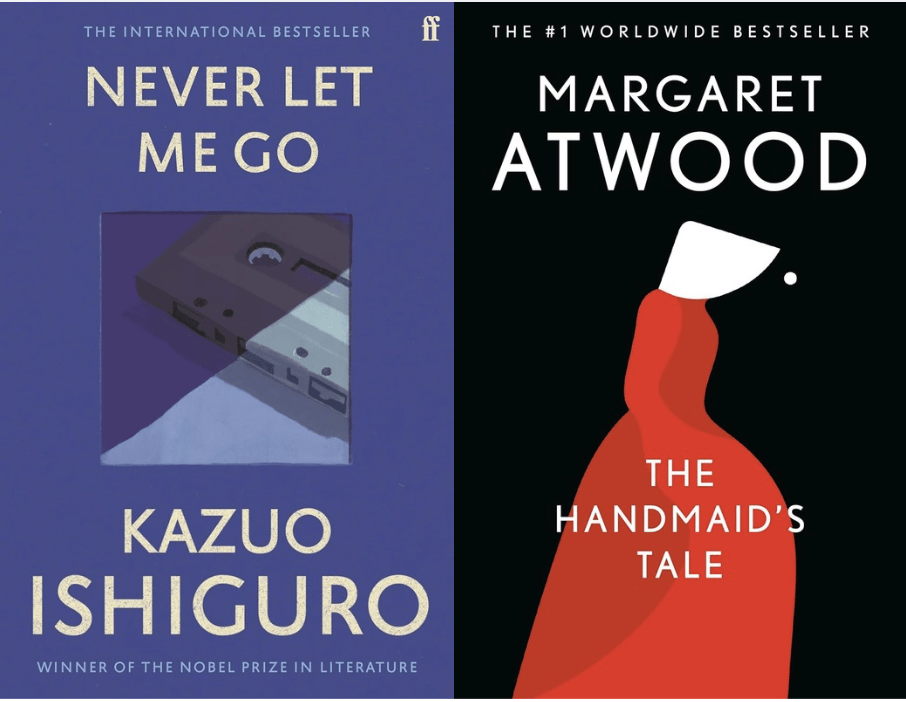
These authors appeal to our ape brains, promising an engaging tale while simultaneously delivering a warning: what might happen if we keep going in the same direction? What patterns emerge if the status quo is tolerated? Where might we end up without the courage to act?
When society is at risk of collision, whose job is it to sound the alarm? Surely that is too much responsibility to place solely on the shoulders of speculative fiction authors. And yet, there is nothing like vividly seeing alternative realities to ignite a sense of duty in the present. Stories seep into our consciousness. They inform the daily actions of citizens, reformers, legislators and agitators. Whether we like it or not, in an era of unprecedented technological advances, authors of speculative fiction have a vital role to play: they serve as both entertainers and unofficial navigators of potential futures.
Today’s question, then, becomes: what happens if we keep going down our current path?
The bad news is that the future is unknown to all of us. The good news is that speculation is free to anyone who wishes to participate. It requires no laboratory, no grant, no special permission. All that is needed is a mind willing to follow a thread of possibility to its logical or illogical conclusion.
Exploring cutting-edge science through the lens of speculative fiction
Of all aspects of modern life, today I’d like us to focus on genetics. The understanding we now have of the human genome is at a level even our parents’ generation would never have dreamed of. Only a few decades ago, deciphering DNA felt like peering into a divine code. Now it is something we can sequence, edit and manipulate with increasing precision. When we combine that knowledge with accelerated therapeutics and rapidly advancing AI technologies, the future scenarios become strikingly broad. Some are exhilarating; others deeply unsettling.
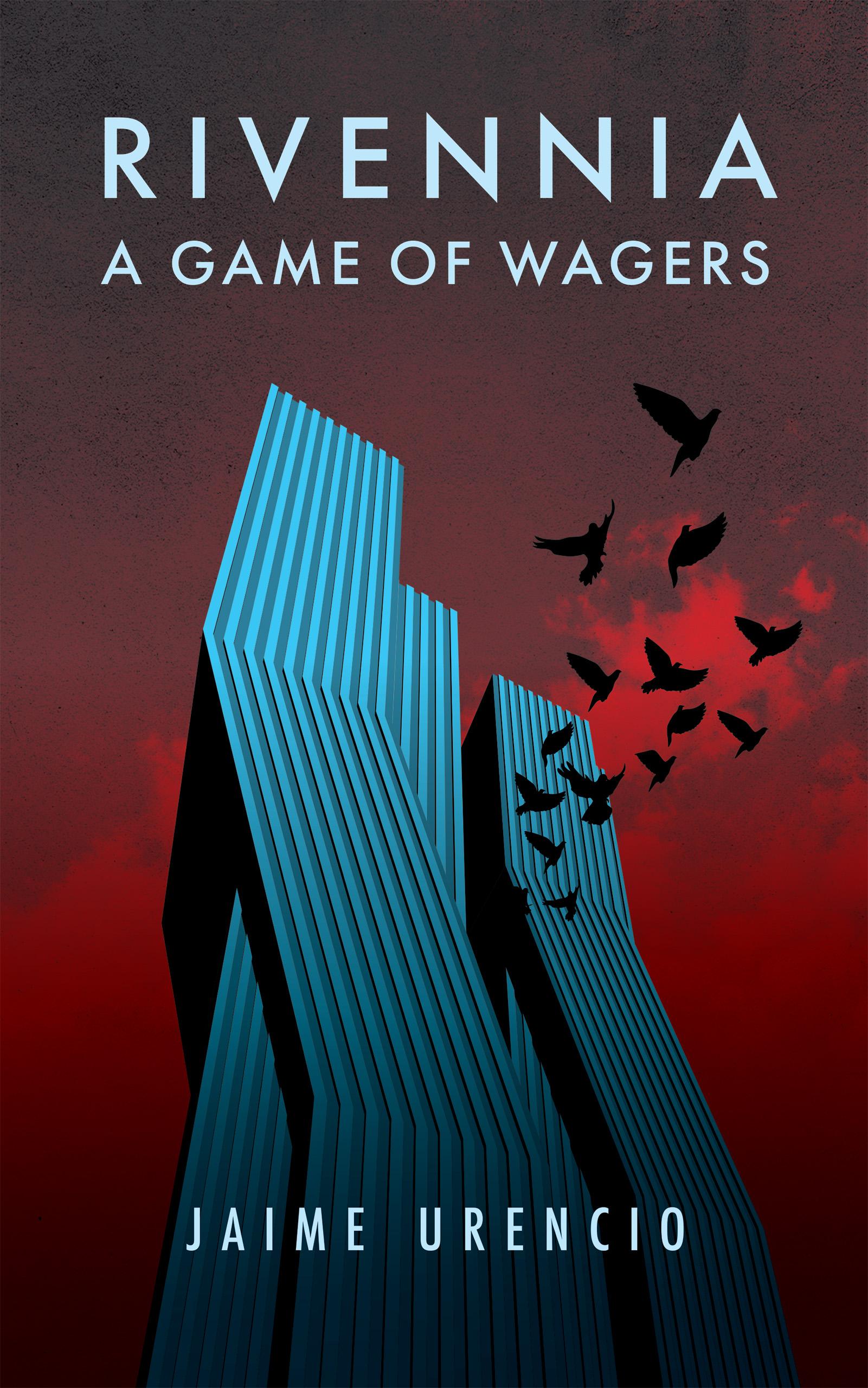
In my novel Rivennia, this is the topic I chose to explore. The question of how—or whether—we should use genetic engineering to enhance ourselves is gaining urgency. I believe this has the potential to dominate the global conversation within my lifetime. Science possesses immense potential to improve our lives, but we should not allow that promise to dazzle us to the point of blindness. Every breakthrough casts a shadow, and it is within that shadow that the gravest dangers often hide. Gene technology is as powerful and consequential as any technology can possibly be. They say you can’t look at gunpowder and only make a firecracker—and certainly, in that analogy, humans have found other uses for it. If there are bigger applications out there, good or bad, you can be sure someone will find a way to explore them.
Like water seeping through cracks, no amount of legislation will stop those determined to experiment beyond the confines of what most people consider ethical. And still, despite the risks, there is no denying that we’re living through extraordinary times. Executives at Google DeepMind recently suggested that AI could cure all diseases “within the next decade or so.” Imagine a world in which the ailments that shaped millennia of human suffering are suddenly rendered obsolete. But when it comes to the very essence of who we are, can humans be trusted with this kind of power?
Many would be right to worry, remembering humanity’s past experiments with eugenics. ‘History doesn’t repeat itself, but it rhymes,’ the old line reminds us. We haven’t written the rhyming verse yet. In theory, we can shape it into something hopeful, equitable and wise. In practice, that remains uncertain.
Before society settles on any direction, we need spaces in which these uncertainties can be explored safely. Fiction still offers that space. Through speculation, we can test futures before we build them. Through imagination, we can consider consequences before they outrun us. Rivennia is one such act of exploration—a story that peers into the tensions, temptations and possibilities that surface when human nature meets unprecedented power, and one that invites the conversation to continue long after the final page. It asks readers not only to witness a possible future, but to keep wondering what other futures might unfold from the choices we make today.
After all, storytelling is still our best sonar. It reveals the contours of the unseen, helping us sense what lies ahead long before we reach it.
Rivennia: A Game of Wagers is out now through Sunshine & Rooster Press.

Meet the guest poster