The shortlisted works across all 13 categories of the British Fantasy Awards have been announced! Find out who’s in the mix over on our blog. Winners announced at Fantasycon in October.

For all things fantasy, horror, and speculative fiction
-
Announcement:

Why there has never been a better time to watch Fantasy Anime
Matthew Palmer finds out what’s going in the world of anime…

Fantasy in anime is a bit of a strange beast. You’re probably aware of the fantasy films that draw from Japanese mythology, such as Spirited Away and Princess Mononoke from Hayao Miyazaki and Studio Ghibli, the acknowledged master of the craft. The most popular genre of anime in the west, shounen battle shows, are also full of fantasy.
Shounen shows are usually long-running action adventure shows aimed at young men and boys, typically focused on martial arts and fighting. The famous ‘Big Three’ of the genre, Naruto, Bleach and One Piece all have discrete magic systems and journeys of self-discovery though worlds filled with monsters – some of the classic tropes of fantasy. Yet to label them as fantasy feels a little reductive, as it doesn’t really capture what is unique about them.
Where the elements of Tolkienesque Fantasy are present in anime they are often double filtered through the lenses of the wider Japanese culture and Otaku sub-culture, creating a subgenre that is very different from what many in the west might expect.
Traditional fantasy anime has historically bubbled under the surface. When it does have big hits, it frequently is focused on characters who have been transported into fantasy worlds (Isekai) or takes place in worlds inspired by computer games, rather than literature.
These two elements are frequently mixed and matched. Indeed, the current trend towards LitRPG and progression fantasy in prose owes a lot to the way those genres grew developed in manga and anime.
Something about LitRPG and progression fantasies never hit particularly well for me. They have a tendency towards power fantasies, and storylines that emphasise action over character. A few years ago, that started to change. Three anime, each adapted from manga, stand acclaimed as a new ‘Big Three’ of fantasy anime.
Above the fantastic level of quality they display, they each have the advantage of being very accessible to western fantasy fans. Personally, I could never have dreamed that three shows could come along that were so well suited to my personal tastes. So let me take a moment if you will, to extoll their virtues, and try to persuade you to take the plunge.
Are You Ready For These?
Frieren: Beyond Journey’s End (Netflix)
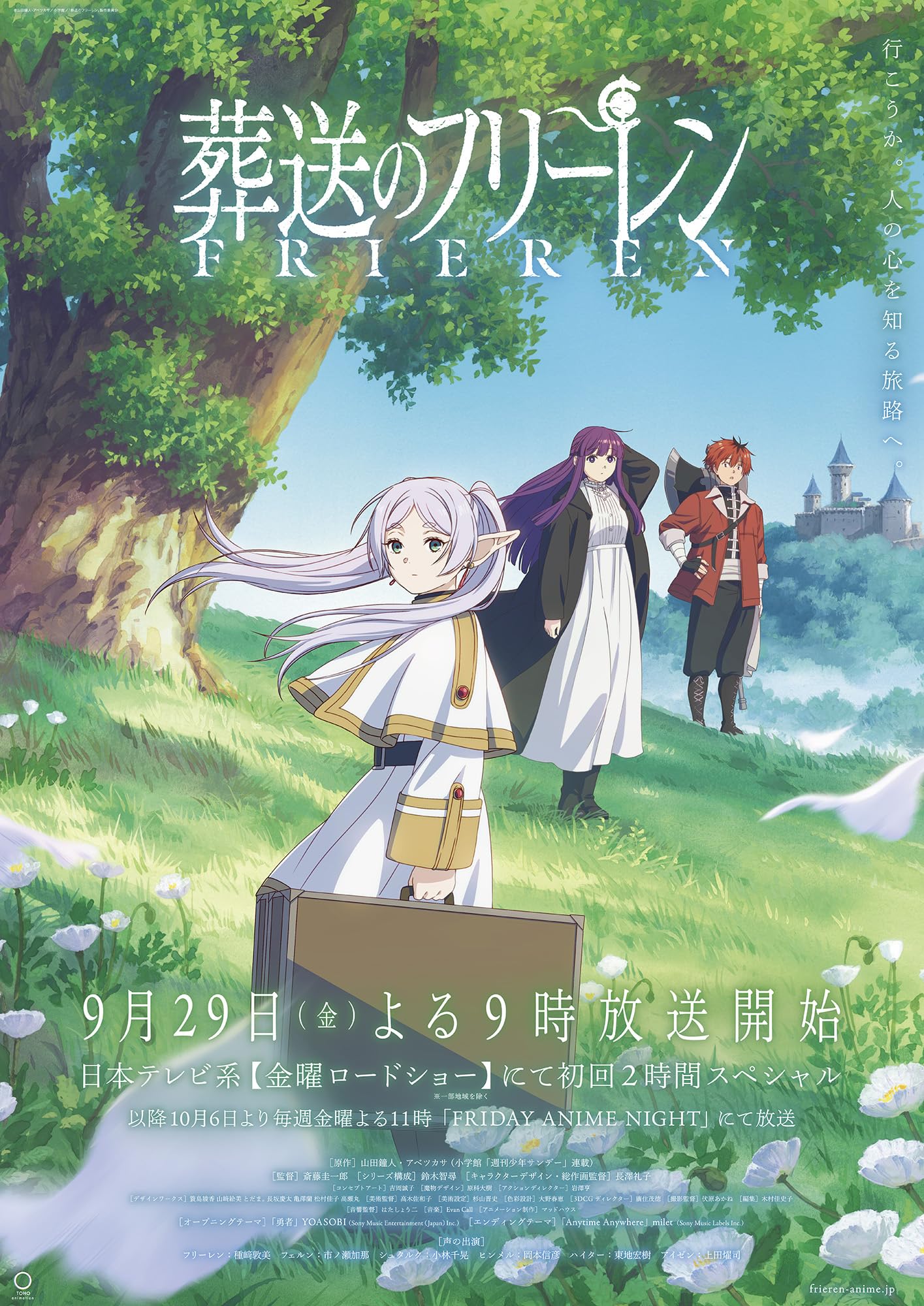
Frieren, which premiered in winter of 2023 has a hook so wonderful I’m surprised that no-one has done it before.
After the climax of their epic quest to slay the demon king, four heroes return home to claim their reward from their king. Himmel, the Hero, asks The Elf Mage Frieren what she plans on doing now that their quest is over. She says that she will return to what she was doing before, wandering the kingdom and searching for whatever spells interest her. She will probably return in around fifty years. Her companions smile and send her off, little knowing that she will be true to her word.
When she does return, Himmel is an old man. After the old friends spend an evening together watching the stars, he passes away and is mourned by the whole kingdom. But Frieren grieves most of at the loss of someone who meant far more to her than she realised. She travels north, gathering new companions, and undertaking a journey to the place where the world of the dead touches the world of the living, in the hope of meeting with him once again.
The reals strength of Frieren is the character work and cozy vibes. Frieren herself is sometimes the protagonist, sometimes the mentor, sometimes the voice of wisdom, and sometimes like an unruly child. As she passes through her lush world, animated by the veteran studio Madhouse, we experience her melancholy over the things that have passed, and her hope for the future. While the show is cozy, don’t underestimate Frieren’s diminutive form. This show contains some of the most epic magic duels in animation.
Delicious in Dungeon (Netflix)
Delicious in Dungeon is a far more raucous affair. As a group of adventurers travel a dark dungeon, they are confronted by a huge red dragon that they have no hope of overcoming.
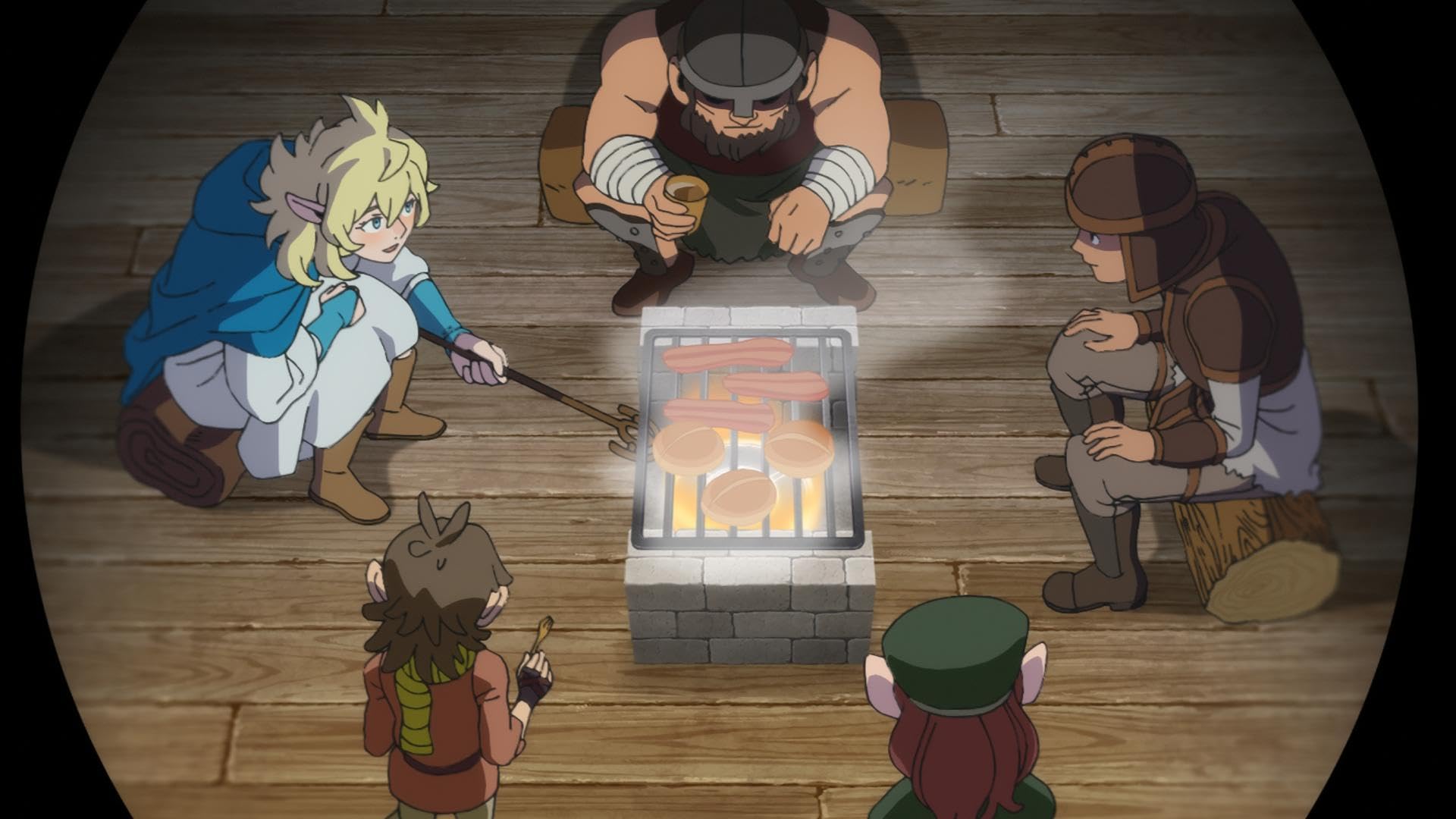
The final act of their healer, Falin, is to teleport her companions to the surface. The last thing they see is the dragon’s jaws closing on her body. The party leader and Falin’s brother, Laos, decides that their only hope is to travel back and slay the dragon as quickly as possible. If they do that, they can retrieve Falin’s body for resurrection.
This would be difficult even if they hadn’t left their loot and supplies behind them. To succeed, they need to adopt a different approach and live off the dungeon itself! They must learn how to cook and eat the monsters in their path, a plan that Laos seems strangely enthusiastic about. Luckily, they encounter Senshi, a mysterious dwarf with a mithril wok who offers to teach them his techniques for not only surviving the dungeon, but to thrive in it.
Despite its RPG inspiration, Delicious in Dungeon eschews the stat screens and simplistic worldbuilding that is common in other examples of the genre. The dungeon that serves as its setting is a fully fleshed out ecosystem, Its monsters are defeated though cunning and knowledge of their biology, something that also comes in handy when you are cooking them!
The history of the dungeon is far deeper and darker than it may at first seem, with a sense of palpable threat that slowly edges through the cozy vibes. Food never looks as good as it does when it is animated, and Studio Trigger will have you salivating over roast basilisk and boiled mimic, all prepared with the care and detail you would expect from a cooking show.
The real secret sauce is the dynamics between the four adventurers, and how their camaraderie builds as the story progresses. Found families are also a very strong thread that ties each of these shows together, and by the end of it you’d be happy to join the four of them for one of their exotic meals.
Witch Hat Atelier (Crunchyroll)

The latest and most anticipated of these three was released only this year. Witch Hat Atelier follows Coco, a young teenager training with her mother as seamstresses in a bucolic world of rolling fields and bright blue skies. More than anything, Coco wishes to learn magic, but her mother tells her it is impossible. She has gazed for years at a picture book that was sold to her by a strange witch but is no closer to fulfilling her dreams.
One day, a witch named Qifrey happens to visit when a minor accident disables a noble’s flying carriage. Finally given the chance to see magic up close, Coco learns a secret: Magic is drawn, not cast. That night, she experiments with the patterns in her picture book, unleashing a terrible spell and petrifying her home… and her mother. To reverse the spell, Coco becomes Qifrey’s apprentice, but the strange witch who sold her the book so many years ago is watching and waiting for a long dormant plan to come to fruition.
What can I say about this show? Where Madhouse and Trigger are animation studios with decades of experience, this is only the second show produced by Bug Films. Despite that, it outshines them all, with animation that rivals Miyazaki. Of all the shows, this is the one with the most in-depth magic system, which we learn about as Coco does. This is very much a magic school fantasy, albeit that Qifrey’s Atelier only has four apprentices. It is as invested in how magic shapes a society as it is with the mechanics of its magic system. Coco is forced to confront elitism and distain, and how growing up around that has affected her fellow apprentices. It is everything you would hope to have in a story of this type: heart, tragedy, trauma, and an incredibly cute mascot.
A New Golden Age
All three of these shows are everything a fantasy fan could dream of. With the rise in popularity of cozy fantasy, it’s rare that just one show meets the moment in the way that all three of these have. it’s been a dream for someone like me who has longed for this kind of content from the anime world.
Anime as a medium often comes with disclaimers, frequently related to its portrayal of female characters, but I can without hesitation recommend each of these shows in that regard, each with well-realised female characters with their own lives, motivations, complications and full sets of clothing.
The one disclaimer I do have to give is that none of these are yet finished tales. Frieren has two seasons, Witch Hat and Delicious have one each. The manga of Delicious is completed, and we are expecting the second and final season in October 2027, but the manga of the other two are not, though their next seasons are in production.
The other thing that all of these shows have in common though, is that they are each all about the journey, not the destination. The best time to enjoy a golden age is while it is happening, not once it is over. If you are a fantasy fan looking for new world to get lost in, or if you are a writer looking for new perspectives on fantasy, there has never been a better time to get into fantasy anime.
(All images from imdb.com)
Meet the guest poster