The winners of the British Fantasy Awards 2026 were announced at Fantasycon. Find out all the details on our blog.

For all things fantasy, horror, and speculative fiction
-
Announcement:
Ready For Submission: BSFA’s Fission
The latest issue of Fission, the fiction journal of the British Science Fiction Association, came out in June. BFS member Karin J. Robinson sat down with the journal’s Co-Editor, Rick Danforth, to find out more about the stories in this issue, to understand what he’s looking for in submissions for the next issue, and to get his take on the landscape for short fiction now.
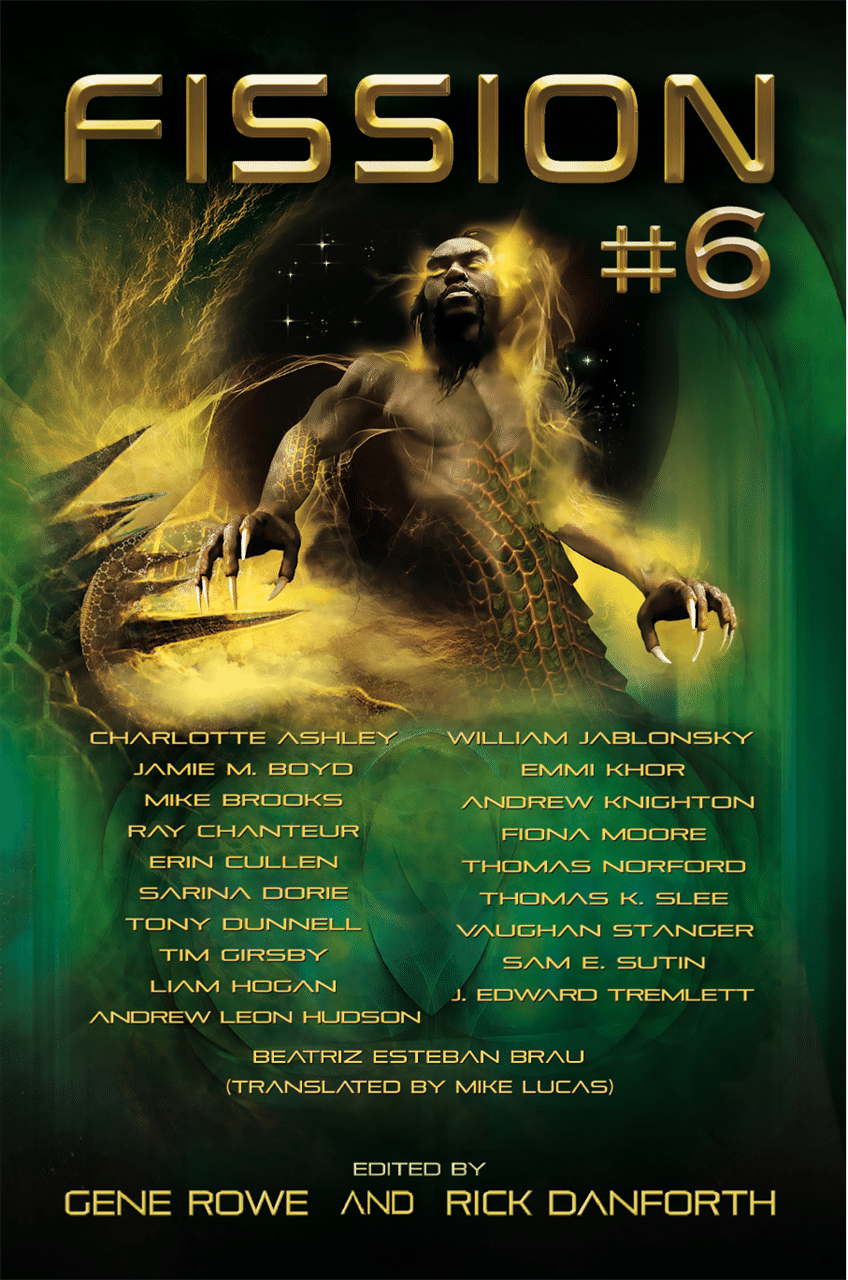
Title: Fission
Editor: Gene Row and Rick Danforth
Looking for: Short stories, previously unpublished in the English language
Genre: Science fiction
Story length: 1000 to 5000 words
Release schedule: Annual
Response time: 4-6 weeks
Payment: 3p (4c) per word
“These Are Great Stories, And I Want These Stories”
KR: My first question is really just, tell me about you? How did you get into this role?
RD: My name is Rick. I’m a short fiction author and editor from Yorkshire, England. I’ve been writing short fiction probably for about five years. I’ve got 40 something pieces out variously in the world.
KR: That’s incredible for such a, you know, for five years, 40, that’s a good ratio.
RD: I tend to get obsessed with doing things very quickly. And I was writing novels for a little bit, a couple of years, and I was like, oh well, I’ll have a break. It was actually for the BFS short story competition.
KR: Relatable. Yes. Same.
RD: And I was like, oh, I’ll write one short story and It’ll be a nice palate cleanser. And that was five, four or five years ago. I’ve never got back to it. Yeah, so I’ve got 40 odd stories out in the world. I was lucky enough to win the BSFA Award for Audio Fiction last year. And I’ve got a collection coming out next year with French Press Publishing, which I’m quite excited for.
But the previous editor of Fission, Eugen Bacon, who is a fantastic author, if you ever get a chance to read any of her work. Well, she left; there was an opportunity in the newsletter and I reached out to Gene [Rowe Co-Editor of Fission], and I said, “If there’s nobody more qualified, I’m passionate about it and I’d love to do it.” So he was very happy to say, you know, “I can work with passion. I’ll teach you, some of how to edit an anthology. You just need to bring a good work ethic and a willingness to learn.”
KR: Fantastic, and here you are. And how long have you been doing it for?
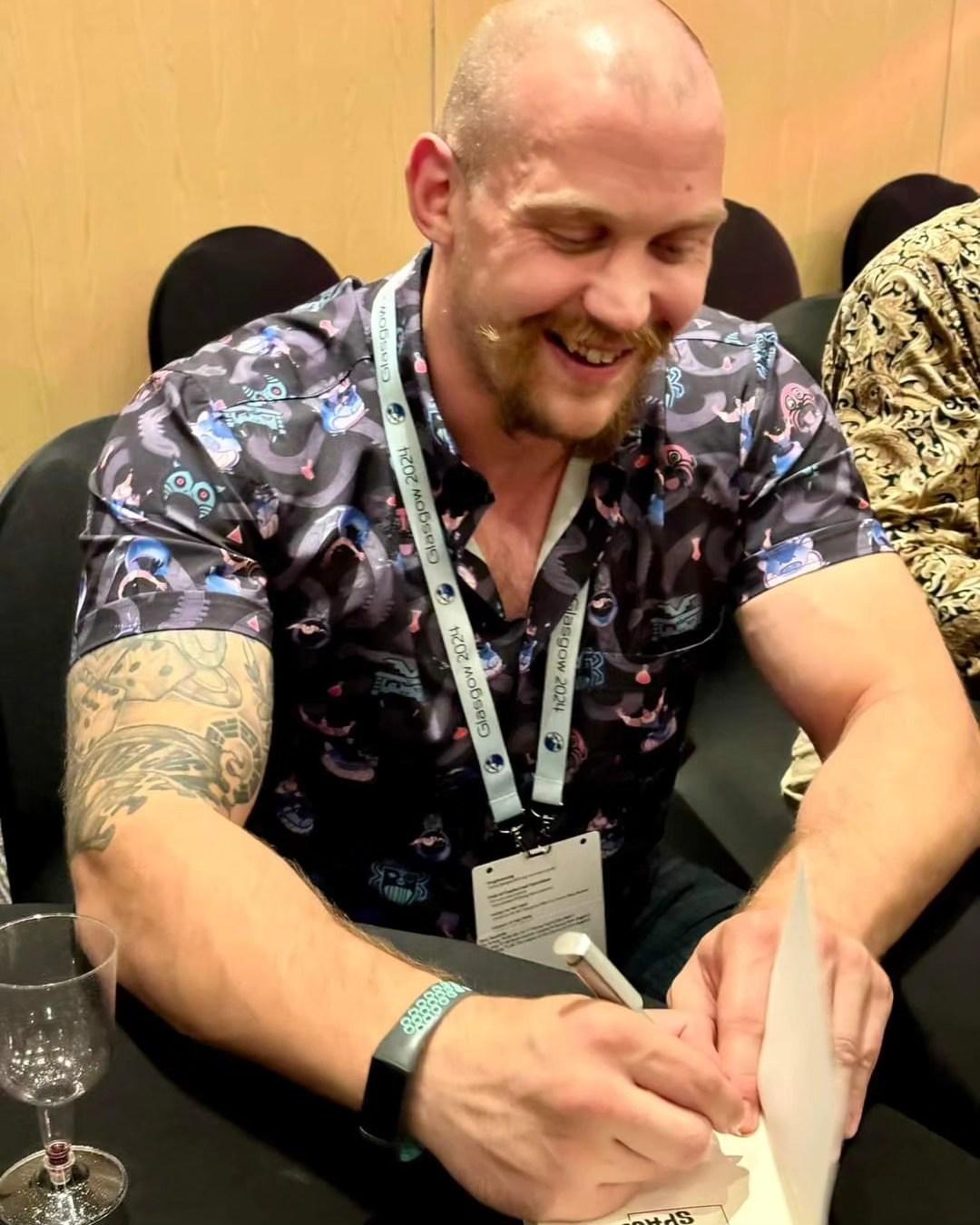
RD (pictured): This is my first copy.
KR: Oh, congratulations. Your debut issue.
RD: Thank you. Yeah, yeah. I was honestly really excited for that. It’s quite nice being on the other side of it. Because obviously, writing short fiction, I get a lot of rejections, as most people tend to do. And it’s nice being able to work and assemble a lovely collection of stories and to message people and work with them, editing their stories.
KR: Absolutely. Okay, so I want to talk a little bit about Fission itself as a publication. Obviously, it is the fiction journal of the British Science Fiction Association (BSFA). But tell me about how you see it as a journal. How do you see it fitting into the landscape of short fiction here in the UK?
RD: I think the real thing it has going for it is honestly its diversity of stories. Because most magazines tend to have a bit of a brand, which obviously isn’t a problem, it’s a feature and it’s great. I read lots of short fiction and I obviously have some favourite magazines who have very clear-cut vibes. But because we do one anthology a year, that gives us a bit of different room to work with.
And so we have an absolute array within 20 stories. Some are funny, some are sad, some are set on Earth, some are set effectively now with a couple of twists, some are far off in the space. We have 20 different wonderful flavours of science fiction.
The only rule is we do try is to keep it diverse on purpose. So if we have two generation ship stores, unfortunately only one is going to get through, or if we have two stories of mind control we don’t use both. So we do want to keep that diversity as a fit because that is our unique selling point, to be honest. And it’s something which I do think sets us apart from everyone else.
KR: So you’re thinking about diversity in terms of themes and tropes, it sounds like. What about in terms of other factors? Do you look for stories of different length, different styles of writing? What are you looking for in terms of that?
RD: Definitely styles. On length, we currently try and keep them to under 5000 words. In the future, I wouldn’t mind playing a little bit with that. I know Gene’s quite keen on it too. But at the moment we’re being asked for cost reasons to try and keep it a little bit reduced, which is obviously very understandable. But I would like to possibly try and push that back if we’re allowed to. But yeah, we go for as much variation as we can have.
KR: And what about on the shorter end? Do you accept flash or shorter fiction? What would be a minimum sort of word count from your point of view?
RD: We’re pretty open. We have done Flash in the past. I personally love Flash because I think a lot of my back catalogue is Flash. I know Gene takes a little more to be convinced by a flash fiction, but he is open to it. I think the shortest one in this issue was actually about 1100 words, but it was fantastic.
There’s an SFWA determination of what it is, which is that flash is under 1000 words, but then every magazine has their personal different definition. I like to think under 1200 words is flash personally, but that is based on nothing more than vibes.
KR: It is funny, everybody has a different word count limit for flash, what a short story counts as, what a novel is. Now, a couple of other practical questions in terms of how you go about the work of editing the magazine. When are you open for submissions?
RD: We open for a few weeks in February and we give lots of notice. We’ve already announced that next year we will be open in February for Fission 7. As soon as we have the date in mind, it’ll be on the website, communicated in the newsletter, and everything else. But that does not appear to be a problem currently because despite the fact we’re open for two weeks, last February we got 422 submissions.
KR: For 20 acceptances.
RD: Honestly, it’s hard because we got a lot. I think that’s because we upped the pay rate to four cents a word this year as well, which isn’t a professional rate, but it’s definitely not at the lower end of the market. So we’re moving up quite nicely. I think that did help us attract quite a lot and also the fact about—not being funny—it goes free to over 1200 members of the BSFA. So already you’ve got a reasonable audience expectation.
So we got a lot of people coming in for what was a two-week window and the quality was really good, which sometimes is upsetting! Because if a story is quite clearly not quite there yet, then it’s quite quick to determine. When you get good ones it’s, well, now I need to read all of this story. It takes so much longer. But it is a happy problem. I think the worst problem was, though, we did whittle it down and it was a short list of about 50 and I honestly would have happily published any of those 50 stories.
KR: Maybe you need to go twice a year, Rick.
RD: Oh, I would love to, if we could do more copies, I would love to. Honestly, letting go of 30 very good stories I’d be happy to publish was heartbreaking.
KR: So I’m curious about that, because obviously there’s a lot of stories there that you loved, but you couldn’t publish. Did you say that to the writer? Did you respond and say, look, we had a short list and you were on it, but we just couldn’t squeeze it in?
RD: Yeah, because ultimately I’m not going to reply to 420 emails personally because I would be here probably till now still individually emailing every person. But everyone who submitted did get a response because I personally hate it when no one ever comes back.
You sent something important to yourself off, you deserve a reply. Most people got a form of, “thank you for submitting. Apologies, but we’ve not chosen it.” And we say, please keep an eye on next year. But the 30 people we rejected and generally loved did get told, you know, you did make it to the final round and we loved your story. But unfortunately we’ve got limited places.
KR: You mentioned that it’s a lot of reading. Do you do all the reading yourself? Do you have a slush team that you work with? How does that work?
RD: No, it is literally me and Gene and we both read every story.
KR: So it’s not like you divide and conquer. You both read everything.
RD: Yeah, it’s literally the most basic system in the world. We had a big Google sheet with all the submissions and it very kindly populates everything for you. We did 2 columns and we both gave a score out of 10 and we both went down every single submission. And then afterwards, obviously, we had a chat about a lot of the stories because for some it was, “I’ve put this as an 8, and Gene, you put this as a two, so maybe we should talk about why we’re so different.”
KR: Do you find that you mostly agree or do you have quite different tastes?
RD: I’d say we mostly did. There was a few notable differences. There was one where I was like, “you know what, you’re right.” I think it was one which we actually did publish in the end. I was like, “no, I hate this story. The character is unlikable.” And then he was like, “that is the point though.” And I was like, “you are absolutely right.” That was the point. I just didn’t like the main character by design.
KR: And he talked you around.
RD: Yes! I gave it a really mean score. But the fact I felt that strongly about it clearly indicated that he did a great job.
KR: Okay, well that actually sets me up for what I wanted to talk about next. Obviously the issue, issue number six, is just out, your first as editor. Congratulations. Tell me about some of the stories in that issue. What made those particular stories stand out for you and why did they feel like such a great fit for what you wanted to do?
RD: Thank you. Well, firstly, as I said, I will back that every one we published both me and Gene love. Because obviously, not being funny, it would be very easy for two people to have a serious falling out and have shouting matches. We didn’t have to do that, thankfully, because there were so many great stories. Every one in there, we both agree, they are great stories and we love them to pieces.
There’s one which early on I saw, “I definitely want that. I love it.” And Gene agreed instantly. It was Andrew Knight’s story, Thirty Percent Pink.
And… It’s a bit of an odd story at first, because it sounds like it should be really silly, but it’s actually not. It’s only when you take a step back, you realise what he’s managed to do, because he’s a very clever man, is Andrew. Where he starts off, and it’s a bit anti-capitalist, was colonists on a world, and they’ve been given pig organs through surgery to help because their planet isn’t terraformed. And obviously they’re genetically modified pig organs to help them breathe and to eat the local fauna, which generally is fantastic science fiction just by itself.
KR: Yeah, okay. I see the logic.
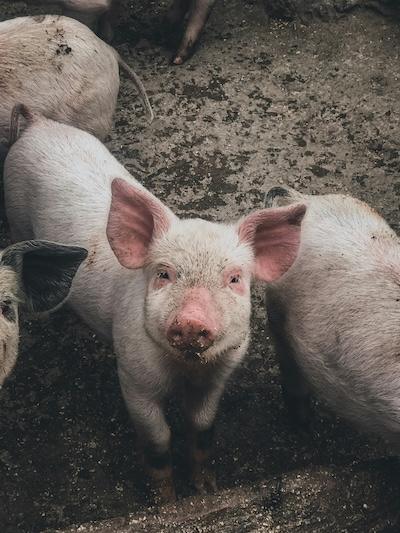
RD: And then obviously once we start breaking it down, they owe a lot of debt to the company who has done the change and the idea is that they’re going to, you know, earn enough money from this new colony and they will pay it back. And then a venture capital firm buys out all the loans and comes and they’re taking everyone’s money straight now or they’re knocking down houses and killing people and reclaiming the organs manually.
And that’s when you start to realise he’s literally done it. Yes, he did. He did three little fucking pigs. But he does it very straight. And there’s no mention of the word wolf and there’s no mention of the word pig. And then you sit back and you go, “you magnificent fucker.”
KR: That is so clever.
RD: It absolutely is. It’s a wonderful story and literally the second I read it I was like…
KR: Straight in.
RD: Which is good, because I do like Andrew’s work anyway. That was one of the lovely surprises for myself, which is I got to publish quite a few authors that I already like. But we did read them, obviously, without bothering about the name and all the other jazz. But when it’s like, oh, I’ve read two of his novels, they’re on my shelf and he sent us a story. That’s pretty cool.
KR: That’s lovely, isn’t it? What else?
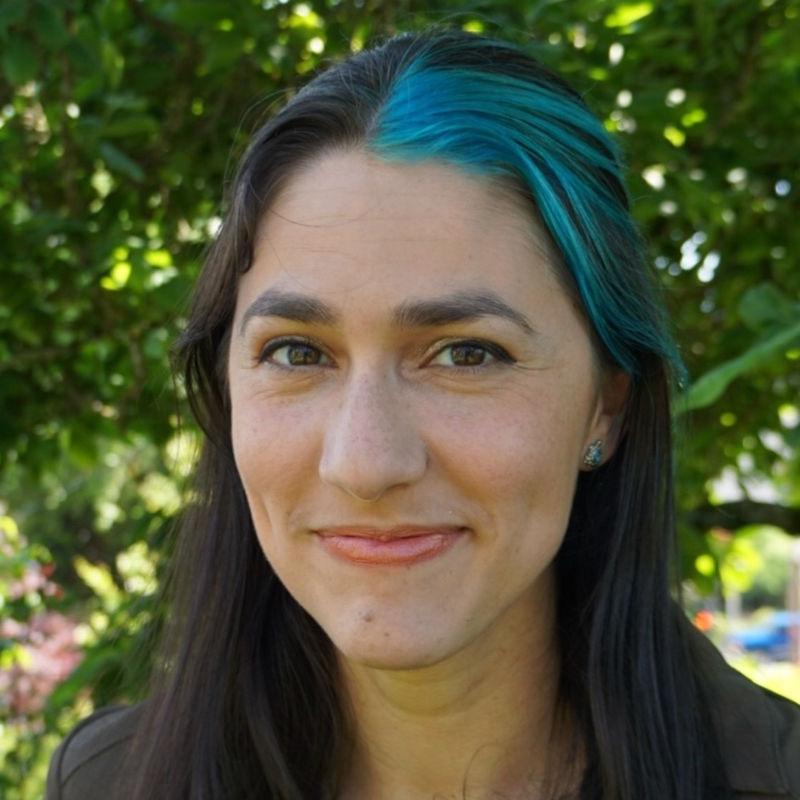
RD: The other one I’ll happily mention is by Ray Chanteur (pictured). I’ve read some of her Flash before and it’s all fantastic. And I read her story and I was a bit funny about it. And then I read it again and I was like, oh no, this is magnificent. And it’s honestly one of my favourites. The basic premise is, it’s kind of like an odd couple but in the same head. Someone has taken a—what are they called, when people try to purge the body of toxins and things?
KR: A detox.
RD: Thank you, that’s the term for it. And that forms a split personality. And the one in charge is the new one who doesn’t know anything and they’re just trying to do nice things and enjoy life.
And the one at the back of her skull is quite frankly obsessed with health to like a dangerous degree. She has a go at her when she walks a bit too close to a car exhaust and was like, “you were breathing in, what the fuck are you doing?” And is obviously obsessed and toxic as hell.
And the start of the story is the person in charge giving in to the toxic stuff and trying to make amends while being sniped at the entire time. And then they say, “you know what, this could be a lot worse and I’m going to show you.” And they go and do all the unhealthy things and have an argument.
And in the end, they remove it and then it cuts back later to them enjoying their life. And it’s kind of a thing about obviously cutting out the toxic people from your life to be able to enjoy it. And it’s beautifully done.
KR: That sounds really fun.
RD: Once again, we really did try hard to get a diverse section of stories and they’re all wonderful. But I think I wasn’t as sure at first because the toxic personality is just so toxic. And it’s like somebody’s horrible, nagging family member that you can’t quite get rid of, but you’re obligated to keep around.
KR: I think, as you say, both stories are really, really different. But I think one has that venture capitalism taking over everything. The other has this conversation about toxic health culture, which I think is very prevalent in society right now. Both of them feel like they’re using speculative fiction to talk to some sort of contemporary concerns. Is that something you look for in your fiction or is that just a happy accident?
RD: It is a happy accident. I mean, ultimately, sci-fi has always been a vessel for commentary on social issues. It’s always really funny when people nowadays turn around and go, “keep the politics out of my sci-fi.”
KR: It’s never been out of sci-fi.
RD: Exactly. Even William Shatner said it, “you had the first interracial kiss on television and you’re telling me to keep politics out of sci-fi? What the hell’s wrong with you?” But that’s what makes them stories. If you took the political element out of it, they would still be wonderful stories. And then you add the political element in it. It’s just another layer to an already brilliant story.
KR: So that’s issue 6. Issue 7, you’ve already announced that you’ll be accepting submissions in February. For those writers who are starting to think about preparing the story for the next issue, obviously, as you said, you’re up for a diversity of stories and so forth, but is there anything that you’d particularly be excited to see in your inbox for issue 7?
RD: Honestly, just anything which makes me sit down and think, I’ve not seen that before, that is wonderful. Which both the two stories I mentioned to you, do something radically different, but it’s like, well, “I’ve not seen that before. You’re doing a lot of things in that story and that’s great.”
And one other story I’d like to politely mention is Liam Hogan’s, which literally starts with a chocolate teapot orbiting around a planet. Obviously it’s a commentary on Betrand Russell’s thing. They go to investigate and it’s actually a genie trying to get their attention. It’s a very dark comedy that starts off like that, merging fantasy and sci-fi elements. Technically we don’t take fantasy, but it is also a sci-fi story. So we have on this occasion.
And then obviously it’s a genie, so you get chaos and people make the choices which provide their own horrible situations. And it’s just so brilliantly well done. So really, I just want something where I go, “I haven’t seen that before. It’s a bit off the wall.”
And I can imagine why a couple of some magazines who have a focus on we want stories like this, might not be able to take them. Because I have read slush for EscapePod before, and we’ve had to do the same with that. There’s nothing more heartbreaking. I was reading a story and going, I loved that, but that’s not our brand. We don’t have to do that here. We can just go, “these are great stories, and I want this story”.
KR: I want to talk a little bit more about the kind of the world you operate in. You mentioned you got, I think it was 423 stories. That’s quite a lot of reading to do. I know that some other editors in genre fiction have stated that they’ve seen an increase in submissions that are potentially AI generated or that it’s difficult to determine if they’re AI generated. Neil Clark from Clarksworld, in particular, has been really open about saying it’s something they’ve struggled with. Have you seen anything that looks like that from your point of view, or is it something you think about, worry about?
RD: When we finished the submission window, we definitely noticed a few looked a bit AI because I’m sure everyone knows what AI writing looks like. It’s very verbose, it repeats the same points a few times. It’s almost a bit like a 12-year old writing their first essay.
(Photo by Noah Buscher on Unsplash)
I think one thing that has helped us is that our open window is so short. Because the people who are doing that kind of stuff don’t really care about science fiction worlds. They’re not keeping an eye out for what’s coming up. They’re just like, oh, what’s out right now? And I’m going to, you know, churn out some crappy stories and turn them out into the world.
But I am a bit worried because I don’t know if you’ve seen, but there’s been a couple of incidents recently where some magazines have had issues. I think Apex had issues where somebody’s been using a bit of AI to adjust their writing as it goes. And that does worry me a little bit, to be honest, because I don’t think we got any of those, but I’m also not 100% confident. I’m 99% confident.
KR: But do you use any tools to check or are you just going on your own judgment? How are you handling it at the moment?
RD: Currently we use our own judgement. There are two of us which I do think always helps. Because obviously everyone has different perspectives, different ways of looking at things and it helps. But equally a lot of the AI identification tools, they aren’t very good. Because you can put Hemingway into it and it’ll say “this is 70% certain it’s AI.” But that was written in 1930, so I don’t think that was actually AI.
And the second part is a lot of those tools are actually pretty much AI in the background themselves. So if your issue with AI is about the eco use and the other stuff, this is just as bad as using AI in the first place. You’ve created an infinite loop of destruction.
KR: It’s tricky, isn’t it? And of course, these tools are trained on good writing. So if you feed the good writing that it was trained on into it, it recognizes it and it looks like what’s in their database. So it’s very tricky.
RD: Yeah, I am worried for other people in that one regard, because I do think one thing which could unfortunately happen, is it might make some magazines less likely to take a new author. I know some magazines already take a few more from authors have already published with them. Like Uncanny, they’re very open about it. It’s not a secret. They have a couple of windows a year, but about half of Uncanny’s stories are from authors they already know, which massively reduces the risk of them taking an AI story. And most of the authors we published have reasonable publication histories. And if you look, you know, they can write, they’re very good writers. But I do wonder, I do genuinely fear for new authors in the next couple of years, because you might have magazines going, “that’s a lot of risk to take on a new author when we don’t know if they could write pre-AI.” I hope that doesn’t happen.
I do want to publish new authors. Because if I get somebody’s first ever story, I would consider that as a genuine achievement for me and for them. I really want to publish someone’s first story.
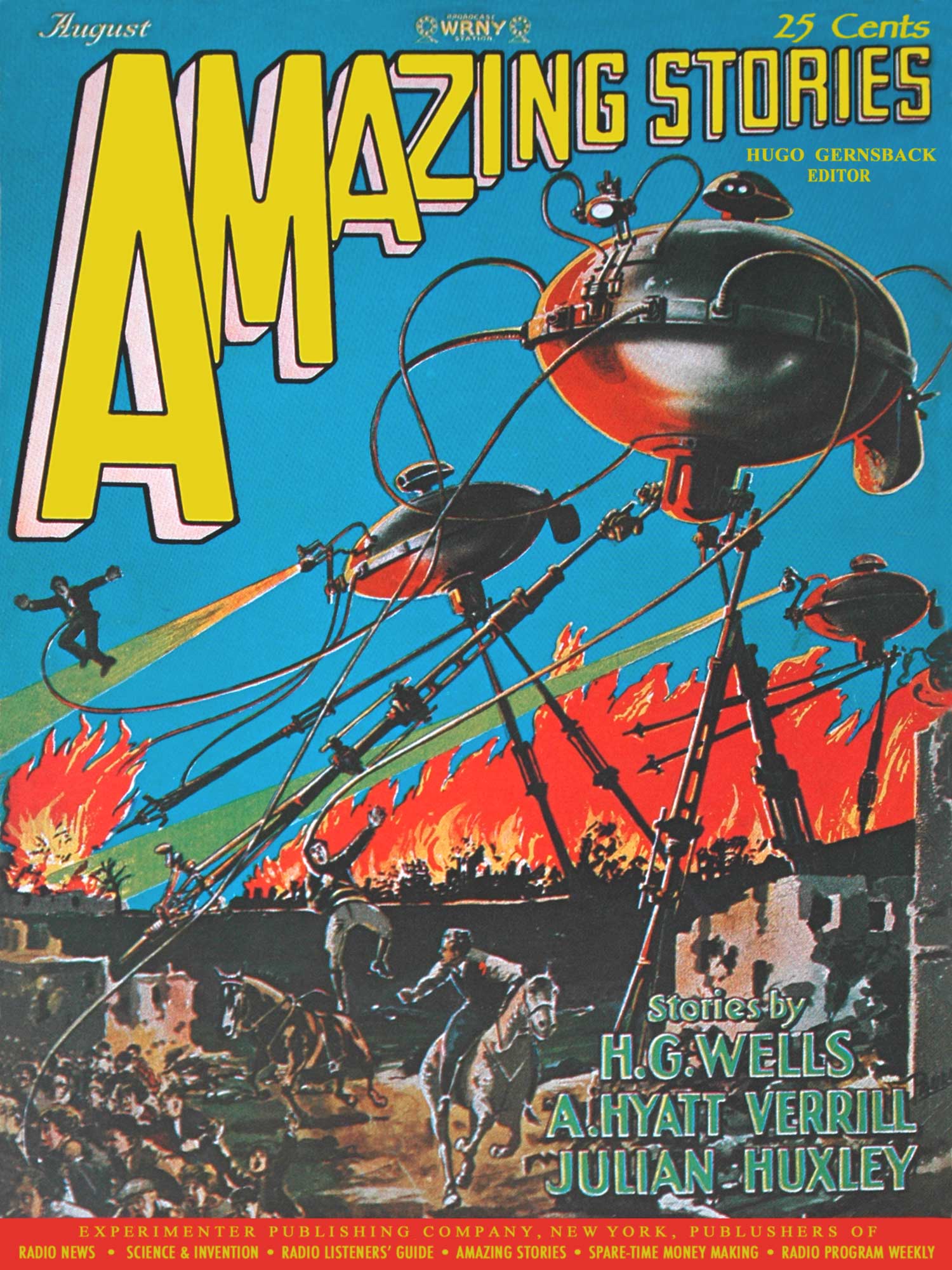
KR: Having said that, I think it’s interesting to reflect on the role of short fiction in the overall marketplace. You know, it’s a genre where, for decades, short fiction was the way to break in. It was how people made their names. You had Amazing Stories and all the incredible magazines coming out of the early days of the genre. And I think nowadays it feels like it’s a bit different. Short fiction is still, I think, an important part of the landscape but it isn’t necessarily what’s going to break people through. As a short fiction writer and editor yourself, what do you see as the role for short fiction in an author’s career and in the development of the genre?
RD: I mean, to be fair, you are absolutely right. At one point, you did not find science fiction authors who hadn’t written a few short stories, if you go back even to the 1970s. I think the pay actually reflected that. If you read the biographies, people like Stephen King and Raymond Chandler, they were getting a couple of short stories out and quitting their job and being able to pay the rent with short stories.
KR: It was a real income.
RD: And that’s because pre-internet age, the circulations of these magazines was absolutely insane.
If you look at like the SFWA pro rate for what to pay short fiction, it’s currently 8 cents a word. But in the ’40s, it was about four cents a word. And if you adjust that for inflation, it would now be 50 cents a word, at which point you would get to the point where somebody who was reasonably prolific could live off it. I mean, you’re not going to be fine dining every night, but you could definitely make a living off them.
I think that’s one of the main reasons why that’s kind of shifted, to be fair. One of the reasons that’s happened is because readership has dipped. And unfortunately, no one quite has the advertising budget to politely remind everyone in the world that short fiction is actually doing really well and you should come have a look at it.
I know for a fact every time I tell people, “I love this short story, you should read it”, they do. They absolutely love it. They tell me they love it. And then sometimes they go back to reading what they did previously. But you still do find quite a few writers who do short fiction to start with and then progress into it. It does have an important part to play in an author’s learning. Obviously not all the tools are the same, but there’s a reasonable amount of crossover. Beginnings, endings, character work, prose, the fundamental concept of making somebody care. There’s a lot of skill sets which you can develop through short fiction.
Obviously, just because you can write short fiction does not mean you can write novels. There is a lot more to it. But you can definitely improve a lot of the elements on that. And to be honest, a big one—and this is an opinion, obviously, not a fact—is it gets you into the kind of world where you’re getting better feedback off people and you’re getting better help. Because especially when you’re a new author and you don’t know anyone, it can be very hard to find a writing group and it can be very hard to find the people who know what we’re talking about.
Whereas if you have a few short stories under your belt, you suddenly get into some writing groups of other published people. You’re talking to them and suddenly you’re getting a much higher level of assistance, which is only going to be beneficial to getting yourself out there. So for the writer, I do think it does have benefits still, maybe not as much as it did. But it’s got a lot of benefits.
And that’s before you get to the fact, once you’ve sold a short story, you are a published author, which I think is a mental win. And let’s be honest, as authors, we don’t always got a lot of mental wins.
KR: It feels good, doesn’t it? You can take that leap in your head at least of going, somebody paid me for this. I must be doing something right.
RD: Yeah, exactly. You fundamentally know how to write, if you can sell a short story to somebody. Great job. You are a published author, no one can take that away from you.
I think especially because if you’re writing novels, it can take a long time. Joe Abercrombie, Jasper Ford, they’re very open about the fact that, it took them over a decade to get published. That is a grind. Whereas if you can get a couple of short stories out of a time, you’re getting some kind of reward, some feedback, and you can say, well, I actually am published. I mean, I haven’t had a novel out, but I’ve got now a back catalogue of 30 stories. I’ve got a collection coming out, and I’ve got an award. So I don’t think most people are going to tell me that I can’t write. I can’t write novels yet. I’m hoping to. But I can definitely write to a respectable standard.
KR: Absolutely. It seems like you’re doing great. Final question, just to open it up. I want to give you the chance to shout out anything else that you’ve seen, read, listened to, watched, or experienced lately that you think we need to know about? What’s something you’ve seen lately that made you stand up and go, ‘that’s incredible’?
RD: Well, based on the audience, I probably shouldn’t talk about England, France and the World Cup. That’s probably not going to go down amazingly well. (Ed note: the interview took place in July 2026)
But I did listen to a wonderful short story on Pseudopod this morning, Red Ripper [by Gordon Grice], which mixed horror with pro wrestling and a lot of tropes from both elements. It was a bit different, it was very weird and it was absolutely wonderful.
KR: PseudoPod, so I’let you have two. You can have the PseudoPod story Red Ripper [by Gordon Grice] and the England-France match. Us nerds are just going to have to get used to sports existing.
RD: Yeah, it’s okay, but the World Cup’s finished. Sports can now stop for four years and then it’ll come back around again.
KR: Yeah, you don’t have to think about it again for a little while. It’s fine. Rick, thank you so much.
Fission will reopen to submissions in February; get the details here.
Meet the guest poster
Leave a Reply