The winners of the British Fantasy Awards 2026 were announced at Fantasycon. Find out all the details on our blog.
For all things fantasy, horror, and speculative fiction
-
Announcement:
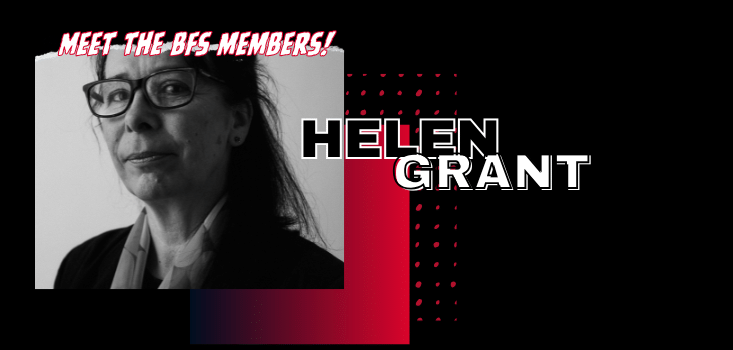
Meet Helen Grant
Every Friday, we meet a member of the BFS and peer deep into their soul (or, at least, a form they filled out). Want to be featured? Email us: content@britishfantasysociety.org
Name, including preferred pronouns:
Helen Grant (she/her)
Which region are you based in?
Scotland
If you write, which genre:
Mostly horror though I have sneaked an occasional bit of sci-fi in under cover of darkness. And my new novella is probably more dark fantasy.
If you don’t write, what do you do?
Writing-related stuff like copyediting and proofreading, very occasionally translation. Also academic writing workshops.
When I’m not working at all, my absolutely favourite thing is exploring the various abandoned mansions, churches, castles, etc, dotted about the Scottish landscape. There are some particularly fabulous Gothic ruins just decaying quietly in the middle of nowhere.

You see some weird things. There was one sprawling pile where I found a lot of black typeface on the stone over a fireplace. People used to “draw a fire” by holding a newspaper over the fireplace so I think possibly someone had done that, and somehow burned the type onto the stone. I actually recognised the text—it was from The Catcher in the Rye, which was serialised in a newspaper in the early 1950s, not long before that particular site was abandoned.
I also like wild swimming, which is… bracing in Scotland.
Are you drawn to any specific SFFH sub-genres?
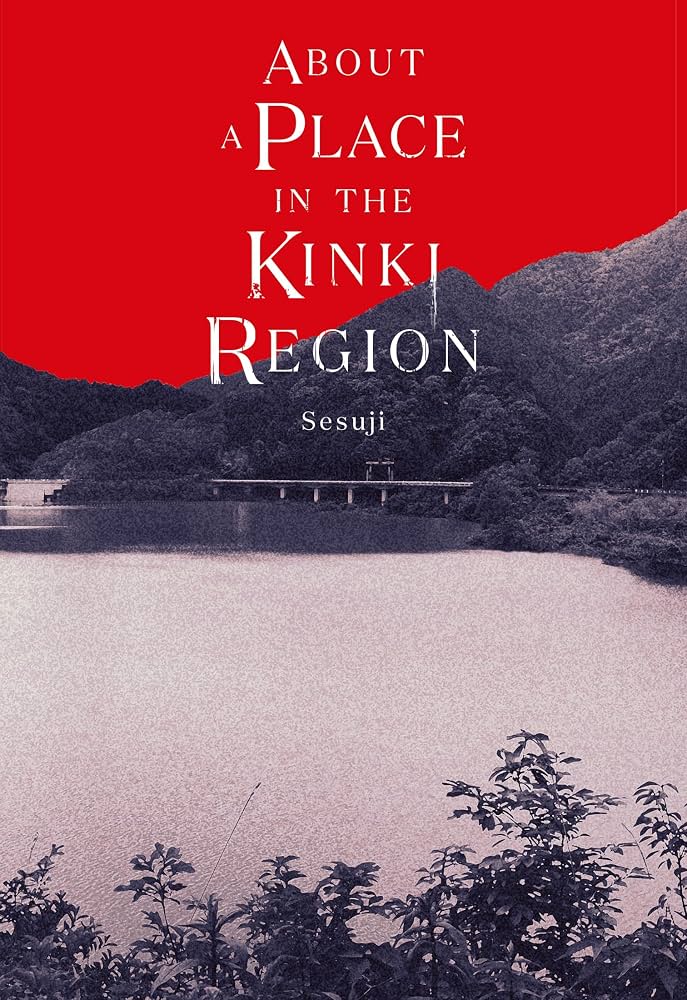
I read across various genres but I tend to prefer stuff that makes my flesh creep to anything that makes me want to vom. I’ve always loved classic ghost stories, and some of those can be incredibly nasty and yet the way they’re expressed leaves a lot of it to the imagination. M.R. James’s Count Magnus is a case in point—a guy gets his entire face torn off, but it’s brilliantly understated. You wouldn’t really think of him as a gory writer. I have also watched The Ring loads of times but never made it past the intro of The Texas Chainsaw Massacre. A recent read I really loved was About a Place in the Kinki Region by Sesuji (translation by Michael Blaskowsky). There’s a sealed section at the back that you’re supposed to open when you’ve finished reading the book, and I was too creeped out to open it right away!
Your Influences
Tell us about the book/film/thing that got you into SFFH: What was it? How old were you? What impact did it have on you?
It was definitely M.R. James, and it was so far back in my life that I can’t quite remember when I first encountered his stories. My father (now 91) is a massive James fan, and when we were kids he used to retell the stories for us on long car journeys. I think he probably had some of them memorised almost verbatim. I recall I particularly liked Wailing Well and used to ask for that one a lot, though the humour in it completely went over my head when I was a kid!
My Dad also had a lot of those Fontana ghost story anthologies and I devoured those too. I often wonder where he got his reading taste from. My gran, his mother, liked historical romance, so it wasn’t from her! I can’t remember my grandfather reading anything at all, though he did tell me off once for reading supernatural fiction, on the basis that “it couldn’t happen”. I loved him to bits, but I ignored that.
How does that early influence show up for you (in life/writing/agenting/publishing/editing/reading) now?
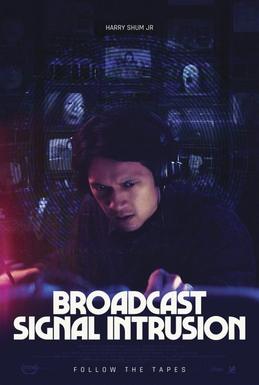
In writing—and reading—I still tend to favour horror that isn’t too in-your-face. I like ominous glimpses rather than guts and eyeballs. A film I hugely enjoyed was Broadcast Signal Intrusion: when you see the eponymous intrusions you know you are seeing something horrible, but you can’t tell exactly what, and I adored that. When I’m writing I try to let the reader’s imagination do some of the work. There is a scene in Demons of Ghent when someone breaks into a priest’s house and kills him, and I focused on the light flashing on the descending blade, and the red stain on the fingers that closed the dead man’s eyes, rather than describing the attack in graphic detail.
I guess the other thing is that, while I admire a lot of classic ghost stories, I’m not trying to write like them. I’ve only ever set a tiny handful of stories in the past, and while I do use “traditional” elements like folklore and old buildings, I try to put some new slant on them. I did a story called Localism for Nightmare Abbey 8, and that has traditional Scottish beasts (kelpies) in the very modern setting of an artificial surf resort. So there’s a kind of reaction there to the classic stuff I’ve read.
Where do you draw your creative inspiration from?
From my environment, and places I’ve visited. Sometimes I’ve been inspired by things (I did one story about petrospheres, the Neolithic carved stone spheres whose purpose nobody knows), but more often I draw inspiration from a particular location. I’d say the majority of my books and short stories are set in real life places, though they are often unnamed. Whenever I go anywhere new my imagination is probing at it, looking for possibilities. Sometimes this is a very conscious process. Hellebore magazine asked me to contribute to their 2025 anthology Tales of Occult Britain, and the brief was to write something about Aberfoyle, which is about 35 miles from us. The story was always going to be about malevolent fairies, given that Aberfoyle was the home of the seventeenth century “Fairy Minister” Robert Kirk. Anyway, I went over to Aberfoyle to see what suggested itself. It was July and all the vegetation was massively overgrown, and that was where the story came from: the parallel between the slow tempo of the green world, and the legendary difference between fairy time and our time.
Who do you look to as a genre hero? Why?
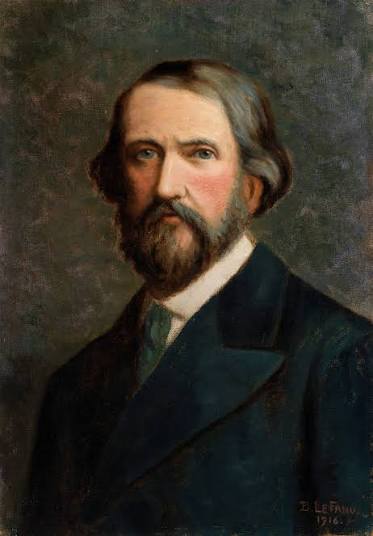
When I read this question, the first name that sprang to mind was Joseph Sheridan Le Fanu (pictured), who predated M.R. James and was much admired by him. I feel Le Fanu has a really sensitive grasp of women’s fears. My favourite story of his, Schalken the Painter, has a peculiar horror for women, even though it is framed by the perspectives of the men surrounding the unfortunate Rose. I have read that Le Fanu’s wife suffered with mental health problems, and I wonder whether that contributed to his sympathetic approach.
Anyway, I’ve looked ahead to the next question and since Le Fanu has been dead since 1873 I think being in an elevator with him might not be all that… edifying, shall we say?
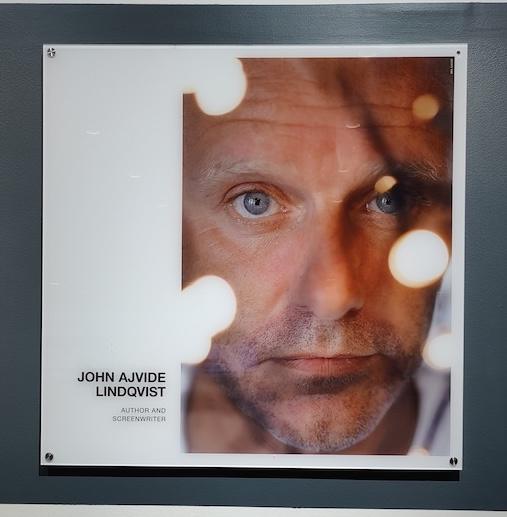
If I had to choose a genre hero now it would probably be the Swedish author John Ajvide Lindqvist (pictured). I loved what he did in Handling the Undead. It was so original. Hand on heart, I love a good old traditional zombie story—someone gets bitten, and then everyone’s running around screaming and people are trying to eat their relatives. I’ve written a handful of those tales myself. But I love that JAL looks at the psychological horror of a loved one suddenly coming back to life, and explores the questions of grief and letting go. The premise, if you haven’t read it, is that everyone who died over the last couple of months revives. And the hero realises that that includes his little grandson, who has been buried. Ugh.
Your Work
You’re stuck in an elevator for 60 seconds with that hero, and they want you to describe your work. Give us the pitch.
Ursäkta, min svenska är usel. Får jag prata engelska?
Okay, I write supernatural fiction—short stories and novels—with a vivid sense of place and often a Gothic feel. What interests me most is how my characters react to the horrors they encounter.
(That’s probably about all I’d manage to say in my 60 seconds, having spent the first 50 gaping like a fish and then asking if I could address him in English.)
What are you working on right now?
I’ve just finished a couple of short stories, one about zombies in Edinburgh and one about a remote Hebridean island where it’s so dark at night that you can’t see anything. Now I’m just about to return to work on a novel set on that same Hebridean island.
Thinking about all the stories/work you’ve done, what sticks out most in your mind? Why?
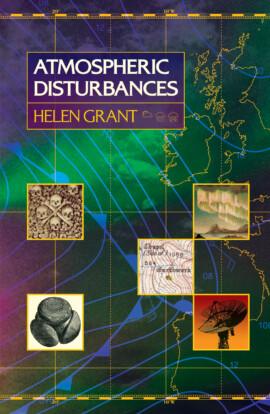
One particular story, Atmospheric Disturbances, sticks out in my mind because it has a positive ending. About ninety per cent of my short fiction ends badly for someone! But that one feels kind of hopeful, in spite of the bleak circumstances (nuclear attack).
Of my novels, maybe Demons of Ghent, because that was the one where I stopped writing Scooby Doo endings and had something genuinely inexplicable in it. Everything I’ve done since then has been about the supernatural.
Where and when do you create/are you at your most creative?
Either out walking in the countryside on my own, or in the bath. Typically when I get in the bath I have a book to read and I end up not reading it because I’m thinking through ideas instead. When I’m outdoors I sometimes talk through ideas aloud, and once a very quiet runner overtook me while I was doing this, which was embarrassing.
What’s the best advice you’ve received about creativity?
“There are those… who think that the man who works with his imagination should allow himself to wait till inspiration moves him. I was once told that the surest aid to the writing of a book was a piece of cobbler’s wax on my chair. I certainly believe in the cobbler’s wax much more than the inspiration.”
(From Anthony Trollope’s autobiography.)
What’s your writing soundtrack?
I never listen to music while I’m writing. However, I do have certain songs that I associate with particular books. I listened to John Grant’s Marz all the time while I was working on Ghost (though not when I was actually writing), and whenever I hear Nun Seid Ihr Wohl Gerochen from Bach’s Christmas oratorio I think of The Glass Demon.
The Quick Fire Round
Sci-fi, fantasy or horror?
Horror
Quiet or loud?
Quiet
Dark or light?
Dark
Strict lines or genre blend?
Genre blend
Awards or bestseller?
Um… my conscience wants to say Awards, but the bills need paying, so Bestseller.
Fiction or non-fiction?
Fiction
Poetry or prose?
Prose
Plotter or pantser?
100% plotter, forever
Reading or listening?
Reading
Notebook or computer?
Computer
Favourite SFFH book of all time?
Scream! Don’t make me choose. But if there’s one book I’ve read more times than anything else, it’s Ghost Stories of an Antiquary. I also re-read Moonseed (Stephen Baxter), World War Z (Max Brooks) and the short stories of Sheridan Le Fanu and L.T.C. Rolt pretty often.
Last book you read?
About a Place in the Kinki Region by Sesuji
Any SFFH author on auto-buy?
John Ajvide Lindqvist
Favourite podcast?
A Podcast to the Curious
The Home Stretch
What’s the best thing about being part of the SFFH community?
Spending time with other people who love the same stuff I do, and take it seriously.
Time to plug your stuff! Where can we find you and your work? What have you got coming up? Consider this your advertising space.
I have a website, helengrantbooks.com, and I’m also on Bluesky at @helengrantsays.bsky.social and Instagram at @helengrantsays. I have a YouTube channel, also @helengrantsays, where you can see some interviews, readings and book trailers.
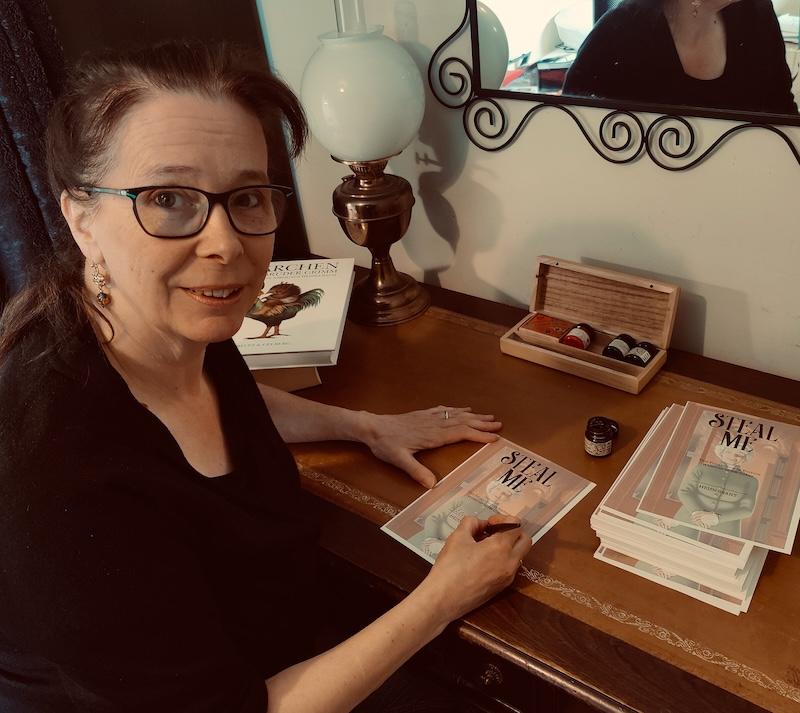
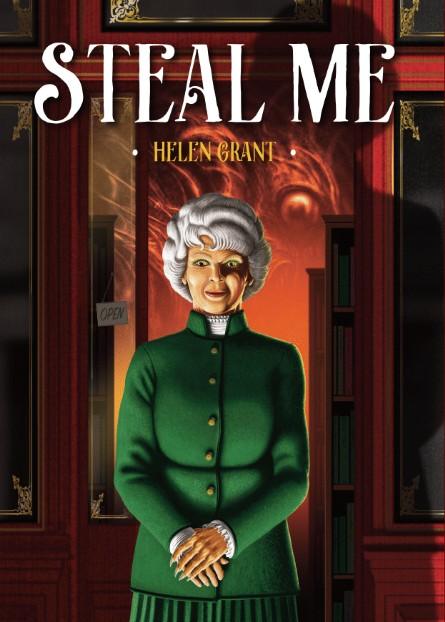
My most recent book is a novella called Steal Me from Absinthe Books, which you can find here. This is what it’s about:
Rowan Byrne hasn’t stolen anything for ages—not since she started to straighten her life out after a personal tragedy. But the volume she’s just picked up in the new bookshop in town seems to want her to steal it. The text is very persuasive. There’s a book for everyone in Legends—a book that will encourage their worst impulses. Steal. Fear. Burn. Kill. It’s not long before Rowan’s small town, isolated from the outside world, is descending into mayhem. Assailed by her own demons, Rowan could try to cut and run. Or she could make a stand, and try to save the community she loves . . .
Steal Me was edited by Marie O’Regan. I’ve written stories for some of her anthologies and they always have brilliant themes!
My most recent collection is Atmospheric Disturbances (Swan River Press, 2024) and you can find that here. It has (aptly) 13 stories, including the one about petrospheres and another about the Paris Catacombs!
I’d like to give a shout out here to John Coulthart, who did the covers for both of these books. I absolutely love his work! His website is johncoulthart.com.
Leave a Reply