The winners of the British Fantasy Awards 2026 were announced at Fantasycon. Find out all the details on our blog.
For all things fantasy, horror, and speculative fiction
-
Announcement:
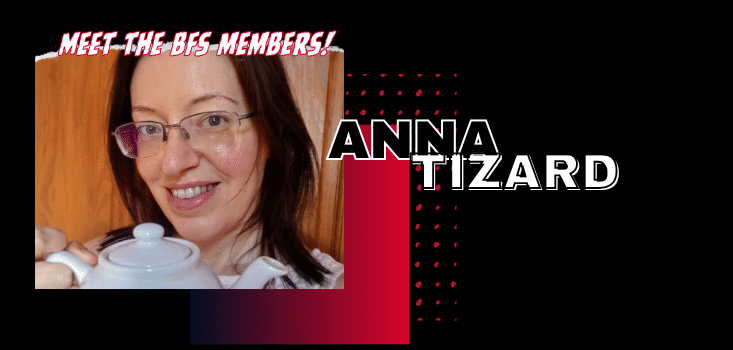
Meet Anna Tizard
Every Friday, we meet a member of the BFS and peer deep into their soul (or, at least, a form they filled out). Want to be featured? Email us: content@britishfantasysociety.org
Name, including preferred pronouns:
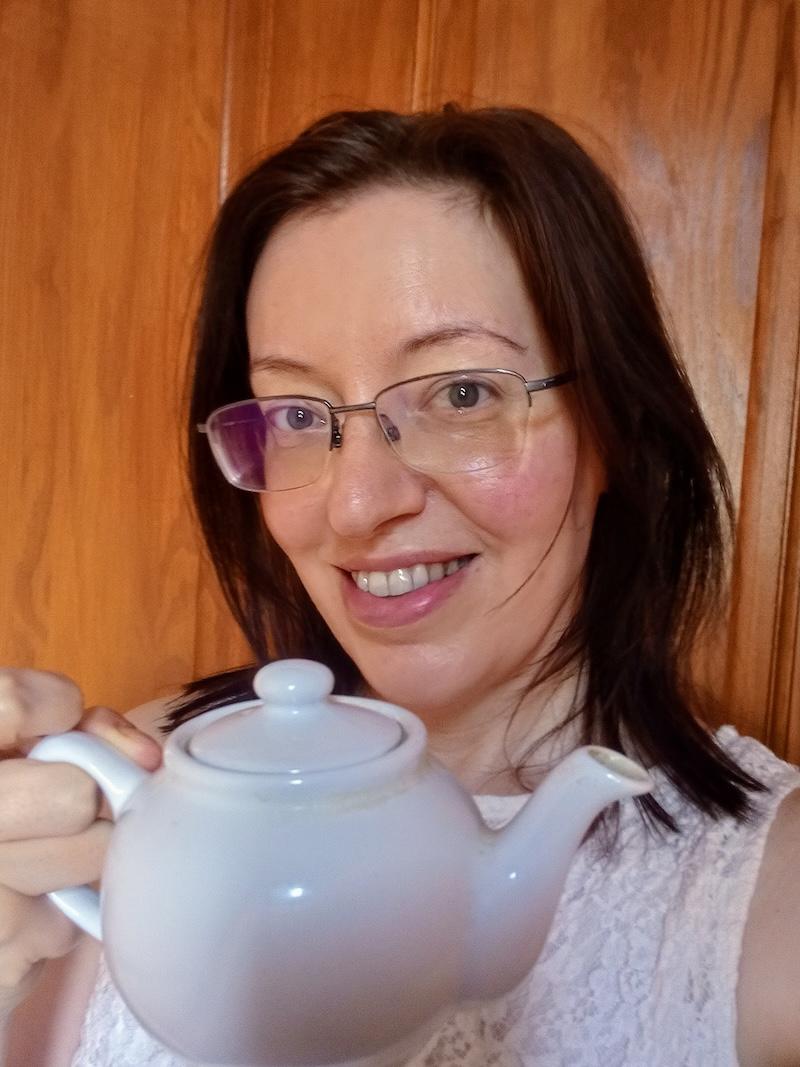
Anna Tizard (she/her)
Which region are you based in?
South-East England (Brighton)
If you write, which genre:
Fantasy
If you don’t write, what do you do?
Read, sometimes pootle around on my mandolin. My hubby and I watch and play along with Lingo and Only Connect (using the “pause” button on the remote A LOT!).
Are you drawn to any specific SFFH sub-genres?
Mostly contemporary/urban fantasy, leaning into magical realism. My love of unusual, weird stuff means I tend to stray outside of mainstream genres, and often into short stories. I’m currently lapping up Catherynne M. Valente’s The Orphan’s Tales.
Your Influences
Tell us about the book/film/thing that got you into SFFH: What was it? How old were you? What impact did it have on you?
I spent a large part of my childhood in Narnia. My journey began with a video of a 1970s animated version of The Lion, the Witch and the Wardrobe. My best friend and I used to watch it obsessively, while acting out the parts of the different characters. Her lounge had a large bay window with a wide sill, and tip-toeing behind the heavy curtains was our equivalent of pushing through the thick coats in the wardrobe to arrive in Narnia. We were probably aged between 7 and 9 (or the windowsill would have been too narrow!). Portal magic, and the idea of another world’s magic slipping into this one, still feeds into my writing and reading choices.
How does that early influence show up for you (in life/writing/agenting/publishing/editing/reading) now?
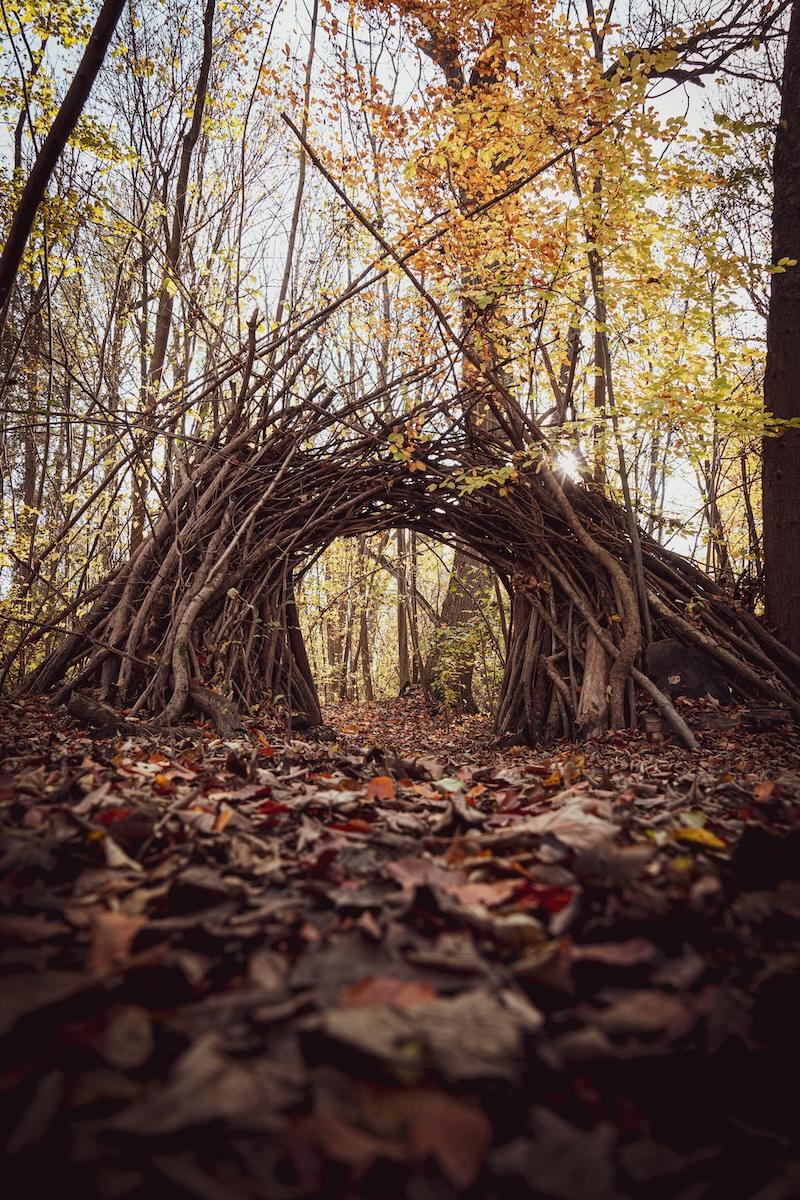
(Photo by Tim Hüfner on Unsplash)
I still love a good portal. Great reads I keep returning to include the Peculiar Children series by Ransom Riggs (where there are various portals into time loops, plus some of the freakiest monsters), and The End of Mr Y by Scarlett Thomas, where a hypnotic state takes you into another layer of reality based on some mind-bending quantum physics!
My love of this feeling—the possibility of a parallel world, or there being another layer to this one—deepened unexpectedly when I discovered the psychologist, Carl Jung. His theory of the collective unconscious poses the idea of a deeper level of the human psyche which is shared. Not a parallel world—but to my zany imagination, this is highly suggestive.
My own fictionalised versions of the collective unconscious have cropped up in my fiction, thoroughly wrapped up in fantasy, of course: I love to imagine what it would be like if parts of the mind were places or creatures. In my first novella, The Empty Danger, fear itself appears as a leathery-winged creature in a realm beyond the clouds that can only be reached through meditation or a dreamlike state. My second book, “I” For Immortality (which won a small award), also takes the reader into a place that is at once real and a part of the shared universal psyche.
Where do you draw your creative inspiration from?
Several years ago, I discovered the surrealist word game of Exquisite Corpse which randomises players’ words into bizarre sentences. It was some time before I thought seriously about using these as writing prompts, but once I started, I couldn’t stop! I now play the game on my story brainstorming podcast, Brainstoryum, mixing listeners’ word suggestions by pulling them from the Socks of Destiny. Being utterly out of control of the results makes it the most challenging imagination exercise ever, and ensures I always reach beyond the usual or “obvious” story ideas to something utterly unexpected. I think it’s fair to say I am now addicted to the unexpected!
Who do you look to as a genre hero? Why?
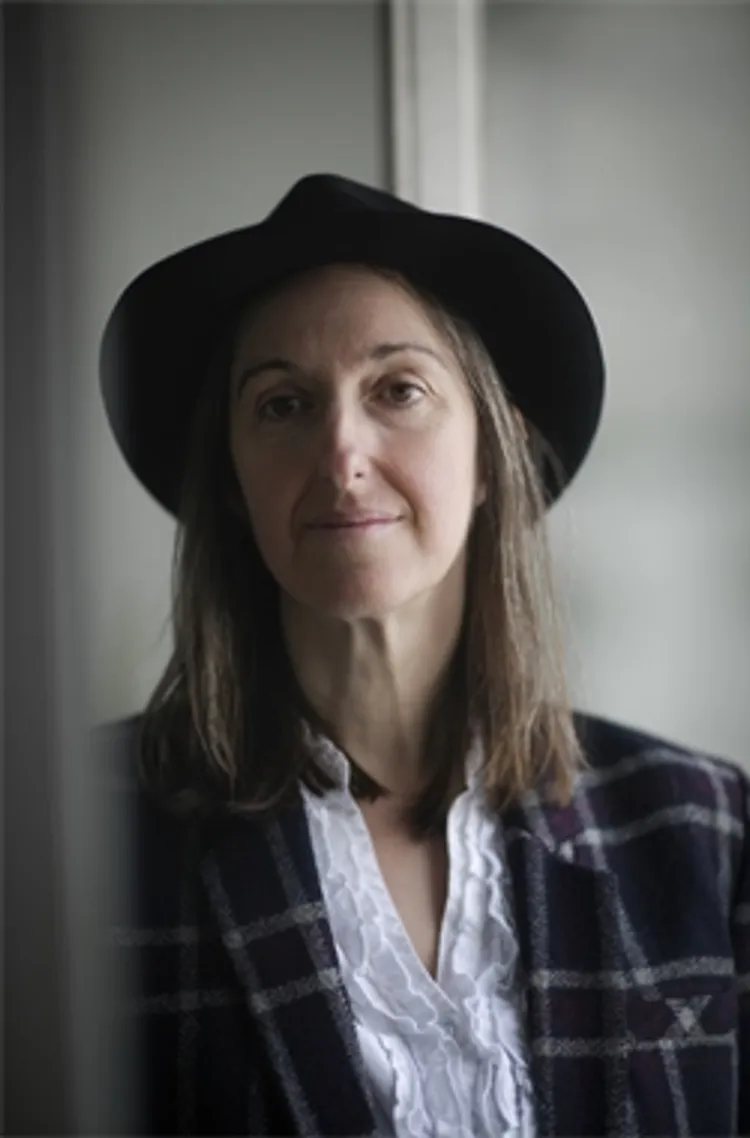
Frances Hardinge (pictured; source) writes really unusual stories. Half-way through The Lie Tree, there was a moment when I sat up and cried, “Whaaaat?”
This is what I love most: to be surprised.
To hold back a mystery that is both outrageous and yet believable, letting it slip out at just the right moment… That is a formidable skill.
Your Work
You’re stuck in an elevator for 60 seconds with that hero, and they want you to describe your work. Give us the pitch.
With Exquisite Corpse, there are no limits to where your imagination will go. This is what my writing practice looks like: a collaborative word game that is half-improv, half-séance. Brainstorms that have me chuckling into my microphone on the Brainstoryum podcast, inspiring ideas I could never dream up on my own; then reading out stories sent in by listeners who’ve responded to these prompts in the most unexpected ways.
My own stories mash together the impossible with the ordinary, and the monstrous with the profoundly human, weaving whimsy into darkness. But that’s what Exquisite Corpse does: it’s all about unusual combinations, and uprooting ideas in the unlikeliest places. Won’t you join me?
What are you working on right now?
Short stories, all inspired by Brainstoryum. There are heists, ghosts, creatures and carnivals. I would love to get into more anthologies and possibly release some longer tales as standalone releases. Maybe next year I will begin building another collection, but ultimately, I’d love to weave these together into one overarching plot.
Thinking about all the stories/work you’ve done, what sticks out most in your mind? Why?
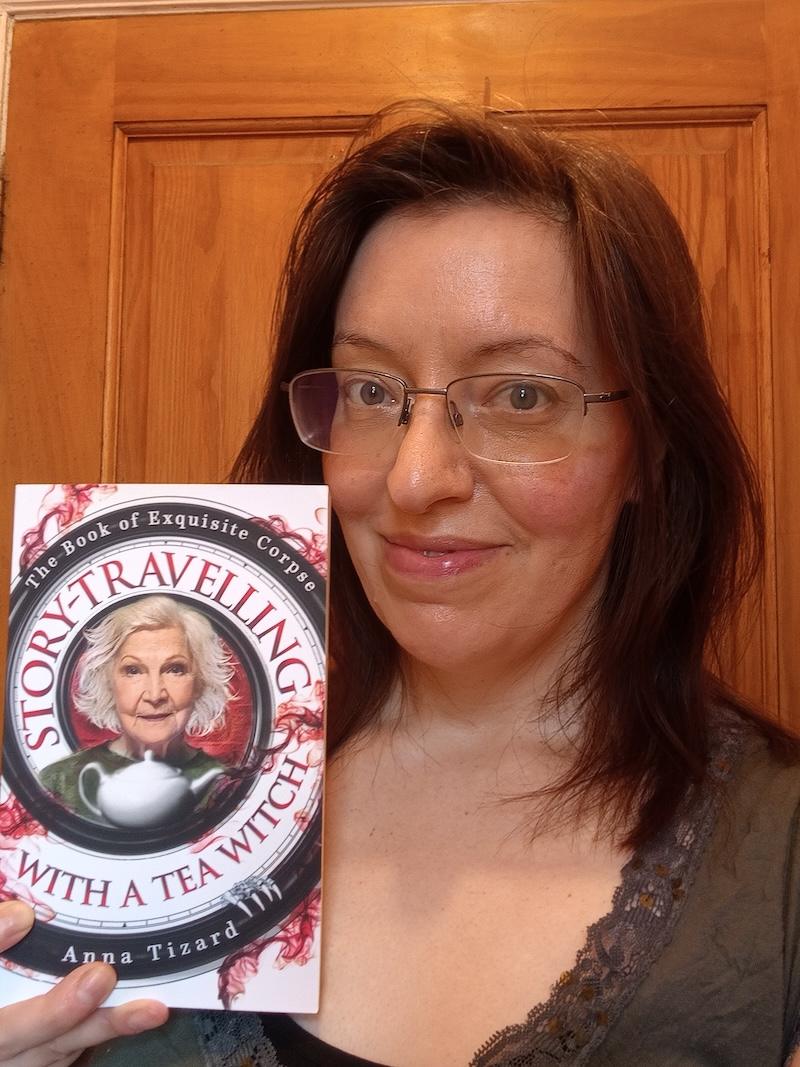
My latest book, Story-Travelling with a Tea Witch. It began as a short story collection on the theme of weird creatures, as that’s where the Exquisite Corpses were taking me at the time, but then Eswilda turned up and decided that she wanted to be the one to tell the stories. She seems like she might be a sweet old lady, brewing stories in her teapot, until you realise she’s a shape-shifting monster on the hunt for an heir to her strange and dangerous magic. The book feels like a body of work rather than just a novel; I had to re-mould my short stories (and drop a few!) so they all fed into Eswilda’s own story. The resulting book is a culmination of so many different stories, ideas and threads, like many worlds in one.
Where and when do you create/are you at your most creative?
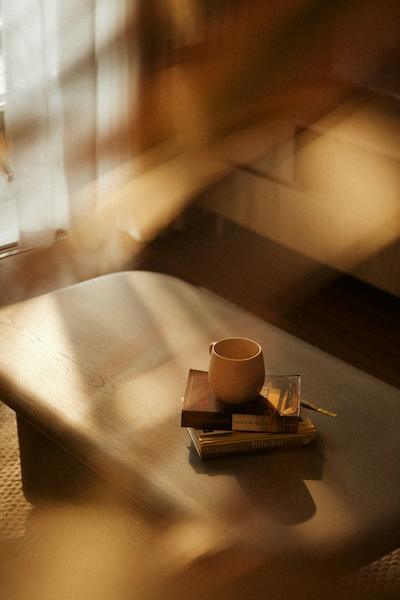
In the morning, at my desk, with a cup of tea: before the critical part of my brain has had a chance to wake up! Although I’m groggy at that time, there’s a freshness to the morning, untainted by the complications of the day.
What’s the best advice you’ve received about creativity?
Give it space; give it time. Early inklings of ideas wither under harsh scrutiny. Be free in your first draft, and just write. Trust your crafting techniques to step in at draft number two, when you’re ready to think critically about what you want this story to be.
(Photo by Cường Nguyễn on Unsplash)
What’s your writing soundtrack?
I cannot listen to music when I write. I would type the lyrics! As for tunes without lyrics… Like music, language has its own subtle rhythms. Even scenes, pacing, the rise and fall of tension and conflict throughout the plot: all these things have their own rhythm. On top of that, when reading or writing, I tend to “hear” the words in my head. It’s just the way my brain is built! Listening to music means being absorbed into that rhythm, and thinking in time with that, so there would always be a clash if I tried to write simultaneously.
The Quick Fire Round
Sci-fi, fantasy or horror?
Fantasy
Quiet or loud?
Quiet
Dark or light?
A mixture. Sorry! Life is made up of both, and I think fiction works best with a blend. I often wind both elements of humour and darkness into my stories, which just feels right to me.
Strict lines or genre blend?
Genre blend. Experiment! Surprise me.
Awards or bestseller?
A tough one. I’d prefer to be a bestseller, but since my writing is probably too niche for that, I will continue to pursue awards wherever I sensibly can!
Fiction or non-fiction?
Fiction
Poetry or prose?
Prose; poetic prose.
Plotter or pantser?
Pantser, although I prefer “discovery writer”.
Reading or listening?
Reading
Notebook or computer?
Usually notebook first, then computer.
Favourite SFFH book of all time?
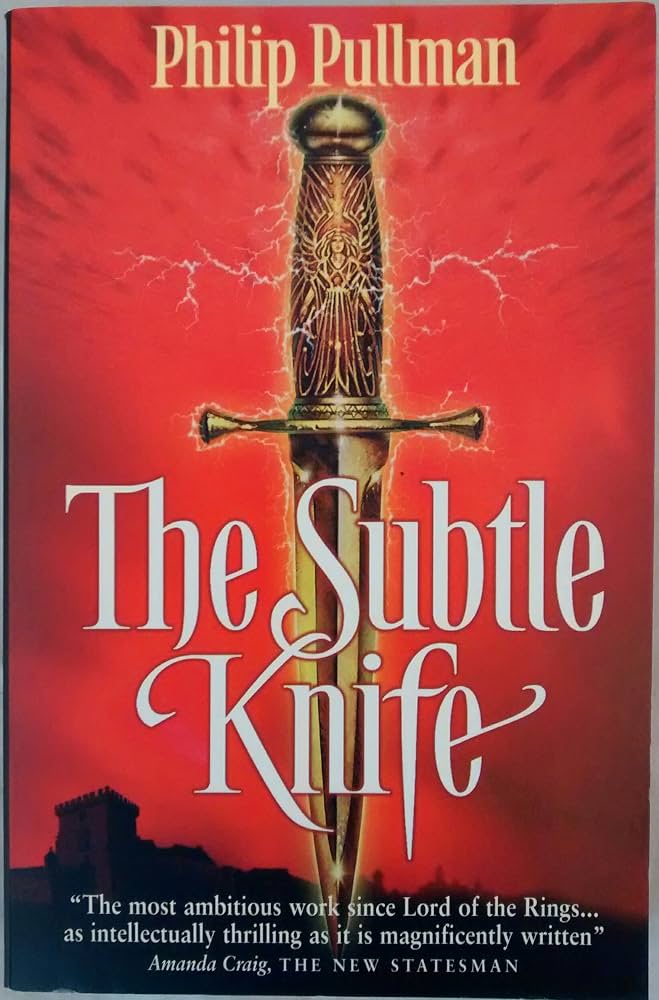
Oh gosh, that’s a hard one. Possibly The Subtle Knife by Philip Pullman. I love the His Dark Materials series, which I’ve re-read more times than I can remember.
Last book you read?
The Best Thing You Can Steal by Simon R. Green. Hilarious, and so clever!
Any SFFH author on auto-buy?
Frasier Armitage, always. He writes mostly scifi, which isn’t strictly “me”, but his writing is so beautiful and gripping that I can never get enough.
Favourite podcast?
The Spotlight Indie podcast. Such a lovely crew!
The Home Stretch
What’s the best thing about being part of the SFFH community?
Exactly that: the community. Just knowing you’re not alone, and there are others who share your obsession.
Time to plug your stuff! Where can we find you and your work? What have you got coming up? Consider this your advertising space.
You can find everything I do at annatizard.com: browse my stories and books, including my latest, the darkly whimsical novel in stories, Story-Travelling with a Tea Witch. Send me word suggestions for the Socks of Destiny on my Play page, and find links to listen to the podcast on the Brainstoryum page. Subscribe and be privy to secret stories. Who knows? You may even inspire the next tale in The Book of Exquisite Corpse, or spark a new tale of your own.
Leave a Reply