
In this monthly column, we pose your questions to an expert in a specific field of speculative fiction and the wider ‘industry’. This month, we asked writing and confidence coach Dr Rachel Knightley to help our members get ready for a new year of creativity.
This month: Creative coaching with Dr Rachel Knightley
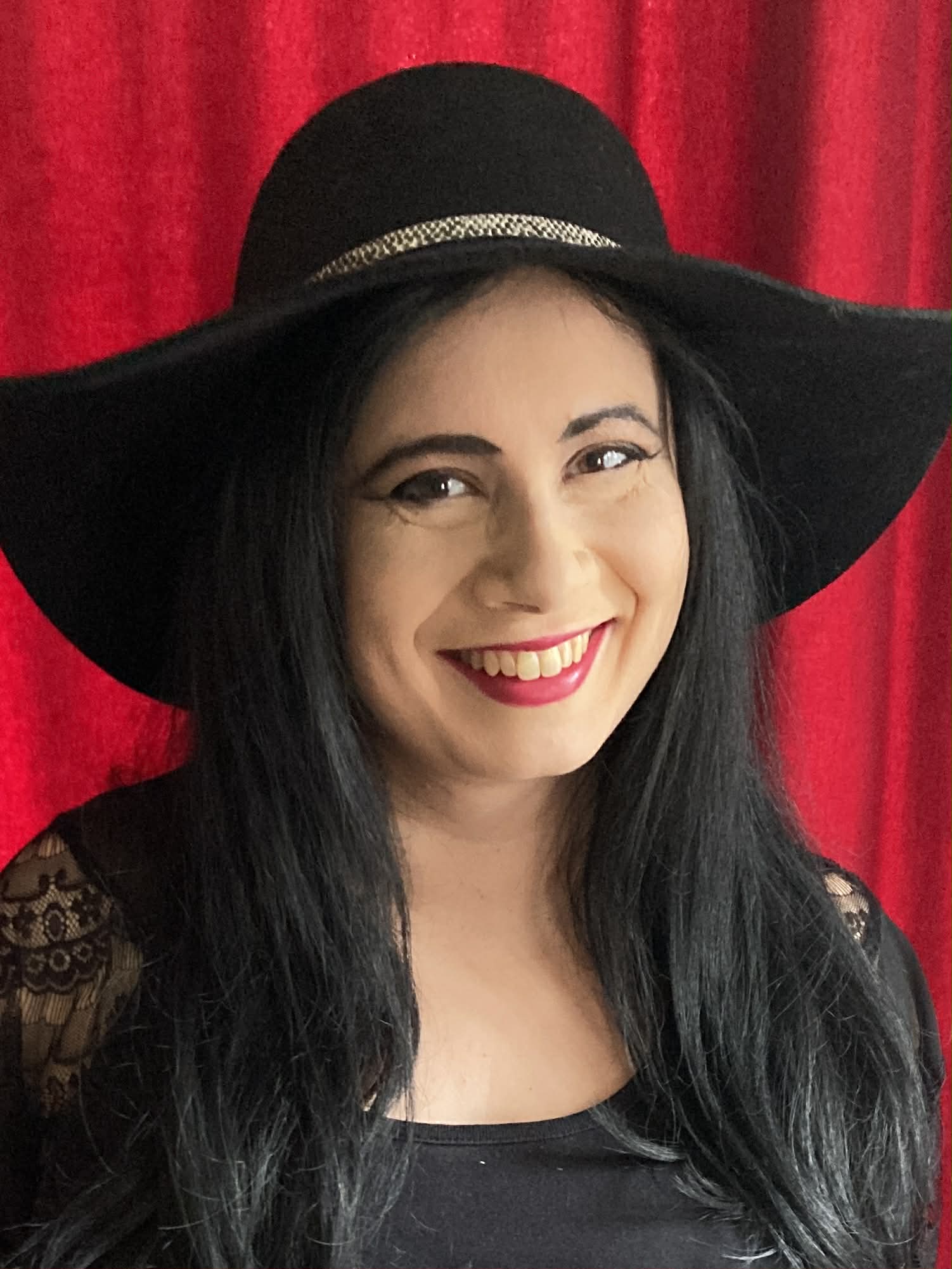
Name: Dr Rachel Knightley
Website: Personal or The Writers Gym
Specialism: Writing and confidence coach
Follow: Instagram | Substack | BlueSky | Facebook
Dr Rachel Knightley is a fiction and non-fiction author, creative writing lecturer and the founder of The Writers’ Gym membership and podcast. The focus of her coaching and speaking is creative confidence to unblock writers and speakers in art and life. She is an International Coaching Federation accredited Professionally Certified Coach, having trained with Barefoot Coaching and Chester University. She holds a PhD in Creative Writing from Hull and PGCert in Teaching Creative Writing from Cambridge. She is a full member of the British Fantasy Society and the Society of Authors.
Whether Rachel is speaking to BAFTA and Carnegie-winning or bestselling writers on the Writers’ Gym podcast or coaching new writers, imposter syndrome (‘I’m not a real writer’), self-sabotage (‘I’ll write when I have enough time/enough confidence’) and the ‘shoulds’ of what to write and who to approach to create the professional and personal achievements and circumstances are central issues her conversations transform. Rachel’s coaching has been called ‘life-changing’ by industry leaders in coaching and in writing.
Rachel has taught and lectured in Creative Writing at Roehampton University and the University of Hull and leads regular writing and confidence coaching workshops at the Century Club in Soho, Olympic Studios in Barnes and Riverside Studios in Hammersmith. She has taught online for schools and universities in the UK and China. She is also the founder of Green Ink Sponsored Write for Macmillan Cancer Support, where her work to promote both the charity and the new writing created to support it by her members and fellow authors is visible on social media and on ten years of successful Justgiving pages.
In 2025, Green Ink Sponsored Write nearly doubled its projected total with authors including award-winning authors Rhianna Pratchett, Kim Newman and Dan Coxon, and Instant Sunday Times Bestseller Sarah Brooks. In 2025, Rachel has spoken at the NAWE Inspiring Writing conference, the World Fantasy Convention, and Riverside Studios London on creative confidence for writers, and fiction and memoir writing. Her published work includes the short story cycle Twisted Branches (2023) and short story collection Beyond Glass (2020). Her stories have also appeared in the British Fantasy Nominated Dreamland anthology, Dreamland, and Great British Horror 5. Her first collection was longlisted for Ellen Datlow’s best horror of the year. Her short story ‘Wolf in the Mirror’ won first prize for fiction in Writers’ Forum. Her articles on writing coaching, genre fiction and related topics have appeared in Writing Magazine, Fangoria, Jewish Renaissance and Writers Online. Her non-fiction includes the current WJEC/Eduqas Drama GCSE Study and Revision Guide and Your Creative Writing Toolkit. She lives in London.
Follow Rachel on Instagram: @drrachelknightley | @jointhewritersgym | @rachelknightleycoaching

The basics of coaching
What exactly does a creative coach do? I’m not sure what to ask here!
My job is to narrow the gap between what’s in your head and what gets onto your page. You gain clarity on what you want from your writing and/or writing career – and what your writing needs from you in return, so your dreams become goals and your goals become your everyday realities. It’s not ‘just’ for beginners, nor is there any need to consider yourself a ‘proper writer’. Many award-winning authors, absolute beginners and everybody in between experiences their own version of the same imposter syndrome, time and confidence pressures. Our conversations clarify where you are, where you want to be and keep you supported and accountable all the way.
Writing coaching is a thinking partnership; a confidential creative space to bring you into a closer connection with your ‘writer’s palette’: your unique imagination, memory, observations and questions about the world and your place in it. And, of course, the permission to mix them with absolute freedom. It’s never about how to write like me, or anyone else: it’s always about how to write more like yourself.
This may be a little too broad, but is there any particularly common mistake that many of your clients seem to often make?
Lovely question—thank you!
If I could send back one message through time to my earlier self and to most or all of my clients, it’s got to be this one:
You cannot edit what you haven’t written.
It’s from my book Your Creative Writing Toolkit, and it’s a testament to how long I spent trying to line-edit the first chapter of a novel I didn’t even know the end (or probably middle) of. In the same book, I mention how difficult it is to imagine an artist thinking ‘I have to get this tiny top corner right before I move on to the rest of the picture’. Yet, as writers, we can lose so much time and energy that way.
A big thing about perfectionism/procrastination is, even as we’re doing it, a part of us knows we can’t make any given line or chapter ‘perfect’ until we know what the rest will need from us. So it keeps us ‘safe’ in the status quo of not having finished that book we claim to love. A better way to show love is the courage to show up for that book. Love it in its imperfection, its courage to be seen on the page. You and the people you choose to help can move it forward from there.
Here’s another I wish I could gift us all:
That voice of poor self-esteem in your head is not the voice of your inner editor.
‘It’s too weird,’ ‘It’s too boring,’ ‘X would hate this,’ ‘When Y was my age they’d written XXX books,’ our brains yell. Again, they’re trying to ‘help’ us by keeping us safe. Unfortunately, survival brains confuse ‘safe’ with ‘familiar’. The world in which your current work-in-progress is finished is not the familiar world. Playing safe means staying in the familiar world.
The inner editor, on the other hand, is the voice of curiosity. It’s the voice of the confidence that comes not through thinking you’re perfect and amazing and the best writer in the world, but from focus and enjoyment in your ideas. Curiosity about what’s around the next corner. And about how to clarify the experience of going around that next corner, for you and your reader.
Completing the thing
Hi Rachel, I’m stringing along quite a few projects and nothing seems to get done. Do you have any advice on how I might be able to start actually completing some projects? Also, I freelance in quite a few different roles and find that I don’t always have the mental or physical energy to sit down and write daily. How can I try to overcome this? I would love to be able to spend even just 15 mins writing every day even if I’m feeling drained. Thank you!
Photo below by Luke Stackpoole on Unsplash
Thanks very much for this. Having lots of things on the go, and/or not completing things, are deeply familiar, potentially very separate writing issues. As are having many different roles and not finding those minutes for your writing. All of this can be just as true for writers working on ‘only’ (!) one thing at a time, though!
It helps to recognise if you like doing more than one thing, and if so (like me, and Tim Lebbon on the Writers’ Gym podcast) you enjoy the ‘palette cleanser’ of moving between projects when stuck. For others reading this, I’m describing hell and they’d much rather do one project at a time. Neither way is ‘wrong’ or ‘right’, but knowing what works for you helps create the circumstances.
One of the main reasons I started the Writers’ Gym is recognising it’s identifying the goals and the little habits to bring in every day that create what we call ‘normal’. So, if finishing things is on your goal list, one set of reps could be to give yourself a ‘fake ending’ promise: before you put the pen down or close the computer, you do a ‘fake’ final paragraph or scene plan. Something to rewrite is a very different psychological proposition to something to write.
But here, from where I’m sitting, is the biggie: There will always be a deadline, a load of washing, a call to make. There will never be absolute confidence or absolutely enough time.

So, the question on my mind for myself and my clients is:
‘What do I want normal to look like?’
The reason I begin each week with the Writing Room is so those few minutes (or the full session) happen before (or at least at a fixed point during) the to-do list, workday and life in general – rather than those few minutes becoming a ‘reward’ for getting everything done. We don’t expect our cars to have petrol as a ‘reward’ for the journey, so teaching our brains and bodies our creativity actually helps us do all our work better – is in fact the perfect warm-up for everything else – can, I see over and over again, be a gamechanger.
I’m not saying your own writing has to go first every day. I’m asking if maybe locking the bathroom door and doing five minutes of writing in the time that nobody gets to ask about might make that permission to write feel a little bit more tangible.
[Member 1]
Hi Rachel, I have a high level goal for next year, essentially “finish a book” but that feels quite large and quite far away. What’s your advice for breaking down into more granular targets and are there any particular tools or processes you’d advise as methods to keep on track?
[Member 2]
I really struggle with setting/remembering long term goals (e.g 3 months, annual). Any tips, particularly on how to make them feel exciting and like something I look forward to doing?
I’ve linked these questions together because, as I can see you recognise, it’s all about having the fun because the less it feels like work, the better we do the work. Which includes remembering we have to do the work in the first place!
Getting attached to the ritual rather than what the ritual is there to summon is where we can fall down, so noticing when something that was once right isn’t anymore is a big part of this. If there are methods you used to use – for example, very fixed deadlines or word-counts – it’s absolutely fine to notice what doesn’t feel good right now and get curious about what does instead.
In terms of finishing a book, from the psychological perspective of making it more achievable, less threatening and more inspiring and encouraging, I do recommend treating it as you would a canvas. An artist (as mentioned before) would never say ‘I’ve got to get the top left-hand corner perfect before I move onto the rest’; layering the canvas means you cover the whole thing and, next layer, build up the overall landscape, working your way toward detail. Word-counts are a double-edged sword and can feed Imposter Syndrome if you read back stuff and it feels like filler, so for me it’s about knowing what we write is only the foundation level. You’ll come back to the canvas and add more detail with every layer. It lets you beat the inspiration addiction by crafting safely so the artist can breathe; enjoy creating and embellishing.
Sometimes I imagine someone were giving me a stupid amount of money to have a (completely changeable and redraftable) beginning, middle and end by this evening/the end of the week. I might say to myself about an article, a short story submission, or a whole book. I start layering up. It breaks the blank page/new chapter fear, and the difference of having something to push up against instead of nothing on the page is huge.
One of my favourites is something I resisted for many years: my digital calendar. A proud dyspraxic, my colour coding is a huge thing in professional and personal life (I’m writing my answers in purple right now). So, having different colours for coaching online, in-person, Writers’ Gym group coaching, socialising and everything else has been great. Best of all, though, I have one colour for notes that only I ever see. That contains my goals and deadlines and reminders two/six/etc days before they’re due. And if I need to move them, I move them. I can still see where everything is (and search easily if my neutrospicy moments mean I’ve put it somewhere that made sense at the time but now I can’t find it!).
I once had a notebook that said on the cover ‘Writing things down is the new thinking them’ which was a lovely joke but also one of those permission moments. When I’m not at work, I let myself have a to-do list by me in my phone pretty much all the time. It’s so calming to know I’ve written a thought down. It stops me having to run off and do the thing immediately, or risk forgetting it entirely. Anyway, before I get too excited telling you about all this, the reason I mention it is the deadlines are slidable. When things change, as well as when they don’t and you just need to extra reminders, you can see everything clearly and change what needs changing. It makes me feel safe and it makes me feel accountable.
At the Writers’ Gym, we share deadlines and goals every week – and any member who wants gets personalised reminders and check-ins with me. That isn’t instead of all the self-reliance above, but it’s a way of having external validation and support as well as internal.
Are the deadlines you’re looking at external or internal? If they’re internal, given that you make the rules, what are the new rules we might brainstorm together?
Balancing life, work and creativity
Hi Rachel, I’d love your thoughts on balancing the whole expanse of what authorship means nowadays. One of my 2026 goals is to boost my social media presence but of course this eats into my writing productivity and creative capacity. How do we find a balance with limited hours in the day to prioritise all the different aspects needed to (hopefully) become a successful, published writer? Especially when we also balance full time jobs and parenting?
Thank you very much for this.
If we were in a room together, I’d start by listening to you talk about what you want authorship to mean.
I think I can hear what you fear it might have to mean, but I’d love to hear more of what you want it to mean. This includes your social media presence, not simply as a box-ticking exercise but as a chance to thrive in a space of your own. Every choice we make, we base on what we want or what we fear. If fear is the strongest voice, the results in our choices will reflect that. Coming into a space of creative confidence, we start listening to what we want and feel the curiosity that will help us build a clearer picture of what we want, which in turn makes the steps to creating it clearer.
But first – and last, and always –authorship means spending a lot of time in your own world: the world only you can ever create. Social media is a brilliant (and free) tool for communicating that world to the ideal readers for it. There are so many wonderful ways of not letting the tail wag the dog; of the content reflecting not replacing your writing process and your identity as a writer. I won’t go into it all here because it’s individual and personal to every writer, but this can be an enjoyable side effect of writing and not a replacement or upstager of it. When I work with my clients on their social media presence, we start with who you truly are and what you truly love. The content you or we create is a reflection of what you’re moved to share. Not what you think you’re ‘supposed’ to or ‘should’ share, but as a celebration of you and your stories.
Hi Rachel, I have a lot of things on the go: I am co-host and editor/producer of the BFS 2-weekly podcast (19 episodes since April), editor of BFS Horizons fiction publication (150/200 pages twice a year), and I have novel due with my publisher in January (I wrote 101k words from June to September, but I probably have 10k to go). I’m fortunate enough to be retired, and to have quite a bit of time to devote to these competing creative endeavours, but I stopped working on the novel at the start of September to write a couple of shorts and I’m struggling to get back into it, always going to the things that “shout louder” and have shorter deadlines. What techniques would you suggest for carving out time for, or prioritising, the thing that seems to be the hardest to do? Not expecting a magic bullet, of course, but a fresh perspective would be greatly appreciated. Thanks!
I loved reading this; it’s such a great example of how even when we do have what we might call ‘enough’ time, the mood doesn’t necessarily take us on the day and/or we find so many worthy uses for that headspace we’re as busy and in demand as ever. I can see you recognise this, particularly around the shorter and more pressing deadlines ‘shouting louder’ than the longer, deeper work. If we were together in a room, I’d listen for what you were curious and passionate about for your writing today, and how today might differ from last year, or even a year from now. Here’s why…
Our time will get filled predominately with what is important to us if we’re clear what that is, or what we think ‘should’ be important to us, if we’re not. One of the things I do early on in most freelance coaching relationships is spend a bit of time on the writer/line-manager relationship. What does the writer (you) need from their line manager (also you)? Where does the line manager have an opportunity to impose helpful boundaries, so the writer has more headspace? Is there anywhere, in return, where the writer might pull their socks up and make sure they – for example – put in a ‘fake’ ending to rewrite, rather than wait for perfect inspiration to strike? Is there anywhere a nudge from the line-manager might remind the writer they’re actually a load more capable than they think they are?
Carving out time is what most writing coaching clients arrive with me knowing they want support with, and often not quite knowing why they haven’t already done it. I mention the locked bathroom door, the five extra minutes that ‘don’t count’ because no one ever knows or asks what you were doing in there! And while we might not have a ‘magic bullet’, I often use the ‘magic wand’: if you knew whatever you go with will be absolutely fine, what would you choose to do next? Remember, the magic wand doesn’t understand ‘should’ and ‘sensible’ and ‘What will X think of me?’ It only understands what we truly want to create. When we’re clear on our intentions, and identify who and what we need to reach out for to create it, that’s when the magic happens.
Hi Rachel. I’ve got some chronic health issues that over the past year have worsened and become less stable. It means that I can’t predict what capacity I’m going to have and so struggle to find regular writing time and make significant progress. Do you have any advice for setting goals that are still motivational while being flexible enough to adjust as needed?
Photo below by Priscilla Du Preez 🇨🇦 on Unsplash

Hello [member name], my fellow Imposter Syndrome panellist! It’s great to hear from you and I’m so sorry you’re having to deal with this. Several Writers’ Gym members and clients live with this question every day and I’m always so grateful to have conversations about it.
I think you’ve phrased it absolutely as the reminders I’d want everyone to have: goals that are ‘still motivational while being flexible enough to adjust as needed’.
Okay, so, bad news first:
Physically and mentally, sometimes we just can’t. Pain, energy, whatever kind of can’t that is.
And while we know it’s better ‘to light a candle than curse the darkness’, it doesn’t always feel better.
But here are some candles we can light.
Here’s the first:
- Forgiving ourselves. Like the importance of the ‘I want’s emerging from beneath the ‘I fear’s in some of the previous questions, it might at first sound theoretical rather than practical. But thought habits are the beginning of everything. So notice (not judge) energy that could leak into anger (which feels so active and powerful) and bring it back into fuel for rest, and making notes to future you when they’re back in writing mode. Forgive yourself for whatever it’s easier to blame yourself for.
Right. That leads me to another: - Leaving notes to Future Me. This is, in all circumstances – from illness or grief to just plain not being in the mood – a great way to get out of the trap of trying to edit what you haven’t written. Future You might just need a post-it note to do what Today You would lose all their remaining spoons if they attempted. Your job is just to leave them notes so they can, not do their job for them but do yours: note, then rest.
- Remember Pirenesi. We will all have our own examples, but I’ll take one of my personal favourites. Suzanna Clarke’s illness and energy levels meant Pirenesi was written in tiny, tiny bursts. It’s why it made sense for it to be told in diary form. It’s beautiful, it’s fully itself, and it took years and years. And I love it. So plonk your thoughts down, shoot the ‘should fairies’ that say this isn’t how you write a book, that any words that reach the page have to be beautiful and finished, and leave notes to Future You. The energy isn’t wasted; it’s banked.
- Physically, mentally, emotionally, artistically, it’s never about what someone else would do. It’s about recognising the power you have and selecting what helps you to use it as you wish, so you can show up wholeheartedly in activity and rest wholeheartedly too. Whatever is going on health-wise – body or mind or both – we can’t stop pain with shame. We can lessen it with the things that make it feel good: curiosity being the first and most powerful. Keeping asking yourself what you want to do and what are the signs it’s time to pause, and keep listening to your body and mind giving their answers.
Finding our confidence
New question, but I’m struggling to word it: How do you manage when clients have really bad self-esteem, but you’re trying to help them believe their work is good? I know many people (including myself) who struggle to accept compliments of any kind or believe their work has worth, and in the bio it specifically says you deal with Imposter Syndrome. That just seems like such a hard thing to manage?
Thank you! Let me share a little story…
A few months ago when I was planning the next series of the Writers’ Gym podcast, I summoned all my courage and wrote an email to Kim Morgan. Kim is one of my writing and coaching heroes. She’s the founder of Barefoot Coaching (where I trained) and for about the last ten years my favourite columnist in Psychologies magazine (where I first discovered the language of coaching, which in turn led me to everything I’ve done since). Kim is also the author of two of my all-time favourite books on coaching, and countless others.
The reply I got back thanked me for getting in touch; that it was lovely to hear from me. But, she assured me, ‘I’m not really a writer…’
Let’s just play that back. The AUTHOR of many, many books that had been a huge influence on me, a successful ongoing columnist for a major magazine, the founder and authorial voice of the coaching materials created in the company she founded, a keynote speechwriter and public speaker … said, , ‘I’m not really a writer.’
Every beginner writer, most experienced writers, at least one BAFTA winner… everyone says it in some way, often in the same words. ‘I’m not really a writer. My friend X is a proper writer. I’m just…’ etc.
So, [member] and almost literally every other writer, here is what we DON’T do:
We don’t tell those feelings they’re wrong or bad. We don’t try to ‘solve’ them. We don’t lock them in a box then sweat our energy away trying to keep the box shut. We acknowledge they’re trying to help. We give them a gentle pat on the head and a comfortable seat by the keyboard and notebook.
And we write. Even though they think we can’t. We do.
And we learn – simply by making showing up to the keyboard our first and most important Writers’ Gym habit – that we are so very much more capable than we thought.
We write. Later we edit. Rince and repeat. The habit leaks into brain and body. Small changes happen.
And even when we’re leading lights in our genres or industries, we hear ‘I’m not really a writer’ still finding its sneaky way into our psychology.
But we know that’s a feeling, not a fact.
Struggling with compliments is a familiar part of Imposter Syndrome, and in a one-to-one conversation we’d go into the story you’re telling yourself. But here, on the page, is one for all of us: turning our rejection of someone else’s thoughts and words into a ‘thank you’ is a gym rep that helps them and us. What they’ve said is true for them, and they’ve been brave enough to put their words out there in return for ours. So, instead of rejecting their words or denying their reality, we can choose being curious about their reality.
Kim was curious about mine (honestly, if you’d told me five years ago one of my own sources of inspiration would be calling what I do ‘transformational’… my imposter syndrome wouldn’t have believed you!). She came on the podcast and now writes ‘author’ on her bio. You might be someone else’s Kim, if you let your words gradually, gradually, out of your head and into the world.

Staying on track
[Member 1]
Any recommendations for handling mood and the impact that has on momentum? Maybe because you’ve just hit a hard bit, or tiredness, or external stuff.
[Member 2]
Similar to above: sometimes I can get sucked into a project and be super into it, but get interrupted (either short term by things like dinner time or bed time or long term by a spike in homework) and when I try to get back to it, all that energy is lost. Do you have advice for either keeping the energy or getting it back?
Photo by Faustina Okeke on Unsplash
Hello and thank you both—I’m linking these questions as the answers for internal (mood) and external (life) can both be faced by one of the most important things a writer can do for their self-confidence, relationship with time and artistic output.
The slogan of the Writers’ Gym is ‘build creative confidence, beat the inspiration addiction, join the Writers’ Gym’. What this does by introducing small, achievable daily or weekly writing habits is it stops writing being something that happens only when the mood takes us. We get used to taking it instead.
Perfect was never on the menu. You’ve possibly seen this on our bookmarks, because it’s one of the clearest messages to move away from the side effects of school telling us writing is something that’s meant to fall out of our heads in beautifully neat paragraphs with excellent vocabulary and perfect spelling. Allowing ourselves to be messy, and bitty, and leaving (as I know I keep saying but I promise it’s worth repeating!) notes for Future Us means it’s easier to return, to pick up where we left off and not need to be in the same state we were in. If I’m not in the mood, I leave key words, instructions to future me. Even if when I come back on the second pass I’m still not in the mood/feeling uninspired/”driving on manual” instead of the “automatic” sensation of inspiration, it’s often surprised me how something I’d convinced myself was “crap” reads back better than something where I was feeling really inspired. The flow state is where we get out of our own way and get the words on the page. But we don’t have to wait for it. We can invite it in by how we arrive. The body and brain call ‘normal’ everything that happens regularly. It’s amazing how quickly a habit can change. If you want your brain to associate arriving at the desk with creativity, it will give you what you want if your messaging is consistent (I sometimes call it ‘dog-training’ my brain!).
However, maybe more important is noticing when there’s a wall of emotion or stress that needs to be acknowledged, not ignored. I had a client realise for the first time they’d always resisted journaling as they thought it took them away from ‘real writing’ but when a warm-up exercise in a group workshop led to it she realised it meant she had clearer, direct access to her material when she’d ‘brain-dumped’ what she was feeling on the page. Writing coaching is another way of doing this: it’s a confidential space with the quality of listening that gives something very different to friendships and writing groups. We’re both here with one focus: you your writing and your life. It’s a space to best understand and work with, not against, exactly who you are and what you need.
What success means, what seeing your words arriving in the world as the best version of themselves means—personally and professionally will have some things in common for most or all of us but the closer the time I spend with you identifying your unique picture of success and happiness in how you live your life and use your time, the more specific and wholeheartedly you can show up in all aspects: online, offline, in writing and in life. It’s not – ever – about me or anyone else handing you a ‘should’. It’s about you discovering your own in authentic realisations about what you want and how you, supported but always in the lead, will be create it.
Is it time to give up?
Photo below by Stormseeker on Unsplash
I hope it’s not too late to ask a question. I’m working on a novel restructure for a finished manuscript I’ve been working on for a very long time (off and on, with a lot of off. Some other projects in between and lots of time not writing). I’ve been lucky enough to have help through a developmental edit and have made some progress but it’s so slow and the project feels so huge. Changing something (especially at the beginning) has a thousand knock-on effects and I don’t know if I have the brain capacity to hold all the parts in my head.
I’m deeply invested in getting it done but I never do much more than thinking, planning, delving into craft books and then maybe a small amount of progress. I do want to tell the story still even after all this time, I believe it’s more important than ever to have it out in the world. I think the work I’ve done is good (sometimes to the point where I can’t believe I wrote some of it). It just feels so much easier to do other stuff at the moment. Like many others here I think it’s partly a capacity problem. I have a teenager with a lot of extracurricular activities to support. I have a tween with a lot of emotional issues to support. I have a very supportive husband with a stressful job. I have a demanding day job delivering training and events, I’m trying to keep everyone healthy, sleep well etc. The usual hacks like 4am quiet writing won’t work for me. It’s easier to always do something else (and like many, my attention span seems to have eroded). I might be stuck in sunk-cost fallacy.

I’ve been told a few times to give up on it. I still have hope that with enough time and emotional space I can finish this to a level I’m really proud of but at the moment it all feels a bit sad. Sorry for the long post. It feels extremely vulnerable putting this here.
Thanks so much for this question.
Developmental edits are, while very valuable when it’s the right thing, one of the reasons I believe it’s so important people understand how writing coaching differs. When we send our work off for an edit, it can show us some very helpful things. But depending on where the work is at, where we’re at and, I have also found, where the editor’s at, it can crate an artistic paralysis which adds to the overwhelm instead of lessening it.
It’s why people like me exist professionally, to talk to the writer and narrow the gap between what’s in the writer’s head and what’s made it onto the page. Because the personal relationship means we get a sense of how we talk to each other and what level of challenge is useful and welcomed, it’s a much more personal approach than the feeling (not intended but often the result) of wisdom coming down from on high.
Above all, it stops the real poison which is being ‘told to’ give up. Instead, it invites a conversation where what is important to the story comes out clearly. Sometimes coaching includes live-editing, but that’s usually after the writer has strengthened their own position and trust in themselves, and their own resilience and enjoyment on what simply through clarifying their intentions, objectives and fears, they are capable of doing themselves.
Coaching isn’t ‘telling you what to do’. It’s asking you the questions that mean you reveal to yourself what’s going to work best for you.
Vulnerability is true strength. Showing up with the whole of yourself is the best thing anyone can do for their writing and their live. I think the opportunity in the crisis here is not to add to the overwhelm but to recognise you are in a position to take back ownership and joy of your writing, time and confidence.
A new year offer from Rachel!
Receive 10% off coaching packages with discount code BFS10, or quote the code when emailing thewritersgym@rachelknightley.com
Read previous columns
Ask an expert
- November 2025: Crowdfunding, with Fio Trethewey and Georgia Cook of The Holmwood Foundation
- October 2025: Creating darkness, with Daniel Willcocks
- September 2025: Working with book bloggers, with Kayleigh Dobbs of Happy Goat Horror
- August 2025: Websites for creatives, with E.M. Faulds
- July 2025: Anthologies, with Dan Coxon
- June 2025: Self-publishing, with AK Faulkner
- May 2025: Indie presses, with Black Shuck Books’ Steve J Shaw
- April 2025: Being a traditionally-published author with Adrian Tchaikovsky
- March 2025: SFFH artwork with Jenni Coutts
Ask an agent, with Laura Bennett: