The winners of the British Fantasy Awards 2026 were announced at Fantasycon. Find out all the details on our blog.
For all things fantasy, horror, and speculative fiction
-
Announcement:

“It’s A Cheat Code”: Clarifying the BFS Stance On Generative AI
Lauren McMenemy chats with BFS Chair Shona Kinsella to clarify and make clear the Society’s position on generative AI. For the removal of all doubt, here we go…
It’s stated clearly, right here on our website: “We do not support the use of generative AI and will not knowingly accept art or writing created using it for any of our competitions or publications. We do not knowingly allow art or writing created using it to be shared in our spaces, either in person or online.”
And yet…
Still, AI-generated posts and artwork have been making their way into our online communities, spawning new shoots all over the place like the festering plague generative LLMs really are. And it feels like it’s getting more frequent, even as our members are fighting bots in their inboxes with scam proposals and fighting tech companies in court to claw back some loyalties for stolen work.
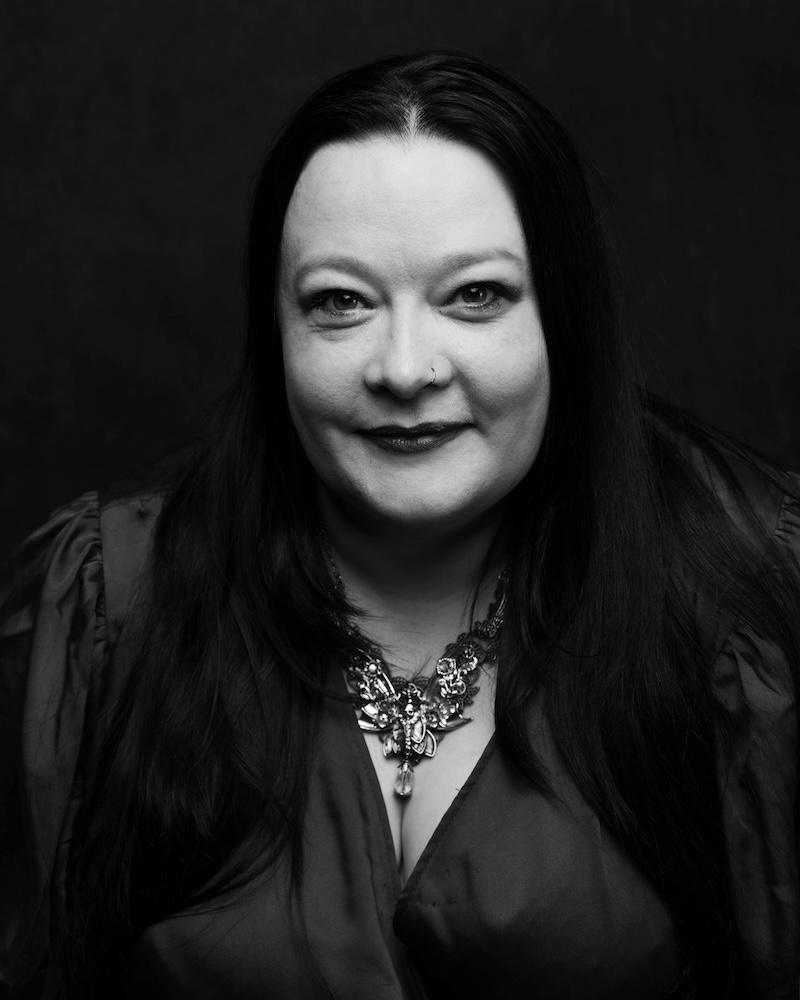
Yes, the British Fantasy Society has a very clear stance on generative AI, and that stance is we do not condone it in any way, shape or form—which is why, after some recent social media activity, I grabbed our illustrious Chair, Shona Kinsella (pictured), for a quick chat to restate this position and explain some of the thinking behind it.
“The official BFS policy is that we do not support the use of generative AI in the arts in any way,” says Shona. “We do not accept writing or artwork that’s created using generative AI for any of our publications or our website, and we don’t allow it to be posted in any of our online spaces, like our Facebook group or Discord. We won’t repost anything AI-generated that’s sent to us on social media either.”
Red flags and extra fingers
But how are we gauging whether something is AI? The darn things are getting so sophisticated now, the old red flags are getting smoothed out.
“Obviously if it’s flagged as AI by the system, then we’re going to delete it unless we know and trust you and you insist it’s an error. Other than that, there are some obvious things, some markers that show something to be AI. If you’re talking about images, there are certain giveaways to do with errors in number of fingers or strange writing and things like that, but there’s also a tone and style that seems to be becoming predominant in AI images that make them a wee bit easier to spot than AI-generated text,” says Shona.
“With text, there are some markers that suggest that it’s been generated by AI; those of us subjected to it regularly are getting better at suspecting. I wouldn’t delete something immediately that hasn’t been flagged just because it shows those markers, but I might be contacting the person who’s posting it and asking them to confirm in writing that this conforms to the group’s standards.”
Those “markers” are not things like Proper Grammar and em dashes—we are professional writers, after all!—but silly slip-ups like leaving the prompt in the text. We’ve had stories submitted to competitions that contain the prompts and model direction; obviously, says Shona, those are “automatically disqualified”.
And it’s important to clarify that we’re talking about generative AI here; those models that were trained on stolen works—including our members’ works—to help “create” text and images without human intervention (yes, beyond the prompts; we know humans need to write the prompts).
Rest assured, there are consequences, says Shona. We are very clear in our position that AI-generated text and images are not acceptable in BFS spaces; if you submit things to us in breach of our rules, then we won’t accept submissions from you in the future. Spec fic has a looooong memory…
(Photo by ThisisEngineering on Unsplash)
Agents vs generative AI
That’s the stories and artwork, but what about the “agentic” side of AI? What about those who find the tech useful for keeping on top of their workload, for keeping things cracking along at the pace required in this digital market? It’s important to differentiate between the AI agents that do things like manage your calendar—those feel inescapable now, with every tech company quietly forcing them on us at every update—and those that generate or create text, images, audio, video, and so on.
We know that some find these generative models helpful for driving the endless marketing machine, especially as an indie author, but we will not tolerate it. Nor will we tolerate any discussions that paint generative AI in a positive light, even if it’s as innocent as “I find this useful”; that as a “part time independent author” it helps your production. That latter example isn’t technically against the rules, but you should remain aware that our community is very firmly against AI as a whole. If you come into our spaces espousing its virtues, you won’t get the reception you might be looking for. Or maybe you’re just rage baiting for engagement?

Ahem, yes: back to the consequences.
“If you post generative AI content on a members-only space, like Discord or the Facebook group, we would initially have a conversation with you,” says Shona. “I would reinstate our rules, and consider that a warning. You won’t automatically be removed or lose your membership for one breach, especially as some people might unintentionally post AI because they haven’t realised that’s what it is.
“But if it continues to happen, you will be removed from that member space, such as Discord, and you could potentially face the loss of your membership if you continue to breach a rule and show disregard for our community standards.”
(Photo by Andrea De Santis on Unsplash)
This community has official standards and expected behaviours
Shona emphasises this is no different for AI content than it is for any other community standards breach, such as hate speech or hateful behaviour which could contribute to creating a hostile environment. You can find our codes of conduct clearly spelled out here, in public view, on the BFS website.
“Your behaviour as a member of our community is held to certain standards,” she says. “If you’re consistently in breach of those standards, despite discussions with committee and volunteers, then you can have your membership revoked. That’s all clearly stated in our constitution and has been the case for a number of years. It’s not a new thing.”
Are we clear? Not quite yet? Shona has one more thing to say.
“There is literally no ethical use of generative AI. There’s many, many reasons not to use it, and I won’t go into all of them right now because I could be here for a long time ranting, but it’s not just about stolen work. There’s the environmental impact. There’s the mental health impact. There’s the negative effects it has on people’s cognitive abilities. There are lots of reasons why AI is not acceptable in our community, so there is no reasonable argument for why you’re using it as far as we’re concerned. We have a clear standard. You will be warned. And then if you repeatedly ignore that warning and show you can’t meet the standards, you will be removed.”
Is AI the future, as we’re constantly told? Not likely, says Shona.
“AI is only the future if we allow it to be. It does nothing that we cannot do for ourselves. I do understand the challenges that face people in building a writing career, doing all the writing and the graphics to promote your stuff online and your social posts and writing a synopsis and doing all the legwork to look for an agent or a publisher or to self-publish. I understand the weight of that work as someone who has done the work myself. If you want it badly enough, you’ll figure out how to do the work.
“AI is just a cheat, and it’s doing you a disservice because it makes you look unprofessional. From what I’ve read of AI generated texts, it’s not to the same standard as human writing. It’s not giving you the connection with people, which is the whole point of writing something: to connect your mind, your experience, your heart to another person. And you’re not doing that if you just put a prompt into a machine.”
(Photo by hannah grace on Unsplash)
Meet the guest poster

2 responses to ““It’s A Cheat Code”: Clarifying the BFS Stance On Generative AI”
Thanks for this. I wanna add, for those who might be tempted to dismiss any of this due to a difference of opinion about the potential utility of AI, or a belief that the environmental or ethical aspects may be resolved in time (I disagree but I understand the perspective):
I had an experience recently of reading a story that had some prompt material left in it at the end. It looked like perhaps the chatbot had – in that context at least – been consulted on the structure and content of the story (it was giving advice on ‘twist endings’) rather than necessarily on the text. But it made me look on the rest of the story with suspicion, questioning every plotting choice, every slightly odd metaphor or turn of phrase.
More than that though, and this is the bit that really saddens me: the suggestions were so basic. I know there are writers who say that they use chatbots only for editorial support – for idea generation, feedback, suggestions. This may feel more ethical on some level than actually using a chatbot to ‘write’, and I understand why (although I would argue that these things are ALL part of the writing process, and all deserve a human brain to burn for them).
But let me tell you: even from a more pragmatic, less automatically ‘anti’ perspective: I still believe this is a huge mistake. Chatbots are literally functionally designed to produce a plausible facsimile of artistic choice. They do not make choices. They do not have ideas. And if you use one to help you make choices you are surrendering your imagination to a void that can only spit out remixes of things that have been seen before. AI is not an accessibility tool. It is a closed door. It is not freeing you. It is shackling you.
So ask yourself: is that what you want your art to be?
Here, here; well said.