The winners of the British Fantasy Awards 2026 were announced at Fantasycon. Find out all the details on our blog.

For all things fantasy, horror, and speculative fiction
-
Announcement:
The Illuminated Man: Celebrating J.G. Ballard
Teika Marija Smits speaks with Nina Allan about The Illuminated Man, a new biography of J.G. Ballard written by her late partner, Christopher Priest.
We’re celebrating the release of a remarkable book: a biography of J.G. Ballard that the late novelist Christopher Priest was working on when he passed away from the same cancer that killed Ballard. Priest had set out to write Ballard’s story to show he wasn’t just a cult writer, but one of the greatest writers of the 20th century. The mantle was passed to Christopher’s wife, Nina Allan, who completed it, patching together with her own voice the gaps that remained. If this book began as a tribute from Priest to Ballard, it is now also a love story written by Nina for Christopher.
Our own Teika Marija Smits spoke in-depth with Nina about the release for the BFS, including discussion of the legacies of both men.
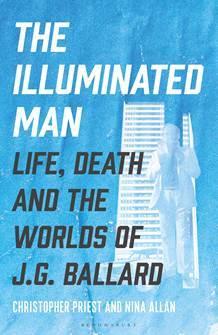
We’re also pleased to offer a 20% discount code for BFS members; enter the code BFS20 at the checkout of Bloomsbury.com to receive 20% off the book, although P&P charges will still apply.
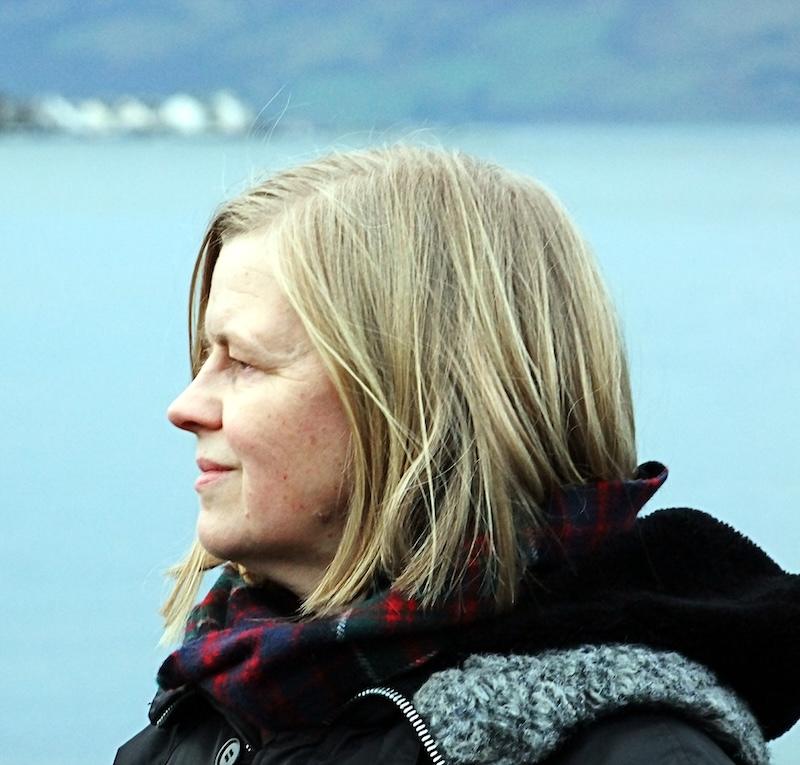
Nina Allan is a writer and critic. Her most recent novel, A Granite Silence, was awarded the CWA Historical Dagger 2026. She lives and works in Rothesay, on the Isle of Bute.
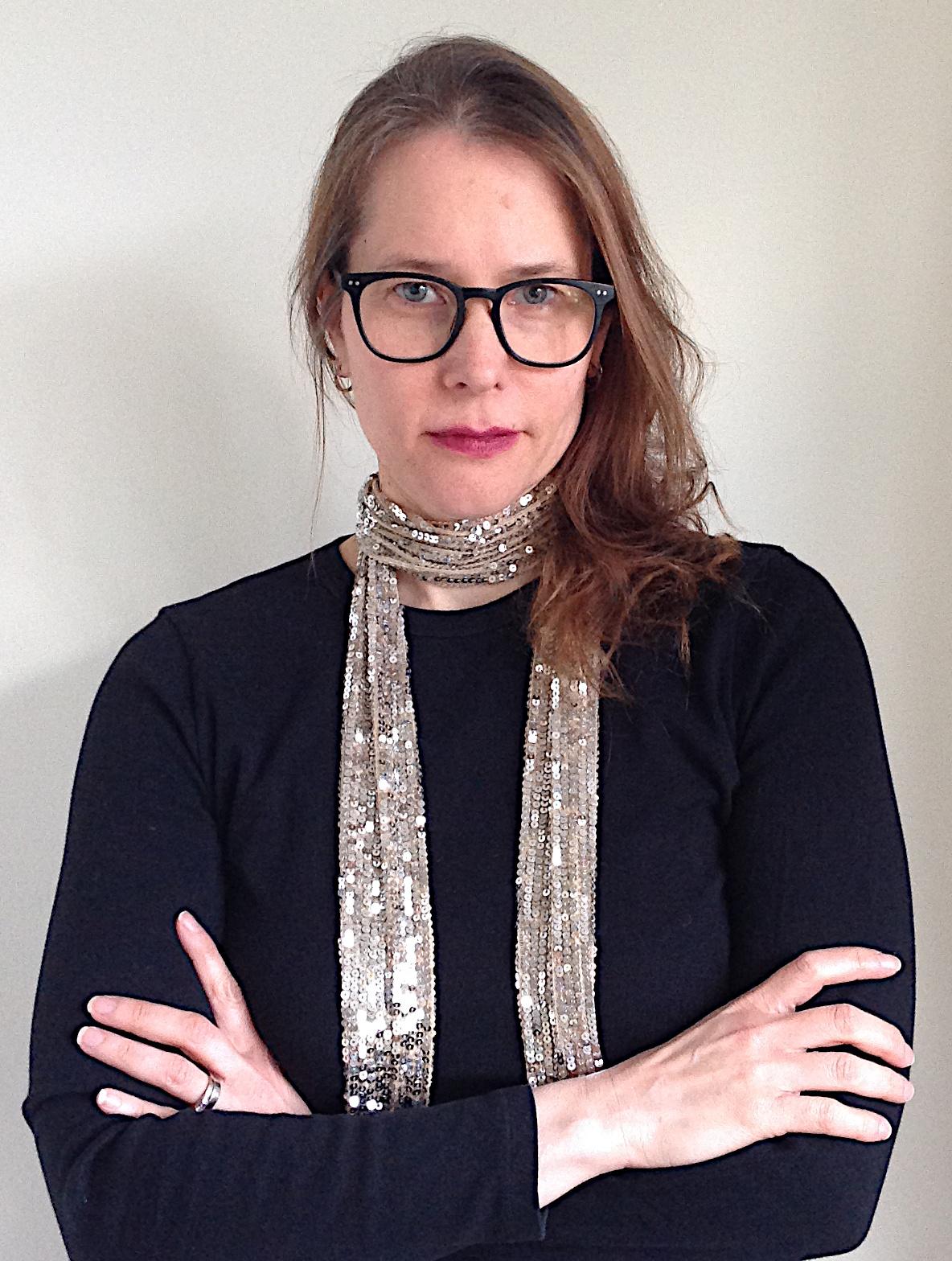
Teika Marija Smits is a UK-based freelance editor and the author of the speculative short story collections, Umbilical (NewCon Press) and Waterlore (Black Shuck Books) for which she won the British Fantasy Society’s Sydney J. Bounds Award for Best Newcomer. She is delighted that ‘Teika’ means fairy tale in Latvian.
TMS: The Illuminated Man is a remarkable biography. Indeed, Martin MacInnes describes it as “a miracle of a book” which feels particularly apt. When you and Chris were first discussing the idea of Chris writing a biography of Ballard, did either of you think that this book would be anything less than straightforward to write?
NA: Chris was never in any doubt that it was a massive undertaking, a journey I’m not sure he would have embarked on without the invaluable help of David Pringle, Ballard’s bibliographer. David’s immense chronology of Ballard’s life and work, decades in the making, provided a head-start on assimilating the huge mass of factual material on which any biography is built. In a very real sense, it gave Chris the freedom to take the project in unexpected directions. Of course, when Chris first began working on the book, we had no idea he had cancer, and therefore no idea that I would be involved in anything other than a cheerleading capacity. Even when Chris was first diagnosed, we both firmly believed he would live long enough to complete a first draft. When it became clear to us that he would run out of time, I took on the task of completing the book almost without thinking about it – it seemed the only thing to do, the only thing I wanted to do. Looking back now on the twelve months I spent engaged in that task, I get the same feeling as I might after climbing a high mountain: I’m not altogether sure how that journey was accomplished, but at least I’ve arrived! I also feel incredibly lucky, that I had such a defined and meaningful task to occupy me in the immediate aftermath of Chris’s death – in many ways, working on the book was a joy. There’s nothing quite like immersing oneself fully in the work and world of another writer – I remember I had the same feeling when I was writing my thesis on Nabokov, back in the early 1990s. I found it energising and life-affirming and inspiring to be in Ballard’s company.
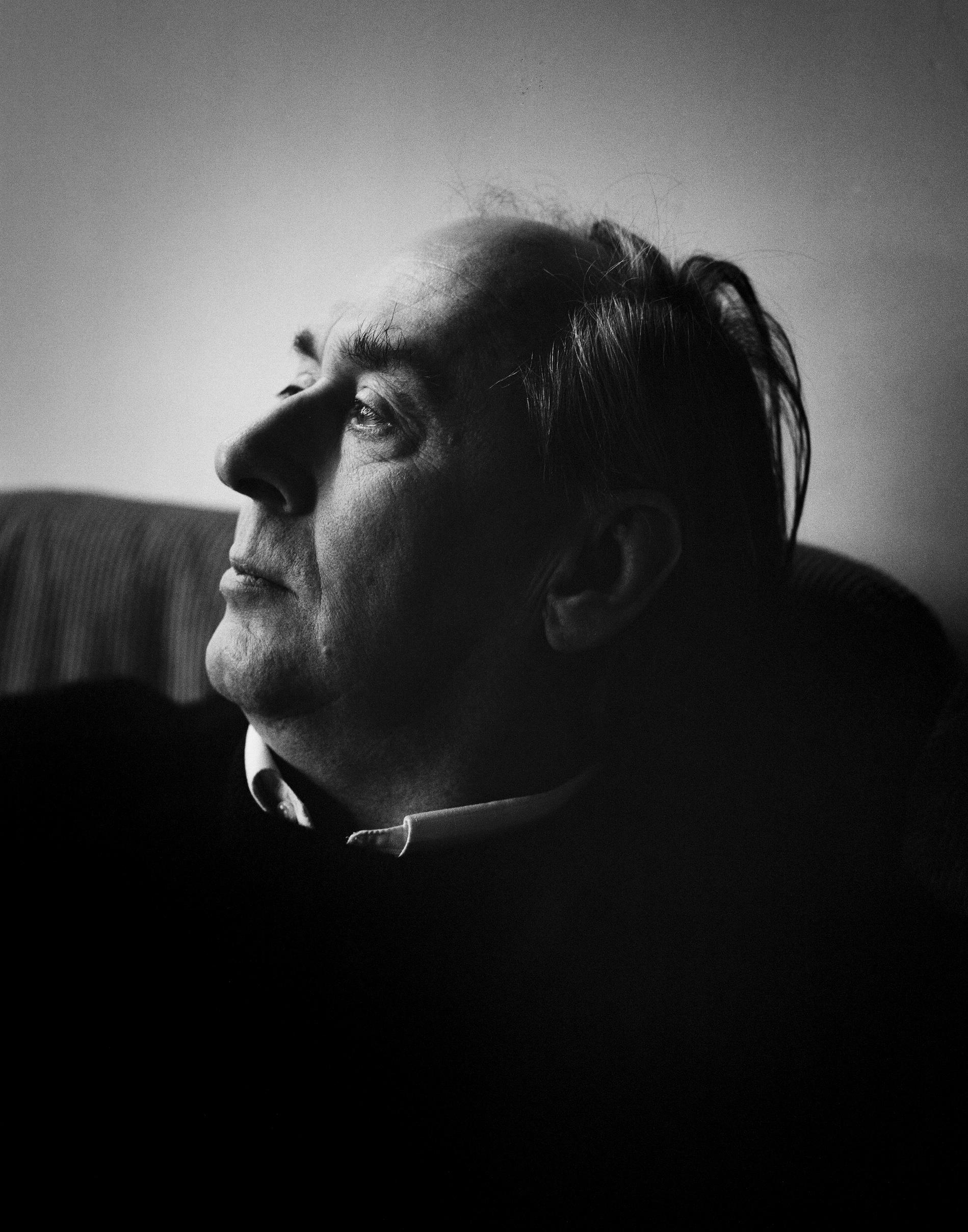
TMS: Vivid imagery – some of it springing from the years he lived (and was interned) in Shanghai as a boy – seems to be a constant throughout Ballard’s works. Unsurprisingly, Ballard (pictured) was drawn to surrealistic art, film and Young British Art. However, he does not seem to have had a great affinity for music. If sound, rather than imagery, had been his touchstone, how would his novels have differed? Would he even have wanted to become a writer?
NA: There’s an interesting quote in the book from Ballard’s partner’s brother, in which he talks about Ballard’s interest in modern music and sound-worlds, and there are plenty of examples in his stories – ‘The Sound Sweep’ is one, also several of the stories in Vermillion Sands – of music, musicians or sound-worlds being centred, so I don’t think Ballard was quite as tone-deaf as he liked to advertise.
Nonetheless, his choices on BBC Radio 4’s Desert Island Discs, for example, reveal him as belonging to the category of listeners for whom music is most important in terms of how it is wrapped up in memories of time and place, as opposed to having a personal resonance that is purely musical. Had Ballard been more musical in the accepted sense of the word, I think we’d have seen a huge variety of imagery, scenarios and even abstract thinking associated with that – much in the way that the visual arts have impacted his writing as it stands. But I don’t think this would have impacted his compulsion to write, which was there from a young age.
TMS: In chapter 17 – ‘A Season for Assassins’ – Chris included several quotes of Ballard’s from The Guardian which shows us how Ballard viewed himself as a writer. Ballard appeared to consider himself “an old-fashioned storyteller at heart”, criticising Joyce’s Ulysses for failing “to engage the reader’s emotions”. However, given that most of Ballard’s novels feature an inversion of one of the seven basic plots (as put forward by Christopher Booker), as well as morally ambiguous characters and “inverted” landscapes i.e. landscapes not considered traditionally beautiful, can Ballard really be considered an old-fashioned storyteller?
NA: I think he absolutely can. One of the core talents Chris and Ballard had in common was an instinctive affinity for narrative prose. Once you pick up a novel by either of them, it’s almost impossible to put it down – there is a propulsiveness to the writing that carries you forward almost without you as reader being aware of it. What also ties Chris and Ballard together in this respect is the way in which they use their talent for storytelling to lead the reader into some pretty unlikely places. Chris always believed that so long as the reader could understand what was physically going on in a particular scene, they would be happy to explore more difficult or unfamiliar territory in terms of ideas or scenarios – and this is exactly how Ballard’s fiction works also. There’s nothing weirder than what’s going on at the heart of Crash, for example, or Rushing to Paradise, or Kingdom Come – but there is an interesting set of characters, and an intriguing situation, and as a reader you can’t help wanting to know how things will turn out. Ballard enjoyed a brief period as a more experimental writer but his natural element was narrative prose and he loved a good story in the manner of Graham Greene or Joseph Conrad. There is a marvellous quote from him, which I now keep pinned up by my desk, about how if you can’t explain the plot of your novel to the person who might happen to be sitting next to you on an aeroplane, then there’s something wrong with it! I don’t believe in hard-and-fast rules for writers, but this one is definitely something worth keeping in mind at all times.
TMS: I was fascinated by the chapter in which you describe your visit to the British Library to view the Ballard archive; your feelings as you read the jottings in his notebooks. I was struck by the simple, yet insightful: “Whose story is this? What is it really about?” These are questions I often ask myself, or peers in critique groups, yet some writers seem to find it difficult to formulate answers to these questions. Like Ballard, should a writer always start with these questions before they embark on a novel, or can the answers be found along the way?
NA: This question might best be answered by the answer to the previous question! Personally, as I say, I don’t believe in hard-and-fast rules for writers – you can follow all the rules and still end up with an indifferent or formulaic piece of work. I’m very much a pantser – I begin writing with a loose sense of the story’s trajectory, but much of the detail and substance will only be discovered in the writing. Chris worked in a similar fashion, but he liked to have a much stronger sense of where he was going – a core idea to explore – before he began. Ballard always wrote detailed synopses before he set down a word – in the case of The Unlimited Dream Company, his synopsis was longer than the novel itself. There’s three writers, three different working methods. Every writer has to discover what works best for them, and that knowledge comes only with experience, time, and a lot of trial and error. I for one am definitely still learning! One thing I have discovered is that the questions above – whose story is this? What is actually happening? – are questions you will have to ask yourself at some point, whether that be at the outset or halfway through. It’s good to remind yourself that there is a reader to consider – and if you can’t answer those questions, then it’s unlikely the reader will be able to, either, and that might be a problem…
TMS: Recently, on Facebook, I asked readers of speculative fiction how Ballard’s works are viewed today, stating that I had a sense (from a quick poll of my teenaged son’s friends) that the younger generations aren’t really reading Ballard. I went on to add: “I could be completely wrong, but has the Marvel cinematic universe, and works of space opera etc., steered readers away from the more cerebral and introspective fiction that Ballard wrote?” I received many answers – those that believe Ballard’s works are more relevant than ever, to those who suggested viewing his works as period pieces. Some hadn’t read Ballard. Some argued that the fate of most dead authors was to have their works forgotten. Is this mixed response to be expected?
NA: Oh, absolutely! I would have been amazed if you had found any teenagers who were reading Ballard. Readers, like writers, change radically over the course of their lives – and their interests and tastes change with them. I’m very much of the opinion that the best work will always survive – even if it’s only a small subset of the reading public who are reading a particular author for pleasure, it is always the radical, innovative, thought-provoking and sometimes difficult work that defines the culture and drives it forward. That has been so since Homer’s Odyssey (just to be topical) and will continue to be true. No writer can ‘write for posterity’ – they won’t be around to comment or complain, they can’t and won’t know what work will continue to be important and should not try to guess. All writers can do is to write with passion and conviction, to explore those subjects and modes of expression that have meaning for them. The future will go its own way, regardless. Regarding Ballard specifically, one of the weirdest and most electrifying things about his work is how it feels even more relevant now than it did when he was writing it. He had a preternatural instinct for reading a room. When I was rereading his late quartet of novels especially, his percipience gave me goosebumps.
TMS: After I posted my question on Facebook, my lovely BFS friend Paul Yates told me about his friend – the interdisciplinary artist Janek Schaefer – who is a fan of Ballard and has, indeed, written music inspired by Ballard. Schaefer offered the following highly relevant questions: “What place does ‘inner space’ now occupy in our hand-screen era? And have the hand-screens expanded or contracted the evolution of society?”
NA: I am one of those tedious people who don’t get at all exercised about hand-screens, or AI, or new technology generally. I believe that artists – again, ever since Homer wrote The Odyssey – have always responded to change, have adapted to it and produced thrilling new work, whether it uses that technology, speaks out against it, flaunts it, adapts it or feels alienated by it. That doesn’t mean I don’t think about this stuff, about how a writer can remain relevant and alive creatively in the midst of what is a second industrial revolution. If we come back to music, just for a moment – think about how it would have felt, as a composer used to working within a system of tonality that had pertained for four centuries and more, to be suddenly faced with the innovations of the twelve-tone system. What happened was, music evolved; even today, the seismic effects of that particular revolution are still tangible and in a huge variety of ways, some retrogressive, some thrillingly proactive. In this respect as in every other, Ballard himself was an interesting case. He was fascinated by evolving technology and often made it the subject of his fiction – but he never owned a computer, never even had an email address. That didn’t stop his fiction from feeling ‘newer’ than almost anyone else’s. So the short answer to your question is: neither, and ‘inner space’ is if anything even more important and weird and mutable in the digital age!
TMS: I can still vividly recall Chris once telling me (at one of the Novacons) that he thought that if he were starting out as a writer in today’s publishing world he wouldn’t get a book deal. (I suppose I particularly remember this as I was starting to query agents and, considering Chris’s immense literary talent, this did nothing to comfort me!) If Ballard was starting out as a writer today, would he find a large, traditional publisher for his work?
NA: Again, I’m going to be very boring and non-alarmist here. I happen to believe that the best work will always find a way, that it will always break through in the end, even if that ‘end’ happens to be after the writer’s own lifetime. What it comes down to is perseverance and discipline – talent alone is rarely enough. Though I think Chris might have struggled to find a home for something as spiky and fragmented as Indoctrinaire as a debut novel in the current market, he would definitely have landed a deal for Inverted World, just two books later. Similarly, Ballard might not have been able to find a home – initially – for his first story collection, but The Drowned World? Who’s not going to publish that? His voice, his individuality – they’re radiant and eternal. Chris loved collecting books about publishing, from the 1900s onwards – and in every single one of them, writers are voicing the same issues about royalties, the same concerns about the demands of the market, the same anxiety about the death of the midlist. I’ve just finished reading a biography of a writer who was born in 1921 – and who had exactly the same experience as Ballard, in being lauded in Europe and marginalised in the USA. Plus ça change, plus c’est la même chose…
TMS: In chapter thirty-four – ‘A Task Completed’ – you write that anyone unfamiliar with Ballard and wanting to know more should start with reading his autobiography, Miracles of Life. For those new to his fiction, where should they start?
NA: Chris would say: begin with one of his story collections, either Vermillion Sands (his personal favourite) or The Terminal Beach (mine). I would say the three early disaster novels – The Drowned World, The Drought and The Crystal World – are unbeatable, and classic, and no matter how many times you read them, never cease to be surprising and compulsively readable.
TMS: You also write of objects containing memories so intense that the act of holding them is painful to you. This really resonated with me. Later, your prose poetry – in which you describe the last of Chris’s days – is heartachingly poignant. Is The Illuminated Man the hardest thing you’ve ever had to complete? Does holding it bring forth a tumult of sorrowful emotions, or feelings of accomplishment and peace? What might Chris have thought of the book? And Ballard?
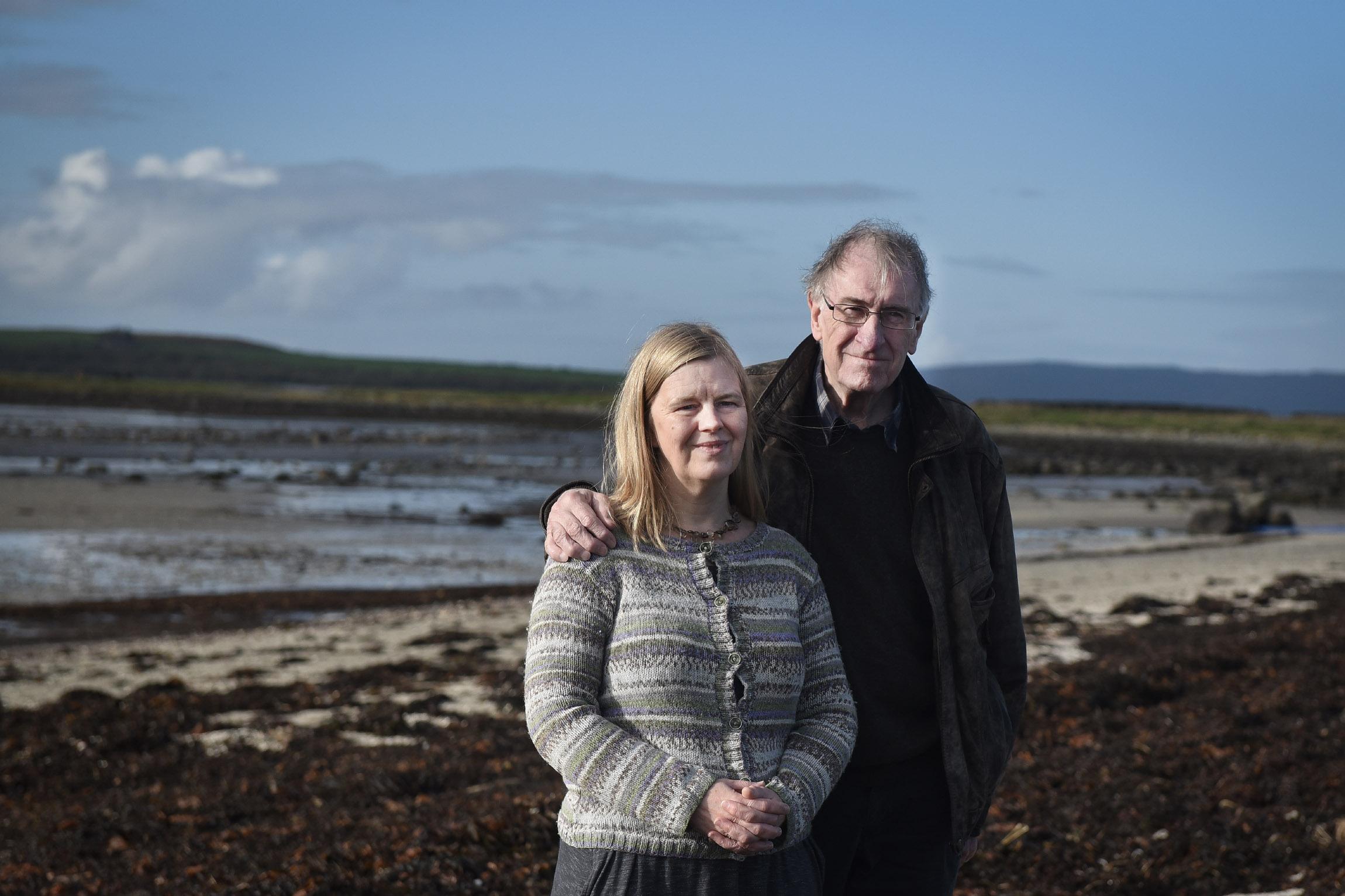
NA:The Illuminated Man is without doubt the most complex, personal and difficult book I have yet had the privilege of working on. I knew even when Chris (pictured) was still with me that I would have to complete that work by the end of 2024, or the book would never be written, because I would simply not want or be able to re-enter those final months with the same immediacy. To me today it feels like a miracle that the book exists. The feeling of having it out in the world finally, independent of me and the rightful property of readers, is both a massive relief and an immense source of satisfaction, most of all because I promised Chris the book would happen and to see that promise fulfilled is everything to me.

The book was a huge and vital source of comfort, stability and sustenance while I was working on it, the fact of it lives with me always, yet for the moment at least there’s no way I can reread it. I leave that to others. I think Chris would be utterly thrilled with the way it’s turned out – most of all, perhaps, because it is so different from what he had imagined when he started this journey. One reviewer mentioned the way our two voices are quite distinct, yet interwoven strands, and I think that’s exactly what Chris would have wanted – we thought of the book as our way of continuing to work together after Chris had died, and I am glad that is apparent in the finished project. As for Ballard, who knows? I like to think he’d at the very least find it interesting!
TMS: Thank you, Nina, for your time and thought in answering these questions.
BFS members can get 20% discount on the book when buying direct from the publisher; enter the code BFS20 at the checkout of Bloomsbury.com to receive 20% off, although P&P charges will still apply.
Meet the guest poster