The shortlisted works across all 13 categories of the British Fantasy Awards have been announced! Find out who’s in the mix over on our blog. Winners announced at Fantasycon in October.

For all things fantasy, horror, and speculative fiction
-
Announcement:
From Pen to Print: Robert James Ryan on Fragments of Silk
Professor emeritus Robert James Ryan has always been passionate about the Isle of Skye, a place he once lived and still dreams of. One of its myths inspired his first work of fiction, Fragments of Silk, which has just been released by Troubador. He tells us more about its genesis…
Name: Robert James Ryan (he/him)
Based in: Wiltshire, UK
What genres/subgenres are you drawn to?
Fantasy, Romance, Paranormal Romance, Magical Realism
Is writing your full-time focus, or do you have a day job as well? What do you do?
Professor emeritus, research supervision, teaching. Writing and assessing writing of various sorts is the principal activity of my day.

The Book: From Pen to Print
What was the genesis of this book? Where did you get the idea from?
I have been passionate about Skye for all my adult life and lived on the island for some years before returning south for work.
The idea for this story originated with a Skye myth that has many variants. They all centre around a legend that an early chief of Clan Macleod married a fairy queen, and that they bore a child. However, she was forced to return to her home in the woodlands of Skye after a year and a day, leaving her child wrapped in her silk shawl. That silk shawl became the clan flag, which still hangs in Dunvegan Castle.
My starting point was how could this come about? Drawing upon my background in science and in particular the phenomenon of entanglement, and a career in applied psychology, an answer began to emerge that did not entail unaccountable magic.
How many drafts did you go through before you felt it was ready to query? How long did that take you?
Before testing the novel with others, I proceeded through three drafts: a rapid first draft, a second development draft, and a third (for) review draft. I completed the review draft in twelve months.
Did you work with beta and/or sensitivity readers? How did you find them? How did you incorporate their feedback?
I employed a professional development editor who took the review draft and provided detailed feedback (I had searched online and found someone who turned out to be the perfect match for my needs). She then took the revised draft and provided further advice. At that point, I found three beta readers: one a prolific author working in romance, the second someone who was close to my idea of a likely target reader, and the third a clinical psychologist who provided commentary on sensitivity issues. Two significant factual issues arose with the beta readers, which led to textual modification and incorporating a trigger warning in the opening pages. My first beta reader was keen on sexual fantasy and was of the opinion that ‘Fragments of Silk’ would only earn one chilli pepper (out of five). Although given the nature of the legend there is a sexual element, what mattered more was its emotional realisation and its ability to lead to a change of state in the lives of those involved.
What was your querying process like? How long did it take?
This was my first work of fiction, and I drafted a query letter following a short course but with little expectation. I have worked with a literary agent in my non-fiction work, but on researching the issue, querying, obtaining an agent and then getting the book adopted and into print would take too long. I had produced and published one non-fiction book that had, subsequently, been taken up by a publisher. As I planned a trilogy, I opted for a partnership model, and Troubador fitted my requirements, offering professional quality in design, production and marketing—all done in a timely manner. They took the manuscript for review and gave me a decision in two weeks.
Once it was in the hands of your publisher, what was the process to get it ready for release?
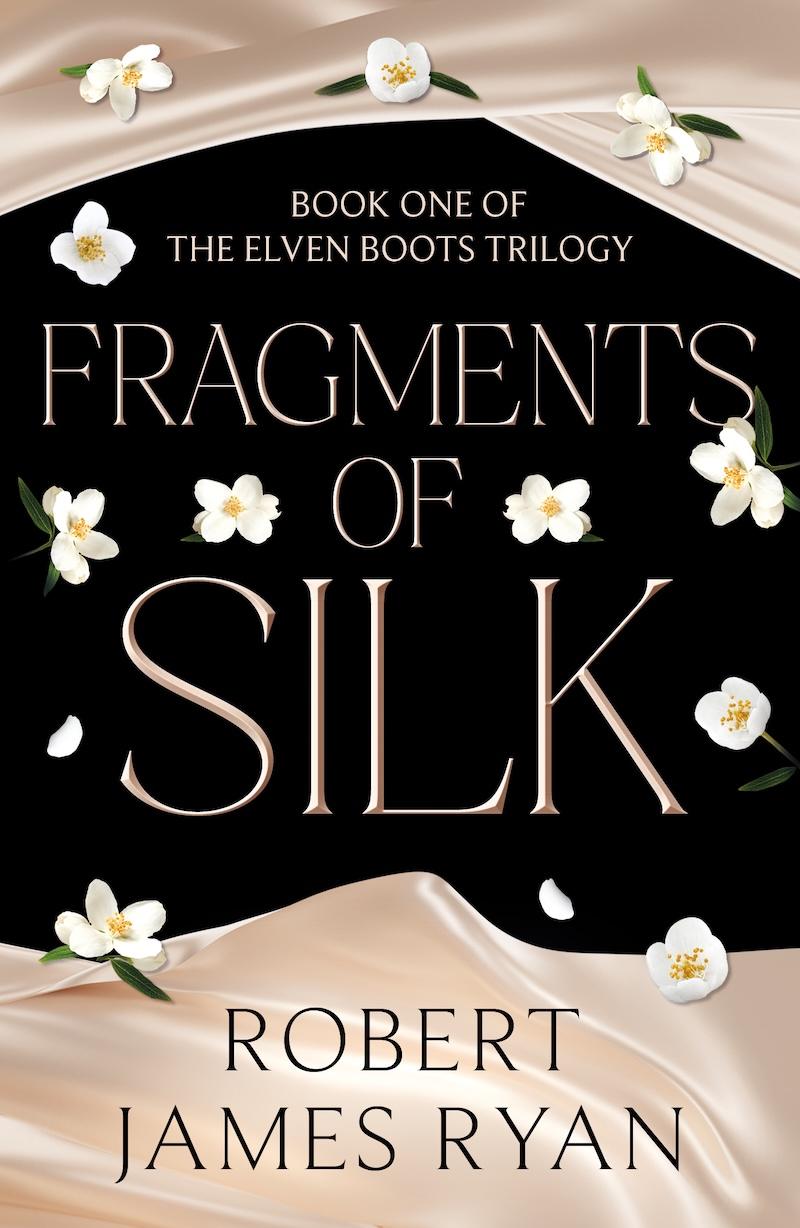
I asked for: (i) copy edit (although I believed I had thoroughly purged the manuscript of typographic and other errors); (ii) creation of a 20 page text sample, full typesetting on my approval of the sample, a further on screen proofing; (iii) cover design (I submitted a proposal, which they worked upon and improved); (iv) printing; and, (v) preparing the book for trade distribution, creating an electronic version, and beginning media and digital marketing.
And now your book is about to be unleashed on the world! How are you feeling?
Very pleased indeed. The publisher had done an excellent job, with a high level of contact with the production team throughout. I felt confident that in as far as producing the book was concerned, there was little more I could have done. The enormous job of marketing now lay ahead.
What would you like us to know about this book?
The book tells the story of profound loss, inter-generational trauma, the power of the human spirit, and the transformative power of love.
Who’s the ideal reader for this one? What sort of things do they like to read about?
- A curious and romantic soul who feels a sense of disconnection from the modern world and yearns for stories that feel ancient, epic, and emotionally resonant.
- Seeks meaning in a modern world that can be a lonely place paved over by modernity.
- Enjoys visiting museums, walking in moody landscapes, and listening to atmospheric folk music.
- Reads literary and mythic fantasy like The Invisible Life of Addie LaRue and A River Enchanted; watches epic, romantic shows like Outlander; enjoys podcasts about folklore and history.
Your Writing Process
Are you a plotter or pantser or somewhere in between? How do you do your first draft?
With all my books (whether fiction or non-fiction), I plunge in with a chapter that captures a key and vivid moment in my story. With Fragments of Silk, it was chapter 3. I then work backwards and forwards from that point, developing the characters and plot as I go. I do not follow a set writing sequence, but write to capture moments before weaving the fabric of the story together as the ideas flow. So, I am a pantser.
How do you approach writing? Are you the type or writer who needs to treat it like a job? Is there a particular time of day you find best for you to write?
I write as a relief from other tasks. Being an owl rather than a lark I like to write late in the evenings. As soon as I have a chapter drafted, I copy it across to my tablet and read it through before sleep. As I spot issues, plot developments, even typos, I remember them and correct the following day. On completing a draft chapter, I run it through a software package that checks for grammar, spelling, punctuation, style issues.
Geek out about stationery: do you use a notebook? A specific type of pen? Or are you computer all the way?
I keep a paper journal, which gets all sorts of scribbling, and I will occasionally note down plot points. Most of my writing is done on the computer in Word, backed up by Grammarly and ProWritingAid. Both products offer AI drafting tools, and I do not use them. Both also offer AI chapter critiques that are, in my view, very inadequate, and lack contextual awareness.
Is any of that different for editing?
I edit as I go, such that the first draft will survive reading by me. I then put it aside for anything up to a month, before reworking to my second draft. On this draft, I work sentence by sentence, thinking through the weight and rhythm of the words and occasionally absorbing myself in a section of the text as I try to capture the emotion and mood in the words.
(Photo by hannah grace on Unsplash)
Where do you work? Do you have a comfy, creative space at home or are you someone who has to grab the moment wherever it comes?
I always work at my home office desk. Fred the dog will often come and lie nearby, offering thoughts when he is so minded. He’s a white coated (misnamed) golden retriever who is useless at retrieving (but not removing), but he can be brilliant at story development.
What’s your writing soundtrack?
That depends on mood. If I want to build emotional intensity, I sometimes listen to Nightwish and particularly Floor Jansen.
Do you have a writing ritual?
I just switch on the computer, retrieve my working file, and write. Once done, I back up, make a copy for Dropbox for download to my tablet for later reading. I don’t work with targets for the day. Some days a lot will flow and some days very little.
Where can we follow you / find out more about your work?
I am building a website for the series, which will include a blog and articles on the science behind the magic: www.elvenboots.com