The winners of the British Fantasy Awards 2026 were announced at Fantasycon. Find out all the details on our blog.
For all things fantasy, horror, and speculative fiction
-
Announcement:
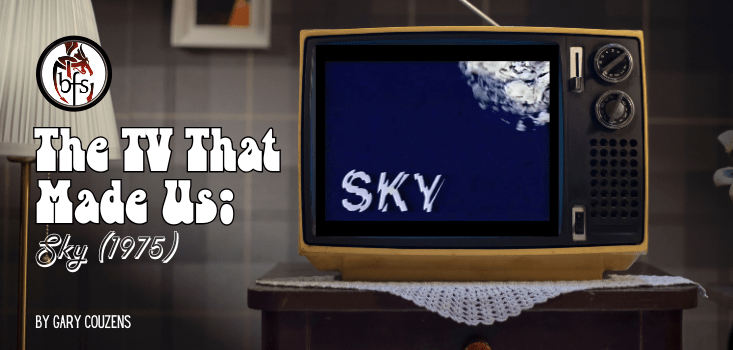
The TV That Made Us: Sky (1975)
In his semi-regular column on the classic TV that made us SFFH fans, Gary Couzens revisits 1975’s strange ecological sci-fi, Sky—broadcast once, never to be repeated…
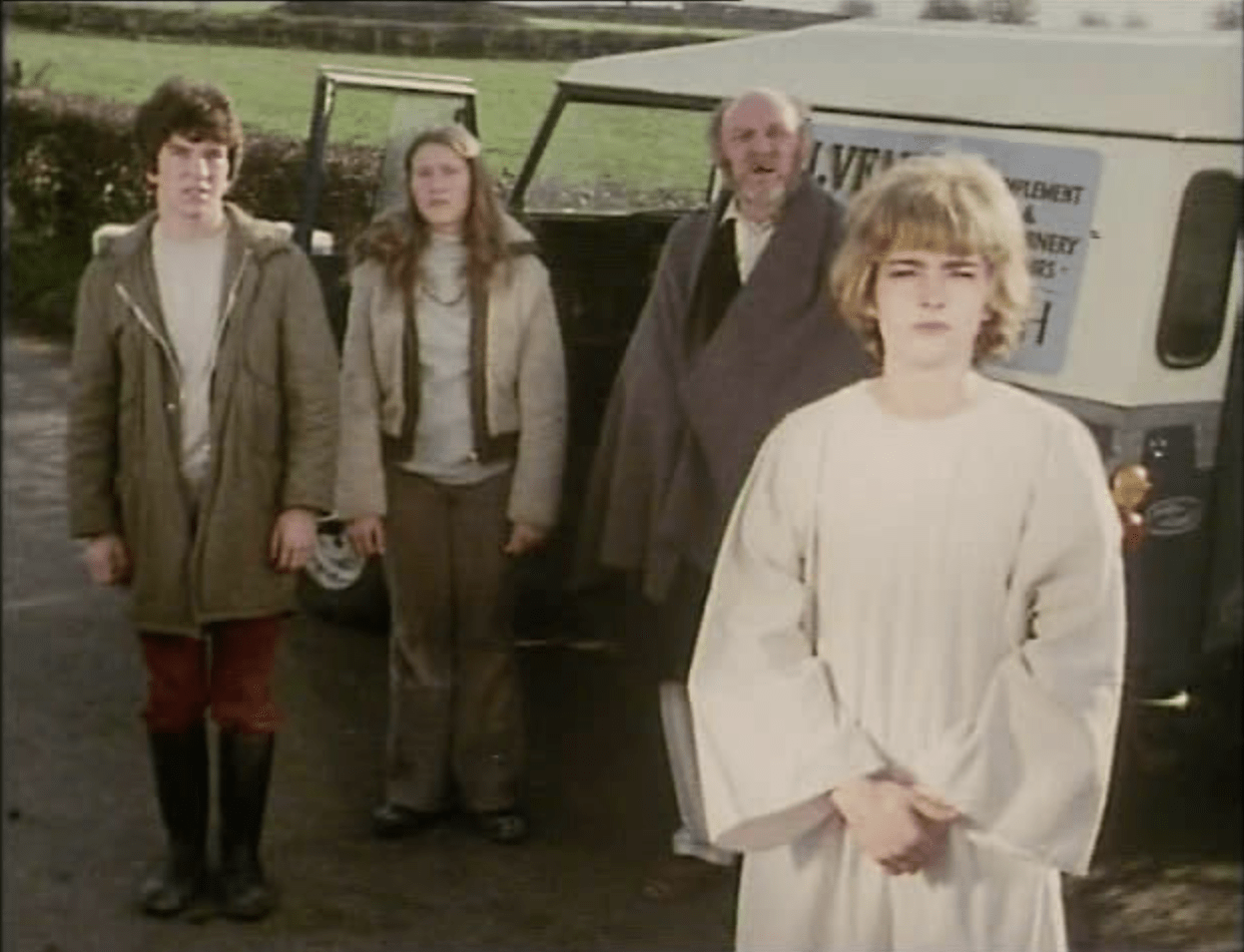
The West Country, mid-1970s. During a pheasant hunt, Arby Vennor (Stuart Lock) comes across a young man lying in the bushes. This is Sky (Marc Harrison), who has missed the time he was aiming for and landed on present-day Earth. He had intended to arrive after “The Chaos” but is instead in “The Decline”. He needs to find The Juganet, which will return him to his own time.
But as Arby, his sister Jane (Cherrald Butterfield) and their friend Roy Briggs (Richard Speight) try to help Sky, on his trail is the sinister Goodchild (Robert Eddison).
Sky shows that in the 1970s what was made for children and teenagers (this one is more for the latter) could often be stranger than much aimed at older viewers. This seven-part serial of 25-minute episodes, in a half-hour slot with a commercial break in the middle, was broadcast on Monday afternoons at 4.50pm on the ITV network, starting on 7 April 1975. It was preceded by a show watched avidly by young film fans of the time, Clapperboard, and followed by whatever your ITV regional franchise scheduled. In mine, Thames, it was a repeat of the American sitcom The Ghost and Mrs Muir.
The Creators
The serial was written by Bob Baker and Dave Martin as an original story, though Baker later published a novelisation in 2015. Nicknamed “the Bristol Boys” by then Doctor Who script editor Terrance Dicks due to their base, Baker (1939-2021) and Martin (1935-2007) were a prolific writing team who began their careers at HTV, their local ITV franchise. Their debut was the 70-minute play Thick as Thieves (broadcast on HTV but not the rest of the network on 11 July 1971), starring Leonard Rossiter and Corin Redgrave. This united them with producer/director Patrick Dromgoole, who was executive producer on Sky and also directed episodes one, two and six.
Baker and Martin wrote for both young and older audiences. They had credits on such series as Arthur of the Britons, Public Eye and Z Cars. After Sky, they wrote King of the Castle and Follow Me…, both also seven-parters for HTV, the latter starting after the former ended in the same ITV network slot at teatime on Sundays. For a decidedly older viewership, they wrote four episodes of the controversially violent BBC police drama Target in 1977 and 1978.
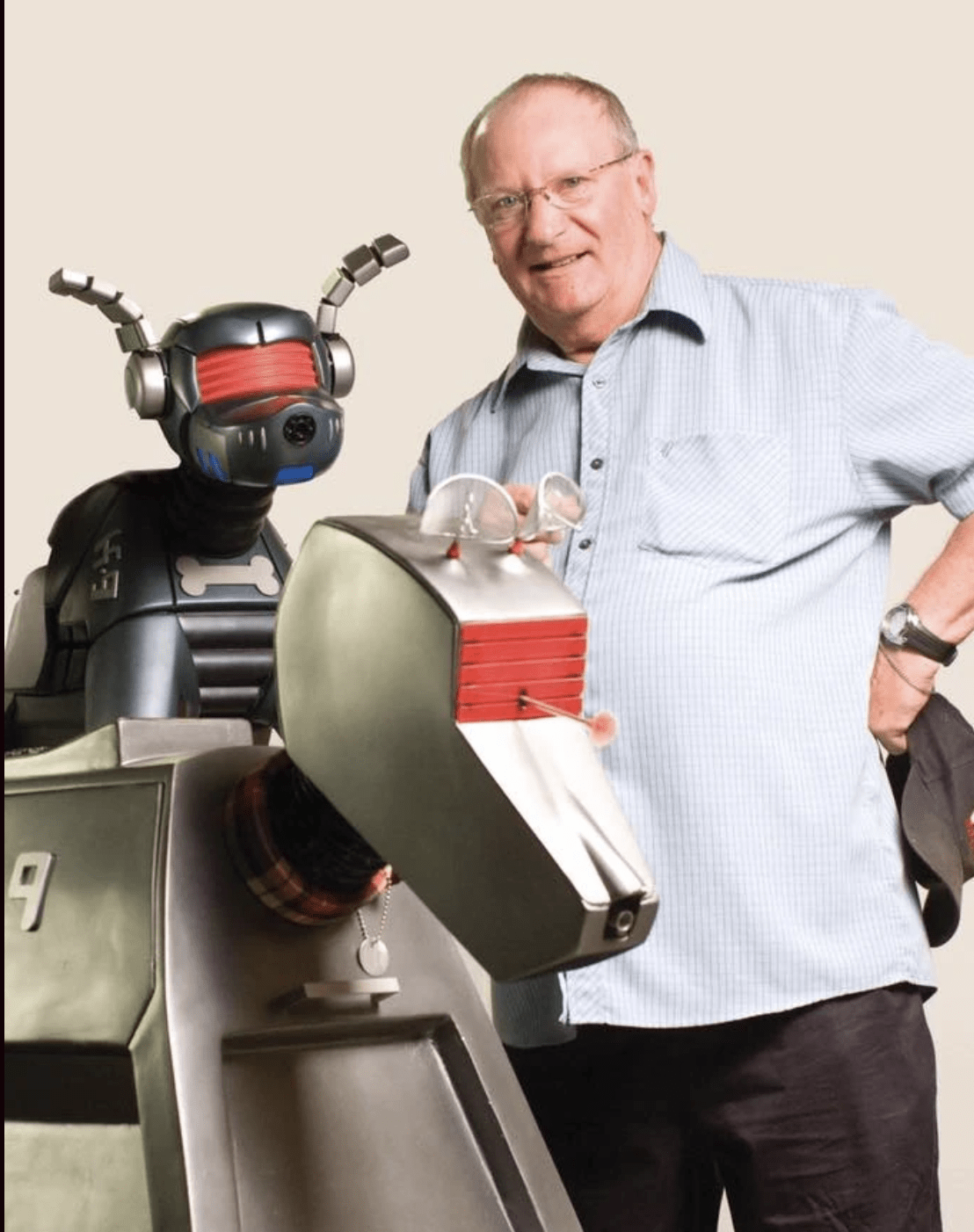
However, as a duo their best-known work was for Doctor Who, beginning with The Claws of Axos in 1971—coincidentally my first Who serial at age six. They wrote eight serials together between then and The Armageddon Factor in 1979. Their major contributions to the Whoniverse were the rogue Time Lord Omega (in The Three Doctors, 1972/3) and the Fourth Doctor’s robot dog K9 (in The Invisible Enemy, 1977).
(Image: Bob Baker with Doctor Who’s robot dog, K9; source)

The Production
Sky was made by HTV West; HTV (Harlech Television) was the franchise holder for both the West Country and Wales (HTV Cymru Wales). It says “HTV West Colour Production” at the end of each episode, which reflects the fact that while all but one ITV region was broadcasting in colour in 1975 (Channel, the smallest, was to upgrade the following year), the proportion of households with colour sets wouldn’t reach 50% until 1976.
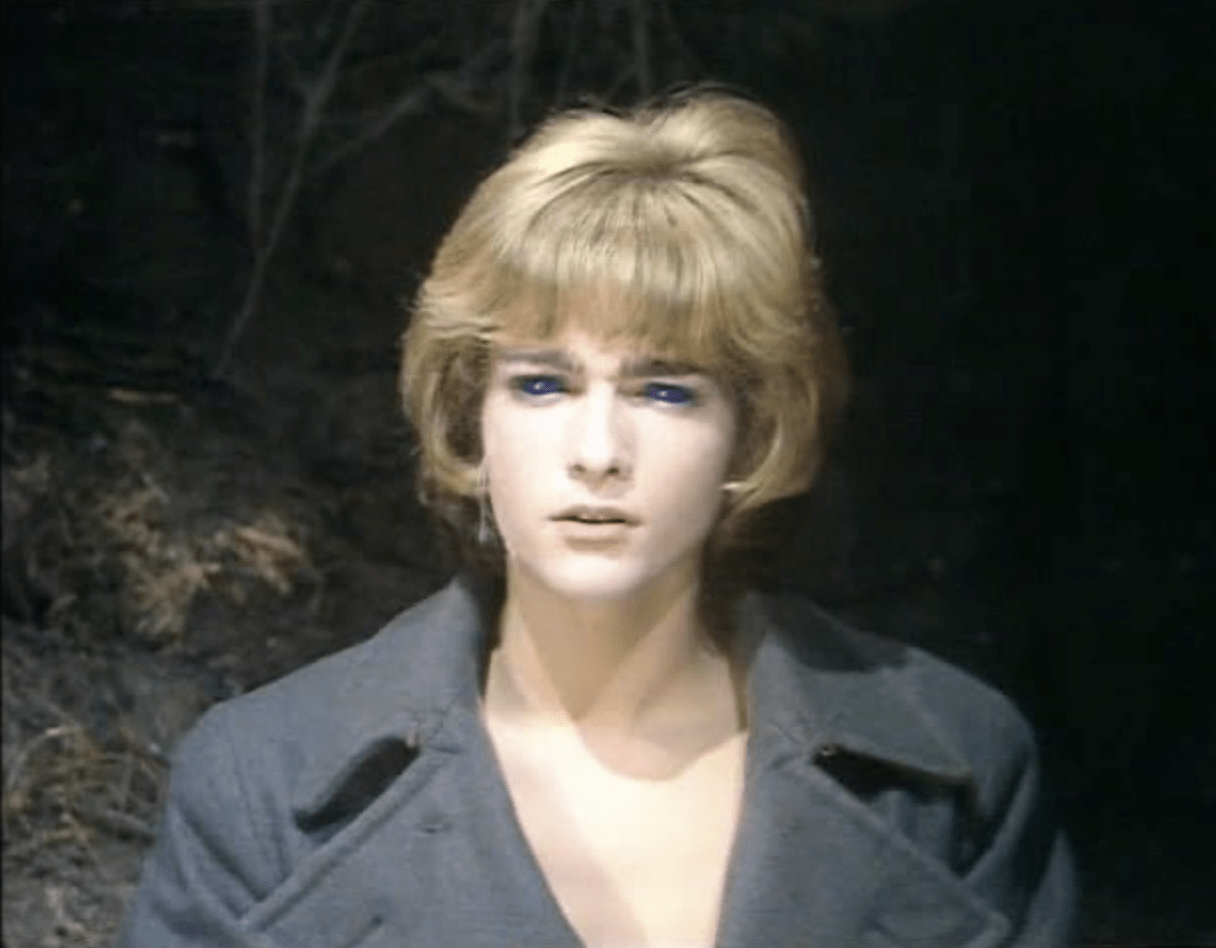
Filmed in late 1974 and early 1975, it was shot in the usual combination of studio work on video and locations on 16mm film. The video enabled such special effects as Sky’s solid blue eyes and his powers enabled by holding out the palm of his hand, both achieved using Colour Separation Overlay (CSO). The countdown clocks on the available episodes indicate studio recordings on Sundays, beginning on 29 November with a week off for Christmas between episodes four and five.
The Story
Without spelling it out, Sky ties in to the Gaia Hypothesis, which had been proposed by James Lovelock in the 1960s and early 1970s, but the serial was made before then release of his bestselling book Gaia: A New Look at Life on Earth (1979). Lovelock suggests that life on Earth and its surroundings make up a self-sustaining organism—and so it is in Sky.
The title character is an intruder, a foreign body which Earth reacts against and tries to destroy, the main antibody being Goodchild. The serial does have an ecological message, with The Chaos brought about by nature’s antagonism: “You believe in machines,” Sky says to Arby, “and that is not the way.”
That trope was popular at the time. The British population’s overthrow of machines in The Changes (broadcast earlier the same year, but based on three Peter Dickinson novels from 1968 to 1970) didn’t leave a rural paradise behind, but instead showed a countryside rife with intolerance and racism. However, there was a strain of back-to-the-land in British television around this time, with the more adult Survivors (1975-1977) sometimes taking on the air of a cosy catastrophe (no more cities) and, in sitcom, the change from executive wage slavery to self-sufficiency in the London stockbroker belt in the very popular The Good Life (1975-1978).
In the final episode of Sky, Arby travels to the post-Chaos future and sees what is left of humanity, speaking telepathically and led by Bernard Archard. Other mystical tropes of the time make an appearance, such as Glastonbury Tor and the sought-after Juganet turning out to be Stonehenge.
The Characters
Although he is the title character, Sky is seen through the eyes of the three teenage leads, the not-uncommon configuration of two boys and a girl. The serial doesn’t try to hide its regional origin, with the three and other characters sporting West Country accents rather than the received pronunciation we might have had. Sky and Goodchild, the two characters not of this time and place, speak their lines in a more measured and formal way to indicate their alienness.
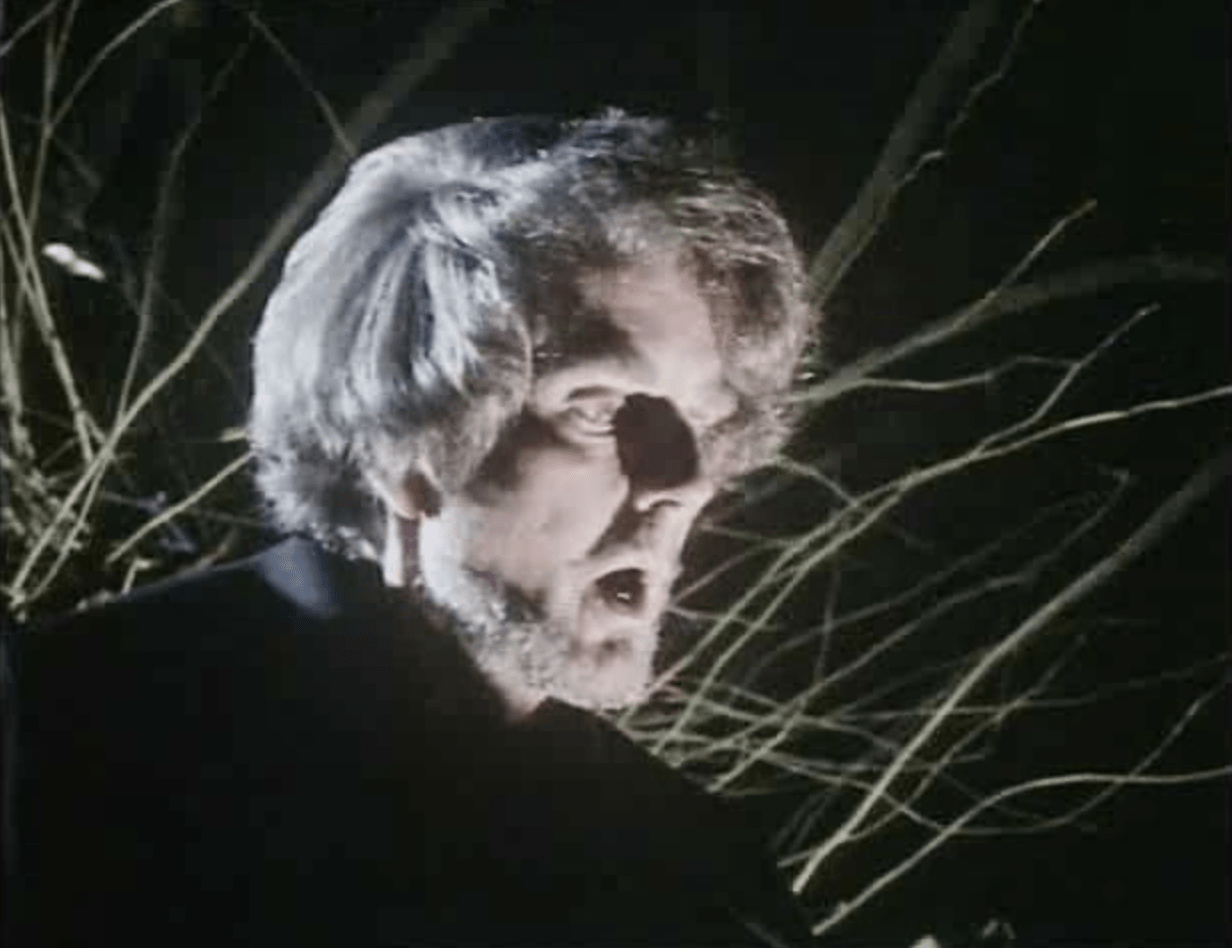
Both were cast for their physical presence: Marc Harrison with his fair hair, CSO-assisted blue eyes, and an ethereal almost waif-like beauty. This was only his second screen role, and he continued acting until 1987. Robert Eddison (pictured), who was 66 at the time of making, uses his staring eyes and his 6’3” frame to make Goodchild a palpable threat, first appearing at the cliffhanger of episode two. He had a career which ran from 1938 to 1991, the year he passed away at age 83.
Of the three other teens, Stuart Lock had made his debut in Oliver! (1968, billed as Peter Lock). He acted until 1999 and moved into production management, returning to his old job in the 2021 version of The Amazing Mr Blunden. Cherrald Butterfield, 16 here, had a shorter career, having made her debut in the BBC serial The Silver Sword in 1971. After Sky, she has two further screen appearances in 1976 and 1977, and clearly didn’t pursue an adult acting career. Richard Speight, 17, is the son of the late Johnny Speight, creator of the classic and controversial sitcom Till Death Us Do Part. He made his debut as a child in the big-screen spin-off of that show, The Alf Garnett Saga, in 1972 and was Peter in two Tomorrow People serials in 1973 and 1974. He acted until 1987, associated for much of his career with shows originated by his father, but had a one-off return in 2004.
These actors are supported by a strong adult cast, with Jack Watson as Major Briggs, Frances Cuka as Mrs Vennor, and familiar names in smaller roles such as Trevor Ray, Peter Copley and David Jackson.
What Happened Next?
Bob Baker and Dave Martin amicably parted ways at the end of the 1970s, their final collaboration being the late-night ITV serial Murder at the Wedding (1979). Baker wrote another Doctor Who solo (Nightmare of Eden, 1979), but his latter-day fame is due to being the co-writer of the Wallace and Gromit films, from The Wrong Trousers (1993) to A Matter of Loaf and Death (2008), with the big-screen The Curse of the Were-Rabbit (2005) along the way. The character of Baker Bob was named in tribute to him.
Sky was broadcast once and not repeated. Any appreciation of older television is bedevilled by the fact that great swathes of it no longer exist, whether long enough ago to have been broadcast live and never recorded, or more recently than that having its videotapes wiped. By the later 1970s, there was more awareness of the need to preserve their material by many companies.
The fact that episodes three and seven of Sky are lost in their original form was accidental. During a transfer to film stock, the two-inch videotapes of these episodes were damaged beyond repair. Fortunately there were home video recordings of these available, so that was what was released on DVD in 2009. Though still quite watchable, these are noticeably lower-resolution than the other episodes, but at least we can still watch all of this intriguing serial.
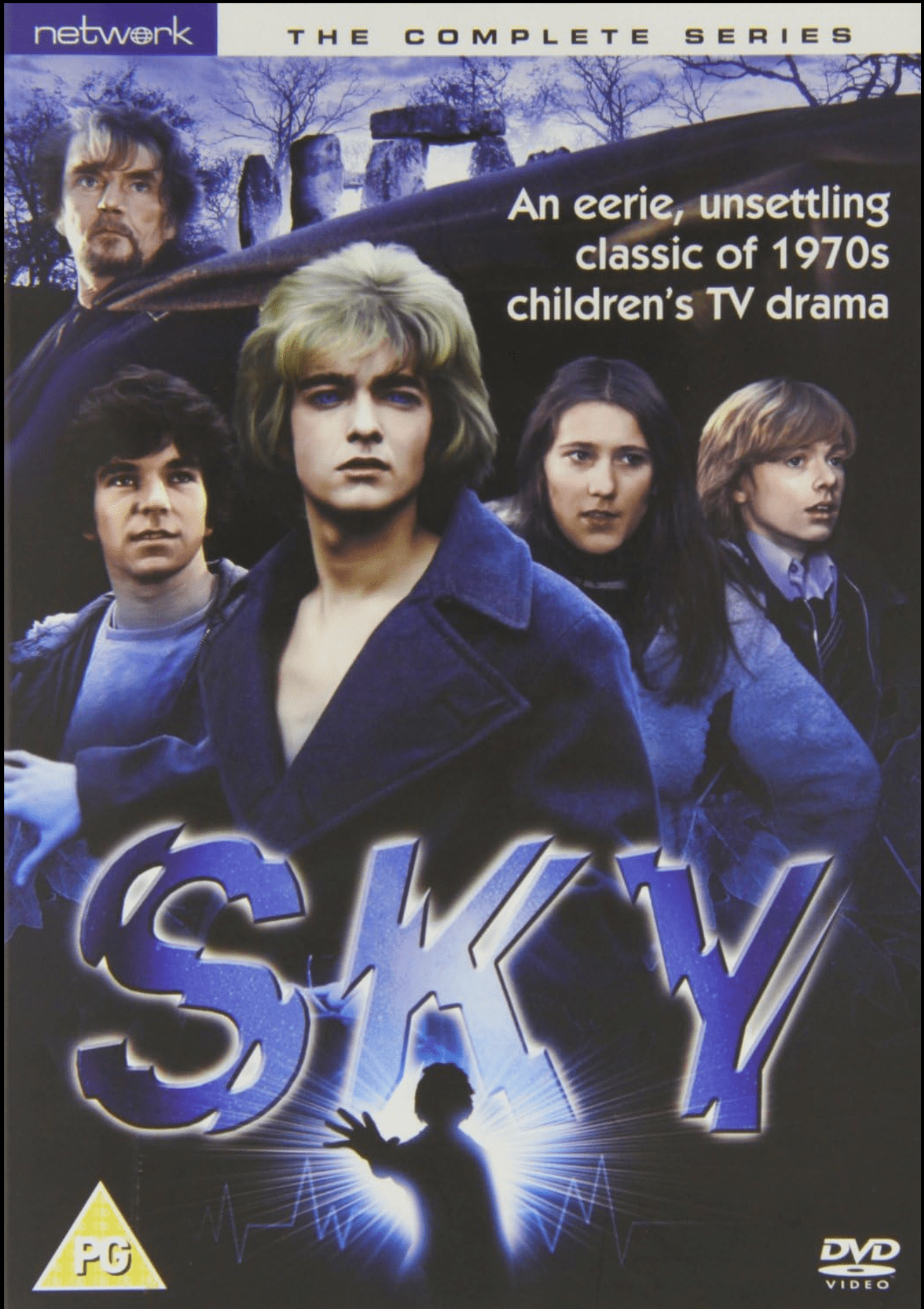
Do you remember watching Sky? Let us know what you thought in the comments below ⬇️
Title photos taken by the author as screen grabs; other images from IMDb.
Meet the guest poster