The winners of the British Fantasy Awards 2026 were announced at Fantasycon. Find out all the details on our blog.

For all things fantasy, horror, and speculative fiction
-
Announcement:
Stephen King: An Appreciation
As (arguably) dark fiction’s most famous author nears his 80th birthday, author and critical theorist Rafe McGregor looks back on the writing and career of Stephen King.
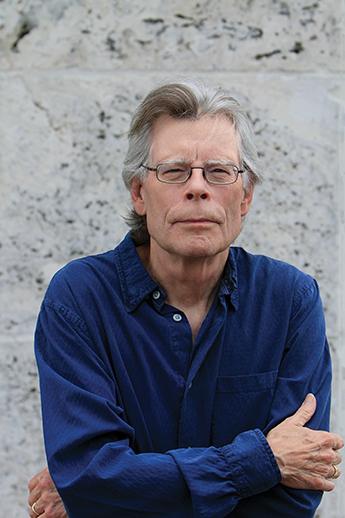
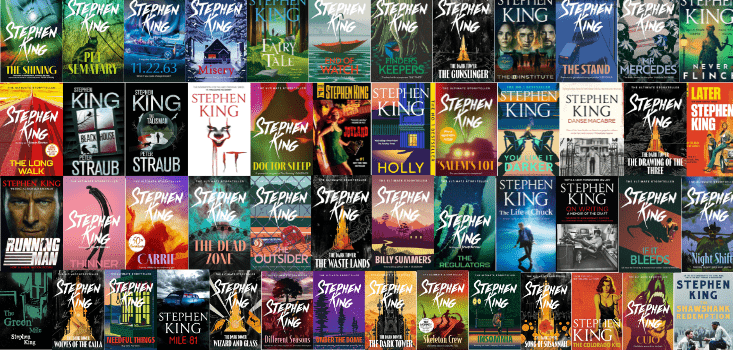
Stephen King is one of a mere handful of authors to have sold hundreds of millions of books. Though he has written across multiple genres, he is best known for his horror fiction and more specifically as the author of: The Shining (1977), Carrie (1974), ’Salem’s Lot (1975), Misery (1987), Pet Sematary (1983), and his apocalyptic masterpiece, The Stand (1978, republished in 1990). Born in Porland (Maine), in 1947, King will turn eighty next year. He began writing fiction at a very young age and made his first professional sale, a short story called ‘The Glass Floor’, to Startling Mystery Stories in 1967, nearly sixty years ago. He is currently completing Other Worlds Than These, which is the final instalment of a trilogy that began with The Talisman in 1984, continued with Black House in 2001 (both of which were co-authored with the late Peter Straub), and is due for publication in October.
I’ve been reading his work for about forty years now and become an unreserved and unashamed fan.
Why? First, King seems like a really (and rarely) decent human being. At least from his public persona and autobiographical writing. His to-and-fro with Trump on Twitter was particularly entertaining. So are his responses to book burners. I could go on. Also, King doesn’t have to be that way – he has sufficient celebrity to be as obnoxious as he wants without losing his fanbase.
Second, he has written the best book on writing that I’ve ever read and am ever going to read, titled, simply, On Writing (2000). As such, I regard him as a writer’s writer (whatever, precisely, that may mean).
Third, in spite of all the money and fame, he’s an underdog, ignored and even despised by the literary establishment and academia until very recently and then recognised with reluctance. Even champions of genre fiction like S.T. Joshi seem to have taken great pleasure in deriding almost everything about his writing. While I’m not going to pretend that I’ve loved every word of his that I’ve read, given that, at the latest count, he’s published sixty-seven long and two hundred short works of fiction, there are bound to be at least some mediocre or subpar offerings. There are also, however, many great offerings and perhaps even a work of two of genius.
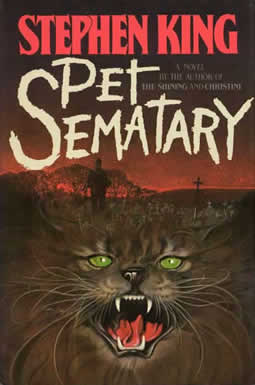
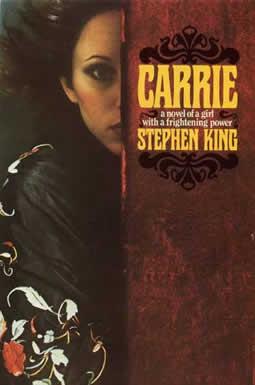
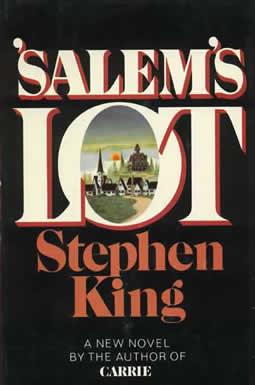
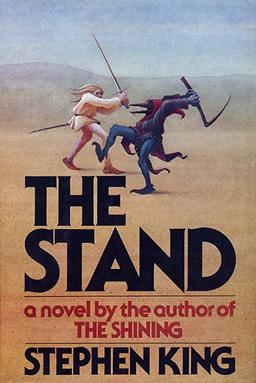
How do King’s “Big 6” stack up?
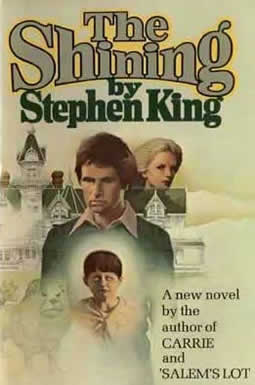
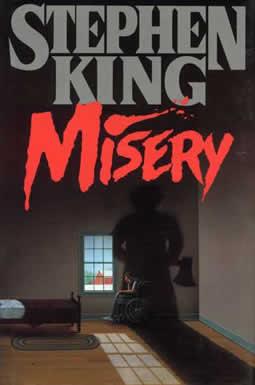
In spite of my lengthy acquaintance with and enjoyment of King’s oeuvre I’ve only very recently completed reading all six of the novels for which he is famous. Misery is my favourite, a great narrative that succeeds on multiple levels and is essential reading for anyone who enjoys books about writing and the writing life, whether fiction or nonfiction. The Shining is excellent, especially the effortless changes of perspective from father to mother to child and back again. This is King doing what he does best: exploring either the traditional family in all its complexity of love, hate, joy, sorrow, comfort, and anxiety. I’ve seen the novel criticised for its lack of internal logic (a recurring complaint from King’s detractors), but as someone who pays a great deal of attention to such things, I don’t see the problem. The supernatural elements make sense, they move the plot along…what’s not to like? Carrie and Pet Sematary are competent and maybe even original outings in the horror genre, with King playing to another strength of his—the representation of the worlds of children and teenagers, but neither are favourites. Salem’s Lot and The Stand were, regrettably, too long for me, which was a shame regarding the latter because I really wanted to like it. There just wasn’t enough story to sustain either novel all the way to the end, and with respect to the former, I thought the short story ‘Jerusalem’s Lot’ (which was first published in Night Shift in 1978) far superior.
Surely this is faint praise if I’m recommending no more than two of King’s six most successful novels? I’m not alone in this assessment because in an interview in Far Out magazine in 2022, he listed his favourite five stories, only one of which is from the six: ‘Survivor Type’ (1982), Misery, Lisey’s Story (2006), ‘The Body’ (1982), and Billy Summers (2021). What is particularly interesting about this list is that only one of his favourites has a supernatural element (Lisey’s Story), much of which is presented with great subtlety. I think King is at his best without the supernatural and in his shorter work, albeit with several exceptions that prove the rule. My own list of favourites also includes only one of the six (mimicking King’s choice) and one other from his list: ‘Rita Hayworth and Shawshank Redemption’ (1982), Misery, ‘Survivor Type’, ‘N.’ (2008), and Cycle of the Werewolf (1983). One novel, two novellas, and two short stories, in the first three of which the supernatural is absent. I was lucky enough to read ‘Rita Hayworth and Shawshank Redemption’ before I saw the film and without any spoilers, both of which contributed significantly to my reading experience.
I think I’ve already justified my enthusiasm for both King and his work, but let me say one more thing to make this a genuine appreciation. His own list of favourites covers forty years of writing and mine twenty-five. Since his big break with Carrie in 1974, the quality of King’s work has remained consistent, in spite of the life-changing injuries he sustained when he was run over by a reckless minivan driver in 1999. Since then he has published, among others, Lisey’s Story, Just After Sunset (2008), The Outsider (2018), and Billy Summers. The first of these is an epic love letter to his wife, the second one of his best short story collections to date, the third an excellent occult detective story, and the fourth a great crime thriller. I hope there are many more to come and I hope we’re both around to celebrate his eightieth birthday…
(Photo of Stephen King by Shane Leonard; images of books taken from stephenking.com)
Meet the guest poster