The winners of the British Fantasy Awards 2026 were announced at Fantasycon. Find out all the details on our blog.

For all things fantasy, horror, and speculative fiction
-
Announcement:
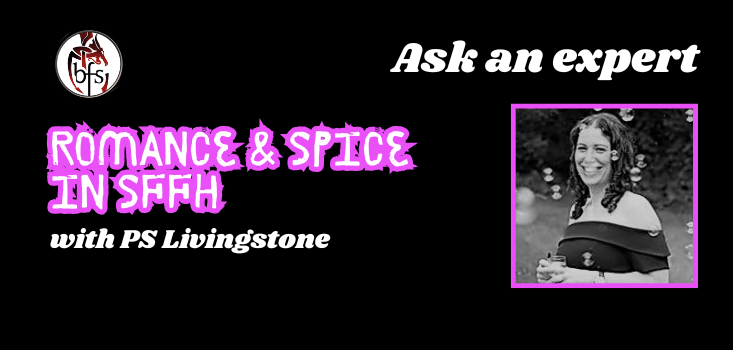
Ask an Expert: February 2026
In this monthly column, we pose your questions to an expert in a specific field of speculative fiction and the wider ‘industry’. Given February is the month of love, we asked our resident romancer PS Livingstone to field questions about “spice” in speculative fiction.
This month: Romance & spice in SFFH with PS Livingstone
Name: PS Livingstone
Website: pslivingstone.com
Specialism: Handling romance in SFFH stories
Follow: Instagram | BlueSky | Facebook
PS Livingstone writes epic contemporary fantasy with lots of romance. She is a Page Turner Award finalist and the author of Awakening, as well as numerous short stories. Suiting her reputation as a renowned grammar fiend, Pamela works as a ghostwriter and editor. As someone who can’t say no, she is also Event Co-ordinator for the BFS. She is a member of the Glasgow Science Fiction Writers’ Circle, Society of Authors, and the Chartered Institute of Editors and Proofreaders. Pamela lives in Glasgow with her partner and three cats, and can often be found in her allotment, usually covered in mud. Her life goal is to own her own tipping point machine.

Romance as a Genre vs a Plot Point
What differentiates Romance™️ from having two characters who fall in love and get together during the course of the book (or series)?
It entirely depends on the focus—what is the driving force? If the relationship is the central pillar (or at least equal), you’ve got romance. Knock down the pillar and the story goes as before, it’s not romance.
You also need to consider whether the characters are the main characters. Side character romances bring another dimension to a story, especially if you want to keep your MCs free to tackle other themes.
Of course, relationships and interactions drive most (if not all) stories, so this is a simplistic answer, but it holds true more often than not. There are plenty of fantasy books out there with a romance subplot; here, the romance is supporting the main narrative and isn’t essential.

This may be outside the scope, but I struggle to understand the difference between romantic feelings and platonic feelings. In romance books, the characters develop feelings, and I only know it’s romantic because they tell me. But that makes it hard to write my own romance, because I have no idea what is the difference between ‘this guy’s my best friend’ and ‘I would like this guy to be my boyfriend’. Some sources suggest the difference is sex, but asexual and aromantic are different things, so that can’t be it. I’m just very confused (and have fully read a book and found out it was romance when the characters explicitly say they’re now going out… or kiss)
In romance, there’s a sense of longing that isn’t really present in a friendship. Friends are often more up front about their desire to spend time together. In a romantic relationship, there may be more hesitance, shyness, reluctance, pretense. People rarely deny a friendship and have the need to protect themselves (outside of high school). This denial and protection is common in romance—the stakes are higher, for your ego and your heart. This is a general answer, of course, and not always true to life but tends to be the case in literature. Kissing and sex are a part of the romantic relationship, but intimacy and affection are just as important.
I’m not overly fussed by romance or sex in my spec fic but it seems really hard not to find one or both in popular novels. Any book suggestions for those of us who are uninterested in romance but really want strong mixed gender friendships instead.
Since this is technically a blog about romance I won’t go into a long list, but T Kingfisher has plenty of books with mixed gender (including non binary) friendships. Also The Wayfarer series by Becky Chambers, The Murderbot Diaries by Martha Wells, Project Hail Mary by Andy Weir, and The Bird King by G. Willow Wilson.
There’s a lot of focus on romance in fantasy at the moment, but I remember in the 2000s there was a focus on gothic/horror romance (Waterstone’s in Cambridge used to have a section charmingly labelled The Lady and the Vamp), and there are romance-forward science fiction stories out there increasingly, too. Why do you think speculative fiction and romance seem to pair so well, and what aspects of romance and speculative fiction would you like to see explored more?
Why spec fic and romance? Possibility. Many, if not most, of the characters in SFFH romance books cannot (in some cases, should not) exist—there’s a whole discussion on dark romance I won’t go into, but you can read in the latest issue of the BFS Journal). Romantasy is escapism, reading to find that all-encompassing love. The fantastical, the speculative, allows writers and readers to lean in in a way we can’t in reality. We bend the rules of love in a romance—much more fun to bend the rules of the universe while you’re at it.
I don’t know that I have specific answer to what matchups of spec-fic and romance I want to see explored more—just that I’m always on the lookout for well-written speculative romance that cares as much about worldbuilding and plot as whether the characters get it on.
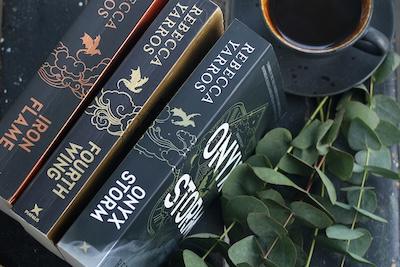
Who’s doing spec-fic love stuff really well at the moment, from your perspective?
There’s so much out there. In the past year or so, I’ve very much enjoyed Jennifer L. Armentrout, Rachel Gillig, Thea Guanzon, and Carissa Broadbent. Of course, we can’t ignore Rebecca Yarros and the sensation of The Fourth Wing series. Great worldbuilding and a steamy relationship. More, please.
(Photo by Elin Melaas on Unsplash)
Reader expectations
Is romantasy as rigid in terms of reader expectations as romance?
Potentially, yes, depending on your definition of romance, and some beats are more important than others. For example, I would separate a love story from a romance, in that a romance has to have HEA (happily ever after) or at least HFN (happy for now). In a love story, you can have tragedy. You may end up tarred and feathered if you don’t have HEA/HFN in romantasy. This doesn’t mean no blips, especially in a series. But good news has to be on the horizon. If you mess up the ending, expect fanfic. If you’ve made two characters who are platonic friends, also expect fanfic (slash fic).
In terms of other ‘main beats’, I don’t think it’s as rigid as it used to be. Standardly, there’s the ‘meet cute’, the ‘switch’ or ‘growing intimacy’, the ‘all is lost’, the ‘grand gesture’ and the HEA/HFN. Some of these fall within a natural relationship, so I’m not sure why you wouldn’t have them. Arguments are important and likely, so I’d expect these. I’m less of a fan of the grand gesture as I think it can hide deeper issues, but resolution and understanding should be there. These are loose guidelines, so have fun with it. Just don’t forget a kiss and riding off into the sunset.
With the boom in romantasy, has it actually become unpopular for the female main character to end up choosing herself in fantasy because of the expectations of at least a dash of romance?
No. Romantasy is having a boom because people have figured out women buy more books and there are writers out there who understand the female gaze. A lot of this comes down to marketing. As I’ve said, HEA/HFN are essential; however, this doesn’t mean the MC can’t choose herself/himself/themself. The right partner wants them to be happy and do what’s right for them. There’s an assumption that choosing themselves is not also choosing their partner.
And there’s plenty of SFFH out there that doesn’t hit romance notes and I don’t think anyone reading those is expecting different. Although sometimes there are plenty of romance notes, but it’s not acknowledged because a dude wrote it.
What don’t we see enough of in Romance? What tropes or pairings would you like to see more of?
Clumsiness and being overwhelmed on the male side of a M/F romance. If our male MC is an OP sorta guy—they often are (for a reason)—he will still need to hit some of the key beats to satisfy the demographic. But seeing him (or the one usually in control of the pain) be clumsy or awkward is great for connecting the reader to him. IMHO, we don’t see enough of this. This also goes for scenes involving any kind of bondage or submission—mix it up!
Tropes are the bread and butter of romantasy, although they’re always best with a new twist. Plenty of enemies-to-lovers, forced proximity, and one bed scenarios. I do still love these, of course. I like the fake dating trope and it’s not as common as the others I’ve mentioned. If you’re thinking of writing this, please immediately beam it into my brain.
(Photo by Jonathan Borba on Unsplash)
Crafting romance
How would you go about writing scenes where characters are physically affectionate with one another (e.g. siblings who are NOT going full Lanister!) in a non-romantic way, without the reader assuming/ deciding it’s supposed to be erotic? Can you have sensuous descriptions, which are exploring the importance of touch between two people, without it being erotic?
‘Sensuous’ suggests some degree of eroticism, so perhaps this is a language issue. Sensuously touching your sister puts you firmly in ‘Lannister’ territory. Context is everything—you can stroke a cat, but if you stroke someone’s inner thigh, it’s a whole other ballgame.
The where and how of touching matters, along with the associated feelings. Hugging or giving a kiss to a sibling might make a character feel safe or warm—in a homely way—or close or comforted. There should be absolutely no clenching, dripping or heated areas of any kind. Touching can be playful, but in a childlike way. This can happen in romance too, but the stopping point is different. Intent is crucial—why do they want to get closer?
You should also be thinking about how characters are introduced and their backstory. If readers have a sense of who people are, the sibling mistake seems less likely. If you’re still having problems, the relationship between platonic friends or siblings has gone wrong somewhere—the interactions and mannerism probably need clarification.
All that said, you can’t entirely control what readers perceive, but the emotions and degree of intimacy should make it as clear as possible.
Romance is known for that feel-good kick when the characters finally get together after overcoming significant obstacles. Is there anything you deliberately do to make sure you achieve that feeling?
You have to include some missed opportunities—often coitus interruptus—but please don’t overdo it. I cannot stress this enough. Continued cock blocking is annoying, especially if you then ‘fade to black’.
Exactly what the obstacles are and their scale (and consequences) really depends on whether your book is heavier on the romance or the fantasy. If you’re writing epic romance fantasy the consequences could be world-ending, so I’d want to see a combination of the couple and external factors (political, societal, etc). If the book is more cosy or focused on the romance, I’d focus on the couples more. Or those external factors might be a disapproving family or an issue at work.
The crucial part is that we have to know and share in the impact of any consequences or obstacles. We have to feel the MCs struggle, so don’t scrimp on the emotions.
What are your top tips for writing chemistry between characters?
Tailor your moment to the characters—this means you need to know who they are, what they’ve been through and what will bring them together. And, crucially, push them apart. Like magnets, they should attract and repel, depending which way you turn them. And just to mix my metaphors, it’s worth remembering that chemical reactions can be exothermic or endothermic. Have a bit of both.

Chemistry is as much about body language as dialogue, and physicality forms a crucial component of romance. Do the characters mean what they say—or does their body language tell a different story? Sometimes they’ll match, sometimes they won’t, but make sure you’re thinking about both with purpose.
Put your characters in different situations, thinking about their relationship arc—what are the key moments that move feelings on? What changes will we see? As a writer, how do you convey this? That annoying habit can become endearing through the eyes of love and vice versa.
Importantly, there has to be a balance, a mix of emotional and physical interactions and responses, but also intellectual. Do they challenge each other and does it lead to growth? It should. And don’t forget the social aspect. People generally don’t exist in two-person worlds—how do they fit into each other’s lives? Seeing someone engage with your friends or trying an activity you love can be very sexy!
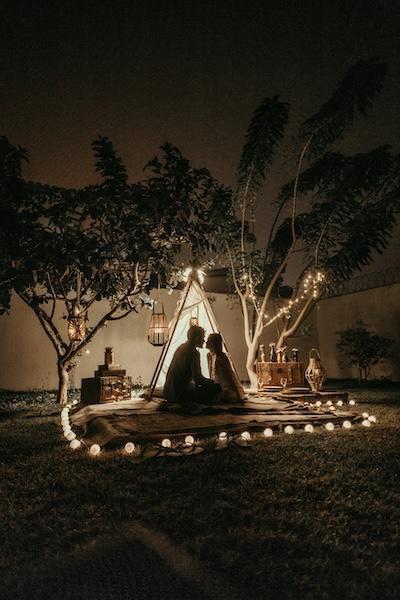
(Photo by Anne Nygård on Unsplash)
What is your advice for balancing romance and plot when both are key to the story (eg romantasy)? More specifically, how can we make sure the romance does not seem frivolous when there are high external stakes also happening?
The key is to make sure the characters don’t dismiss or minimise the stakes, at least not all the time. It’s not uncommon for someone to be blasé when they don’t want to acknowledge the truth or are trying to allay someone else’s fears.
Make the stakes part of the conflict; the choice between love and duty, making the sacrifice. Of course, people often make the emotional choice—that gut instinct to save the one we love over everybody else. It’s understandable, relatable, even outside of romance. What parent doesn’t choose their child when given an ultimatum?
But this doesn’t mean freedom from consequences. A lover may be angry the other person chose to save them and the fallout forms one of the troughs in their relationship journey.
Just make sure you’re still writing a romance. It has to be front and centre.
The Thing About Spice…
Why are we all of a sudden talking about “spice” levels in books? What are they?
Spice levels are down to how much detail and time is dedicated to sex in the book. I will say YMMV—what’s hot to someone is mild to someone else. For example Kushiel’s Dart by Jacqueline Carey was considered quite spicy, but the language around the sex scenes was quite tame. If I remember right, there isn’t a single ‘cock’ in the book. By contrast Jennifer L Armentrout’s Fall of Ruin and Wrath is graphic and detailed right from the outset. I wouldn’t consider them equally spicy, but I’ve seen them rated the same on various websites.
Do we have to have “spice” in SFFH stories now? WTF is the difference between romantasy and fantasy romance and, for that matter, romantic fantasy?
You absolutely don’t need to have spice. I see lots of people asking for both spice and non spice recommendations on Reddit. But if you aren’t going to show the deed, then be clear on why. Is it not needed? Fine, great. But if you have characters talking dirty to each other, being extremely suggestive, and then don’t show it, prepare for backlash. If you’ve gone for a very slow burn, your readers may feel they deserve to be there in the final act (pardon). Your characters and style need to match what you reveal. You cannot have A HUGE FANFARE and a tiny parade.
The other thing to consider, though, is your market. The US can be more puritanical than the UK—this is also true for swearing.
(Photo by Christian Wiediger on Unsplash)
Overall, the important thing is that the reader sees the progression of the relationship. In some cases, characters can have sex long before ‘feelings’ arise (hate sex is a thing, and a big seller) and their move is to intimacy. For other characters, especially asexual or aromantic people, the journey to partnership would look different. Sex, if it happens, may be a more timid or shy affair, and a good old romp isn’t needed. As ever, it comes down to your characters and the world you’ve built around them. Spice has to fit. Just manage reader expectations, so people aren’t disappointed. Or shocked!
Romantasy v fantasy romance v romance fantasy v romantic fantasy
This varies from person to person.
- Fundamentally, romantasy is a marketing term (it used to be considered YA—it really wasn’t), and not everything readily fits into the category. Readers will call something romantasy (or tag it on review sites) with even a tiny romance element; see The Priory of the Orange Tree for details, which does not cut the romantasy mustard. For me, the difference is in the stakes and worldbuilding.
- Fantasy romance: romance set in a fantasy world (or our world with fantasy elements—vampires, werewolves, etc.) where the plot breaks down if the romance is removed.
- Romance fantasy: equal mix of worldbuilding, plot and romance. Authors may examine different themes alongside the romance, especially in cases where the MC is developing powers or coming to terms with a life-changing revelation.
- Romantic fantasy: more of a romance subplot that supports the narrative, but below the level of fantasy romance. You could switch the romantic relationship with a different one—siblings, parent/child, friends—and the story still works.
Arguably, romantic fantasy and romance fantasy are the same thing, but if you need a (very slim) definition, that’s where I’d go. Opinions are going to differ on this and I’m not looking to get into a debate. Feel free to disagree—just don’t come at me.
How do you feel about trigger/content warnings for sexy SFFH? Any recommended resources for figuring out what you need to warn about in your story?
I’m a fan of dark romance, often where the lines of consent, propriety, and behaviour are blurred. This genre faces criticism for its content, but people read these books knowing what’s in them. They are consenting to explore these themes in a safe space.
I’ll make a comparison to the BDSM community, who are all about consent and safe play. You can tie someone up and flog them, but only if they say so. And they decide when it stops.
Trigger warnings allow us to play and explore safely—you give people the choice. We aren’t here to dictate what anyone enjoys, but neither should we force potentially upsetting content on anyone.

So, yes, trigger (or sensitivity warning, as I prefer) are good things. You don’t need huge amounts of detail, just a guide. Warning may include SA (either implied or on the page), non-con, dubious consent, rough play, bondage, etc. These are separate to general warnings, like violence, torture, self-harm, animal cruelty, which you should also use. Nobody wants to be hurt or upset during their leisure time (or indeed any time).
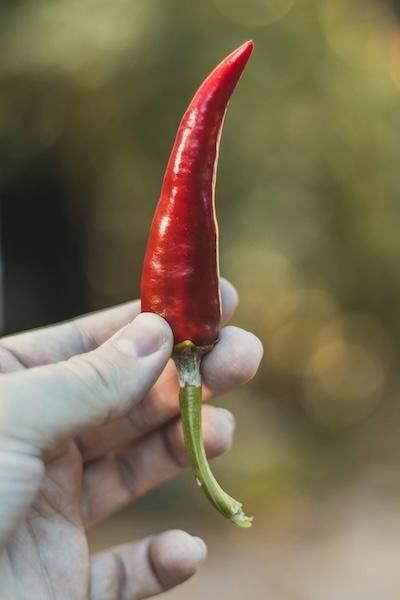
You can use the pepper rating system, but this isn’t universal and doesn’t provide detail, so specific warnings are probably better.
(Photo by 1MilliKarat on Unsplash)
Any tips for navigating all of this as a writer who is awkward and cringey?
I assume this question is referring to spice and writing it when you feel uncomfortable. I’d start by asking why you feel that way. And what aspects make you uncomfortable?
You might not want to go into graphic detail. Great news, you don’t need to. You can focus on emotions and sensations instead of actions and body parts. Sure, sex can be a carnal rampage of sweat and bumping uglies. It can also be tender and poignant. Write the type of scene you want, the type that’s right for the moment and the characters.
Sometimes the awkwardness is because the characters feel that way, in which case you should focus on what they need to move past this discomfort and into a place of intimacy. It will form part of their (and your) journey and your story will be better for it.
Getting your first sex scene written can be difficult, but it’s like any other scene in your book—try to treat it that way. And write it for you first. Once you have, try sharing your scenes with trusted peers—letting others read your spice can really help. It’ll be out in the world one day, so best rip that plaster off sooner rather than later.
Or maybe spice just isn’t on the cards for you, and that’s okay too. As we already covered, spice isn’t essential. You just need to make sure it’s part of the plan and the story reads smoothly, not conspicuous by its absence.
If the whole romance thing makes you cringe… in all honesty, I’d recommend writing in another genre.
What I will say is that it gets easier the more you do it. The writing—get your minds out of the gutter!

Visit Pam’s website to follow her adventures: pslivingstone.com
Read previous columns
Ask an expert
- January 2026: Writing TTRPGs and working with existing IP, with Alasdair Stuart
- December 2025: Creative coaching, with Dr Rachel Knightley
- November 2025: Crowdfunding, with Fio Trethewey and Georgia Cook of The Holmwood Foundation
- October 2025: Creating darkness, with Daniel Willcocks
- September 2025: Working with book bloggers, with Kayleigh Dobbs of Happy Goat Horror
- August 2025: Websites for creatives, with E.M. Faulds
- July 2025: Anthologies, with Dan Coxon
- June 2025: Self-publishing, with AK Faulkner
- May 2025: Indie presses, with Black Shuck Books’ Steve J Shaw
- April 2025: Being a traditionally-published author with Adrian Tchaikovsky
- March 2025: SFFH artwork with Jenni Coutts
Ask an agent, with Laura Bennett: