The winners of the British Fantasy Awards 2026 were announced at Fantasycon. Find out all the details on our blog.

For all things fantasy, horror, and speculative fiction
-
Announcement:
There is No One True Way
When the Booker went scifi this year, Matthew Palmer noticed something strange in the social media discourse: an oft-reshared quote attributed to M. John Harrison that said worldbuilding is unnecessary in genre fiction. Surely it wasn’t true?
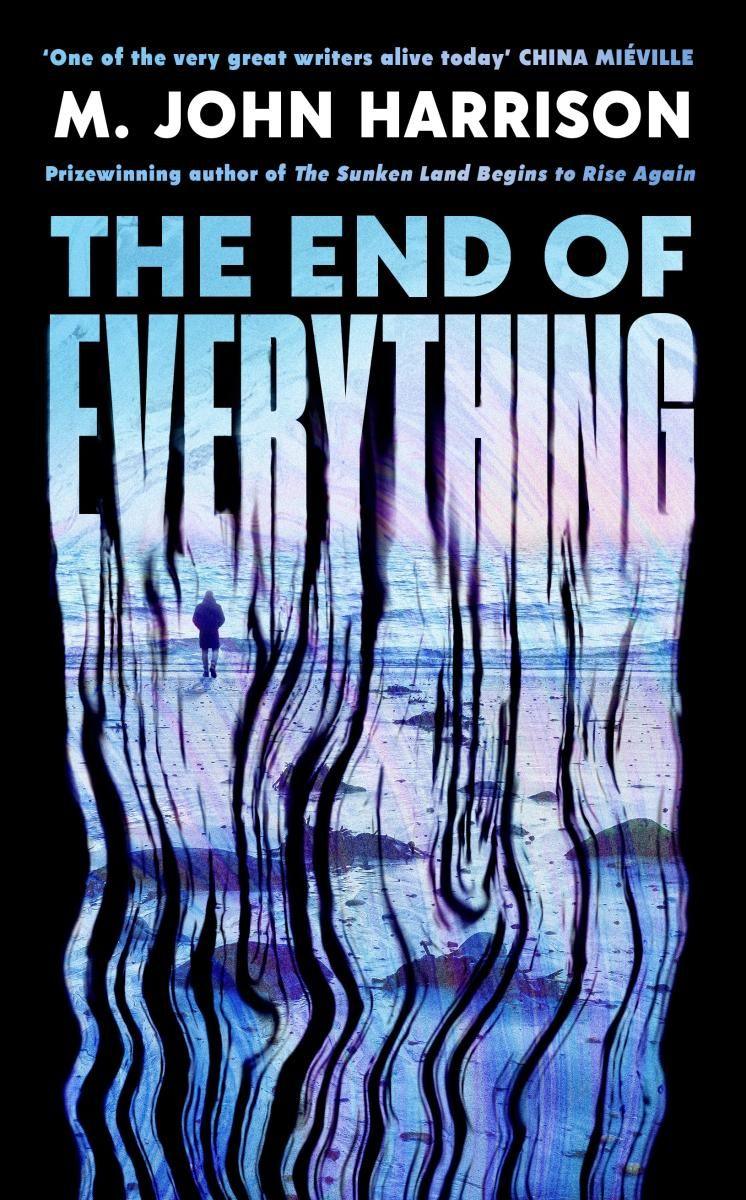
On 9 November, M. John Harrison won the Booker Prize for his novel The End of Everything. Seeing a genre writer winning the UK’s most prestigious literary prize is surely a cause for celebration. SFFH writers and fans across the spectrum were very quick to join in with congratulations. I’ll be honest, I’m not familiar with Harrison’s work, but it was still encouraging to see.
But I’m not here to talk about his work, or the implications of his win for the status of science fiction within the literary establishment.
No, what caught my eye was a BlueSky post quoting Harrison that started doing the rounds a couple of days later. The quote was as follows:
“Every moment of a science fiction story must represent the triumph of writing over worldbuilding. Worldbuilding is dull. Worldbuilding literalises the urge to invent. Worldbuilding gives an unnecessary permission for acts of writing (indeed, for acts of reading). Worldbuilding numbs the reader’s ability to fulfil their part of the bargain, because it believes that it has to do everything around here if anything is going to get done. Above all, worldbuilding is not technically necessary. It is the great clomping foot of nerdism. It is the attempt to exhaustively survey a place that isn’t there. A good writer would never try to do that, even with a place that is there. It isn’t possible, and if it was the results wouldn’t be readable: they would constitute not a book but the biggest library ever built, a hallowed place of dedication and lifelong study. This gives us a clue to the psychological type of the worldbuilder and the worldbuilder’s victim, and makes us very afraid.”
You can’t stop the signal
Reading that quote makes me feel tired. Seeing other people debate the merits of that post makes me even more tired. Why? Well, let’s dig into it, because this particular social media post burrowed its way into my lizard brain and started stomping around like it owned the place.
First, let’s look at the quote itself. Not the contents of the quote, but its origin. Because if there is something we should all instinctively distrust, it’s a quote taken out of its original context.
The image being shared around comes from Goodreads, a quote from the site cropped into an image. There wasn’t any citation for the source of the quote. When you add a quote to Goodreads it doesn’t even ask you to provide a source, only some brief guidelines. I have no idea if these quotes are moderated or verified in any way, which is in itself worrying.
So, I went digging. As far as I can find, the quote originates from January 2007 from a blog post by Harrison on his website. This website doesn’t exist anymore, except on the internet archive. You can find the quote and the extensive notes that he made on it here. It seems like it caused no small amount of discourse at the time, and Harrison made extensive notes clarifying his position in December 2007. Man, the internet moved a lot slower in those days huh? Different worlds.
(Photo by Andris Romanovskis on Unsplash)

The only way to do things?
If I ever win any kind of award (unlikely), I sincerely hope that people don’t take my words and use them to resurrect discourse that is old enough to vote, buy alcohol and raise a family of little discourses of their own.
Because discourse there has been. The initial post has (as of time of writing) 700+ reposts and rising. It’s been passing through my feed on a regular basis, people taking one side, people taking the other. People riffing off people taking the wrong side. Quite the hot buffet of takes.
I don’t know what the original poster’s intentions were—I won’t call them out here; that’s not my intention—but I don’t see how this particular quote relates to Harrison’s Booker Prize success, especially as that rare example of a genre fiction winner of a literary prize. The least charitable reading is that sharing this this was designed to cause engagement of the very kind that it provoked.
There are very distasteful aspects to this kind of discussion, and I’ve seen it play out a thousand times across the various nerdy spaces that I’ve been in over the years. In certain RPG spaces it’s referred to as “One True Wayism.” You know the idea, even if you’re not familiar with the term. I don’t know how common it is outside of RPG circles (it is apparently a common term in BDSM circles as well, which tells us something about that particular Venn diagram). People, not just nerds, are very quick to promote their own way of doing things as being the only correct way of doing things.
Part of that is a quirk of language. Not every statement is necessarily qualified with a “This is how I do things; it may be different for you.” It’s very easy to take someone’s statement on their own method of writing and impose the implication of One True Wayism onto it.

Discussions of this type call to mind the other perennial discussions that seem to roll around social media on a semi-regular basis, things like hard magic systems vs soft magic systems, or is [insert popular genre here] really worthy of attention? The reason that these sorts of discussions bother me so much is that they are solved problems. We all know the answer: There is no absolute, true way of doing things. No genre is inherently more worthy than any other. There are as many ways of writing as there are writers, and there are as many ways of telling a story as there are stories. Anyone who attempting to convince you otherwise has an agenda.
Which is the part of this that bothers me the most. Of all the reactions to Harrison’s win, why is this the one that is persisting on BlueSky? Of all of Harrison’s quotes, why choose this one?
A veteran scifi author winning a top literary prize should be a moment that brings people together, not generate empty discourse. Why not choose a quote from the book that won? Why not write about what makes Harrison unique as an author, recommend his other works, or boost other authors that might be enjoyed by people who read Harrison because of his Booker win?
Try to be better in our heavily-mediatised world
These sorts of discussions are the fuel that fires the engines of social media. It’s all about likes, reposts and comments to feed the algorithm. There may be interesting discussions that arise from those, but it seems almost like a byproduct rather than the aim. Instead, it’s mostly just an excuse for people to indulge in a little bit of team sports with a side of elitism as a treat.
It’s inescapable. Social media is going to do what social media is going to do: Namely encourage all of our worst instincts. We all need to resist that, myself included, and try to post in a more mindful fashion. If we see something controversial maybe we should take a moment to consider: Who is posting this? What are they posting? Why are they posting it? What is its providence? Because it’s one thing when something like this takes off in a discussion about art, but it’s another thing altogether when it’s something with greater weight.

In Harrison’s notes on his original post he states the following:
“My argument isn’t really with writers, readers or gamers, (or even with franchisers in either the new or old media); it is a political argument, made even more urgent as a heavily-mediatised world moves from the prosthetic to the virtual, allowing the massively managed and flattered contemporary self to ignore the steady destruction of the actual world on which it depends.”
We’re all now living in the heavily-mediatised virtual world that Harrison saw on the horizon. It’s Ironic that Harrisons own words have now been mediatised themselves, turned into a fragment to be distributed and flattened to the point of their most basic meaning.
It’s our job to fight against that trend, not encourage it.
Photo above: M. John Harrison (Booker Prize website).
Meet the guest poster

Leave a Reply