
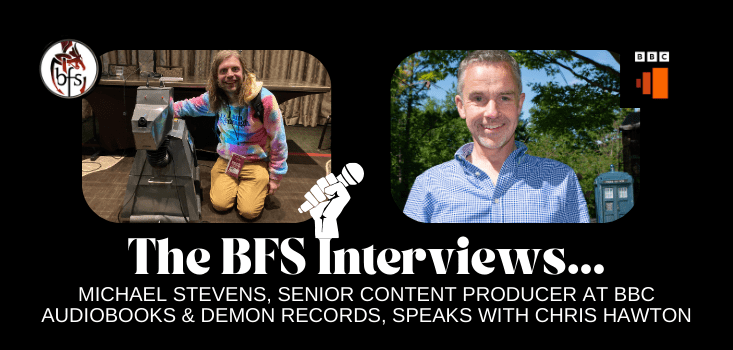
Michael Stevens, Senior Content Producer at BBC Audiobooks and Demon Records, speaks with Chris Hawton, BFS member and co-host of the All-New Adventures of the Doctor Who Book Club Podcast, about his approach to the Doctor Who audiobook slate, and more.
This interview is part of our coverage of the inaugural Speakies Awards, recognising the best in British audiobooks for the year. The BFS sponsored the Best SFF Audiobook category, which featured the BBC’s Agent of the Daleks by Steve Lyons on the shortlist, though the category was ultimately won by Juno Dawson’s Queen B. More about the Speakies, here.
Watch the interview on YouTube, or read the transcript below.
BBC Audiobooks And Its Scifi and Fantasy Output
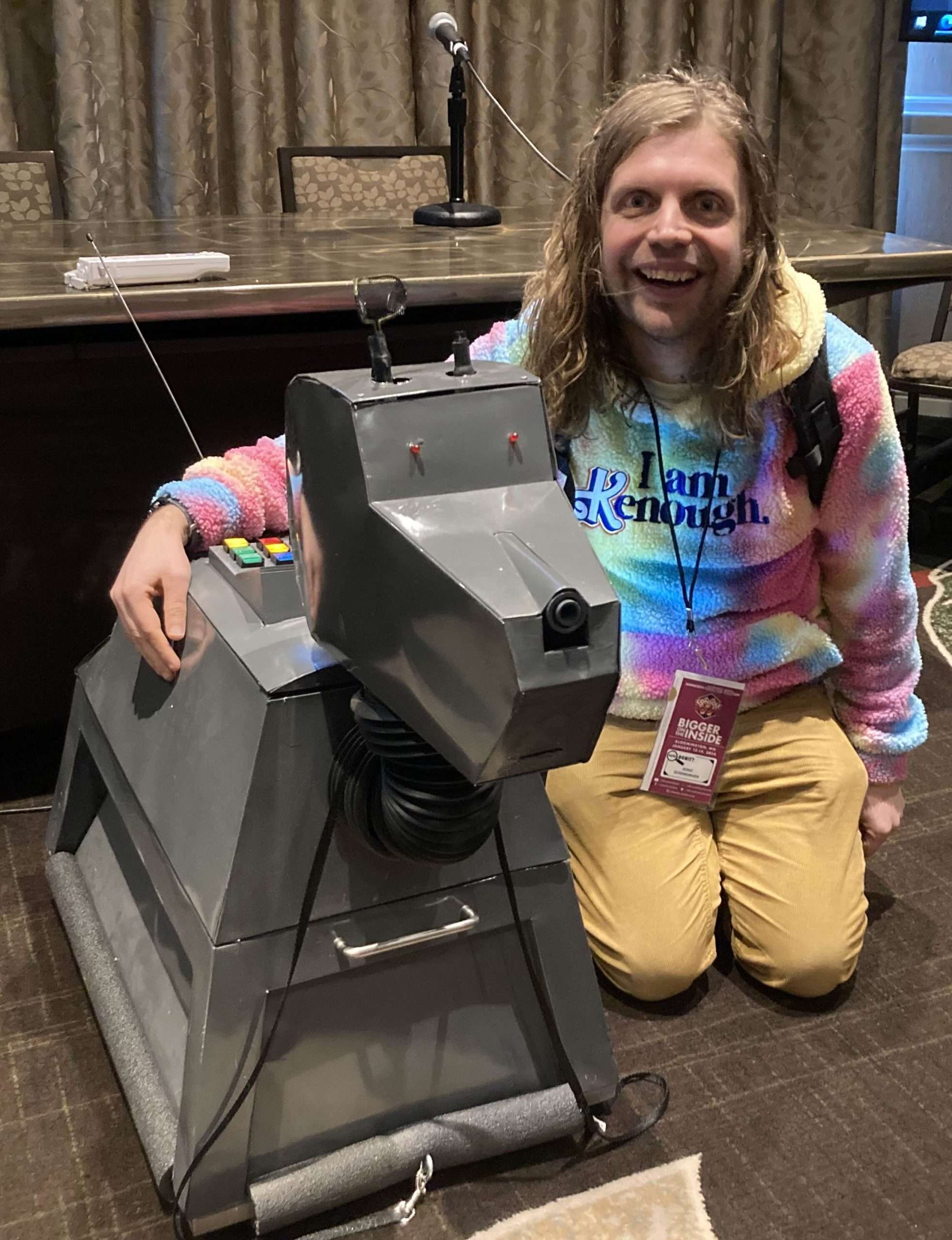
Chris (pictured): Welcome everyone. I am Chris Hawton and I am here on behalf of the British Fantasy Society, and we’re going to be talking about the importance of audiobooks with Michael Stevens, who is the Senior Content producer at BBC Audiobooks. And I’m also just going to declare an interest, for those who don’t know, I co-host a Doctor Who book club podcast called The All-New Adventures of the Doctor Who Book Club, so there may well be some Doctor Who related questions. And actually, we’re going to kind of start off with a little bit of an observation. Agent of the Daleks—which, as the name would suggest, is a Doctor Who related title by Steve Lyons—was nominated for Best SFF audiobook at this year’s Speakies, a category which was sponsored by us at the British Fantasy Society. Agent of the Daleks didn’t win; however, that category was won by Juno Dawson, who is of the Doctor Who parish. So that’s kind of good news as well.
So Michael, could you just give us a little bit of a background into yourself and your role at BBC Audiobooks please?
Michael (pictured): Yeah, sure. Well, I’ve been working with BBC Studios, formerly BBC Worldwide, for 25 years, and during that whole 25 years we’ve been publishing Doctor Who audiobooks. We started with narrated TV soundtracks, predominantly for the missing episodes of Doctor Who—so, where the TV episodes no longer survived, we would put out the audio that did survive with some linking narration—and through the years, we’ve developed our ranges so that we now have about five distinct ranges alongside the TV soundtracks, we have audio original stories of which Agent of the Daleks is an example.

We also have been mining the vast back catalog of novelizations of the TV series that were first published by Target Books, and we’ve just completed a whole run from 1964 through to 2005 of TV stories that have been novelized, and we’ve now made them into audiobooks. We also publish BBC books, novels, original novels, when they publish. So that’s really the potted history of our Doctor Who publishing. And then, I guess, in terms of science fiction generally, we have, over the years, published a lot of BBC Radio productions, dramatisations, largely of the likes of John Wyndham, HG Wells, Quatermass, and a few other scifi productions as well. And of course, veering more into fantasy. There is the Lord of the Rings. You know that legendary version?
Chris: I thought you’re going to mention that!
Michael: Yes, yeah, from 1981 and its predecessor, which was dramatization of The Hobbit. So yeah, we’ve certainly dipped many toes—feet, even—into scifi and fantasy.
Chris: Did you have a background in in science fiction before you started working with the BBC in its various different precursors?
Michael: I didn’t have a professional background, but I am a lifelong Doctor Who fan, you know, full disclosure. From the age of four it caught me, and that, of course, was extremely helpful when I joined the BBC Radio collection, as it was known then. I wasn’t taken on as a science fiction or even a Doctor Who expert—I was working generally in the output of comedy, drama, etc—but because Doctor Who was part of that publishing, and because I had always followed Doctor Who I knew a lot about it, so that that helped a great deal, and doubtless that also influenced our growth of the Doctor Who list. Also, I have always loved John Wyndham, always loved other TV series like Blake’s Seven, Space 1999, and so on, and Douglas Adams as well, which is another big element of our publishing. I’ve followed Douglas Adams’s work since being a teenager. So, yes, it was a happy sort of confluence of the job.
Chris: Do you think like audio exclusive titles, like Agent of the Daleks, whether those allow more experimentation with sound design or narrative style?
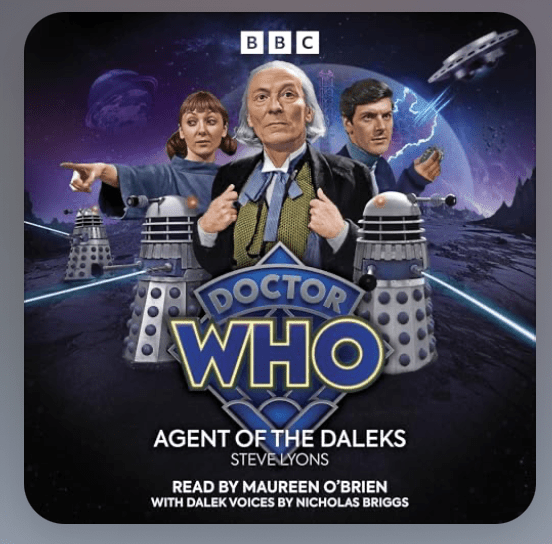
Michael: They can do yes, because the author can build that in right at the right at the beginning. And actually Steve Lyons is a good example with the Agent of the Daleks, because, yes, he did do that. So it’s very interesting, because audio on the face of it offers an unlimited canvas on which to draw or paint your story, because you’re not restricted by visual constraints be they budgetary on TV or whatever can be created on a computer. So on the face of it, audio does offer that that scope. And if you are clever and canny, you can harness that really well. Of course, if you say, well, you could do absolutely anything and you can do everything, in many ways that can hamper you, because what do you do?
So I think sometimes, I think there’s a case for using the audio medium in quite an economical pared-back way. You know, a voice in a room, two voices in a room, three voices in a couple of, and so on. But you can choose to throw on loads of sound effects, loads of music and so on. And of course, in every environment that you choose to tell your story that can be portrayed and illustrated through sound design very easily. So yes, I think it does offer more scope. Obviously, if we’re doing an audiobook of a published novel, then the reader just reads what is on the page. So yes, I think I would agree with the fact that if you’re starting from scratch with an audio story, you can really harness the medium as much as you as much as you like.
Chris: Dare to say, it’s like how the books were originally in the 90s were kind of like, everything, all the effects are there in your mind. And you can just add to it. Speaking of books from the 90s and whatnot, I was just thinking it’s been a while since BBC Audiobooks produced a reading of a Doctor Who novel from back in the day that wasn’t tied to a TV story. I think quite a few of those were as part of the build-up to the 50th anniversary and stuff like that. But are there plans for any more readings of some of the old BBC novels, or the Virgin novels?
Michael: Yes, we do have plans—tentative at the moment, and they won’t see fruition for at least a year—but yes, definitely. We focused on the Target novelisations because that was a program we embarked upon, and it felt like the right thing to complete that program. But as that has now been completed, apart from a few mopping up titles, radio adaptations and a few missing stories that never made it to the screen, we will be turning our attention to those full length novels—very big books, actually, which makes for more listening time. Of course, not all of those books are going to be suitable for mainstream audience, but I think plenty of them will be.
Chris: Yes, some of them may require some editing, possibly. That’s great, because quite a few of those books are now, like, in some ways they are the late 20th centuries missing stories because they’re not available in bookshops. And if you buy them online, then some of them can go for like 100-odd quid and more.
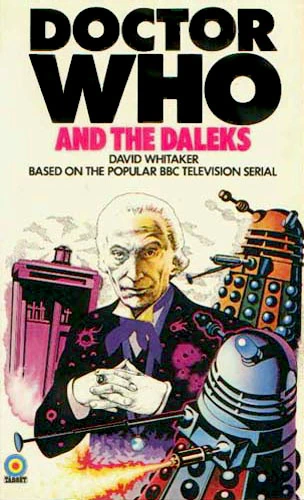
Michael: Absolutely, in fact, that was how that was the situation with the Target Books when we began, which was 2005, that they would they were dormant and out of print. And at the time, I did wonder whether actually people would still deem them as sufficiently of interest. And yet, I’m really aware that there is a great deal of nostalgia now around the 1990s books. I was there at the beginning as a reader, you know, and found them to be really exciting, this prospect of,as I think the tagline said, stories, too big—
Chris: too broad, too deep, haha.
Michael: Yes, too broad, too deep. Yes, and it was a great journey to go on. And, yeah, absolutely, I’m very excited with, as you say, we did do some. We tended to shadow what BBC Books were doing in terms of reprinting the ones that they reprinted. Most of them, we made audio editions of. But absolutely, I think the fun is going to be selecting the books and the readers, seeing how they turn out.
Chris: How do you choose narrators? Because, I mean, there are some times where you are lucky enough to be able to use the actor who played the Doctor or the companion, but there are other times where, for whatever reasons, those actors aren’t available. So I’m just wondering how does that process happen?
Michael: Well, I have largely tried to find readers who were in some way involved in either the particular story, if it’s a TV one, or in the era from which that story comes. And we’ve been very fortunate, as you say, to have several Doctors—Tom Baker, Colin Baker, Peter Davison, Paul McGann—to have read and proved to be terrific readers. Likewise, lots of the TV companions have proved to be wonderfully talented, and they’ve become very popular narrators. So as that has gone on, we’ve reused a lot of those readers. Then we’ve added where perhaps a companion or a Doctor wasn’t available from a story we’ve looked at the guest cast, the supporting cast, and drawn from those. But as time has gone on—it’s been 20 years since we started with the TV novelizations, and many of our readers have passed away. So for certain eras of Doctor Who you don’t have many surviving actors to draw upon.
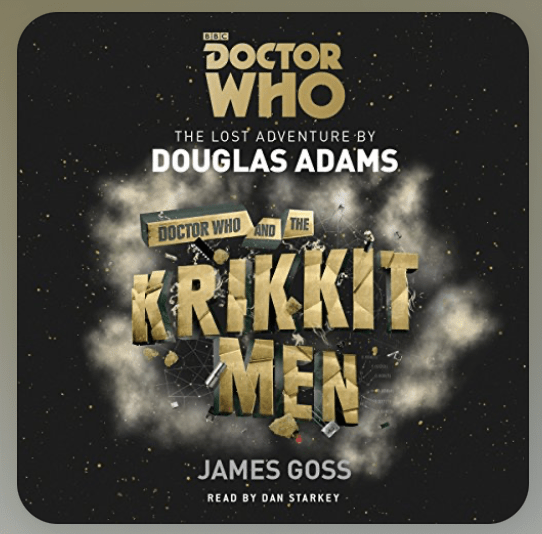
Then we also have quite a band now of really talented readers who weren’t necessarily associated or weren’t at all in the TV series—having said that, people like Dan Starkey, who’s become one of our more prolific readers, he didn’t play a role. Obviously, he played several roles in the modern series, yes, but he’s so versatile, he lends himself to, really, any era of Doctor Who. Similarly Jon Culshaw, who, came to it because I was aware of him as doing the Fourth Doctor. And I thought that is that voice is so good. John was interested in reading two books, wouldn’t that be a brilliant match? And it turned out that he was a terrific reader.
So yeah, that’s sort of how we’ve gone along, and it has been really nice just to have a few guest cast who perhaps just do one or two stories. I’ve seen people like Pamela Salem who read Hand of Fear, Michael Cochrane, who I think read three of the Target Books, and then, as we’ve as we’ve brought people on for the Target Books, we’ve then used them for the original novels because BBC Books every year have been publishing original novels largely based on the current TV series.
Chris: How do you decide—so when you were doing the Target Books, how did you decide which titles to prioritize? Because I remember when the audios were coming out originally that they, to my frustration, they hung on to Terror of the Zygons to the end because they wanted to finish on that, rather than, say, possibly a less appreciated story. How was that with the scheduling, or prioritising the releases?
Michael: Yeah, it’s a great question, and it’s an interesting way, the way it did evolve. We started by focusing on those very first three Target Books, the David Whitaker and Bill Strutton books, yeah, Doctor Who and the Daleks, Doctor Who and the Crusaders. And so we brought William Russell in to read those. And at the same time, two of our earliest readers were Geoffrey Beevers and Caroline John; having done their first books, we then thought, well, they’re great readers so we’ll add on more books that would suit them. So that informed a lot of the choice.
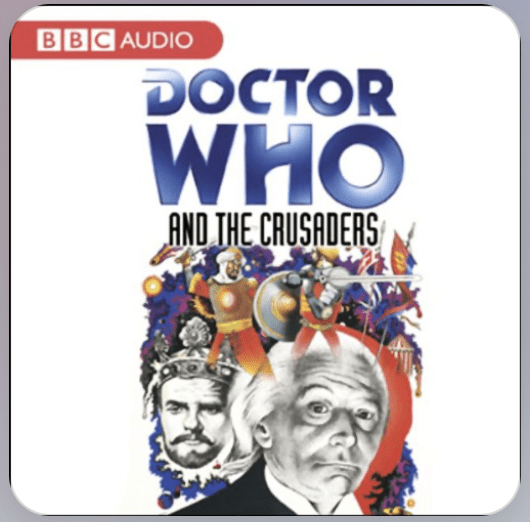
But very quickly, I wanted to be sure that within any publishing year, we had a good mix of Doctors and eras. And even within that, I always wanted to have a mix of enemies—I didn’t want to have a run of Dalek stories or a run of Cybermen stories. I wanted to always keep variety there. So the driving factors have always been the readers, the writers, the eras and the monsters, and always trying to keep a variety within each era. And of course, as we’ve gone on, the number of titles that were available still to do has shrunk, and so the choices get narrower. But I think we did manage, really, to keep that variety going and ensure that in any year, you’d have a First Doctor, a Second, a Third, etc, etc, to the Seventh.
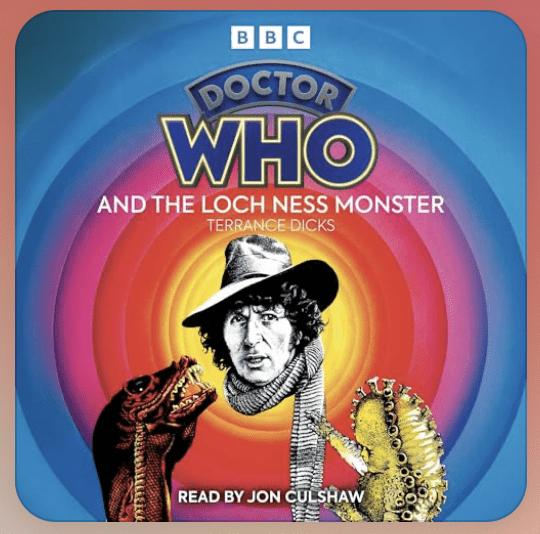
The fact is that our last one of that complete run that I mentioned was the Loch Ness Monster. Some people were speculating that we’d done that in order to do what the DVD range had done. But in fact, it was complete coincidence. What happened was, a couple of years ago, I looked ahead and thought, right, we are going to be completing the range. It would be very nice to finish on one of the first tranche of Target Books—you know that great, sort of early heyday of the mid 70s. And so I looked at what was left, and there weren’t that many left, but Loch Ness Monster was one of them.
So I did hold it back, but it wasn’t anything really to do with the DVD. It wasn’t homage to that. So yeah, Jon Culshaw read that, and he is now he’s neck and neck with Geoffrey Beevers in terms of being our most prolific reader. And it was nice to finish with a John reading.
Chris: What do you think is the biggest challenge in producing Doctor Who audiobooks compared to the other sort of SFF franchises that your work kind of touches upon?
Michael: Well, I think you’ve always got to be aware of the core essentials of Doctor Who, and by that I mean getting the details right of key sound effects, key pronunciations of all the many planets.
Chris: Well, the TV show sometimes skips that a little bit. Matt Smith had an unconventional pronunciation of at least one planet that comes to my mind. And that said, I suddenly am thinking, what is the right way to pronounce Metebelis? I think Meta-bee-luhs, but I think he pronounced it Meh-teh-bolous.
Michael: And of course, you know, famously, Tom Baker would insist on calling Gallifrey Gallifree. There was—oh nowhat was it? I was looking something up the other day and I thought, right, I’m going to have to go to iPlayer just to get the definitive on that. And lo and behold, within one episode, two different characters pronounce the word differently. So those sorts of things. And you know, voices of particular characters or aliens, you’ve got to keep an eye on how they sound. I always think we don’t—again, if it’s a novelization, we shouldn’t slavishly try to emulate the way something sounded on TV because in many ways, these books are in their own little universe. However, you know, the Daleks should really sound like the Daleks, and we’ve been very lucky in having Nick Briggs on board to give us those voices. Throughout all of our titles, when the Daleks and the Cybermen appear—with the sole exception of Doctor Who and the Daleks, which was the first one we did and we hadn’t got Nick on board at that point, but for all of the others—when you hear those characters, you are hearing the authentic TV voice, and for K9. But yeah, so I think those are probably the key things that if you’re dealing with an original scifi or fantasy novel you’ve got perhaps more free range.
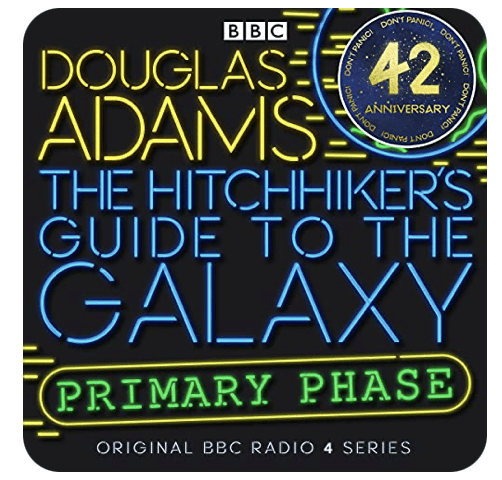
Chris: Possibly with Hitchhikers? There are definitely people who expect there to be certain sounds.
Michael: The interesting thing with Hitchhikers is, we’ve always published the radio episodes. We at BBC Audiobooks have never recorded the books. Macmillan, who do publish the books, they have their own audiobook reading, so we’ve never ventured into that, nor, indeed, have we ever ventured into original fiction based on Hitchhikers. That’s an interesting idea, but we’ve never got down that.
Chris: So what excites you most about the future of BBC Audiobooks’ SFF? I’d be interested to hear what you say about Doctor Who, but also wider what’s exciting about the future?
Michael: Well, starting with Doctor Who, the thing I do work on most, I am excited about the prospect of venturing into the longer original novels, as we’ve talked about earlier. I’m also really excited about our audio originals range, which we’ve been publishing for a good few years now—again, that’s 20 years. But as you mentioned, we entered Agent of the Daleks into the Speakies awards, and it was shortlisted. I think it was a really strong title. It was an example of an original way of telling a story with a terrific reading from Maureen O’Brien and terrific sound design. It just goes to show that we can still enjoy new ways of doing things. And so I’m excited about the challenge, really, of continuing that and topping it in many ways. And, of course, with Doctor Who, who you never know what’s on the horizon with the series itself.
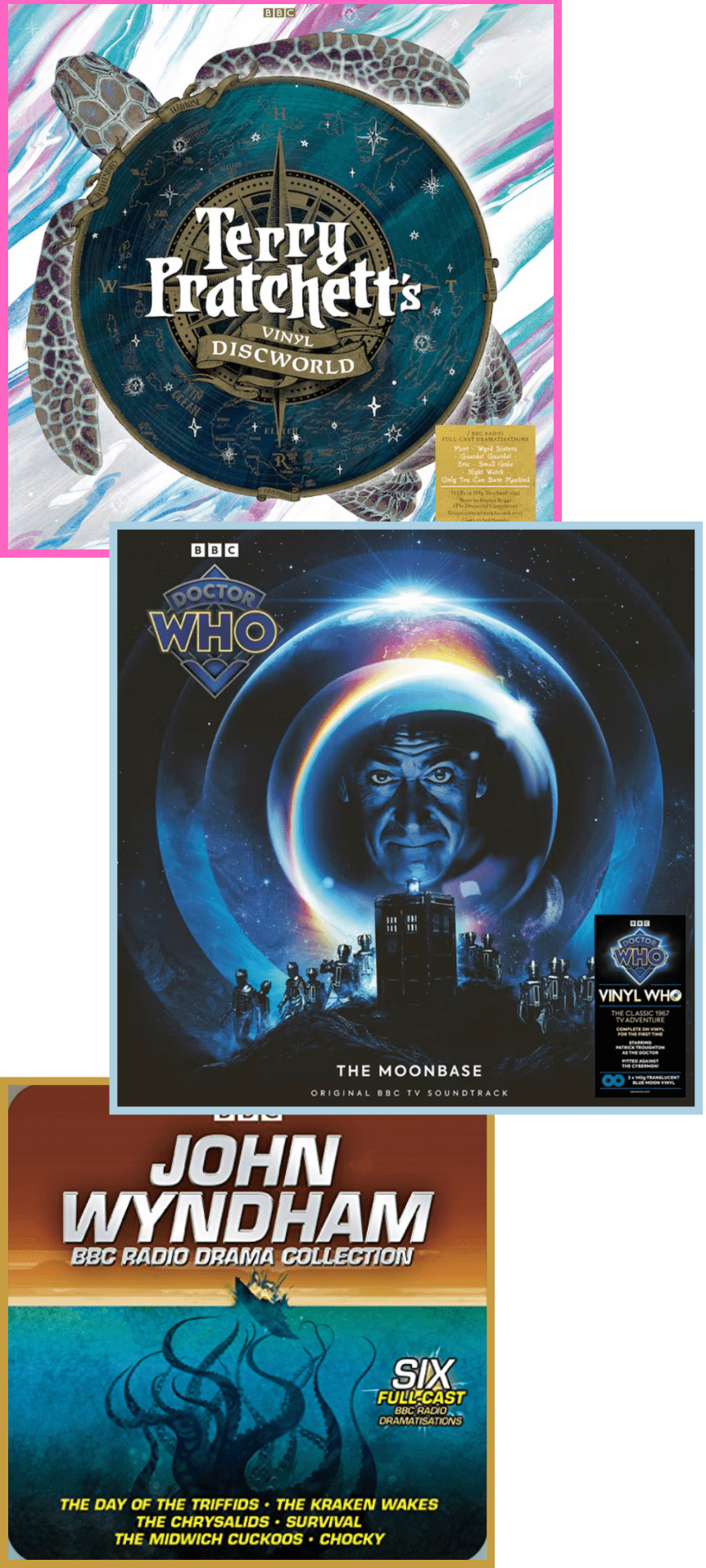
And in other areas, we have a backlist of scifi, as I mentioned earlier. In recent years, you may have seen or some of the viewers may have seen, Demon Records has been putting out some of our scifi backlist on vinyl, vinyl LPs.
Chris: Yes, I’ve got a couple of them over there.
Michael: Have you right? Yeah, what have you got?
Chris: I well, I have Doctor Who related ones. But yes, I think I’ve got Genesis of Daleks, which I think you did.
Michael: We’ve done lots of the TV sound Doctor Who TV soundtracks, but we’ve also done Terry Pratchett, Neil Gaiman, several of those Hitchhikers, and there are other things in the works, some of which are extremely exciting. So, yeah, it’s good working on those. And, yeah, as for others, I have colleagues over in Random House who look after the general BBC audio output. So that is anything that Radio Four is making at the moment that they choose to publish, or indeed, it’s mining the archive. And as I mentioned back in the day when I was looking after science fiction, we did all those John Wyndhams and we did a terrific box set called Classic Radio Scifi that had things like Solaris, which was a really good radio adaptation, Frankenstein, and others. So they’re always there. And sometimes there are new ways to re-market. But, I’m sure there will also be other science fiction that’s coming down the line from BBC Radio.
Chris: Okay, all right. Well, I think we’re coming up to time, so just want to thank you so much for your time. Michael, it’s just been fantastic talking to you, it’s just been an absolute thrill. And I’m very excited to hear about, hear more about the 90s novel readings when those come to fruition.
Michael: Well, perhaps we’ll be able to talk again.
Chris: I would be thrilled.
Explore the Speakies and BBC Audiobooks’ Doctor Who output
- Explore this year’s Speakies shortlist and winners via The Bookseller, here
- More about the SFF Audiobook category here
- Hear from Juno Dawson and Steve Lyons about their nominations on our blog, here
- Listen to the BFS Long Story Short Speakies Special podcast episode, with Steve Lyons and Nicholas Briggs, here
- More about BBC Audiobooks output is available on BBC Sounds
- Listen to the All-New Adventures of the Doctor Who Book Club podcast here