Every Friday, we meet a member of the BFS and peer deep into their soul (or, at least, a form they filled out). Want to be featured? Email us: online@britishfantasysociety.org
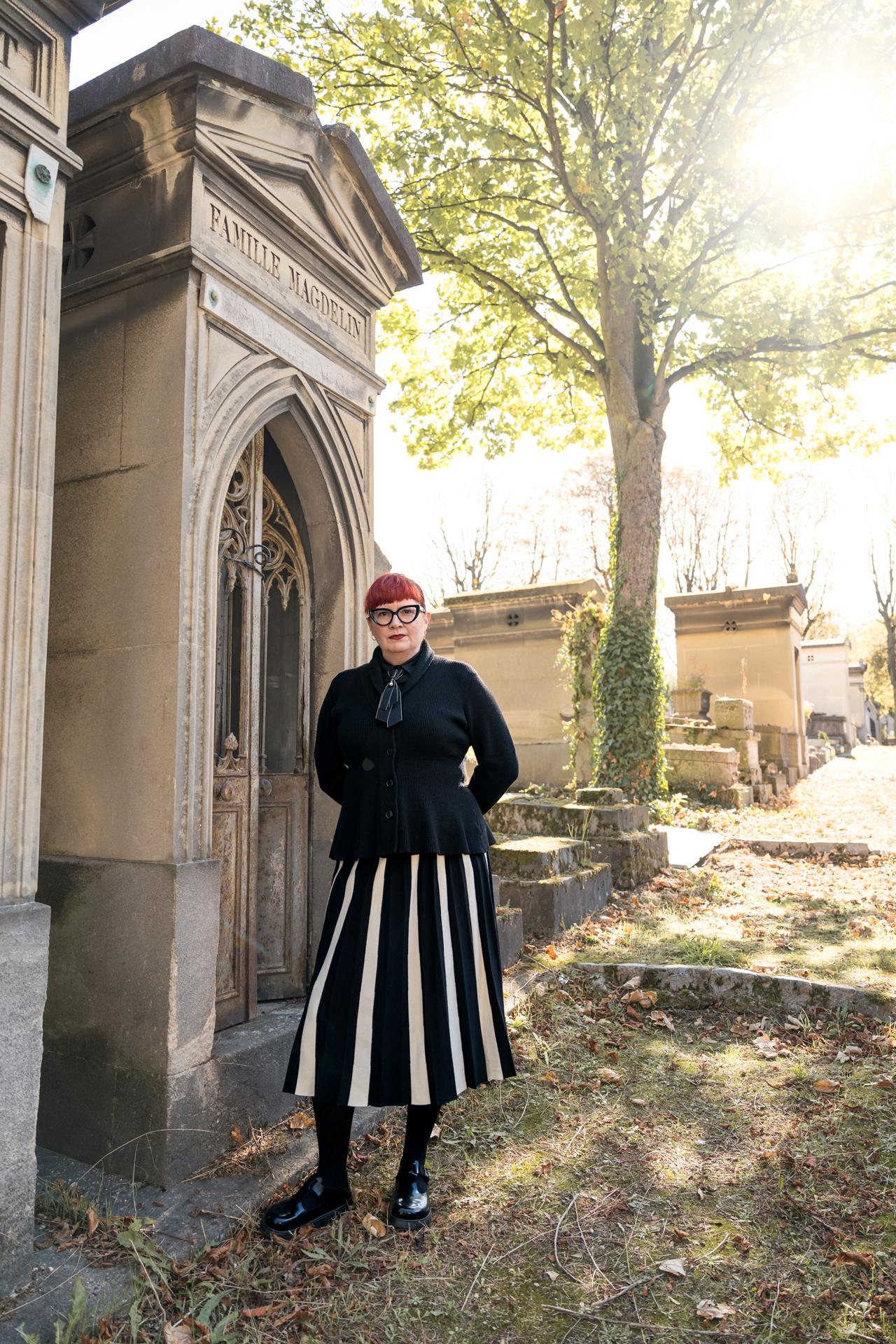
Name:
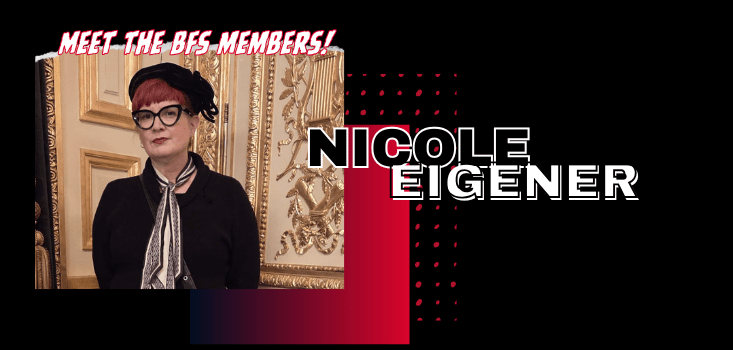
Nicole Eigener (she/they/iel)
Which region are you based in?
Southern California (for now)
If you write, which genre:
Fantasy and horror. (My work is genre-bending, but combines both fantasy and horror elements: especially as my duology is about a time-travelling vampire!)
If you don’t write, what do you do?
In my offtime: I am a professional graphic designer, and I’ve been in this career for 30+ years. I’m in a bit of a transitional point in my life and I don’t have much free time, but when I do have, I love collecting photographs and discovering new music. I am a huge music fan.
Are you drawn to any specific SFFH sub-genres?
I love magical realism and low-fantasy.
Your influences
Tell us about the book/film/thing that got you into SFFH: What was it? How old were you? What impact did it have on you?
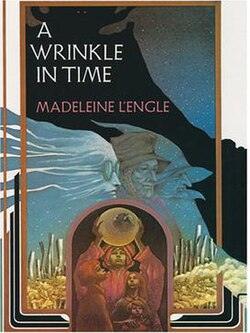
I can trace my earliest experiences with SFFH to Madeleine L’Engle, specifically her novel A Wrinkle in Time. As I grew as a reader, her books stayed with me, and I loved how many of her works had crossovers and beloved characters would make appearances in different storylines.
It gave me a basis for my worldview that everything that happens in life is connected, if one takes the time to link all the little threads together. Because of her, I wrote my first novel when I was 14 in a spiral bound notebook. My incredible literature teacher at the time encouraged me to submit it, and even helped me with a cover letter and to mail the manuscript to a popular publisher of young adult books in New York City. The manuscript was returned, with a polite rejection that encouraged me to keep writing—my first rejection! Sadly, both the letter and the manuscript are lost to the ages. But I’ll never forget that pivotal experience.
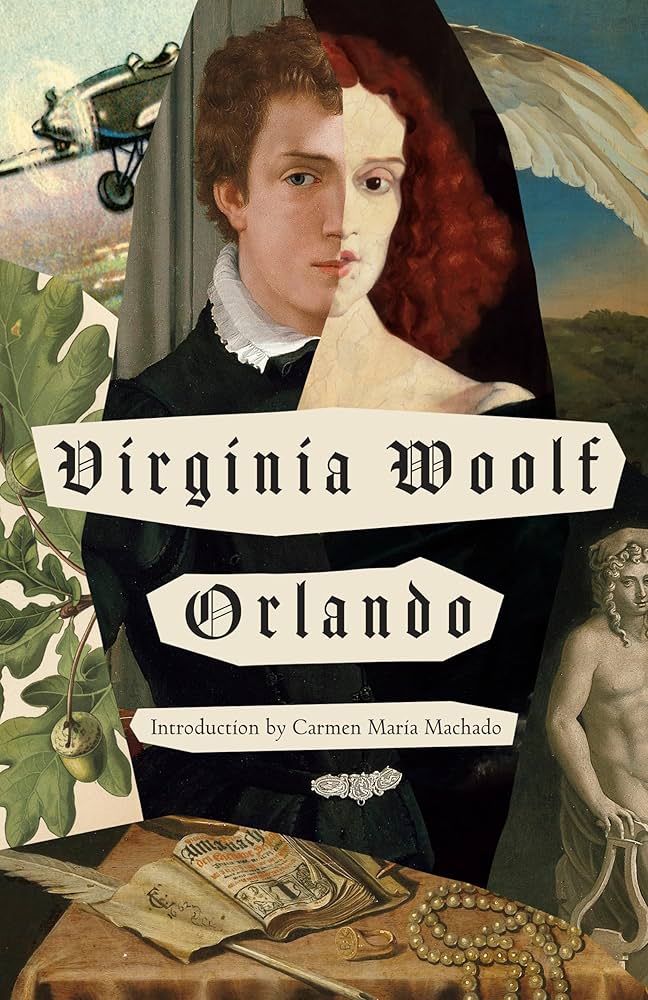
Another one, which I NEVER hear anyone mention as a fantasy book, is Orlando by Virginia Woolf. This book most definitely had an impact on me, not only for my work but for me personally. It’s a book that explores gender, and it begins in the Tudor era and ends in present-day. Orlando is a gender-shifting immortal, although no reason is ever given for their immortality. Perhaps it can simply be described as a fable about a person who remains alive until they figure themselves out.
Something readers might find interesting about my work is that although I’m writing about vampires and time travel, my writing style is firmly grounded in the Bloomsbury Group.
I’ve long been obsessed with Lytton Strachey, Carrington, Virginia Woolf, Duncan Grant, E.M. Forster…I’m a lifelong Anglophile and Francophile. All of their work is queer-coded and so is mine, but I’ve also long been equally obsessed with 17th-century French history. My work, I hope, forges a marriage of my early love of language and history, with a touch of my American experience.
How does that early influence show up for you (in life/writing/agenting/publishing/editing/reading) now?
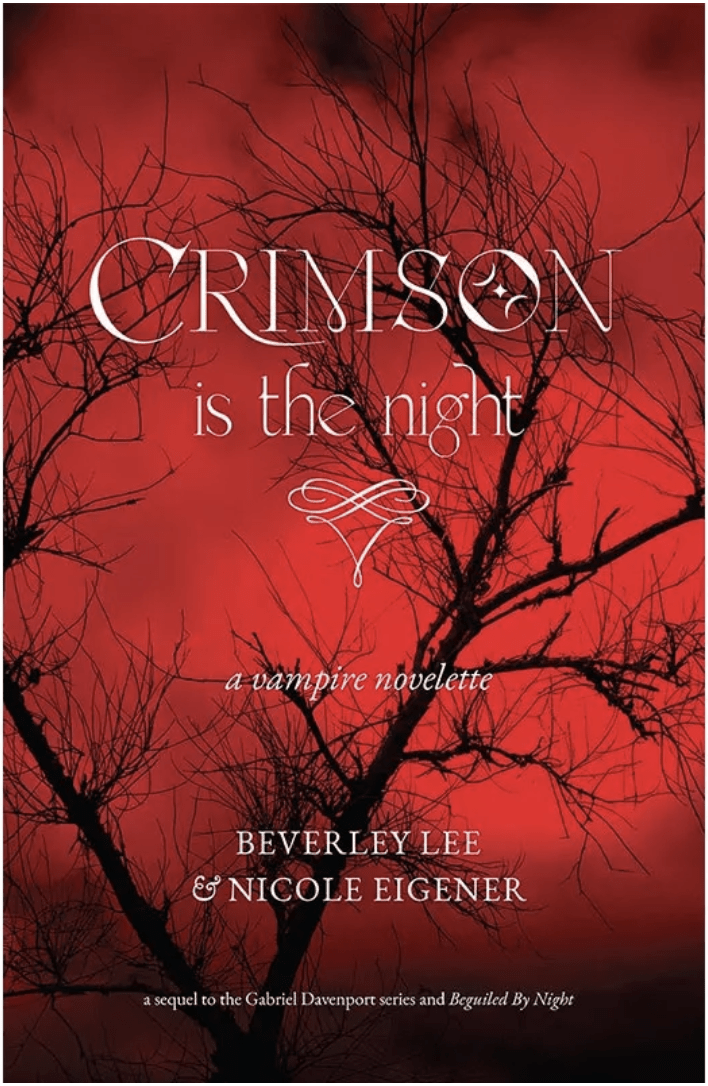
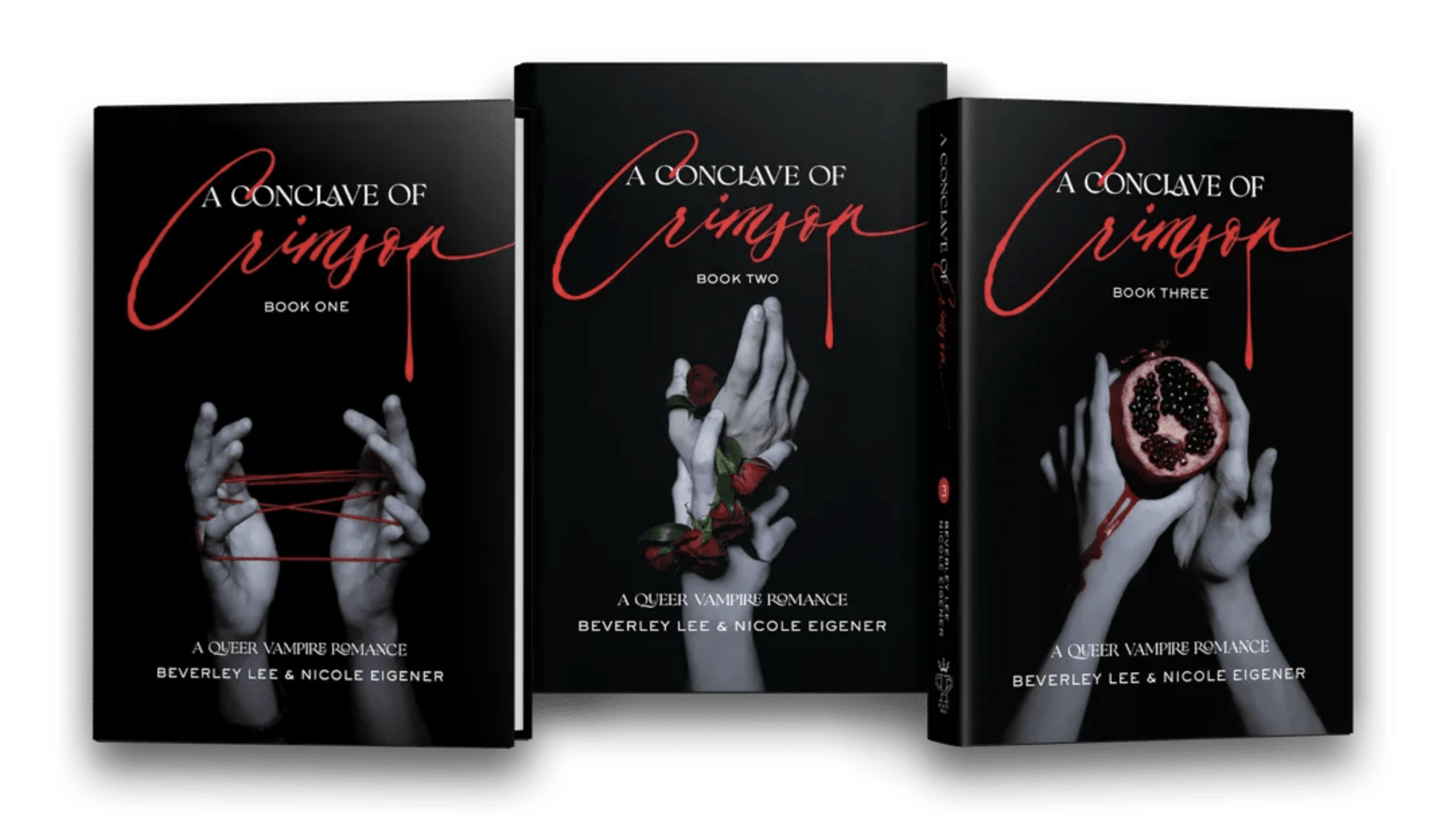
Ironically, and completely unintentionally, the practice of having characters show up in other works (and very unexpected places) happened when Beverley Lee and I collaborated on a tiny novelette, Crimson is the Night. The vampires from our individual works converged on Beverley’s turf. My French vampire, Vauquelin, travelled to Beverley’s isolated moors in the United Kingdom to meet Clove and his Bloody Little Prophets. To say this meeting upended their existences is a vast understatement! We went on to write an entire trilogy, A Conclave of Crimson. And we’re still writing it, although we’ve decided that only the first three volumes will be available to the public.
Where do you draw your creative inspiration from?
My inspiration is largely drawn from the past. I am an old soul. I find feeling in old surfaces, textures, art, and especially music. A certain song or piece of music can send me off into another realm. I’ve always been drawn to such things, and haven’t always had an explanation for it. I’m a huge fan of 17th-century Baroque music. But a common motif in my work is finding a bridge from the past to the present, and the challenges of living in an increasingly modern society with a love for aesthetics of old (and I have to emphasise the aesthetics, not the politics!).
Who do you look to as a genre hero? Why?
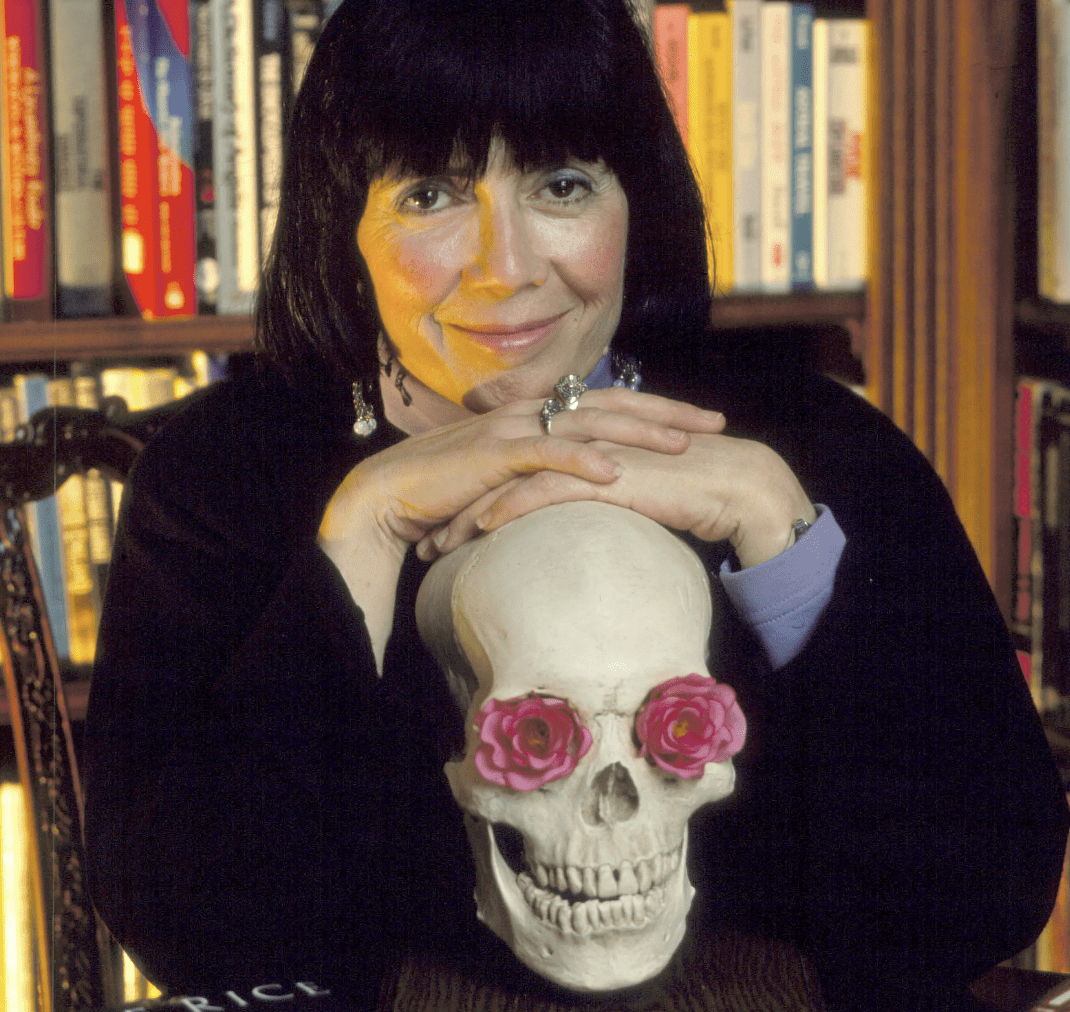
I absolutely look to Anne Rice. Her work is not classically horror—I would consider it more literary as it’s character-driven, and her brand of horror is more existential (I could talk for hours on how problematic horror is as an umbrella genre: the definition of what one finds scary is so incredibly subjective). But as a fellow author of vampire fiction, this has always been my challenge: how to categorise vampires? I’ve posed this question to readers on multiple occasions, and I always get mixed results.
Some readers classify vampires as fantasy and others as horror. There is gore in my work because that is the nature of vampires—they must take life to remain animated in my canon—but are they monsters? That’s when I go into literary mode, because so much of my work peels the curtain back from the psychological aspect of the revenant. Does anything supernatural just automatically get sorted into the horror folder? It seems to, for me, but literary horror work is a very hard sell. To me, it nests more comfortably in the fantasy realm.
Your Work
You’re stuck in an elevator for 60 seconds with that hero, and they want you to describe your work. Give us the pitch.
(Interesting side-note: before she passed, I lived less than a mile from Anne in Southern California. I lived in fear that I would run into her and turn into a blathering idiot and blurt out “I write vampire books, too!”—in those nightmares, she would pat me on the head and walk away). Now that Anne has left our mortal coil, I do send out an occasional whisper: I hope that the works Beverley and I have created would have made you proud. She is the godmother of our vampire work.
What are you working on right now?
I don’t have any writing projects in the works at the end of 2025, because I’ve been doing a lot of editing and formatting, but I do have a very HUGE personal project going on which takes up much more of my headspace and I’m hoping will come into fruition in 2026. I feel another story needling its way into my soul, but as a character-driven author and a dyed-in-the-wool discovery writer (pantser), I will wait patiently for the story to make itself known to me.
Thinking about all the stories/work you’ve done, what sticks out most in your mind? Why?
Without hesitating, it was the act of writing live with Beverley Lee. Despite the fact that she lives in the UK and I live in California (an eight-hour time difference), we somehow managed to write a 300,000+ word trilogy in real time (live-action writing in a shared Google Doc). 300,000 WORDS IN THREE MONTHS. We actually broke Google Docs, because we exceeded their character count cap (which is over 1,000,000 characters for anyone who cares!) To this day, we’re still flummoxed by that. When a story wants to be told, it will be told. It nearly killed us.
Where and when do you create/are you at your most creative?
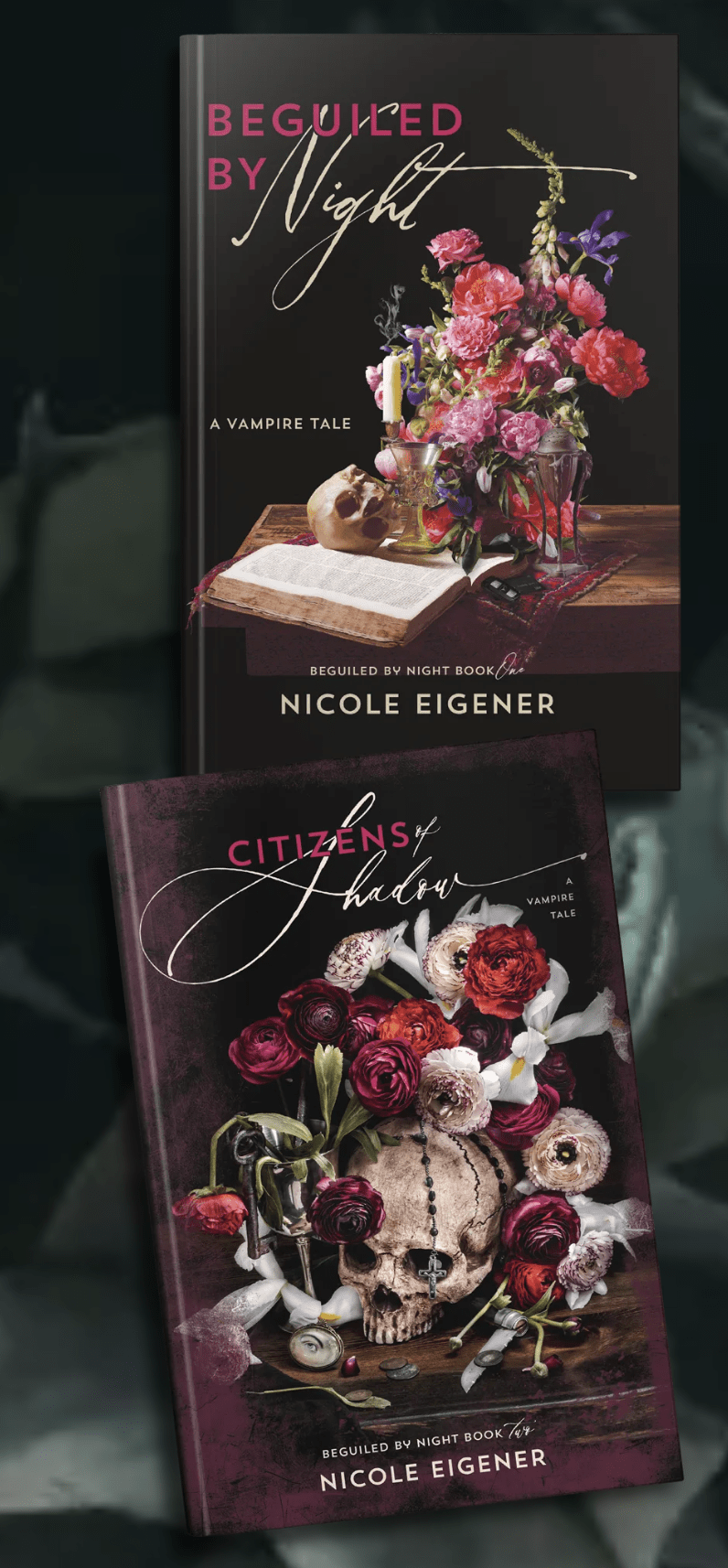
In an ideal situation? Absolute isolation. However that has never been the case for me. I wrote both of my novels and the trilogy in absolute chaos and completely unideal settings. Almost all my work has been created in stolen moments—on my phone, little bits here, a couple of quiet hours there. Vast amounts of Beguiled by Night and Citizens of Shadow were written on my phone whilst I was in the bathtub, because during that period of my life, it was the only time and place I had completely to myself. Certain chapters of A Conclave of Crimson were written in places you would never believe.
What’s the best advice you’ve received about creativity?
For marketing: Don’t follow trends. Trends are a flash in the pan.
For creating: I’ll quote Oscar Wilde. “Be yourself; everyone else is already taken.”
It follows in line with marketing, actually. Humans are fickle. Don’t write anticipating what is selling… because in a few months, that might be dead.
What’s your writing soundtrack?
It’s always evolving. Music is a permanent part of my life, so it naturally figures into my writing as well. I build playlists whilst I’m writing, and eventually I pare them down and release them (you can see my playlists for Beguiled by Night and Citizens of Shadow, as well as the ones Beverley and I curated for A Conclave of Crimson, here.)
Music is a grounding tool for me when I’m in the throes of writing. I need it to world-build, and give me a sense of place. But I also tend to have separate soundtracks for editing and formatting. Those tracks are lyric-free and tend to be 1-2 tracks on repeat (I also have ADHD and when I’m not in freeform mode, as with writing, I need to be much more focused with editing and graphically formatting for final book prints and ePUBs).
The Quick-Fire Round
Sci-fi, fantasy or horror?
Oh, this is a tough one for me. Fantasy.
Quiet or loud?
Quiet.
Dark or light?
Dark.
Strict lines or genre blend?
Genre-blend.
Awards or bestseller?
Neither. Both are biased.
Fiction or non-fiction?
OOOH. Both. I read a lot of history.
Poetry or prose?
Prose, and selective poetry. I love Sara Teasdale and ee cummings
Plotter or pantser?
PANTSER FOREVER. Although Beverley and I prefer to exchange pantser with Discovery Writer. Pantser seems a little dismissive. There’s still a process and method involved.
Reading or listening?
No shade for listeners. But as an ADHD person I can’t possibly focus on audiobooks.
Notebook or computer?
I will write on anything. A phone. A desktop. A laptop. A square of toilet roll and a lipstick. A borrowed piece of A4 paper and a pen in a hotel lobby. If the words are coming, I must answer.
Favourite SFFH book of all time?
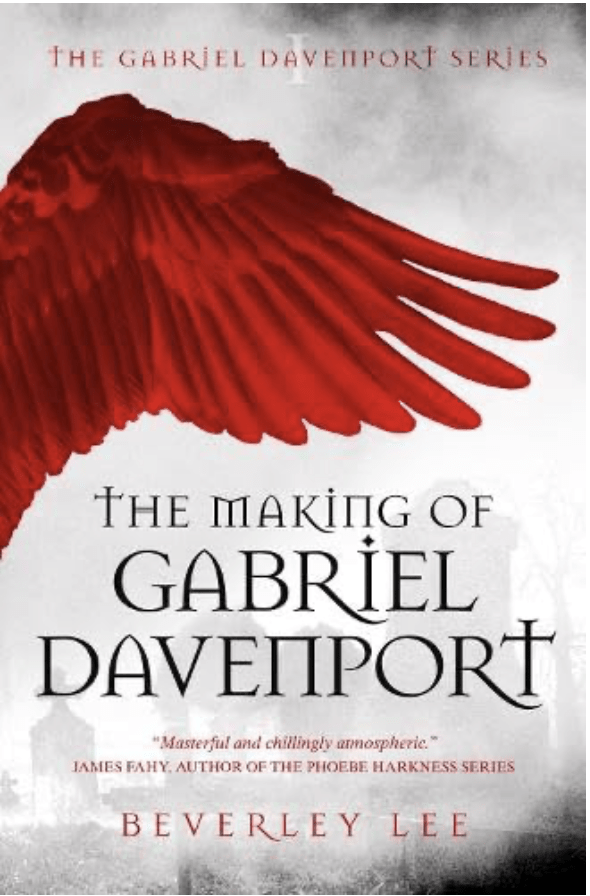
OOOOF. Asking the hard questions….The Making of Gabriel Davenport series.
Last book you read?
The Haunting of Wounded Birds by Beverley Lee.
Any SFFH author on auto-buy?
Victoria Schwab.
Favourite podcast?
I don’t listen to podcasts because for me, as a severely neurodiverse person, they aren’t ideal. It’s too much pressure, and I obsess about the length and how many I’ve missed. Podcasts have always been a hard pass for me, and the same goes for audiobooks. I find it difficult to engage, and that’s okay for me. I have learned to move on. I’ve been on podcasts that I haven’t even listened to because I just can’t. I know many other people enjoy them, and that’s great! Just not my thing.
The Home Stretch
What’s the best thing about being part of the SFFH community?
Honestly not sure how to answer this, because joining BFS feels like dipping my toes into the steam of fantasy. I’ve never felt 100% comfortable labelling myself as a horror writer or a fantasy writer…but I know my work has elements of both! So I’m hoping BFS will be a happy island for me 🙂
Time to plug your stuff! Where can we find you and your work? What have you got coming up? Consider this your advertising space.
I’m an author who is on the neurodiverse spectrum, and I’ve read so many tutorials about how to stay present to keep up with algorithms and such… but that isn’t easy for me. The best place to find me is Instagram: Nicole Eigener
With so many platform changes, I really can’t keep up.
Although people don’t seem to love visiting websites anymore, my information is always available at thevampire.org