Every Friday, we meet a member of the BFS and peer deep into their soul (or, at least, a form they filled out). Want to be featured? Email us: online@britishfantasysociety.org
Name:
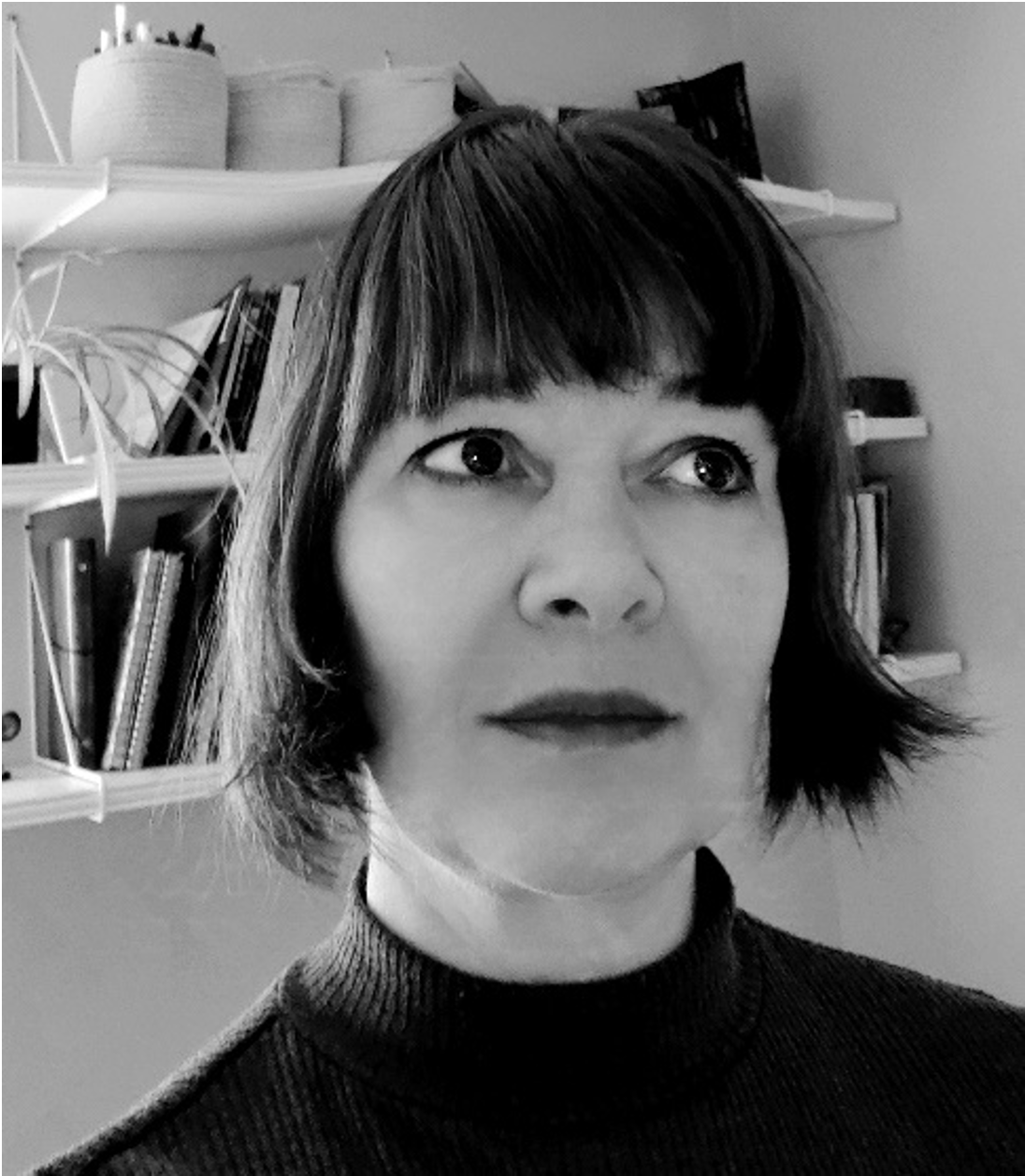
Alexandra Peel (she/her)
Which region are you based in?
The Wirral Peninsula
If you write, which genre:
Fantasy, sci-fi and horror
If you don’t write, what do you do?
I am a Learning Support Practitioner in Further Education. I have worked in education for twenty years—it has its moments! When I am not working or writing, I am reading or gardening.
Are you drawn to any specific SFFH sub-genres?
When reading for pleasure, my tastes are broad as long as I find the writing engaging. I lean more towards soft sci-fi, rather than the seriously hard tech writing, Cyberpunk, Space Opera, Dystopian/Utopian, Military Sci-Fi. Tolkien is the go-to High Fantasy author, and I do enjoy his books, though I am not generally a huge fan of contemporary work that revolves around elves, dragons and suchlike. I prefer Urban Fantasy, Occult, Ghost stories and Paranormal, and Grimdark. Also, the work of Terry Pratchett, who I suppose is comic fantasy, and JG Ballard
For my own writing, it depends very much on whether I have a project in mind, an idea in a notebook, or a magazine running open submissions. I’m more intuitive than intellectual when it comes to writing; the only subgenre I don’t do—read or write—is romantasy. (I don’t read romance books, full stop.) I love comedy and violence.
Your influences
Tell us about the book/film/thing that got you into SFFH: What was it? How old were you? What impact did it have on you?
We didn’t have books at home when I was a child; my parents didn’t read books so I got mine from school. I tell a lie—we had a Bible and a Phillips World Atlas! I did, however start a small collection of the Ladybird Fairy Tales books somehow. The tale of the Pied Piper of Hamelin absolutely fascinated me when I was about seven. This man who looks strange, who plays a pipe that calls first the rats, then the children. Brilliant! Later, in high school, we studied Robert Browning, and there it was, the poem, The Pied Piper of Hamelin. There’s some pretty vivid imagery in that poem:
“ Rats!
They fought the dogs, and killed the cats,
And bit the babies in the cradles”
I learned it off by heart and recited it to my friends, who were impressed by my recall but not the poem. The imagery stayed with me all my life. Here’s another way of seeing things, I realised. Here’s a different way to describe things—everything doesn’t have to be real. As children, we make stuff up all the time. Parents and teachers in the 1970s would smile and nod and usher you on to something more ‘meaningful’. But The Pied Piper made me realise that some adults keep doing it.
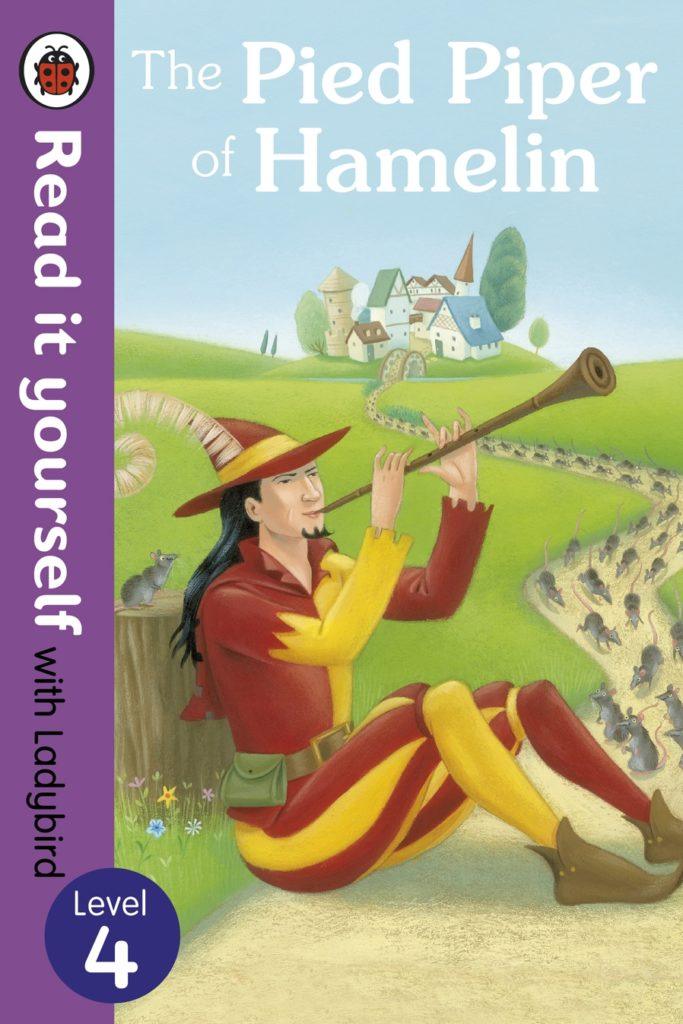
One other thing I read influenced me. I was off school with some illness, and my mum brought home a comic. I cannot recall what it was, but the Fantastic Four featured, and I found it fascinating, especially The Thing. Again, this was adults doing what children do, create things from the imagination.
I wanted to be an artist from the age of seven, after visiting a London gallery with my dad. I couldn’t comprehend what Turner was about, but the fantastical renditions of biblical stories by the Italian Renaissance artists grabbed my attention: Botticelli, Caravaggio, Fra Angelico. All those severed heads, disproportionate figures, angels and stylised landscapes. Pretty fantastical to my mind.
How does that early influence show up for you (in life/writing/agenting/publishing/editing/reading) now?
The colour of poetry, the boldness of visual art, the tactility, the smell, the textures, everything. I have been accused of writing purple prose; I hold my hand up to that. I did, in the past, lean towards over describing sensations, but I think I have grown out of that a little. But, with all the simple, clear prose around, there should be room for the colour purple.
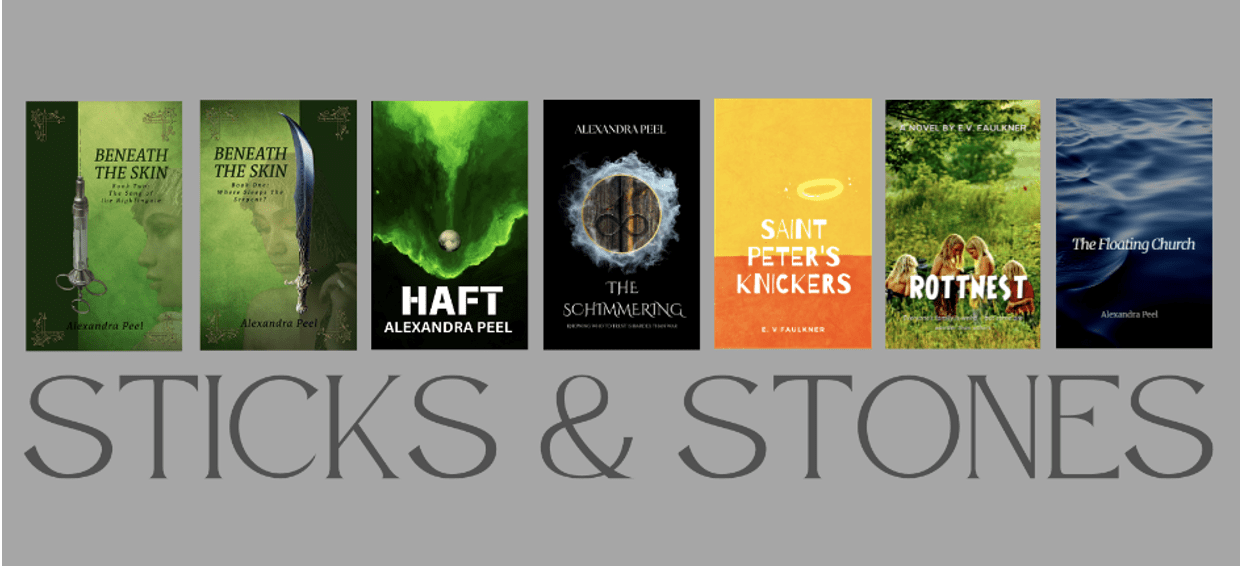
I still love poetry, though I cannot understand a lot of it. I enjoy the way many poets capture emotions and convey atmosphere so subtly. I want my reader to smell the blood on the blade. I want them to weep when someone dies. I want to move readers somehow. I just completed my most mammoth project—The Schimmering—and hope I manage to convey the complexity of human thoughts and emotions of the three main characters.
Where do you draw your creative inspiration from?
Everywhere. Something that catches my eye. I often take snapshots on my phone as visual notes/reminders—a dead, decaying gull; a cupola with flaking paint. Things I overhear, conversations at work or things I am told by friends and family. A random name, a smell, an unguarded moment in the garden or the gym, when the brain is full of sweat and Eminem and pounding blood fills my ears—an idea forms, or more likely, a character pops up and calls to be written.
Who do you look to as a genre hero? Why?
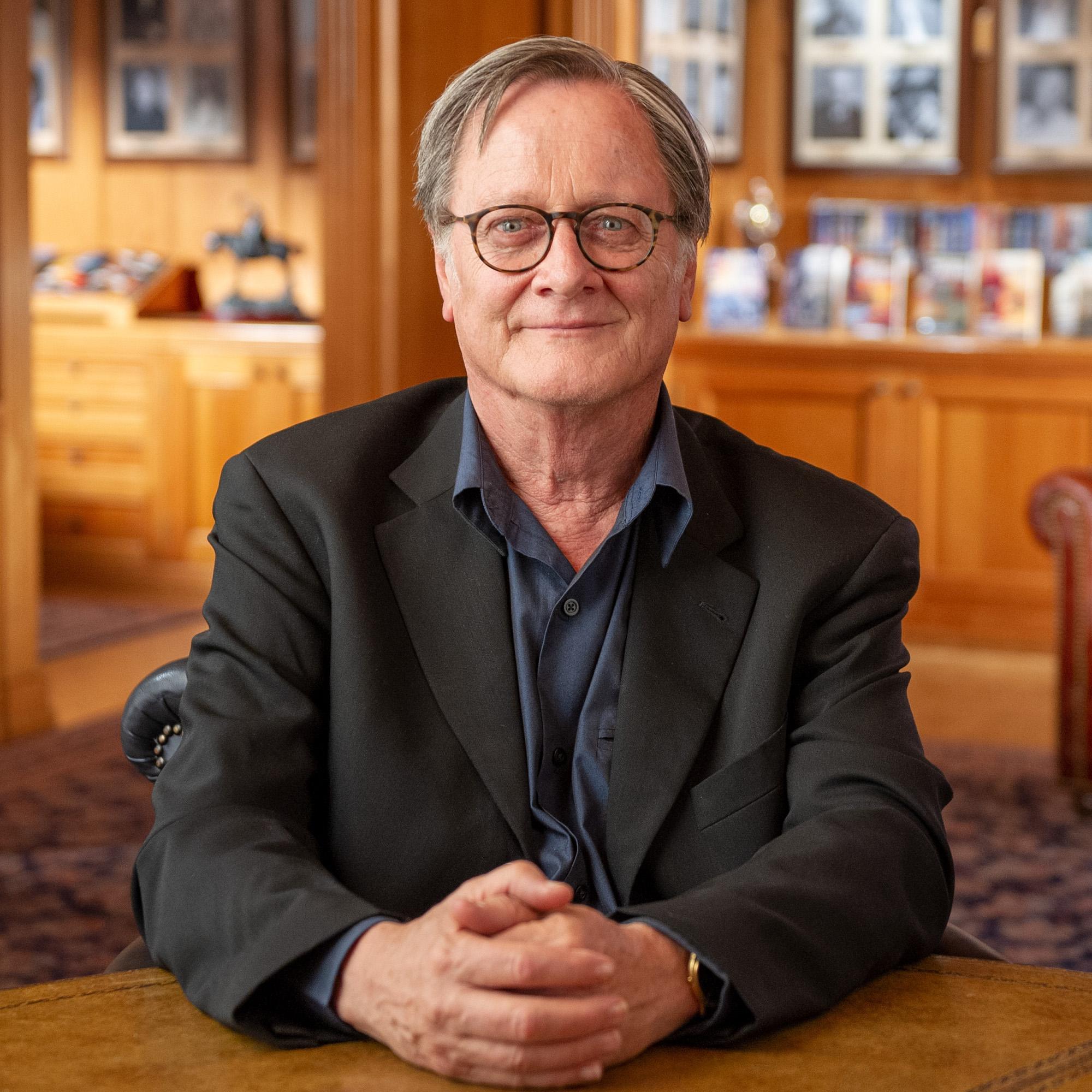
Tim Powers (pictured; image source)—the supernatural smashing into the real world. Incredibly well-researched histories that had unexplained moments, and Powers explains them by creating this ‘other’. Ghosts, spirits, legends and myths all come to bear on his protagonists in alarming and sometimes terrifying ways.
Also, Joe Abercrombie—it’s fantasy, but it’s ‘real’. The characters are like us; they are flawed, they are weak, they are bad-tempered, foul-mouthed. Everything about his books thrills me. Before reading Abercrombie, I don’t think I had come across a fantasy writer who had not written any tropes from the genre before.
Your Work
You’re stuck in an elevator for 60 seconds with that hero, and they want you to describe your work. Give us the pitch.
“Hi Mr Powers! Er… exploring the inner lives of characters blending psychological depth with a lyrical style—tension between restraint and revelation—what’s left unsaid matters as much as what’s on the page—literary fiction, speculative work, or genre-driven narratives—strong emotional core—commitment to compelling storytelling, no matter the genre. Prose that can be unsettling, thoughtful without being distant, and memorable long after the final line. Phew!”
What are you working on right now?
1798, Wirral—Will Waveney, a reclusive former soldier, reflects on his outsider status after rescuing a woman from a shipwreck. Written from Waveney’s perspective as internal narrative and observational detail. His reflections on the sea, his past, and his surroundings are woven with observations of local characters and events, providing a vivid sense of place and his isolated, guarded perspective. A complex character in an atmospheric setting, forming the foundation for an unfolding and supernatural mystery.
Thinking about all the stories/work you’ve done, what sticks out most in your mind? Why?
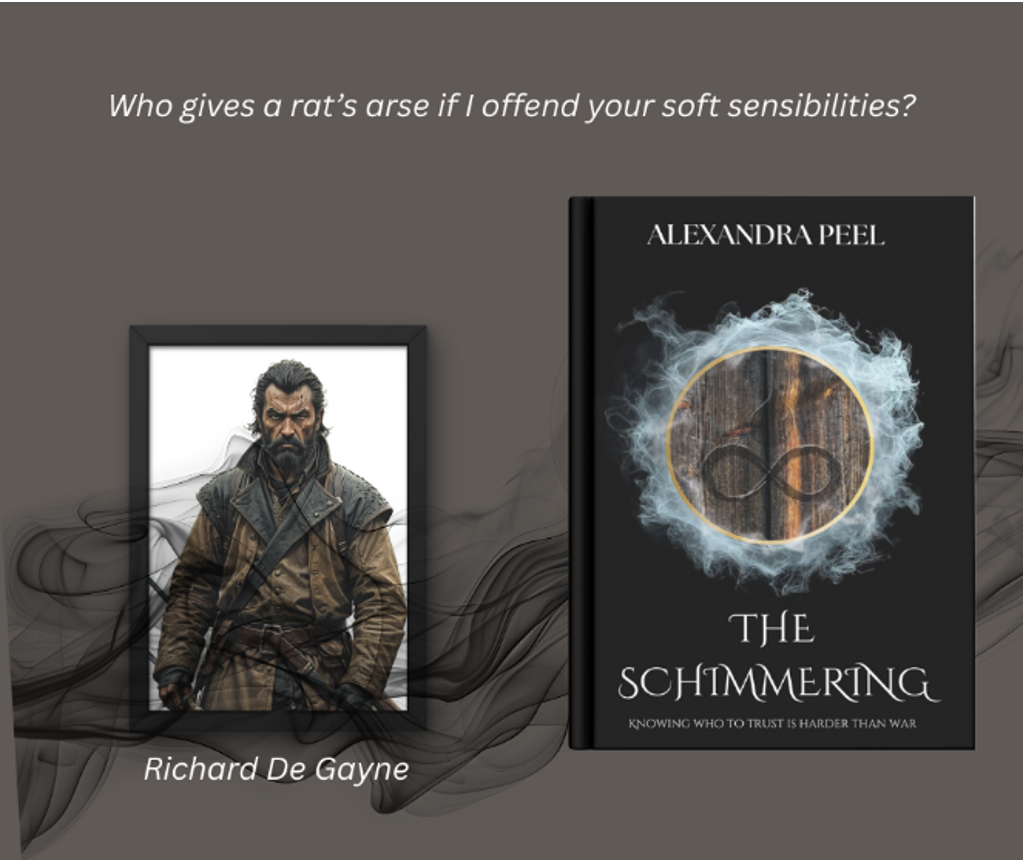
I can’t pick any single piece because they’re all so important at the time I am working on them, and yet once they are released into the world, I move onto the next thing. But if I’m forced, I suppose the latest publication. The Schimmering took the longest time to compile. It was written, torn apart, broken into two books, then four, then reassembled, then self-published. It was a joy and a nightmare.
Where and when do you create/are you at your most creative?
I work in the spare bedroom. I can’t bring myself to call it my study or office, that sounds too highfalutin for me. I write on my days off. I go through phases of vigorous industry interspersed with barrenness. Weekends are my prime work periods simply because of my job. I am at my most creative during half-terms and holidays.
What’s the best advice you’ve received about creativity?
Most people seem to think creativity is easy, or that everyone can do it, and to a limited degree this may be true. But there is a whole bunch of learning, practice, application and consistency that the majority of individuals are not prepared to go through, so they won’t make it. Everyone may be able to create, but not everyone can create well. Be honest with yourself. First and foremost, be honest.
What’s your writing soundtrack?
I don’t have one. I write in silence. When I have finished a couple of drafts, I will compile a soundtrack that suits the era or setting of my story, which I edit to—but on low volume. I’m easily distracted so can’t be doing with something in my head with my scenes.
The Quick-Fire Round
Sci-fi, fantasy or horror?
Fantasy
Quiet or loud?
Quiet
Dark or light?
Dark
Strict lines or genre blend?
Genre blend
Awards or bestseller?
Bestseller
Fiction or non-fiction?
Fiction
Poetry or prose?
Prose
Plotter or pantser?
Pantser
Reading or listening?
Reading
Notebook or computer?
Notebook
Favourite SFFH book of all time?
The Anubis Gates by Tim Powers
Last book you read?
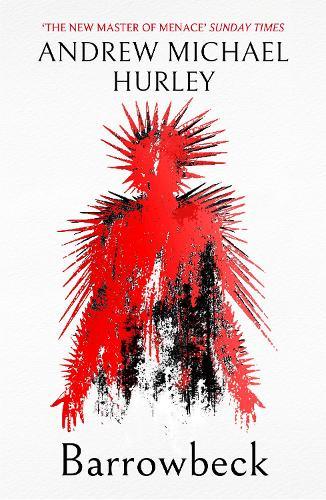
Barrowbeck by Andrew Michael Hurley
Any SFFH author on auto-buy?
Tim Powers and Joe Abercrombie
Favourite podcast?
I don’t have one. I’ll listen to whatever catches my attention. Primarily BBC R4 podcasts because I missed something.
The Home Stretch
What’s the best thing about being part of the SFFH community?
- It’s a broad church
- Shared passion
- Acceptance
- Events
- Discovering new authors
- Welcoming
Time to plug your stuff! Where can we find you and your work? What have you got coming up? Consider this your advertising space.
- My newly-released novel, The Schimmering, is available in paperback and eBook format.
- Sticks and Stones Books is where you’ll find my work and that of EV Faulkner
- Follow me on Instagram, Substack or BlueSky
- My website and Amazon author page