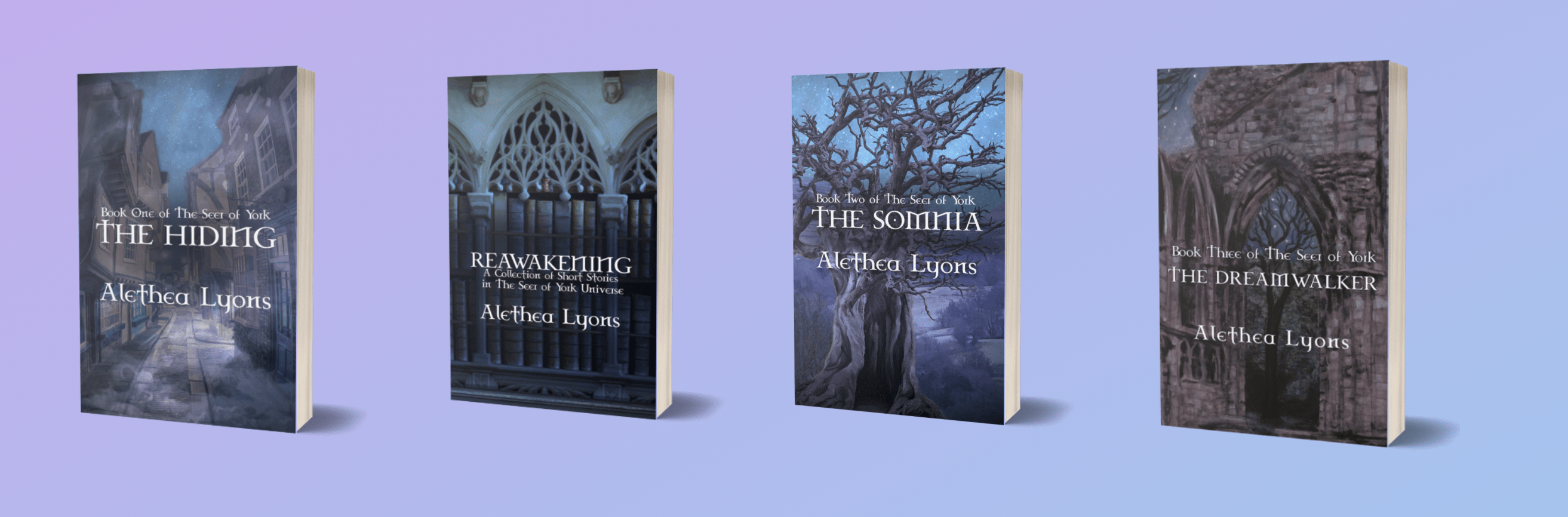
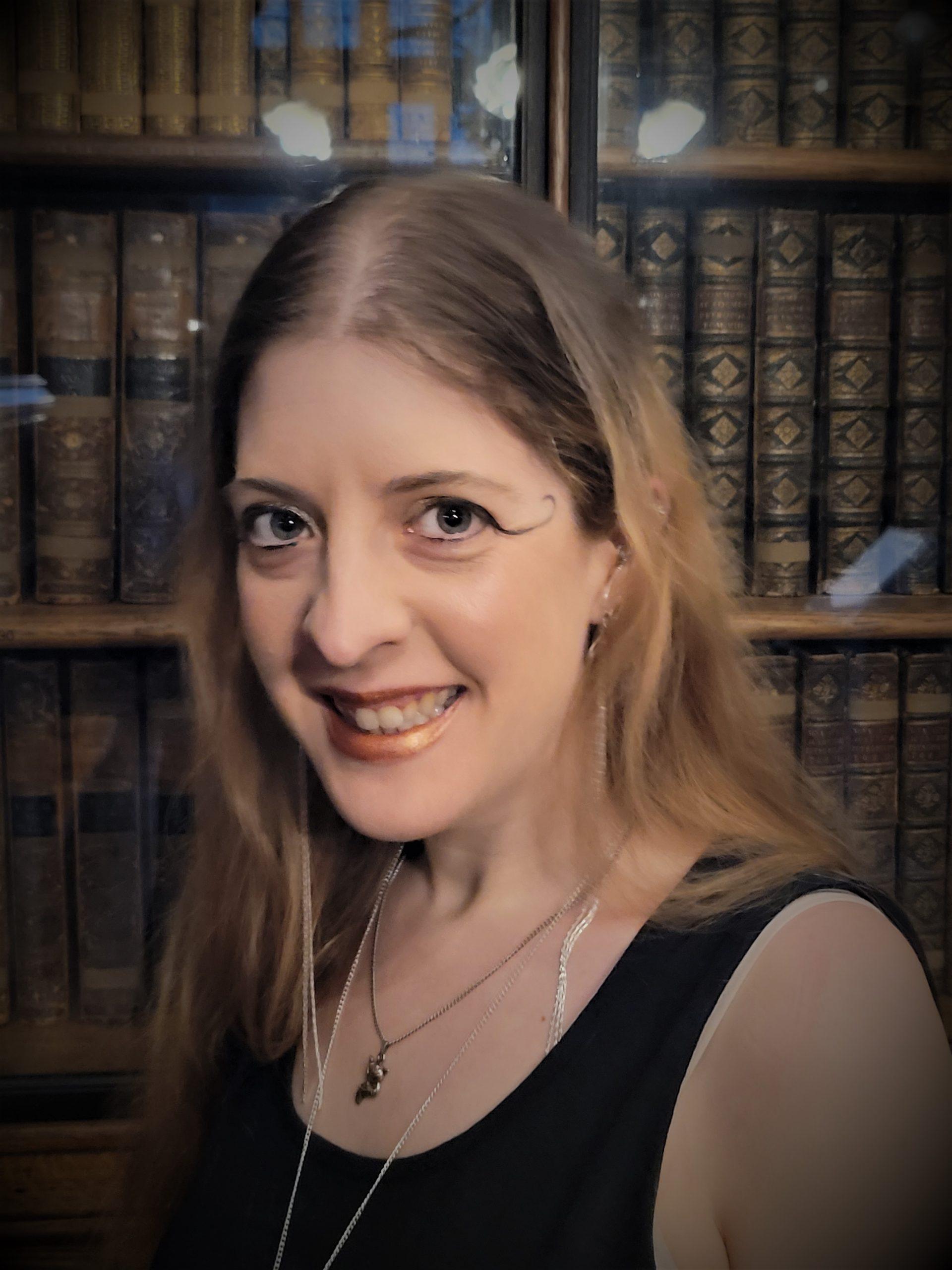
It’s publication day for the third instalment in the Seer of York series! Author Alethea Lyons takes us through the genesis of this latest release, plus a bit more about zer writing process.
Name: Alethea Lyons (ze/she), but you can all me Thea
Based in: Manchester, UK
What genres/subgenres are you drawn to?
I write mainly fantasy. I particularly love folklore and/or science-fantasy. I’m fascinated by delving into the magic of the past and how that shaped our thoughts today, and what magic and folklore could look like in the future. I also read a lot of SFFH, plus occasion other things. I’m willing to try most genres.
Is writing your full-time focus, or do you have a day job as well? What do you do?
After almost 3 years as a full-time mum, I went back to an office job about a month ago. I’ve always fit writing around nap/bedtimes and lunch breaks. My day job is sadly not very interesting; I work in finance. Being able to write full-time one day is the dream.
The Book: From Pen to Print
What was the genesis of this book? Where did you get the idea from?
The series started with the characters. It sounds hokey, but I had a dream with the main scooby gang hanging out at home and Heresy, an incorporeal deception demon, possessing the TV. The full dream never made it into a book, but the characters grew from it. I wanted to write a book that focussed on family and friendships, so in book 1 there was deliberately no romantic subplot. I also wanted it to show a group of people from different backgrounds and faiths who could work together as friends, just like my real-life work and friend groups. Through a lens of magic, I wanted to show that our differences make us stronger. The city of York and various folklores have also been big influences.
As for The Dreamwalker—book 3 which has just come out—the individual book plot was inspired the idea that creation is akin to daydreaming, and is a sort of in-between state where we’re open to all sorts of thoughts and influences. Unfortunately, in the book this leaves people open to possession. But it’s for a good cause.
How many drafts did you go through before you felt it was ready to query? How long did that take you?
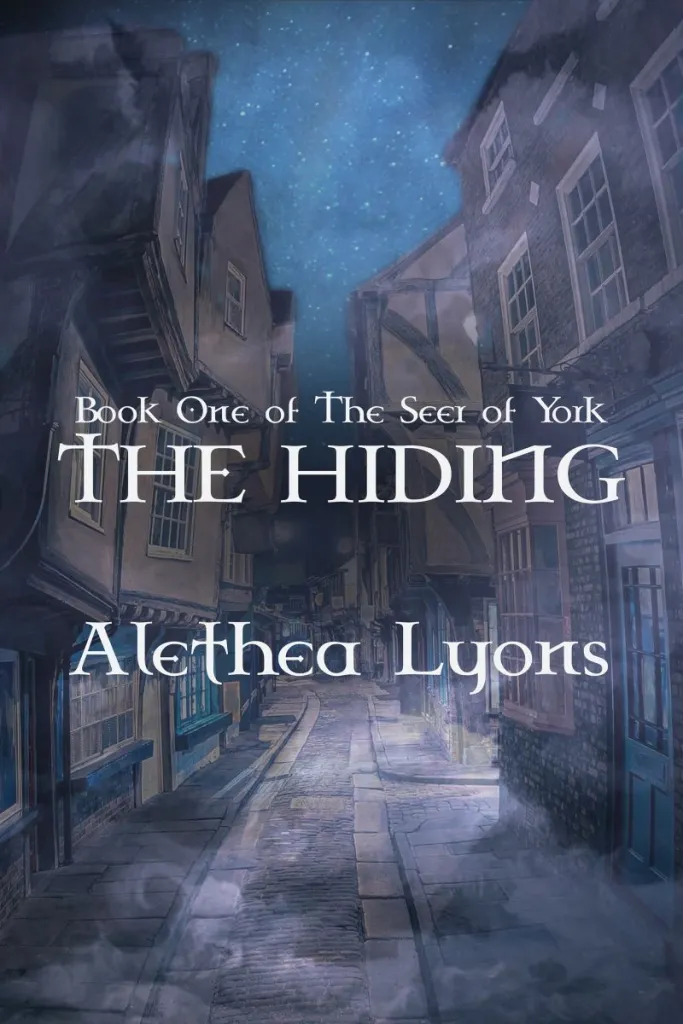
Before I queried The Hiding (book 1, pictured), I’d done at least eight drafts. During the querying process, I had additional feedback which led to at least two more. That included adding a new chapter one because I was told I couldn’t start a book with antagonist POV (though I still prefer that opening, shhh). On and off, it took three years, but there was a lot of ‘off’ in that time.
The Dreamwalker had nine documents titled ‘zero draft’, but only two further drafts before I sent it to my editor. I wrote that book in less than eight months, plus a few weeks back and forth with my editor.
Did you work with beta and/or sensitivity readers? How did you find them? How did you incorporate their feedback?
I work with a few beta readers. With it being a series, it makes it harder to find people. I also think it’s harder than it was five years ago. I’m fortunate to be in several writing support groups, so someone is usually willing to beta read a book or at least my plotting notes. Over the years, I’ve found a few people I will always do exchanges with. The Dreamwalker only had a couple of betas due to time and being a book 3. The Hiding probably had over a dozen.
Because I write books with characters from cultures and faiths that aren’t mine, I do use sensitivity readers on their parts as well as asking for advice from friends who are part of those communities. My publisher already had a Muslim reader who has checked Saqib’s parts and a fellow BFS member recommended a sensitivity reader for a Black gay character who is introduced in book 3. Their advice, along with friends’ insights, has been so valuable.
What was your querying process like? How long did it take?
I did the first draft of The Hiding as a NaNoWriMo project in 2018. I didn’t do any editing on it until 2021 when a friend persuaded me to query a different book. I started querying The Hiding towards the end of 2021, I think. I sold it in August 2022 and it came out in March 2024. Fortunately, my publisher was then willing to sign the others in the series without that longwinded process. In the end, I got three indie press offers on The Hiding. Though I had some fulls with agents, most immediately stepped aside when I got the press offers. I would recommend to anyone in a similar position to ask for more than the two weeks. I had similar happen when I sold another book to an indie press.
Once it was in the hands of your publisher, what was the process to get it ready for release?
A long wait, to start! Because of their schedule, it was almost eighteen months from signing to publication for The Hiding. We started doing edits the August before (so seven months). First round of edits took about a month, then a second set in September that were much faster. After that, it went to the proofreader who also did the formatting. We had it ready for preorder and advanced review copies by end of October. It was a lot of hurry up and wait. Hurry when it was with me and I needed to edit and get it back fast, then hold-my-breath waiting to see if the editor hated it or not.
The Dreamwalker has been very similar. I’ve done some more work with my editor (I wrote it faster, though neater, and it had fewer beta readers), and we had some delays that were out of our hands. The general process has been the same though.
And now your book is about to be unleashed on the world! How are you feeling?
Feelings soup! I’m really excited because I love this book. The Dreamwalker deals with some themes that are very personal to me: the MC realising she’s bi, the arts connections which are important to me as a writer, the emphasis on isolationism being harmful. I’m also really nervous. It’s hard being a small indie because, for me, there’s a lot of imposter syndrome, and almost all the marketing side of things falls to me. There’s a lot of shouting into the void. But I have a great street team, so I know at least someone will be cheering for a book 3 with me. So overall, yes, excited. I think. I hope people like it.
What would you like us to know about this book?
It’s a creepy, twisted version of York where dystopian police enforce laws against magic. But it champions that diversity is a strength, with a witch MC who ends up stuck in the middle of both sides. It also has a snarky deception demon and a cat-shifter. Plus, The Dreamwalker has the long-awaited romance subplots (and they’re oh so queer).
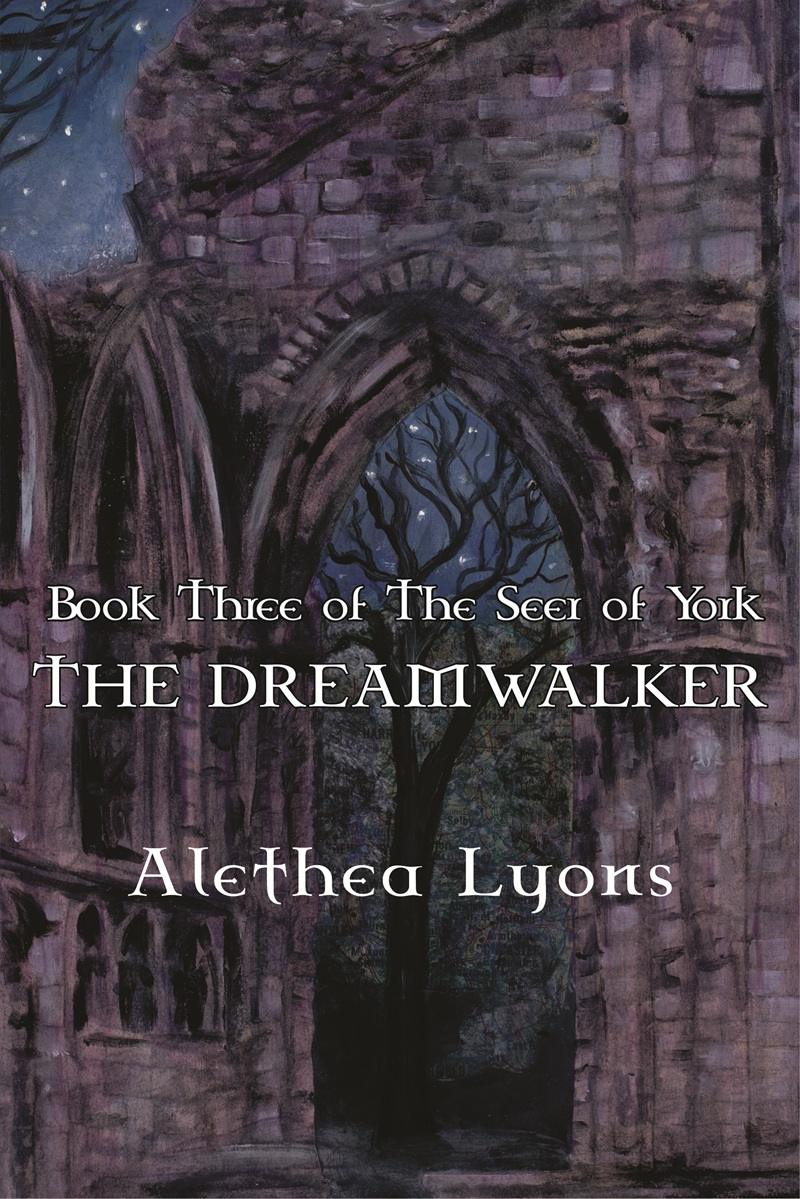
Who’s the ideal reader for this one? What sort of things do they like to read about?
Anyone who enjoys that line between dark fantasy and horror or who enjoys folklore bought into the modern era. I describe the series as Buffy x Charmed x A Discovery of Witches. Or [Northern Lights’] Lyra’s Oxford but make it Northern. If you like found family and strong women, this is the book for you.
Your writing process
Are you a plotter or pantser or somewhere in between? How do you do your first draft?
I do about ten zero drafts, so I think that makes me an in-betweener. I have to write long-form to work out details because my characters are very strong-willed. But I do like a certain amount of order, so end up with a wall of post-it notes for plot.
How do you approach writing? Are you the type or writer who needs to treat it like a job? Is there a particular time of day you find best for you to write?
I used to have times and methods I preferred. Then I became a mum.
For me, actual writing is not a job. Being an author, social media, marketing, all that stuff, that’s a job. But actually writing is my happy place that quietens my anxiety. I write on my lunchbreaks at work (and did before I had Sprite), and I write in the evenings. If I’m lucky, I get a day off or weekend now and then where I can go to the library and/or a café and do nothing but write all day. That’s rare. I do most of my writing at night, when Sprite is in bed, and my poor hubby is a writing widow (he’s very supportive).
Geek out about stationery: do you use a notebook? A specific type of pen? Or are you computer all the way?
Like most good writers, I have a stack of notebooks. Some of them are even written in. I love drafting outside with a nice ink or gel pen and a pretty notebook. Sometimes I write with different coloured pens for different character’s POVs. Much as I love doing that, I do most of my writing on one of my computers. I have a main laptop, dual screen, but also a little travel one I take to work for lunch break or bus writing.
Is any of that different for editing?
For editing, it’s all computer. I wish I could afford to print my books and edit by hand, but it’s just not practical, even though it is effective.
Where do you work? Do you have a comfy, creative space at home or are you someone who has to grab the moment wherever it comes?
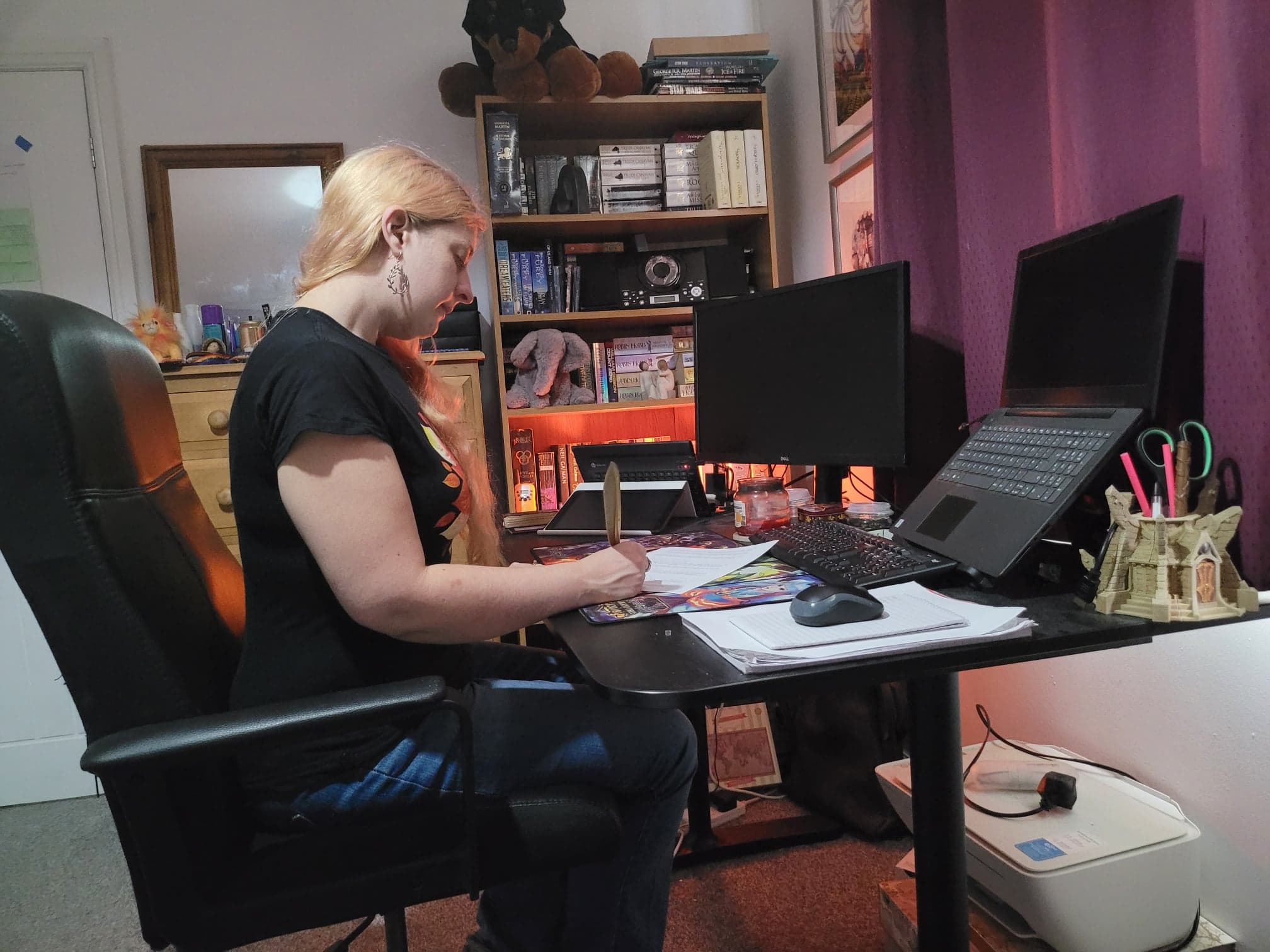
A bit of both. I’ve sent up a nice office space in the corner of my bedroom. It has one of my bookcases behind me with a lot of great fantasy books—largely so I have a pretty background for social media and online events. My desk points towards the window so I can see some trees. There’s occasionally blue sky, but this is Manchester so let’s not get carried away.
(Pictured: Thea at her desk)
What’s your writing soundtrack?
Another thing that changed after having a child. Since I’m mostly at work or he’s asleep, I write in silence. However, my preference is something I know well in the background. I stop hearing it before the end of the first track, but it stops other noises disturbing me.
Do you have a writing ritual?
Blah as much as I can and tidy it up later. Less a ritual and more a necessity. If I can set things up nicely—research books, a candle, notepad, post-its, array of pens, pot of tea—then that’s my perfect happy place. Life doesn’t often allow that, so I take what I can get.
Where can we follow you / find out more about your work?
I’m @AletheaRLyons on most social media, though I’m most active on Instagram. You can find my newsletter, website, published short stories, etc, on my linktree. There’s also a specific Seer of York linktree—and the books are available through most indie stores if you ask them to order.