
Allen Ashley is training his eye on classic genre films for us, looking at not just the film but the context in which they were released. Here’s the latest instalment in his blog series.
Fahrenheit 451 (1966)
Directed: Francois Truffaut
Colour
105 minutes approx running time (on DVD)
(All images taken from imdb.com)
(Note: Time stamps are of author’s own noting)
The short novel “Fahrenheit 451” by Ray Bradbury rightly takes its place as one of the most loved and in some ways most prescient depictions of a near-future dystopia, along with the likes of George Orwell’s “1984” and Margaret Atwood’s “The Handmaid’s Tale”. Essentially, it depicts a totalitarian, non-literate society where firemen burn books; and it seems more relevant and pertinent today given some of the verified news stories one reads or hears emanating from apparent democracies. As Ray Bradbury says in a 2002 video interview that accompanies the Warner Brothers DVD release, “The real threat is ignorance and the lack of education.”
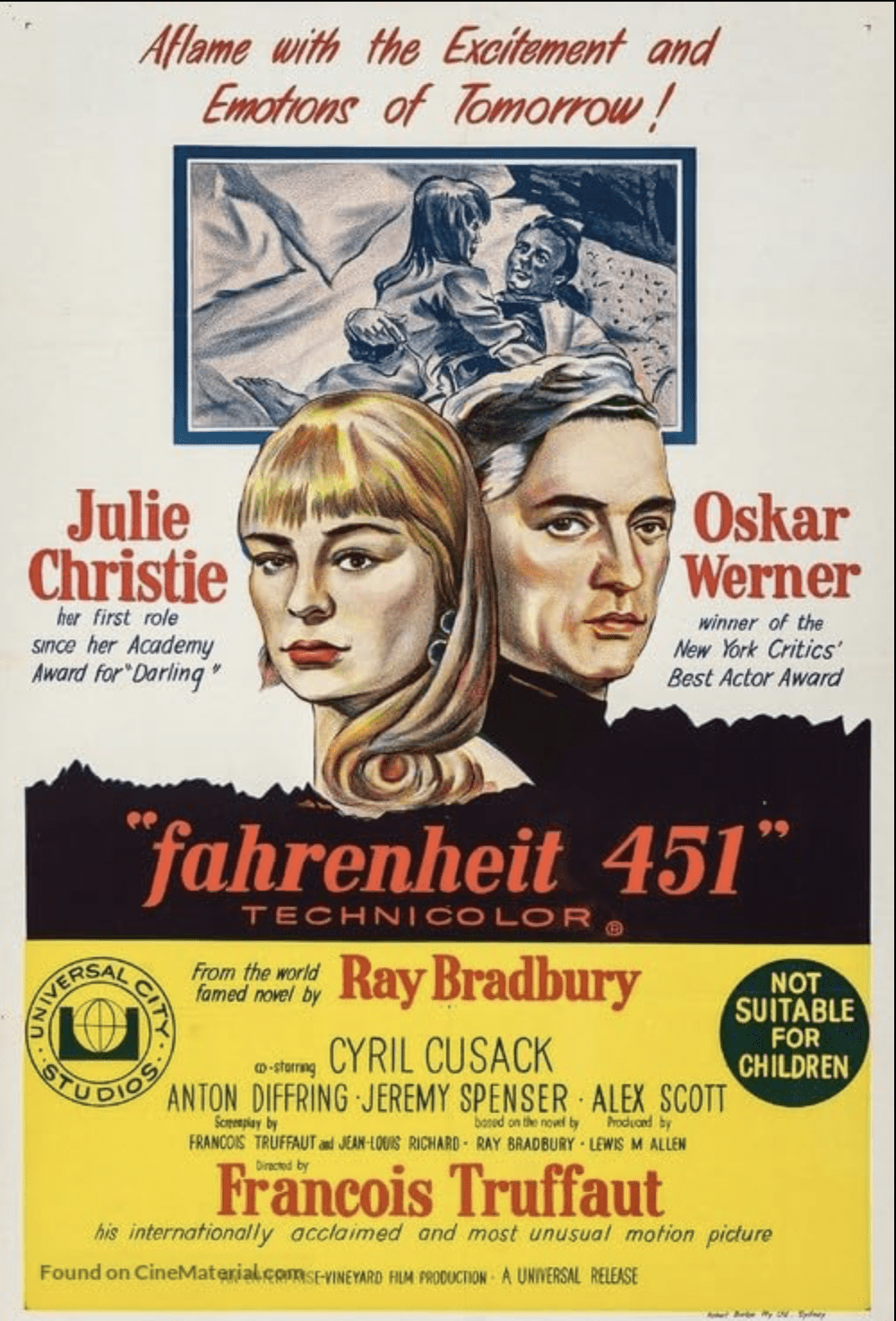
To be clear, there is a 2018 remake of “Fahrenheit 451”, but I’ve not seen it; instead, I am dealing with the 1966 film made in glowing Technicolor and directed by Francois Truffaut. It’s not without its faults and was panned on its initial release but as Bradbury himself notes in the same interview referenced above, it gets better with each viewing. In fact, it’s often beautiful to look at and the score by esteemed Hollywood composer Bernard Herrmann (who worked for Hitchcock on “Psycho” and other films) is at times lush and romantic and at other times charmingly neo-naïve. (I’m thinking of the percussive shuffle that accompanies the progress of the bright red fire engine.)
We start with the credits being solely spoken, against chiaroscuro silhouetted images of television aerials. Effectively dropping us straight into this non-literary world.
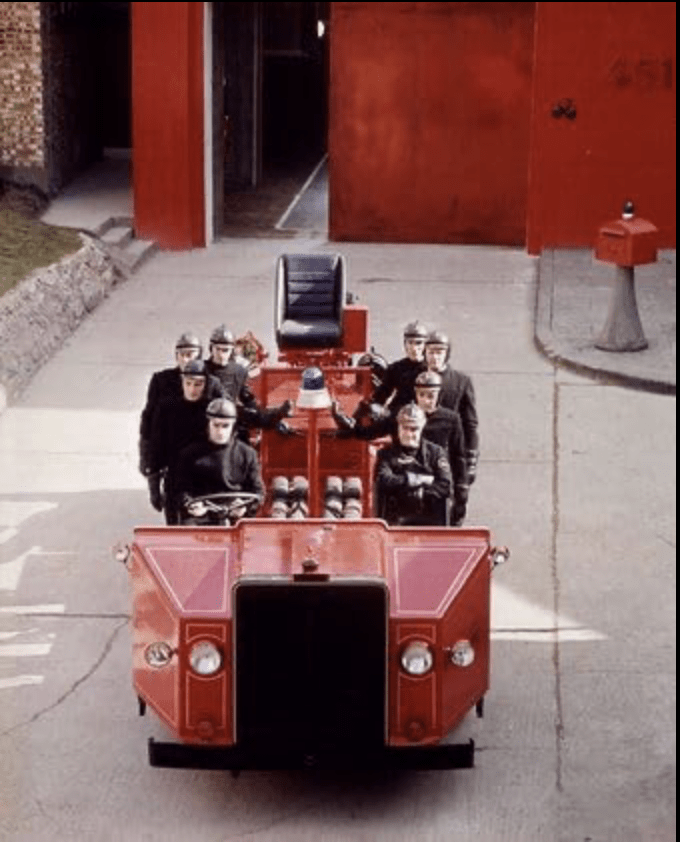
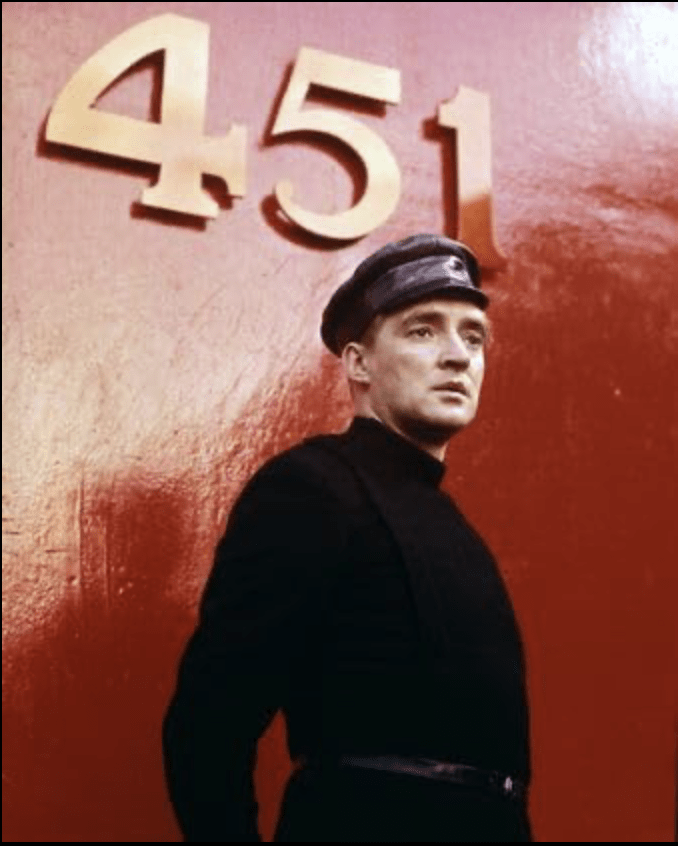
The first action is the fire engine setting off from its equally vivid post-box red fire station, the crew dressed in black uniforms and, at their destination, marching like a loose group of stormtroopers. We see them collect all the hidden books from an apartment and our hero Guy Montag (played by Oskar Werner) dons a fireproof tabard and turns the flamethrower on the combustible pile. There are several moments in the film where one finds oneself trying to catch the titles of the volumes being incinerated, and this is the first of them. It’s mostly paperbacks, many in Penguin Books livery—orange and white, green and white, blue and white—and also a lot of modern classics by French authors. Yes, I know, the fascist government is destroying our literary heritage and I’m sitting there going, yes, I’ve read that one, oh always meant to give that a go…
Fired Up
The Captain, an older male mentor figure, congratulates Montag and suggests a promotion is on the cards. Cyril Cusack is superb in this crucial role; a bully, an inspirational leader, a cultured man who has decided to eliminate culture. When he embarks on a philosophical soliloquy later in the film as the firemen discover a massive secret library at the older woman’s house (from approximately minute 52 to 58), one gets the feeling that the Captain has probably read quite a lot of these books, such is his breadth of knowledge about objects he considers to be mental poisons. At that point, the Captain becomes the Devil incarnate, a being of fire, ultimately doomed to perish in the flames.
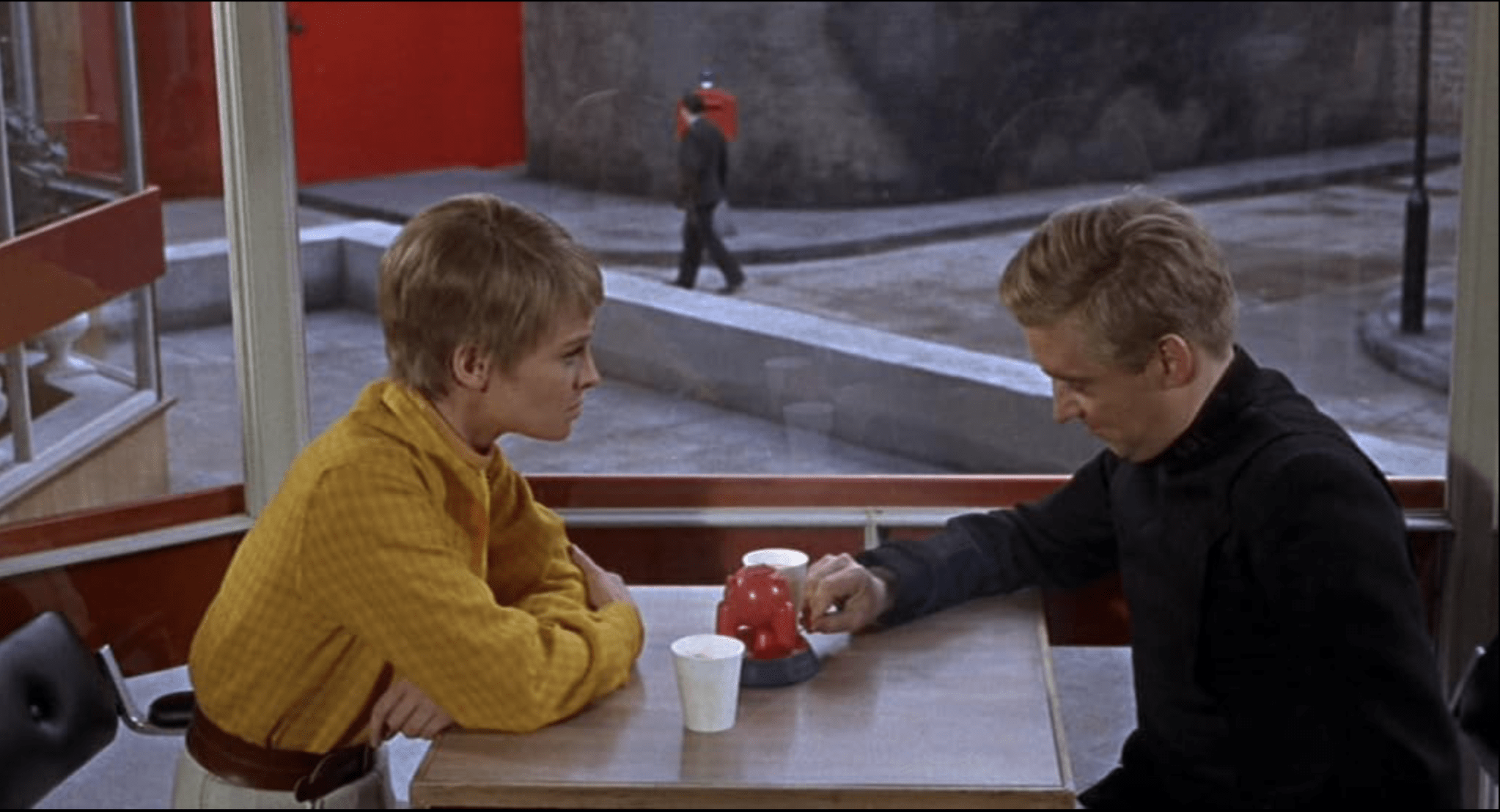
Back to the opening. Montag returns home on the monorail and is approached by a young woman named Clarisse (Julie Christie). Whether it’s the character or the actor, Montag remains somewhat stiff despite Clarisse’s openness, one might say flirting. Returning to his bungalow, Montag finds his wife Linda (also played by Julie Christie), zonked out on tranquilisers as the flatscreen TV plays on the wall.
The plot of “Fahrenheit 451” is essentially that classic standby that has served us since Saul (later Paul) was on the Road to Damascus—man has a crisis of conscience, realises his world isn’t as wonderful as he thought it was or as it could and should be, so begins to rethink and, importantly, act against the controlling interests of his society. “Logan’s Run” would offer a similar template a few years later.
Montag begins to become interested in the books he has so far been merrily destroying, he rebels and has to run for his life to escape the oppressive city and find sanctuary.
Great Balls of Fire
There is so much to enjoy about the look of “451” and this is partly the inevitable application of Retro-Futurism—in its initial French iteration, the style in which writers, artists, directors and designers predicted the future would turn out but which from our perspective now seems charming and quaint. The various telephones in the film are mostly antiques. The fire engine is at a technological level somewhere in the 1950s and maybe that’s the point—this film is partly a critique of postwar boom consumerist America. It seems very likely that David Lynch was referencing “451” when he opened his film “Blue Velvet” (1986) with white picket fences and a fire engine slowly driving through suburbia.
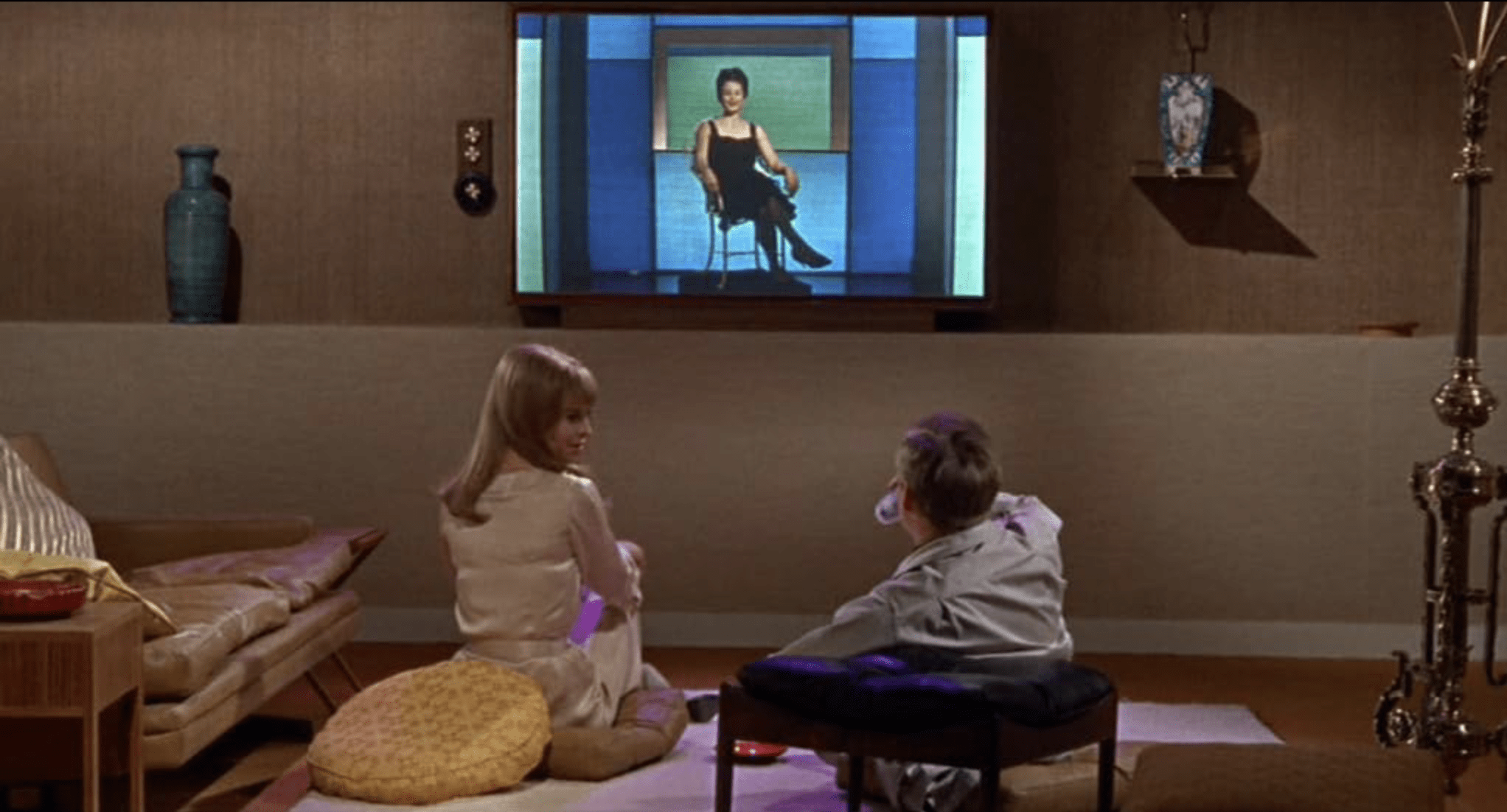
Montag and his wife Linda live in a one-storey newbuild and there’s a short but powerful scene near the end where he is on the run and a red public announcement car rolls down the street warning everyone in this Stepford-style, all the houses look the same, development (actually filmed in Roehampton) to be on the lookout for this dangerous non-conformist. Inside, the lounge is dominated by a wall screen.
That was 1966 and the TV doesn’t seem that big by modern home cinema and integrated systems standards. This prediction of entertainment and communication devices becoming all-pervasive and overly influential was correct but didn’t go far enough.
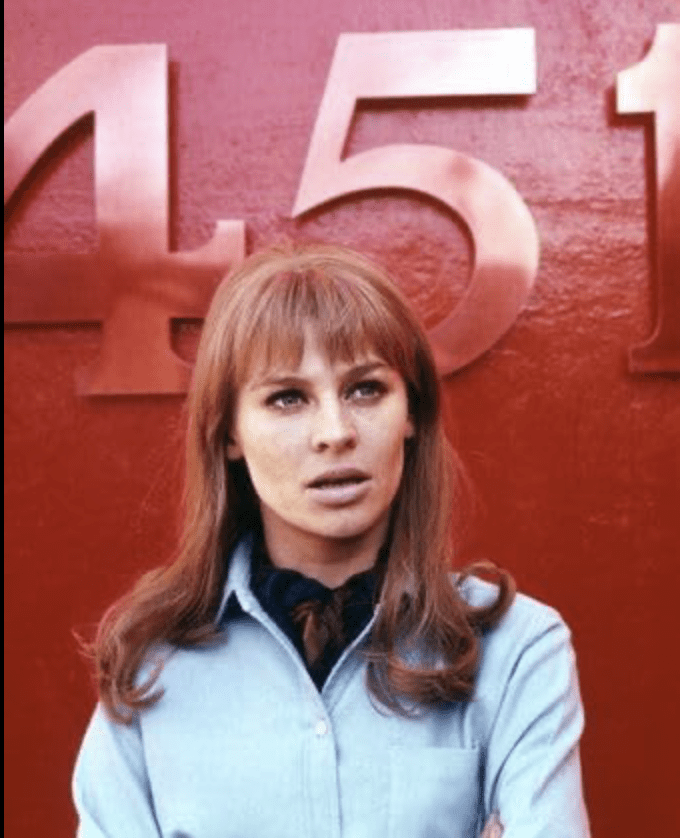
The “Prozac Nation” notion of bored housewives addicted to tranquilisers, as exemplified by Linda’s character whose story arc includes an overdose (c27-31m), was very much a concern of 1960s USA. In fact, one can’t escape the 1960s with Linda. I read somewhere that all the Hollywood Biblical epics betray their year of making by the actors’ hairstyles and small details of their clothing; Linda’s outfits in the film include a fashionable white coat and short skirt outfit and a nylon nighttime trouser suit in yellow. Her hair is styled for 1966 and she now reminds us of the “Vogue” magazine era-defining faces such as Jean Shrimpton and, yes, Julie Christie! These are positive points for me—just as I would enjoy a brightly coloured pop video from the 1960s, the look of this film is nostalgic as much as it’s futuristic.
Future Fire
Oh it tries, though, to picture the future. We have a police patrol using jet packs to seek out the fugitive Montag (c94m). And then there’s the monorail on which Montag travels to and from work and where he first encounters Clarisse.
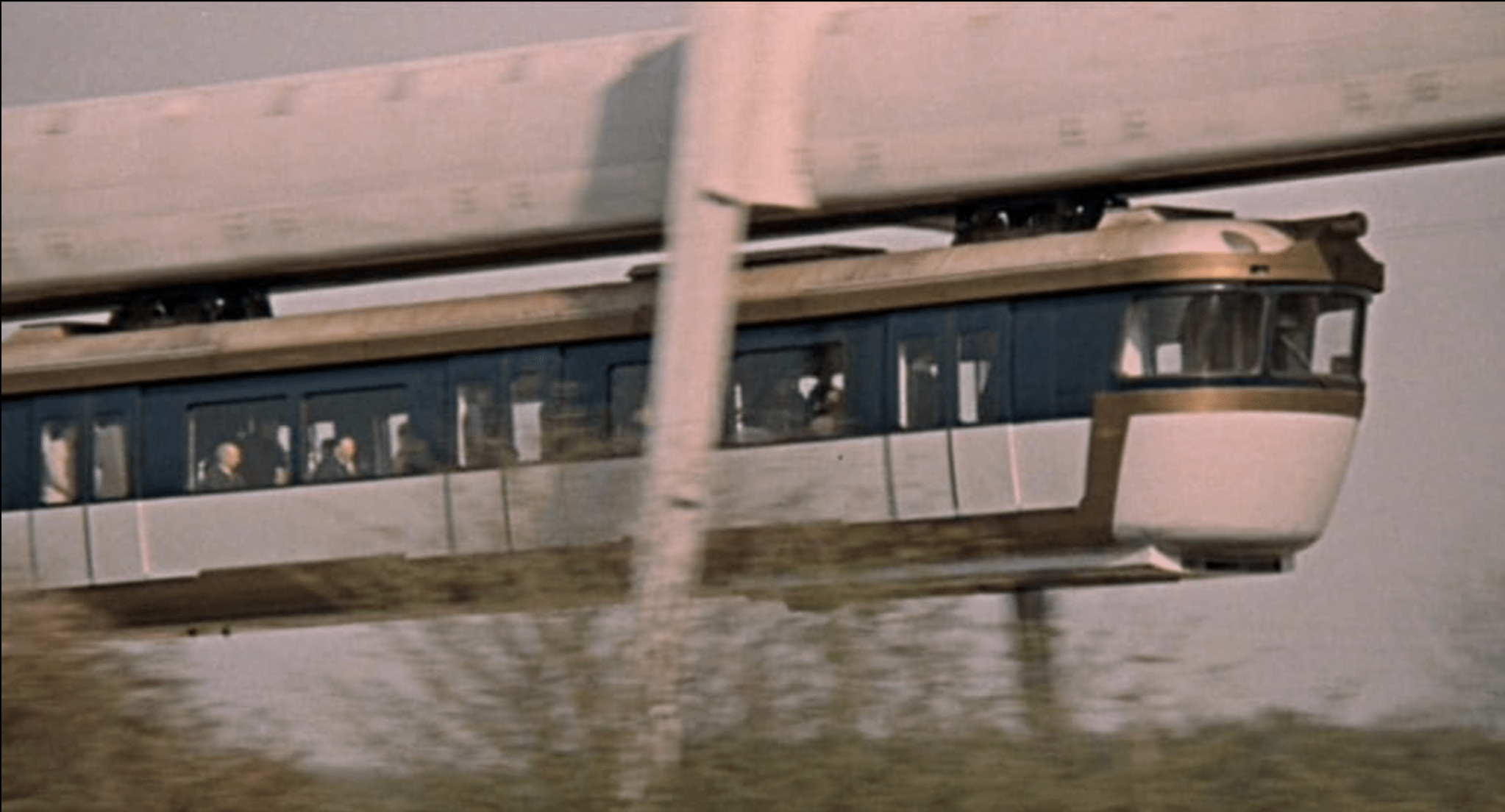
The base of this vehicle opens rather like the loading mechanism on a desk stapler and it’s a long walk down this ladder to the ground to alight. In the early days of London’s Docklands Light Railway, I often used to think back to this film where the rail is above the train rather than below it as in the DLR.
In fact, much of the credit for the visuals must go to cinematographer Nicolas Roeg, who would later go on to be a successful film director, including working with Julie Christie again in “Don’t Look Now” (1973).
Probably the most shocking scene is that around 59-61 minutes where the older lady (Bee Duffell) who has the huge secret library stashed at her vintage house decides that she cannot live without her now kerosene-soaked books and strikes a match to self-immolate. It is perhaps this incident more than any other that tips the balance in Montag’s mind and pushes him over to the other side.
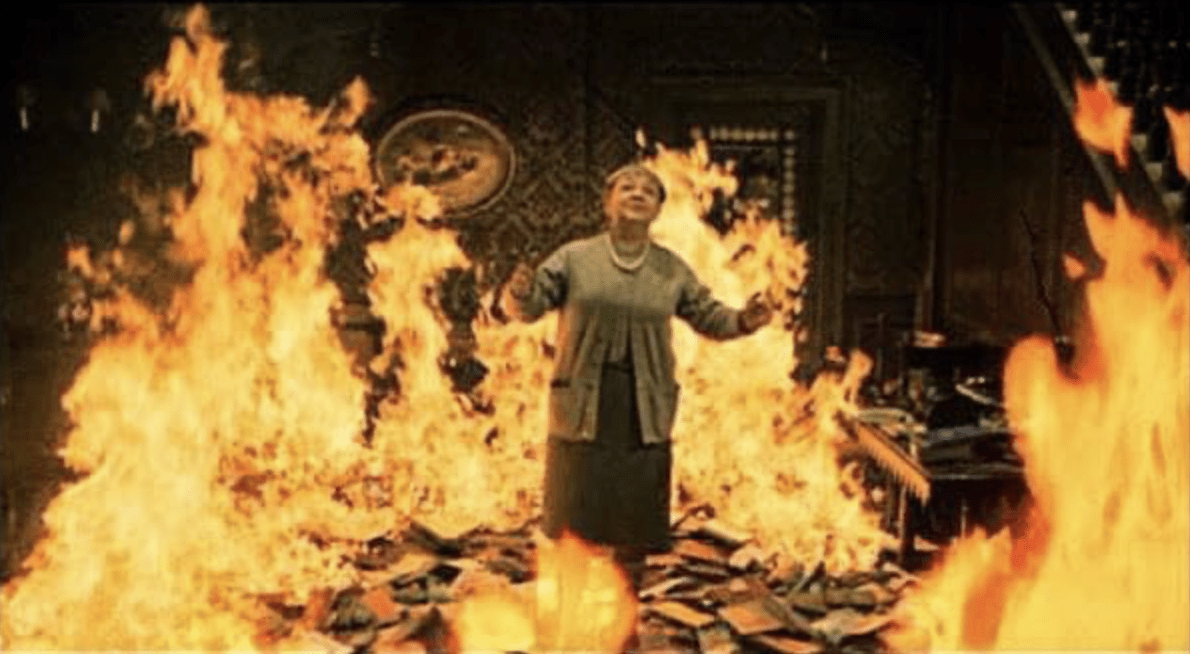
Of course, this being a Hollywood production, there is some lavishness and lustre added to the tragedy as we watch various volumes catch fire.
At the end of the film, our hero having figuratively regressed to an earlier state of civilisation by following the abandoned tracks of the old steam railway in order to reach “The Book People”, we are blessed with final frames that were serendipitous during the shooting as this primitive settlement is softly blanketed with a magical covering of snow. Montag and Clarisse are together and there is perhaps hope that humankind will recover its lost literary culture somehow.
Relight My Fire
So, what are the issues with this film? Perhaps unfairly, a lot of the discussion centres around cast and crew choices. This was Francois Truffaut’s first film in English although on set the dominant language was French. A doyen of the then-cutting edge French New Wave of directors, riding high on the success of classics such as “Les Quatres Cents Coups (The 400 Blows)”, he has delivered a romantic parable rather than the hard-edged political SF feature that some may have wanted or expected.
It was Truffaut who cast Julie Christie in both female roles, seeing the two women less as rivals for Montag’s attention or affection and more as two sides of the same coin (as indicated by Truffaut biographer Annette Insdorf in the DVD extras). One might wish that instead both females had been rendered in a more rounded fashion, although that would always be unlikely for the TV and Tranqs addicted Linda.
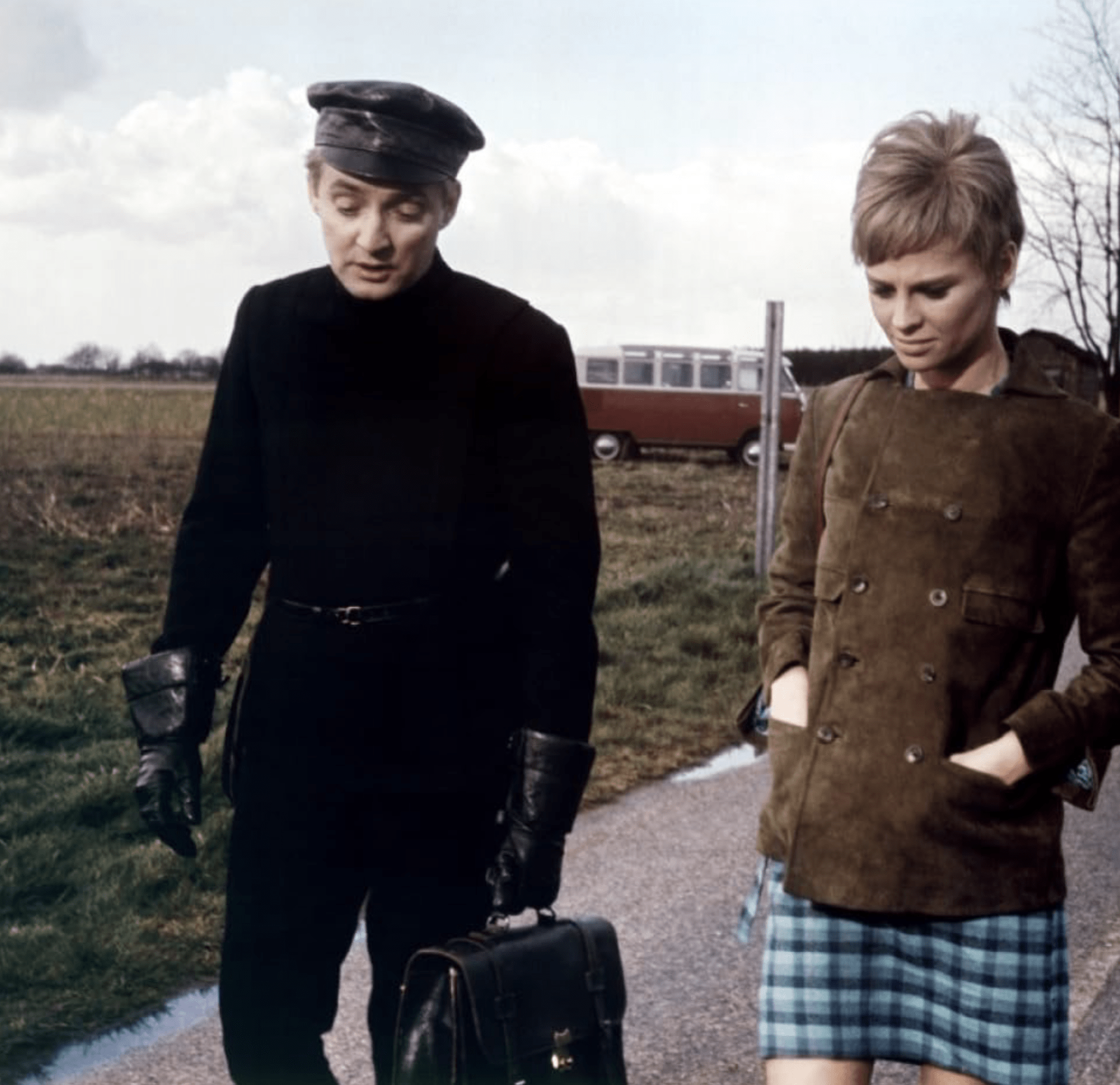
Truffaut’s choice of Oskar Werner in the key role of Montag is also open to question. Sure, they had worked together on “Jules et Jim” but the Austrian actor’s pronounced Germanic accent throughout plays into the simplifying notion that this was largely an allegory of Nazism. The black leather uniforms and a couple of instances of saluting also bring out this sub-theme. One can only wonder what a director like Roman Polanski or Sidney J. Furie (who did “The Ipcress File”, 1965) or a lead male such as Terence Stamp or Albert Finney might have brought to the portrayal of Montag.
So there you have it. An immersive film that’s not quite perfect. If you like a bit of retro-futurism and if you love the work of Bradbury—and, seriously, who doesn’t?—this is another buried classic to add to your “must see” list.
What did you think of Fahrenheit 451? Let us know in the comments below ⬇️

One response to “Classic Genre Films: Fahrenheit 451 (1966)”
I agree that Truffaut’s version is flawed, but it is a moving film. Its SF effects elements have always looked primitive compared with more elaborate special effects science fiction movies – indeed, “The Man Who Fell To Earth” (Nicolas Roeg) also has ‘unsophisticated’ SFX, but a great movie anyway. I saw “Fahrenheit 451” on its release, when movies such as Peter Watkins’ “The War Game” came out and such films informed my politics in the 60s. My favourite Truffaut film is “La Nuit Americaine” (“Day for Night”).