The winners of the British Fantasy Awards 2026 were announced at Fantasycon. Find out all the details on our blog.

For all things fantasy, horror, and speculative fiction
-
Announcement:

O Captain, My Captain: In Memory of Sir Patrick Stewart
Adrian Fletcher remembers Jean-Luc Picard, the ultimate leader with heart and morality, and a beacon of hope that we can always be better people
People often reveal more about themselves in the casual moments—the throwaway comments, the words said without thought—than they do in prepared statements. I recently saw an interview with Sir Patrick Stewart in which he discussed taking the role of Jean-Luc Picard in Star Trek: The Next Generation, the role he would become synonymous with. Amongst the familiar remarks on how he never suspected TNG would last as long as it did, there was a phrase that stuck with me. He said that the opportunity to make a TV show in Hollywood was “too delightful” to pass up. The sense of following a dream, that almost childlike but never childish sense of wonder at the prospect of discovery, is the very soul of Star Trek, and would be one of the defining traits of TNG in general and Picard specifically.
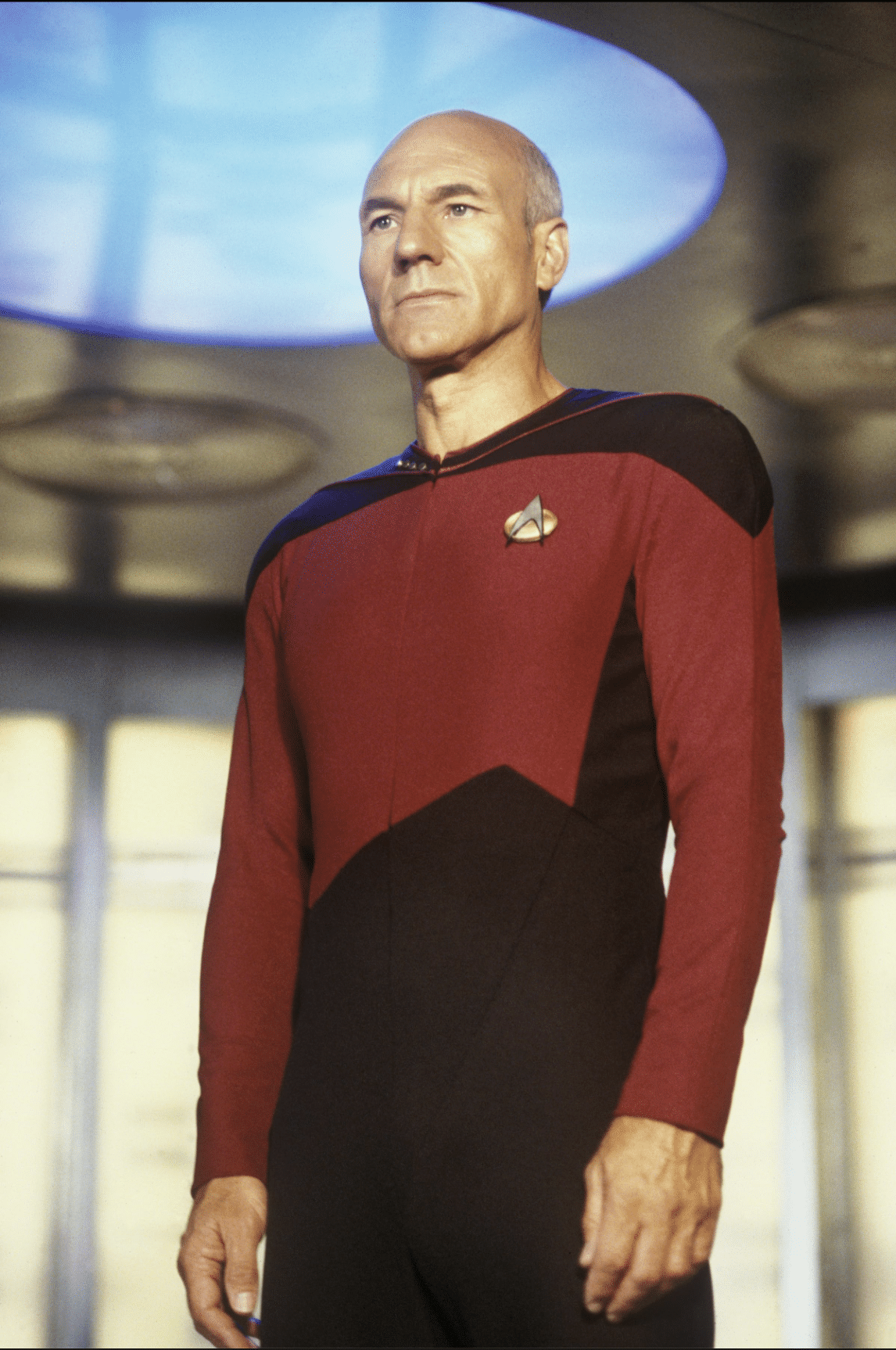
It’s common knowledge now, of course, that Gene Roddenberry was not in favour of casting an unassuming, bald, Shakespearean actor as the captain of the Enterprise D. TNG in general was a gamble; it was a show without a network backing it, no returning characters, and a huge budget. It was cosy sci-fi long before the term cosy was invented. There was no overarching antagonist, though in later seasons the Borg would somewhat fill that role if only for relatively few episodes. Instead, TNG chose to focus on character stories, and the success of the show is a testament to that decision. TNG created Star Trek as we know it today; had it failed, it’s likely the franchise would have been left on the shelf, its established fanbase would have eventually seen new content, especially in the age of streaming, but there would have been no Voyager, no DS9 and no Enterprise. Without the established success of Star Trek as a franchise, would we have seen reboots of Doctor Who or Battlestar Galactica?
The beating heart of The Next Generation
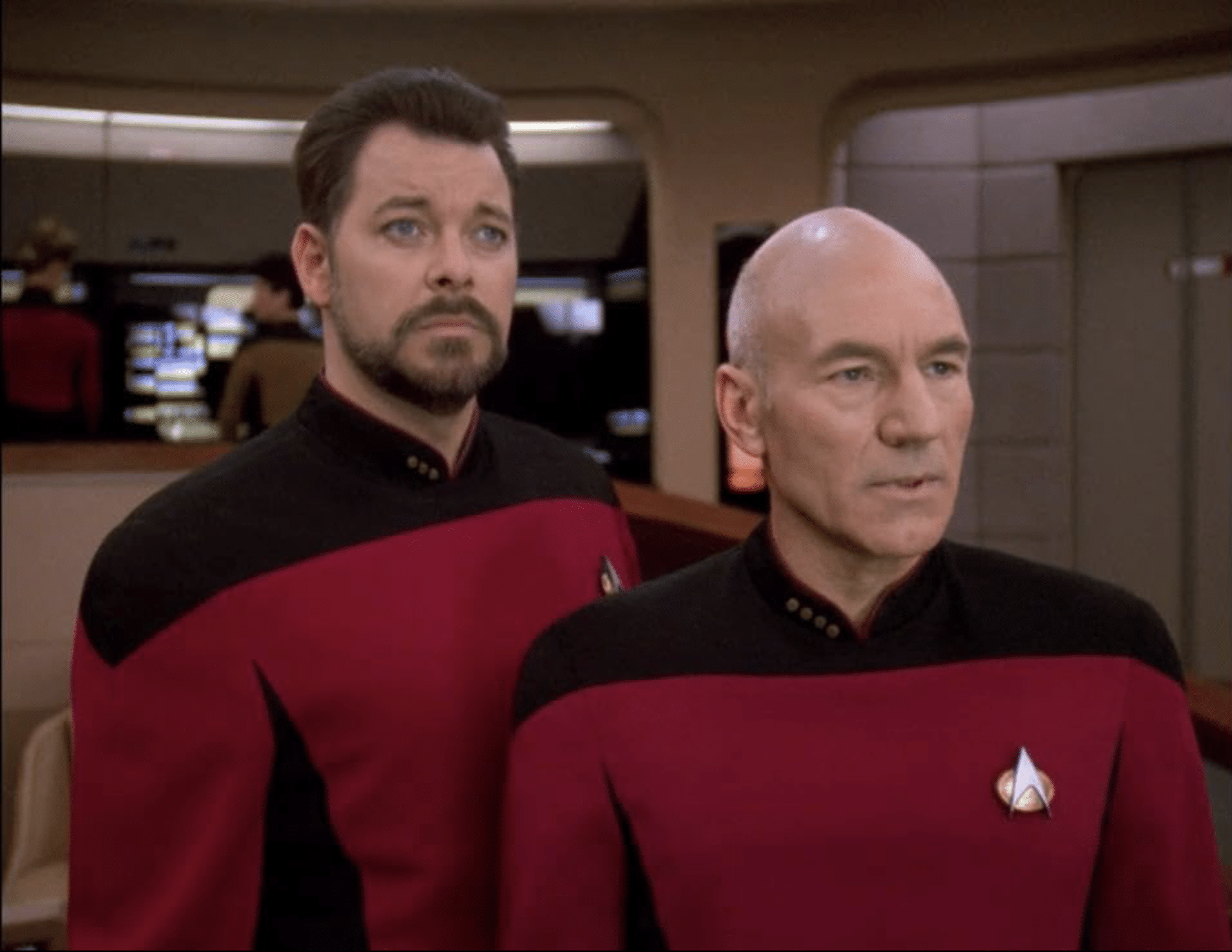
In the TNG episode The Icarus Factor, Picard and Riker discuss a command Will has been offered. Picard tells him, “it will be your ship, and being who you are, it will soon be vibrant with your authority, your style, your vision.” That’s what Stewart was to TNG: the beating heart of the show, infusing it with his personality, in turn creating a show filled with the wonder of discovery and the simple idea that we, as people, can be better.
Speculative fiction allows us to examine abstract questions in literal situations. Personal autonomy could be discussed in the context of whether Data was truly alive, or through an invading force that strips away individuality. TNG always chose to ask the question: who are we? And, more importantly, what do we have to do to be the best version of ourselves?
Picard truly was the best of us—a man of deep moral values who believed in the dignity of all life, but in no way dogmatic. He respected the beliefs of others, willing to defend them to the end. He upheld the highest ideals of the Federation, a true believer in its ideals, but was never a soldier blindly following orders. Picard stood for doing the right thing, and if he ever thought he was being asked to go against that, he had the courage to defy his superiors, knowing that ultimately the chain of command was superseded by the greater imperative of the principles on which the Federation was built.
There is a wonderful line in Ted Lasso that’s attributed, I’m not sure accurately, to Walt Whitman: Be curious, not judgemental. Whoever said it, it could be written as an epitaph for Jean-Luc Picard. His gentle curiosity and compassion grounded the show and stopped it becoming a tale of colonialism. In the real world, so many lauded as explorers are in real terms conquerors. Imagine for a moment that each world the Enterprise D had visited had some kind of threat that had to be pacified and it’s suddenly given a very different tone. Instead, the crew were explorers in the truest sense of the word, travelling the galaxy purely in the pursuit of knowledge.
A model for hope
I was young—young enough that I still had hair, if you can imagine such a thing—for the original run of TNG. I remember watching it on BBC2 with my older brother. I would have been maybe 13 when the final season aired, and I’d never seen a lead character like Picard before. He almost never fought, and his authority wasn’t based on anything tangible. Main characters are often larger than life, idols that no mere mortal could ever match. Picard was a settled presence; calm, measured, solving problems collaboratively, relying on his crew rather than his own maverick abilities. A role model we could all one day hope to be.

What made Picard different was perhaps most clearly demonstrated in comparing two of the most famous episodes of TNG and The Original Series. In the latter, Kirk is trapped on a planet with an alien and, through no fault of his own, he’s engaged in a battle to the death. On the other hand, when Picard is trapped on a planet with an alien, they are forced to come together, cross communication barriers, and better themselves and each other.
It’s impossible to say the exact depth of impact TNG had on me, but watching it in my formative years was the first time I would have seen so many of the values that I hold dear stated explicitly on TV. The idea that everyone deserves respect, that our problems can be resolved with words, that those among us who would use fear to attempt to limit our liberties must be resisted at all costs, and, most importantly, that a man stands up for what he believes, no matter the cost. They’re all core to the person I want to be, and core to the man Picard was. I’ve never stopped and consciously asked myself what would Jean-Luc do, but I believe that anyone who did would live a life they could be proud of. In the season 6 episode The Chase, Picard explains that an alien race believes that each of us is composed of a multitude of voices, each representing a part of us; the voice inside of me that speaks of the demands of conscience sounds an awful lot like Jean-Luc Picard.
A beacon of hope that we can be better
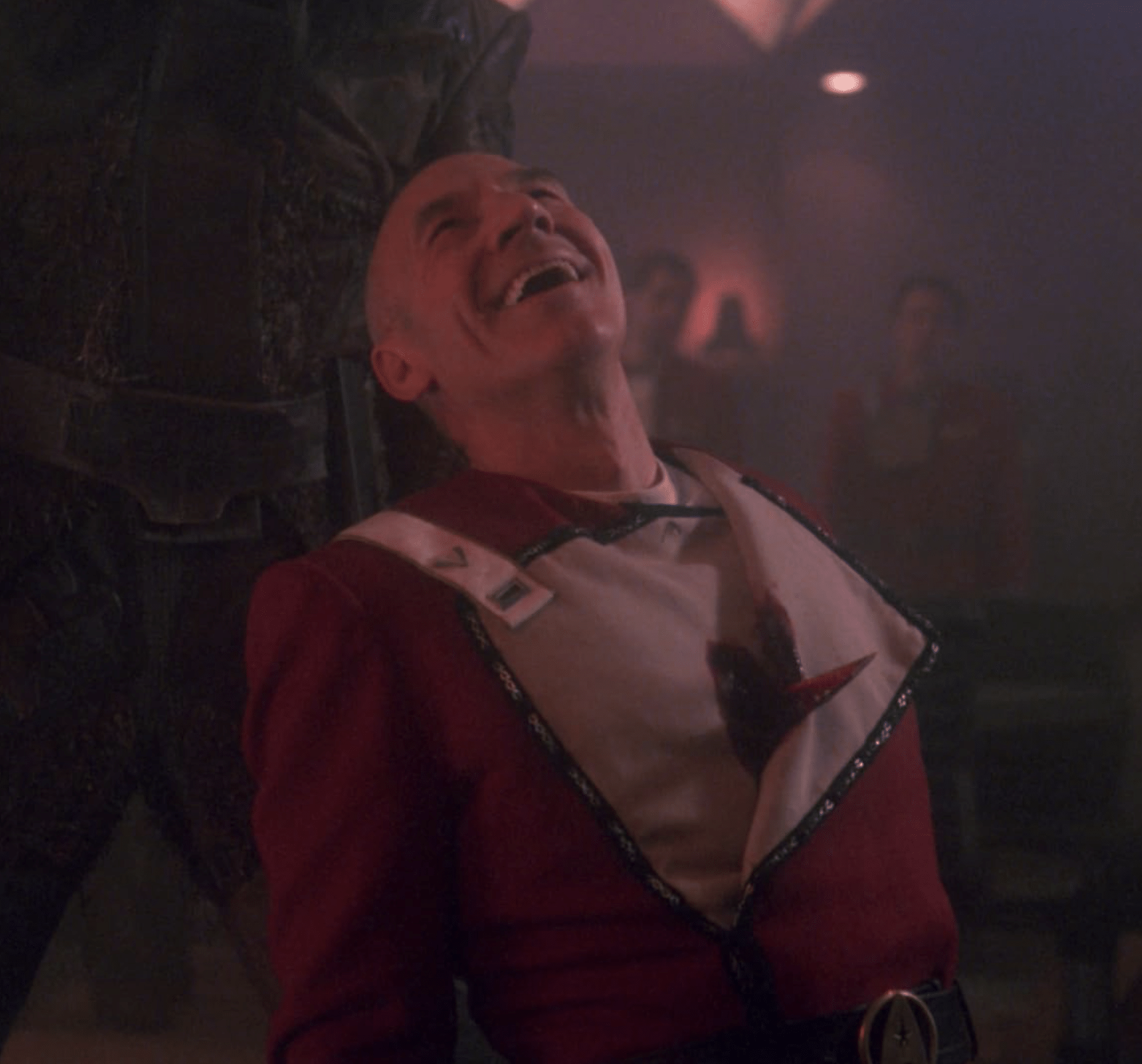
But what of the man behind Picard? Sir Patrick Stewart was a proud socialist, a man who worked tirelessly to defend victims of domestic abuse and support LGBTQ+ causes. It’s safe to say that part of the reason Picard worked so well was because there was so much of the actor in the character. He brought the same quiet strength and goodness to The X-Men’s Professor X, a character he was almost born to play, and one who shared so much with Picard. He was a man who, in later years, wasn’t afraid to poke fun at himself, but never abandoned his roots or his values, a true knight of the realm.
Ultimately for me, Kirk, while a great character, was a man to be admired, someone you’d perhaps wish to be. In contrast, Jean-Luc Picard was a leader I’d willingly follow into hell without question or hesitation. The kind of person who makes everyone around them better and shows us what we are supposed to be. Patrick Stewart showed us not only that we can be better, but how. In a world increasingly grim, Picard and TNG both remain a beacon of hope that this is not all we are. That we can be better.
Oh captain, my captain.
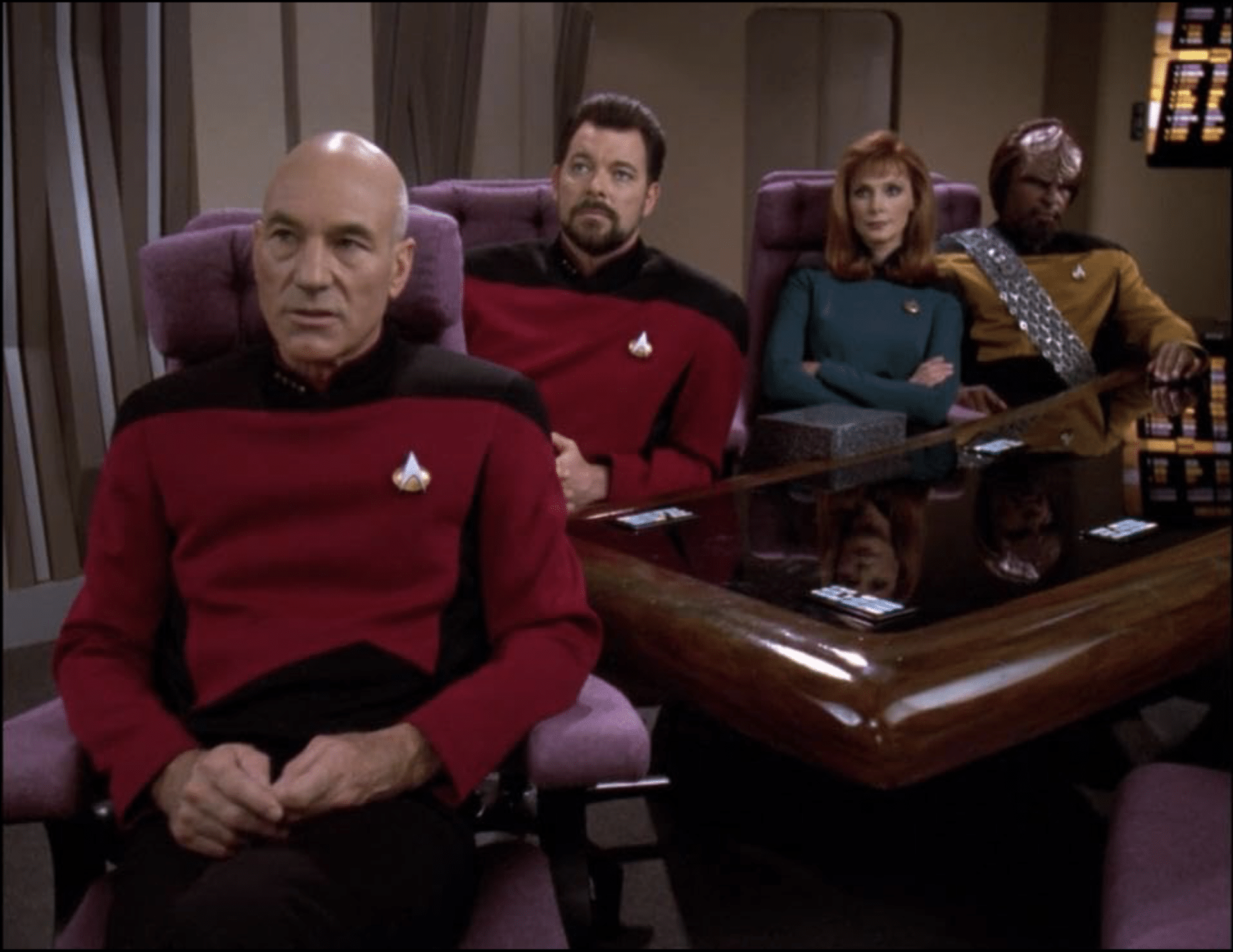
All images from IMdB’s Star Trek: The Next Generation entry.
Meet the guest poster

Leave a Reply