The winners of the British Fantasy Awards 2026 were announced at Fantasycon. Find out all the details on our blog.

For all things fantasy, horror, and speculative fiction
-
Announcement:
Classic Genre Films: Dark Star (1974)
Allen Ashley is training his eye on classic genre films for us, looking at not just the film but the context in which they were released. Here’s the latest instalment in his blog series.
Dark Star (1974)
Director: John Carpenter
Colour
84 minutes approx running time (on DVD)
(All images taken from imdb.com)
(Note: Time stamps are of author’s own noting)
Stoned in Space
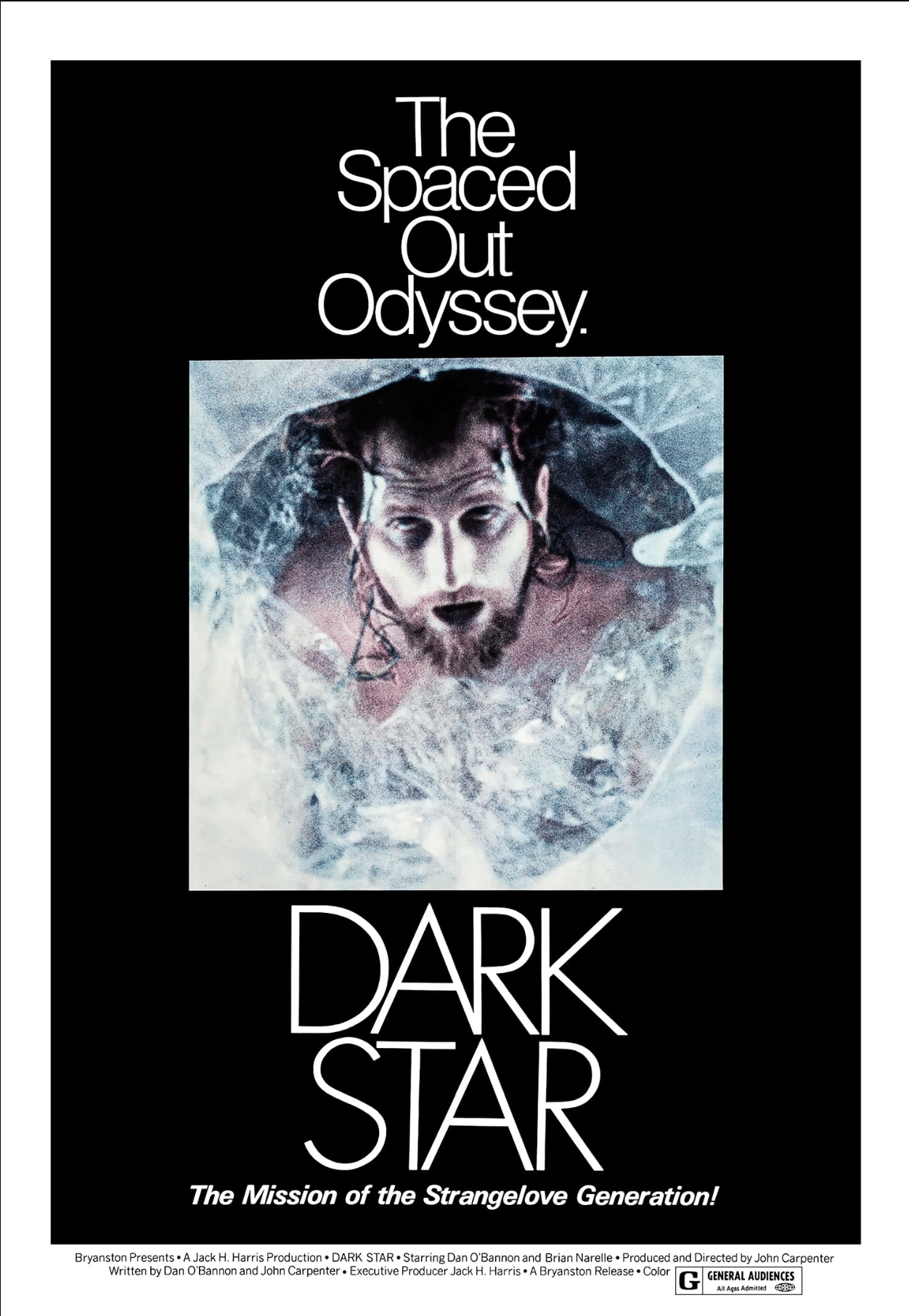
This small budget production has achieved cult status and influenced later films and TV shows. It is perhaps best summed up by its tagline, “Bombed Out in Space with a Spaced Out Bomb”. Way back in the day (i.e. the late 1960s and much of the 1970s) there was a market for so-called “stoner” movies, initiated by Easy Rider (1969) and encompassing many of the road movies of the time such as Two-Lane Blacktop (1971). Pour something soothing into the glass or roll up a jazz cigarette, lay back and enjoy.
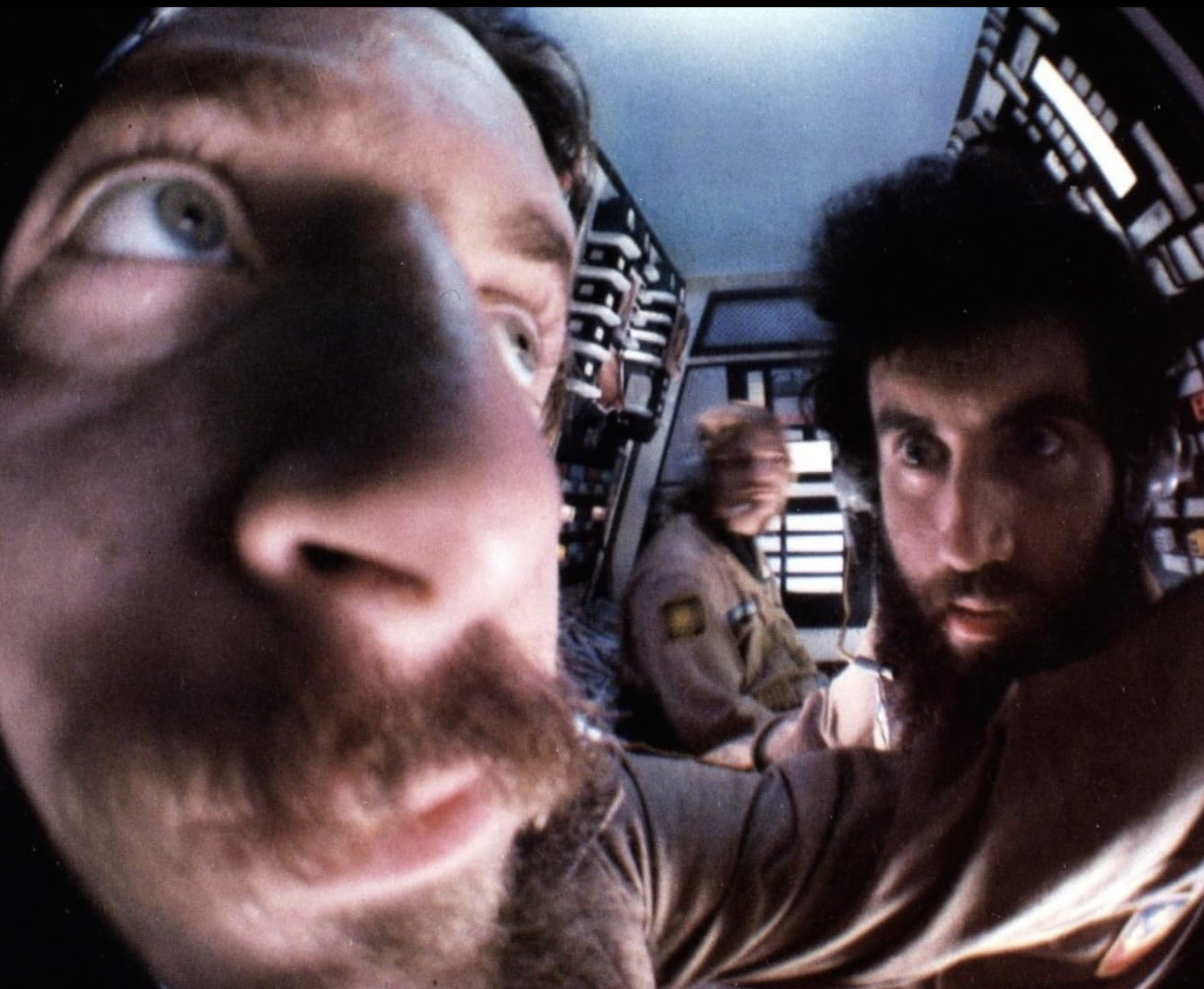
My take is this: The film’s title comes from the Grateful Dead epic improvised song Dark Star; there is a 23-minute version on their album Live/Dead (1969). What we have in view here is the Grateful Dead in space. Goodness, our scuzzy hero astronauts—three experienced years but twenty relativistic years into their mission with their unkempt hair and beards—even look a bit like Jerry Garcia or Pigpen.
Grunge in Space
It’s this grungy aesthetic of having been cooped up in a tin can for months on end that is one of the most influential aspects of Dark Star. The four-man crew is bored, dysfunctional, unable to properly communicate with or (at times) even tolerate each other.
At about minutes 11-12, we learn that storage area nine “self-destructed last week and destroyed the ship’s entire supply of toilet paper”. It doesn’t bear thinking about! Their sleeping quarters have been blown up (c17m) and although Pinback (played by Dan O’Bannon) suggests they repair them, no-one can be bothered.
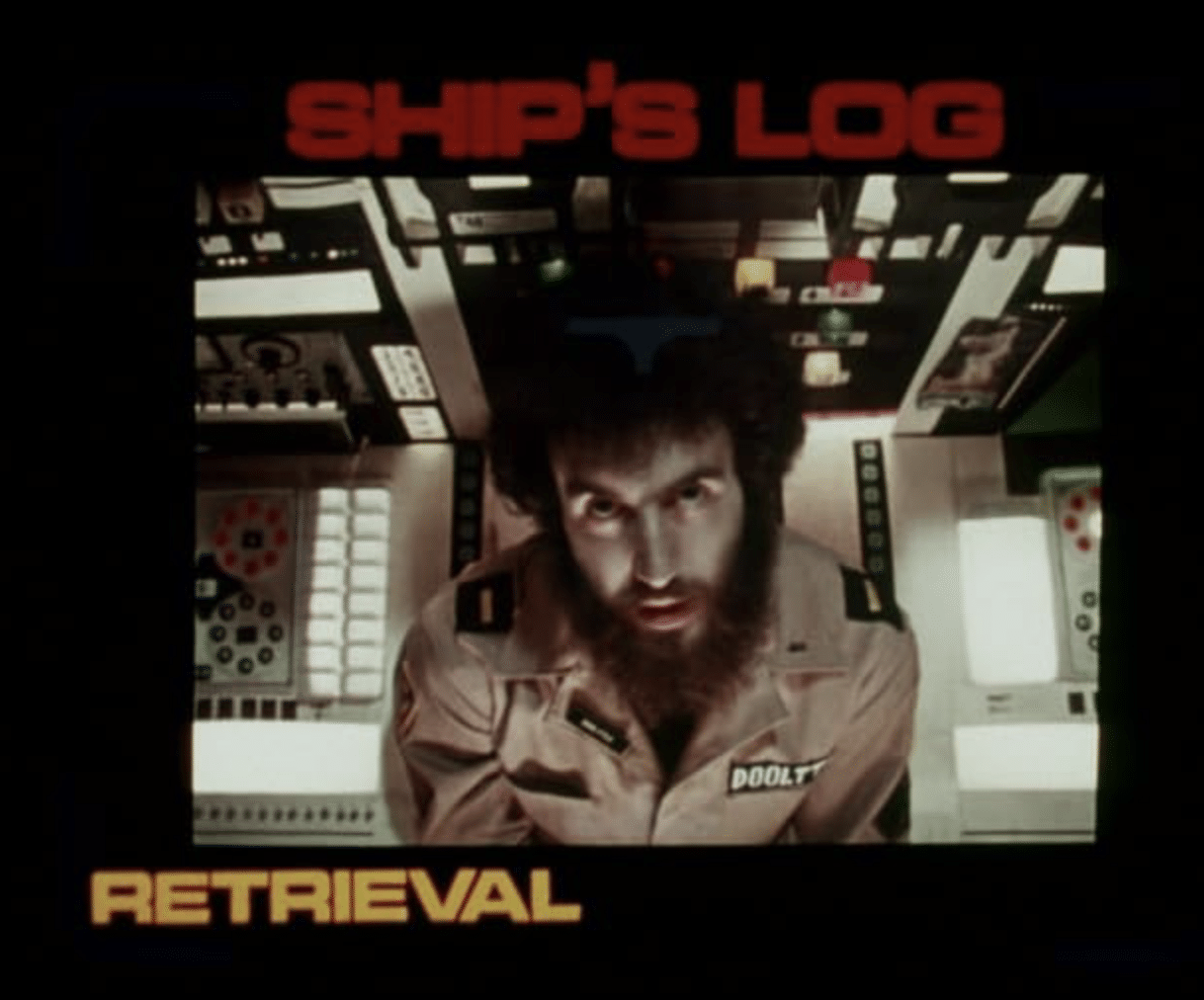
Boiler (Cal Kuniholm) smokes cigars in the communal areas. The aptly named Doolittle (Brian Narelle) is nominally in charge since the death of Commander Powell (Joe Saunders), but lacks initiative or leadership skills and his attention is prone to wandering. Talby (Dre Pahich) absents himself by sitting in the observation dome watching stars and dreaming of the Phoenix Asteroid cluster.
Apollo 11 it is not.
Clean lines in Space
It’s all a far cry from the clean lines, the smooth chins and military neatness on display in the tracking scenes aboard the Discovery in 2001: A Space Odyssey (1968). Dark Star is something of a parody or response to that multi-million dollar epic. I have also seen this film described as “truckers in space”. Neat.
Carpenter’s approach—that this is what lengthy space travel would really look, feel and smell like—was later picked up by Doug Naylor for the popular comedy TV show Red Dwarf (1988-2020). Later films such as Sunshine (2007) also hint at these deprivations. Co-writer Dan O’Bannon later reused a few ideas and gave us the haunted hulk of the ship in Alien (1979), complete with another dysfunctional and exhausted crew. And an extraterrestrial on the loose.
Aliens in Space
The longest sequence in Dark Star, approximately 19 minutes including one diversion, begins when the female-voiced sentient computer tells Pinback that he must feed the alien “mascot” he rescued at an earlier stage of the mission (c27m). Now, I’m a fan of old-style Doctor Who” original Star Trek, and before that The Outer Limits and 1950s creature-features—so, I’m quite tolerant. But the alien in Dark Star must be the cheapest-looking galaxy being you’ve ever seen. Clearly intended for comic effect, even if early audiences didn’t quite pick that up.
All those light-years travelled, all that seeking exotic creatures and intelligent civilisations, and the alien is basically a fruit-patterned beach ball with a couple of claws attached, that squeaks and wants to play like a lively puppy.
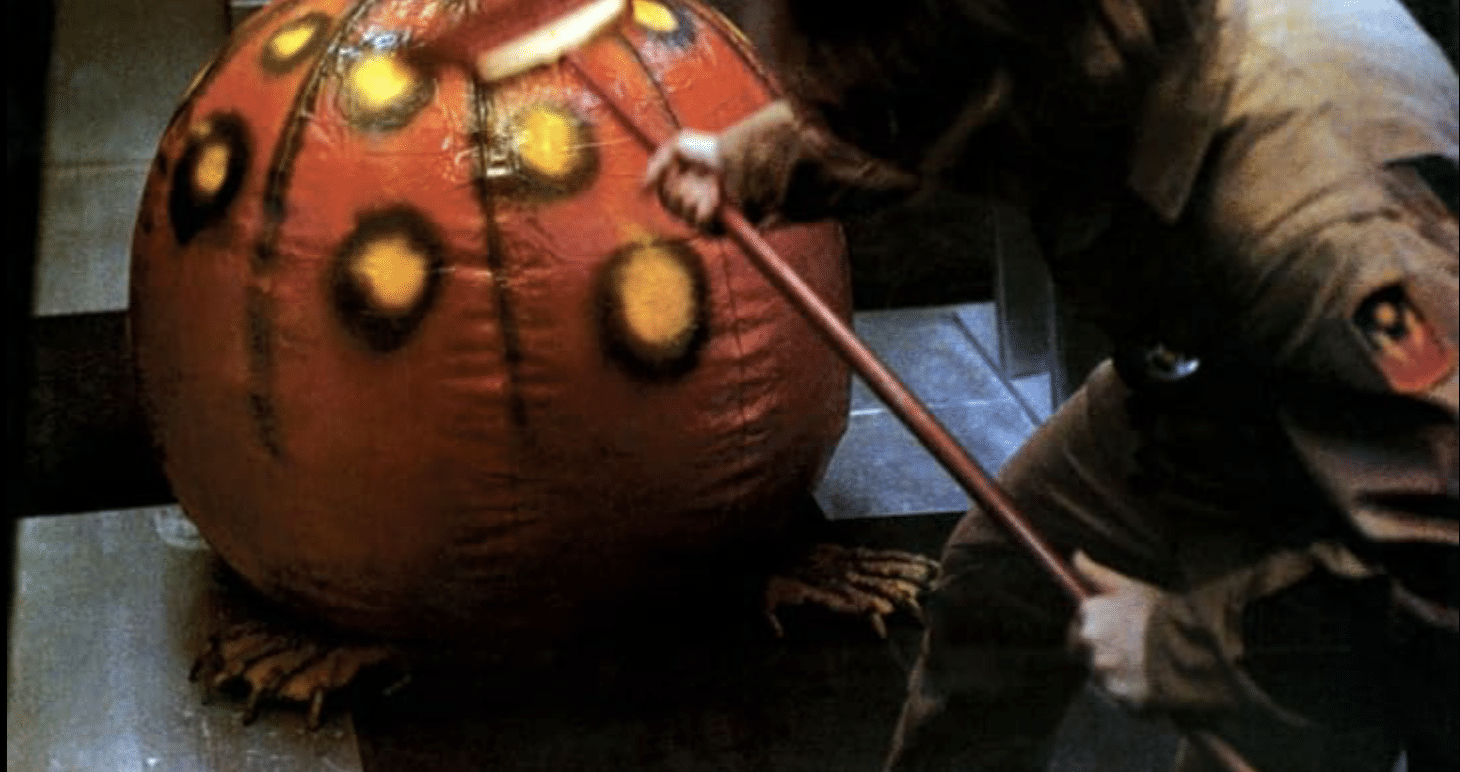
Nearly 20 minutes later (at about 46m), Pinback obtains an “anaesthetic gun” and warns the critter, “Now it’s time to go sleepy-bye, you worthless piece of garbage”, before shooting the only recorded alien in the known universe. It deflates exactly in the manner of a ruptured beach ball.
Danger in Space
As we all know, comedy is right next door to horror, so at minute 27 we begin a part of the plot that endangers Pinback’s life in a slapstick yet still potentially lethal manner: the alien scoots off and takes Pinback to unexpected parts of the ship. I mean, an “Emergency Airlock” makes sense but why exactly does Dark Star require a “central trunk elevator shaft”? The Grand Guignol continues as Pinback gets trapped within the escape hatch in this malfunctioning lift and, for no good reason, the shipboard computer starts playing Rossini’s lively The Barber of Seville whilst the poor guy’s legs are kicking frantically beneath the floor of the capsule. It’s farcical but almost fatal.
Bombed out in Space
The spaceship’s mission has been to find unstable planets and destroy them ahead of later safe colonisation. Yes, I know, it doesn’t quite bear close analysis.
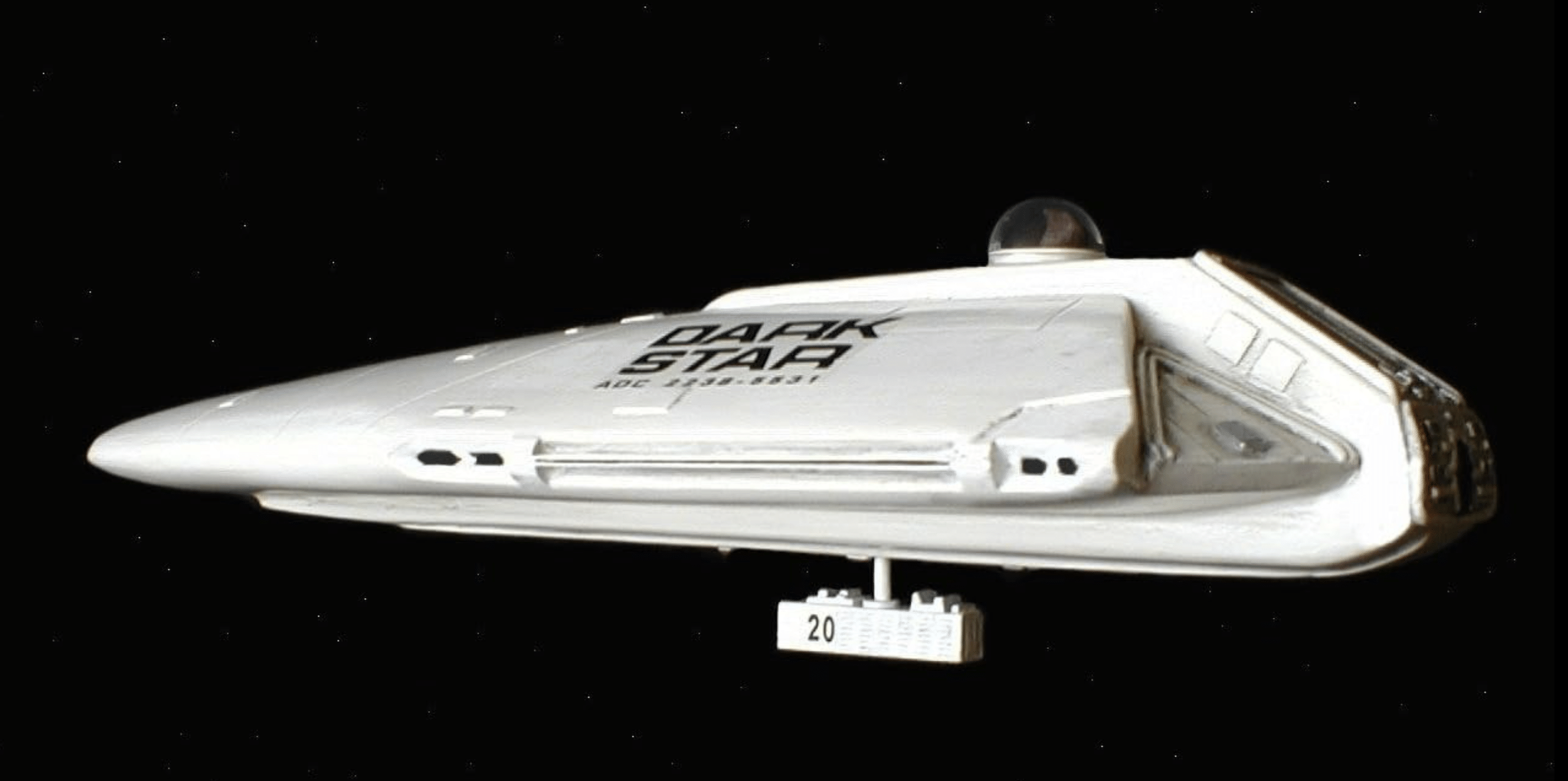
The other set-piece or series of linked scenes for which this film is most remembered concern “Bomb 20”. Essentially, these are an extended and hilarious parody of the famous sequence from 2001 where human astronaut Dave Bowman has to disable the super-computer HAL 9000. Folks, we are all worried about Artificial Intelligence and rightly so on this evidence. In Dark Star we have a self-aware talking bomb who won’t be disarmed or talked back into the bomb bay, and whose response to being taught the human academic thought experiments of phenomenology is to tell Pinback, “You are false data. Therefore, I shall ignore you” (c78m). It’s like arguing with a genius toddler… who is packing several megatons of nuclear weapons.
Essentially, this film is that rare beast: a science fiction comedy—of the darker, wry and satirical kind rather than knockabout laugh a minute. It started as a student film and retains some of those aesthetics as well as the rather affectless acting style common to much auteur work from the 1970s. In some ways, it’s a classic cult film, although not with the commercial reach of something like The Rocky Horror Picture Show (1975).
Cults in Space
Here’s one reason why I would make such a statement. I was recently accused of being “London-centric”. Me? You’re having a giraffe, geezer! But seriously—my friend Gary Couzens reliably informs me that Dark Star was first broadcast in Britain on BBC-2 on 29 December 1977. Cheers, Gary. I’m pretty sure I first saw it on that date. It caused quite a stir and, relying on personal memory here, in a reversal of the usual template of cinema release followed by a much later TV screening, the film was then picked up by the independent Phoenix Cinema in East Finchley, north London, and enjoyed a decent theatrical run to good-sized audiences. This was way before iPlayer, YouTube, and so forth. It was often pretty hard to get a second look at a film in those days, so the High Road N2’s answer to Islington’s famous Screen on the Green was the place to go to.
Director John Carpenter went on to make several further iconic SF/H genre films including Halloween (1978), The Fog (1980), Escape from New Yor” (1981) and The Thing (1982). But nothing is quite as loose, unusual and ‘out-there’ as Dark Star.
What did you think of Dark Star? Let us know in the comments below ⬇️

Meet the guest poster

Leave a Reply