The shortlisted works across all 13 categories of the British Fantasy Awards have been announced! Find out who’s in the mix over on our blog. Winners announced at Fantasycon in October.
Old Books and Bright Futures: The Quo Vadis Catalogue
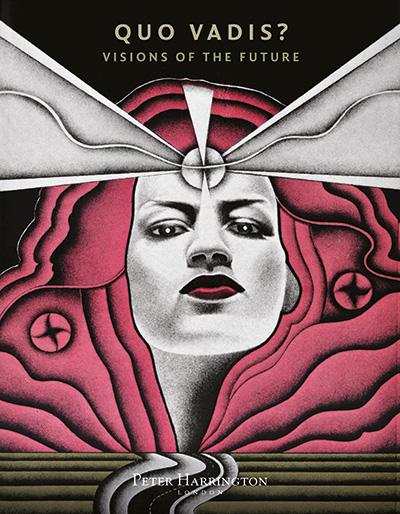
Catalogue cover, using the artwork from Octavia Butler’s Mind of my Mind
Andrew Knighton takes a journey through the history of science fiction with a rare books catalogue—a place where connection and authenticity are still valued.
Could a signed book you picked up at Fantasycon one day be a collector’s item?
It’s not something I’ve often through about, but for the rare book sellers at Peter Harrington, it’s a crucial part of the job. Their new catalogue, Quo Vadis, brings together materials imagining the future, from 17th century prophecies to original cover art for Neal Stephenson’s Snow Crash. Mostly made up of collectable books with prices ranging from three to six figure, it’s a fascinating thing to browse, like looking through a photo album of the genre’s history.
Fortunately for us, the experts behind it offered to talk with the BFS.
Catalogues like this are a chance for booksellers to show of their wares. “I tend to curate two literature catalogues a year,” Sammy explains, “but this one did have a special resonance for me, since for the last few years I have been reading mostly science fiction.”
While Sammy had been contemplating a sci-fi catalogue for some time, Anna found the theme for Quo Vadis.
“As bookdealers, we’re always delving into the past, unearthing books from bygone times and reinterpreting them for the modern world,” she explains. “It felt appropriate to flip the perspective and engage with the writers who were looking ahead at us – and beyond.”
Assembling the Collection
“The existence of a catalogue like this, decades into the era of the internet, feels like optimism fulfilled. If all we wanted was stories, then we could pick up digital editions, and the old copies would be worth no more than the paper they’re printed on. But objects in themselves have value, unique physical items in a digital age, linking us to their authors and to a shared history.”
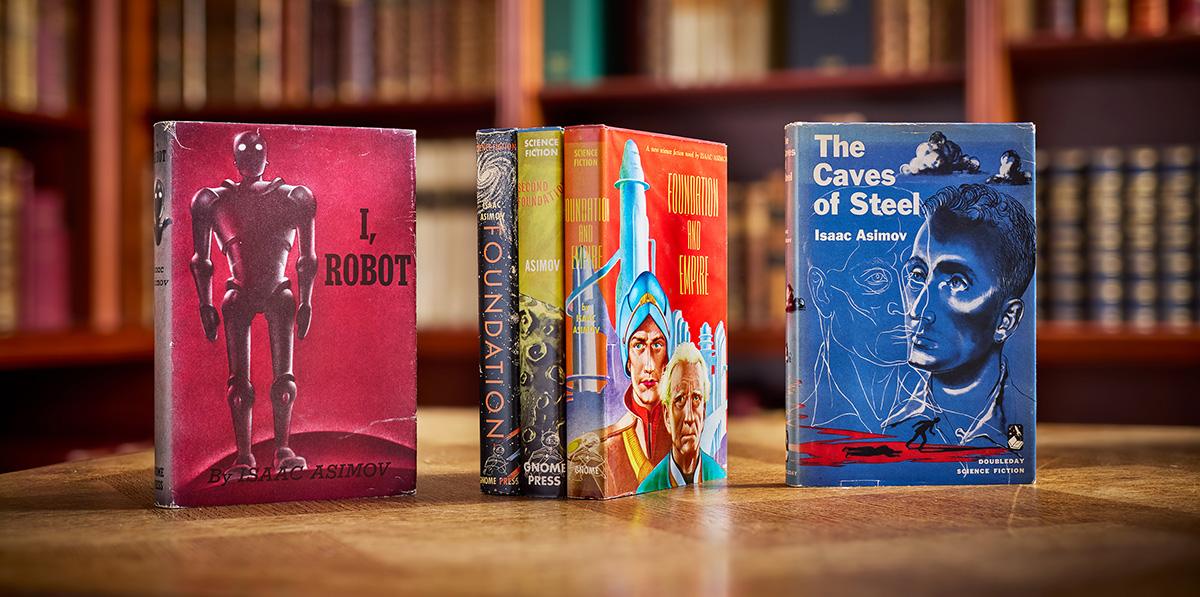
Rare first editions of Isaac Asimov’s novels
To create this catalogue, the booksellers first had to curate its contents, acquiring and setting aside books that would grab the attention of collectors.
Some of this involved finding special copies of the expected classics, like a presentation copy of Isaac Asimov’s I, Robot, or a complete set of signed first edition Culture novels. These are the sorts of items that collectors might know they’re looking for.
But to really grab collectors’ attention (and their bank balances), the collection needed some more surprising pieces, what Anna refers to as “the strange, the new, and the underappreciated.”
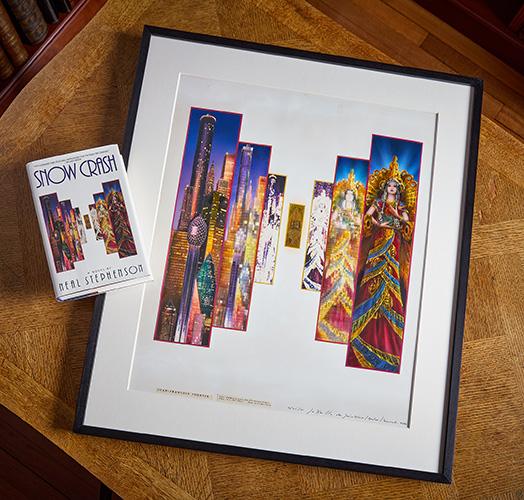
“It’s an opportunity to showcase some real blockbuster items,” Sammy says, “like the original cover art for Snow Crash, or Ray Bradbury’s typescript for the stories that made up his Martian Chronicles.”
The collection’s curators are clearly passionate about their work, so I was curious to hear which their favourite items were.
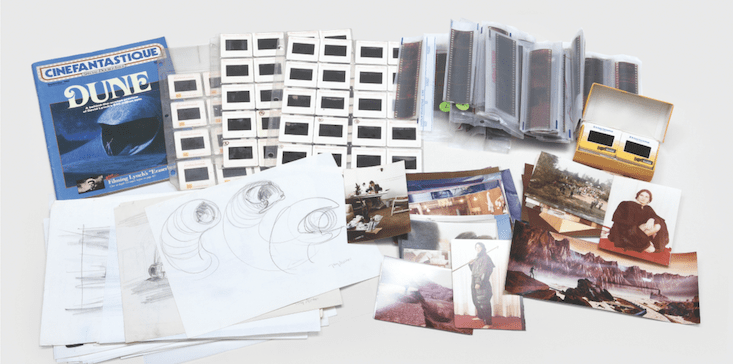
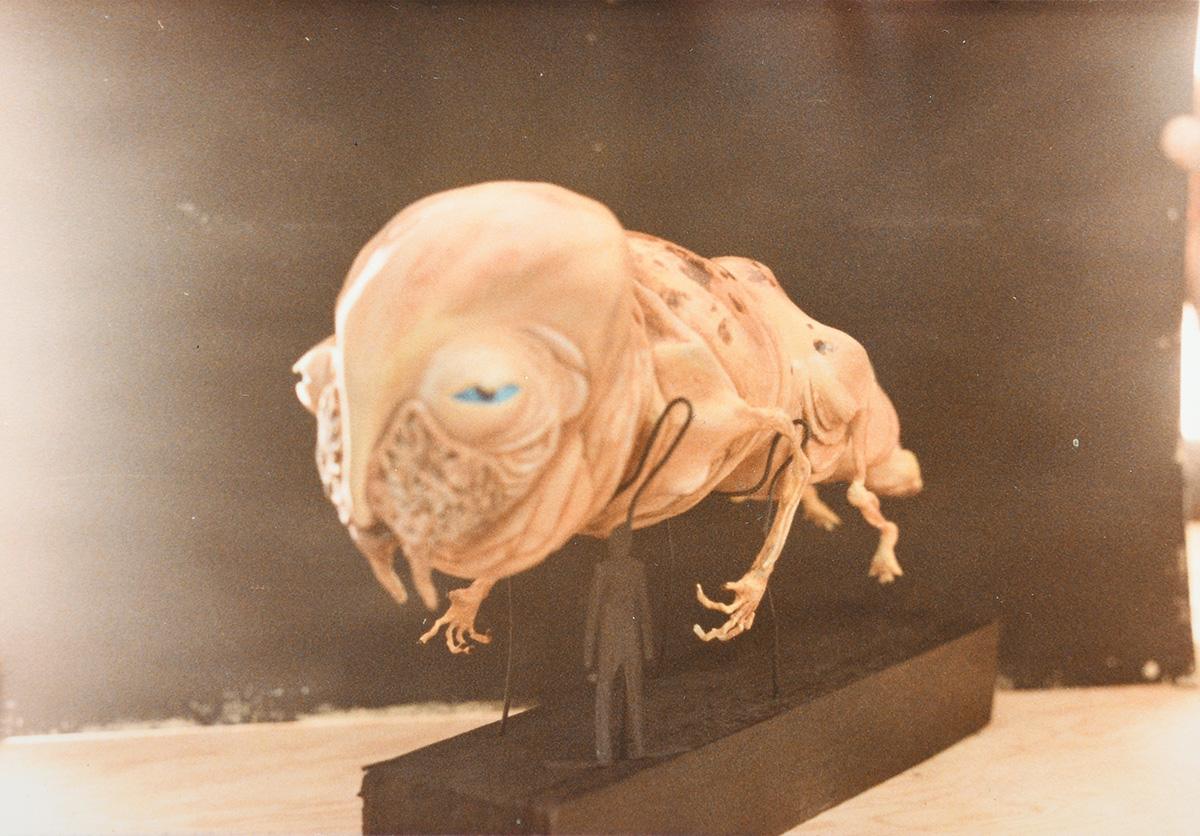
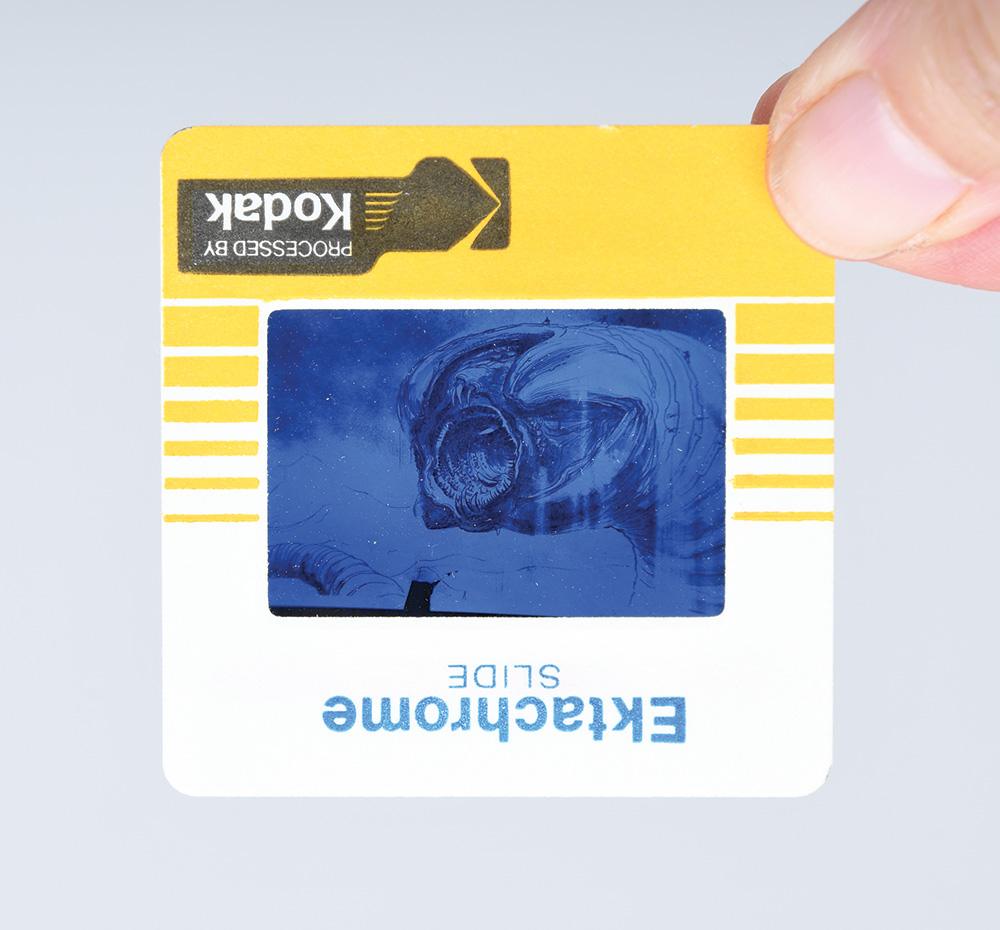
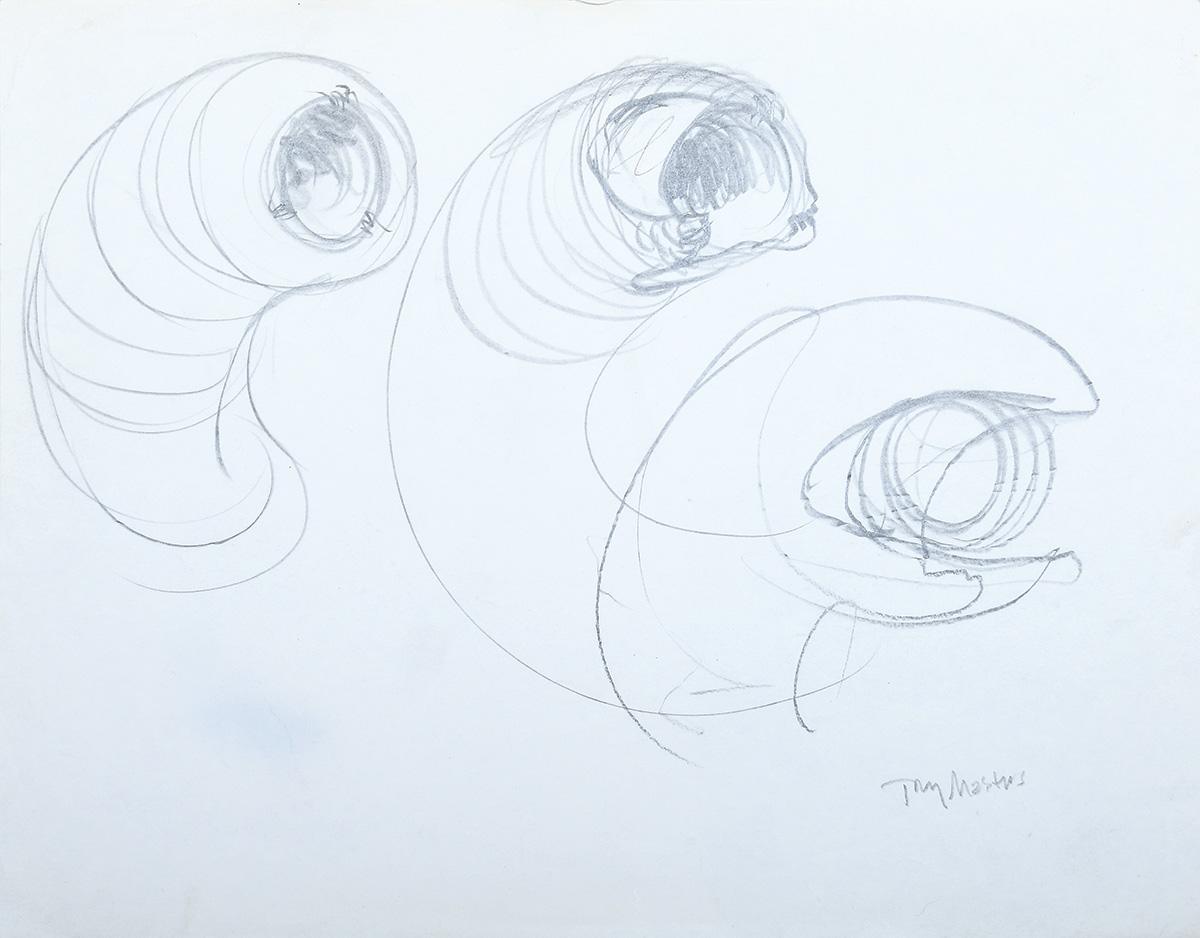
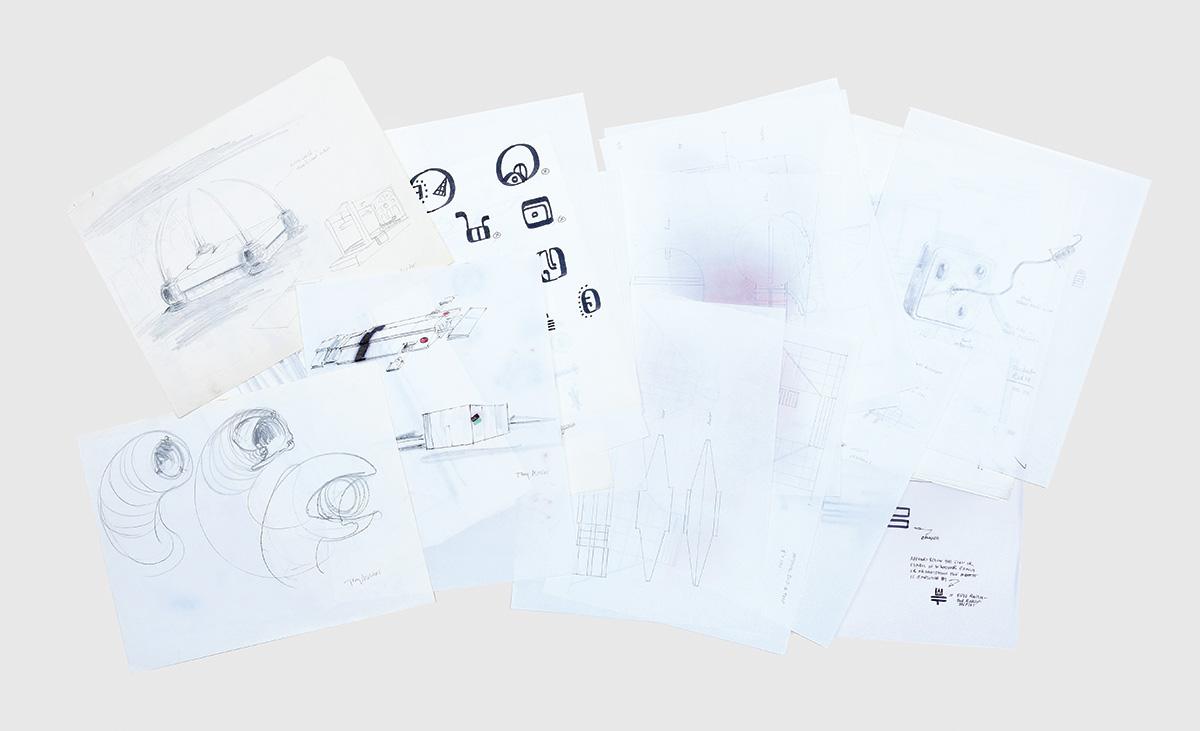
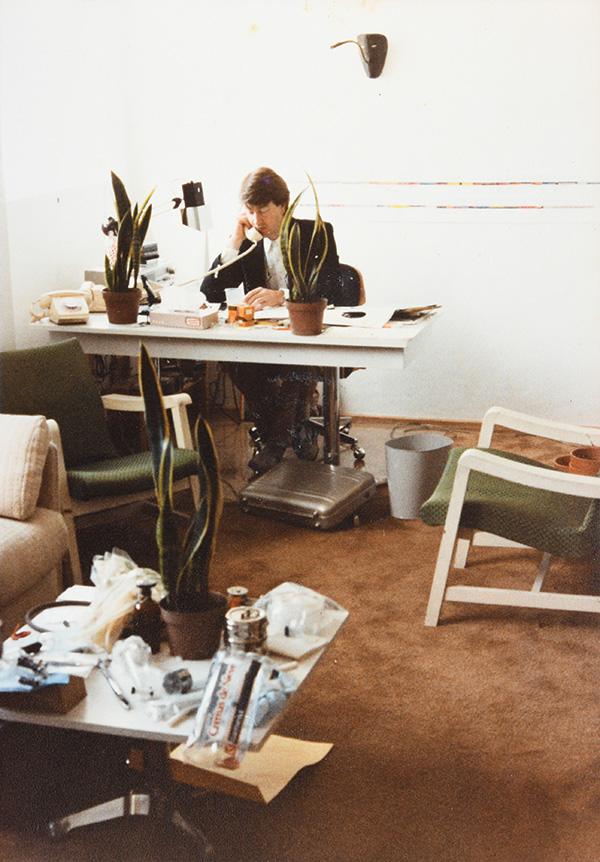
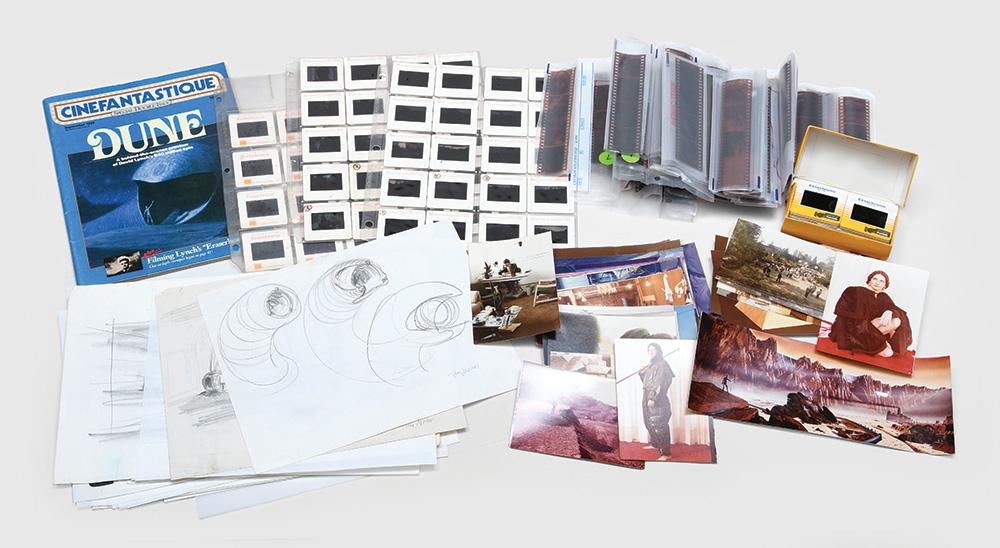
“I really enjoyed having Ron Miller’s archive of artwork and photographs from the production of David Lynch’s Dune film,” Sammy says. “Miller’s imaginative sketches of Atreides, Fremen, and Sardaukar weaponry and insignia are too cool, and you can really see how much zany fun the production team were having by the candid snapshots of them trying on robes and headpieces.”
Some of Ron Miller’s archive of artwork and photographs from the production of David Lynch’s Dune film
For Anna, the most inspiring pieces were the optimistic ones. “In an increasingly dystopian world, I welcome fantasies of a brighter future,” she says. “Sammy bought Idrisyn O. Evans’s The World of To-morrow when we first started discussing the idea for this catalogue last year. It’s an unashamedly enthusiastic paean to the future, in a strange experimental binding, full of excitement for electric cars, portable cameras, space travel, and a World League of Peace. We can but hope.”
Where Scifi is Now…
Those choices, like the wider catalogue, say something about where science fiction is at in 2026. The presence of film materials in a rare book catalogue highlights a wider multi-media machine, while the longing for hope has its latest incarnations in solarpunk, romantasy, and cosy stories.
A selection of pre-20th century books reflects a growing interest in science fiction’s history, with academics and commentators teasing out its deep roots. Edward Bellamy’s books Looking Backward and Equality show utopian visions from the late 19th century, while prophetic works by Marie Anna Adelaide Lenorm and (19th century) and William Lilly (17th century) highlight humanity’s endless obsession with predicting the future.
First edition and original art of Neal Stephenson’s Snow Crash.
The tech bros claiming to bring Banks and Stephenson’s visions to life can be seen as the latest variation on the followers of Nostradamus, picking out fragments of other people’s texts to justify their own plans. Imagined futures legitimate action in the present, and science fiction fills that role as well as any prophecy. These books show not only the genre’s deep roots but its long connection to political debate.
Other items carry us through the genre’s 20th century. Typed letters by Philip K Dick, like the sketches from Lynch’s Dune, are artefacts of a genre finding itself and the creators who shaped it. And while rare books, like fine wine, need time to establish their value, the catalogue reflects recent developments, with books by the likes of N. K. Jemisin showing science fiction’s path into the 21st century.
…And Where We’re Going
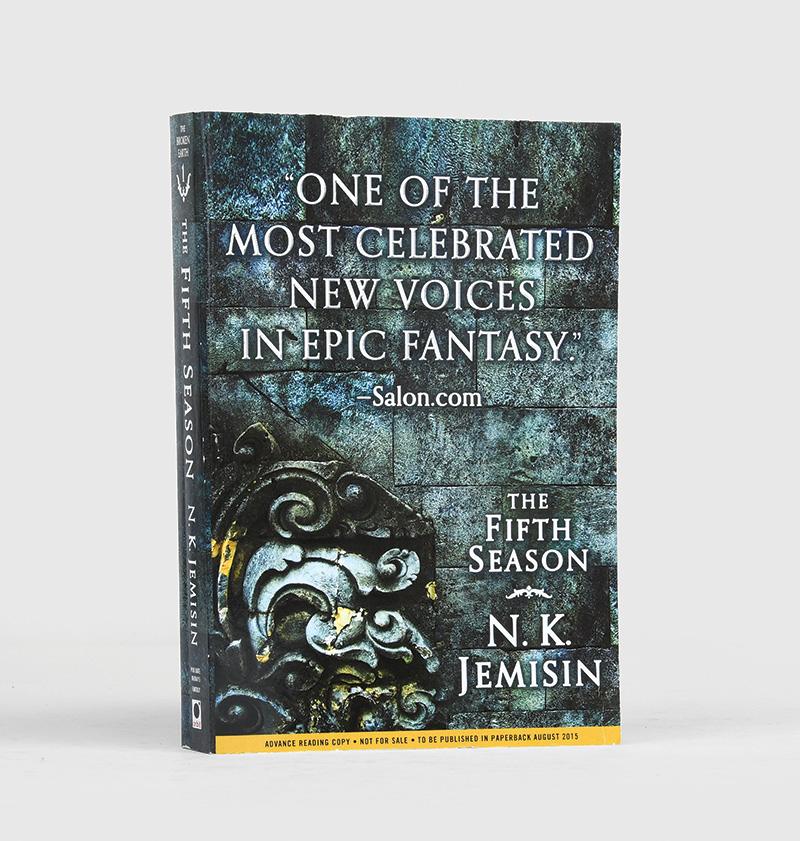
A proof copy of N.K. Jemisin’s The Fifth Season.
In a discussion about where we’re going, I wanted to know what these experts think the future holds. “I try not to do my own prophesying too much,” Sammy says, while Anna states that “I’m a bookseller rather than an oracle.” But once the caveats are out of the way, they have thoughts on which books might become collectors items.
“We’ve seen interest burgeon in writers like Octavia Butler and N. K. Jemisin,” Anna says, “and I hope that this is part of a wider trend towards the broadening of the sci-fi canon.”
Sammy also mentions Jemisin, as well as Neal Stephenson’s Anathem, which is popular with hardcore coders. “It must be something about the book envisaging the tech world as its own arcane, monastic enclosure that appeals to them! It’s not a terribly expensive book yet, but I can envisage it becoming so once that customer base gets their hands on it.”
Historic copies of scifi books exist in a place of tension, where love of the past meets curiosity and fear for the future. That tension is a familiar feeling in the genre community, as authors grapple with imminent topics of surveillance, climate collapse and authoritarianism while their own futures are thrown into uncertainty by generative AI.
But browsing this catalogue, I was reminded of how much joy could be found in stories, no matter how dangerous the future looked. From wild prophecies in the war-torn 17th century, through Edward Bellamy dreaming utopias amid industrial smog, to Jemisin crafting worlds of wonder in the shadow of the war on terror, authors have always helped us dream of better futures, while old books provide a comforting connection to history.
The existence of a catalogue like this, decades into the era of the internet, feels like optimism fulfilled. If all we wanted was stories, then we could pick up digital editions, and the old copies would be worth no more than the paper they’re printed on. But objects in themselves have value, unique physical items in a digital age, linking us to their authors and to a shared history.
“What rare book collectors really want is authentic connection,” Sammy says, “yes with books, but also with fellow book-lovers. Thus I suspect, or hope, that the old-school relationship between collector and bookseller, whether mediated by an intercontinental video-call showcase over Zoom, or assisted by an AI number-crunch of the market record, must remain essentially the same.”
In an era of the inauthentic, derivative and digitised, rare books don’t lose value but gain it. As Anna says, “I’m confident that the human touch of printed and handwritten words will continue to be valued – perhaps more so, as we crave a brief respite from our shared cyberspace.”
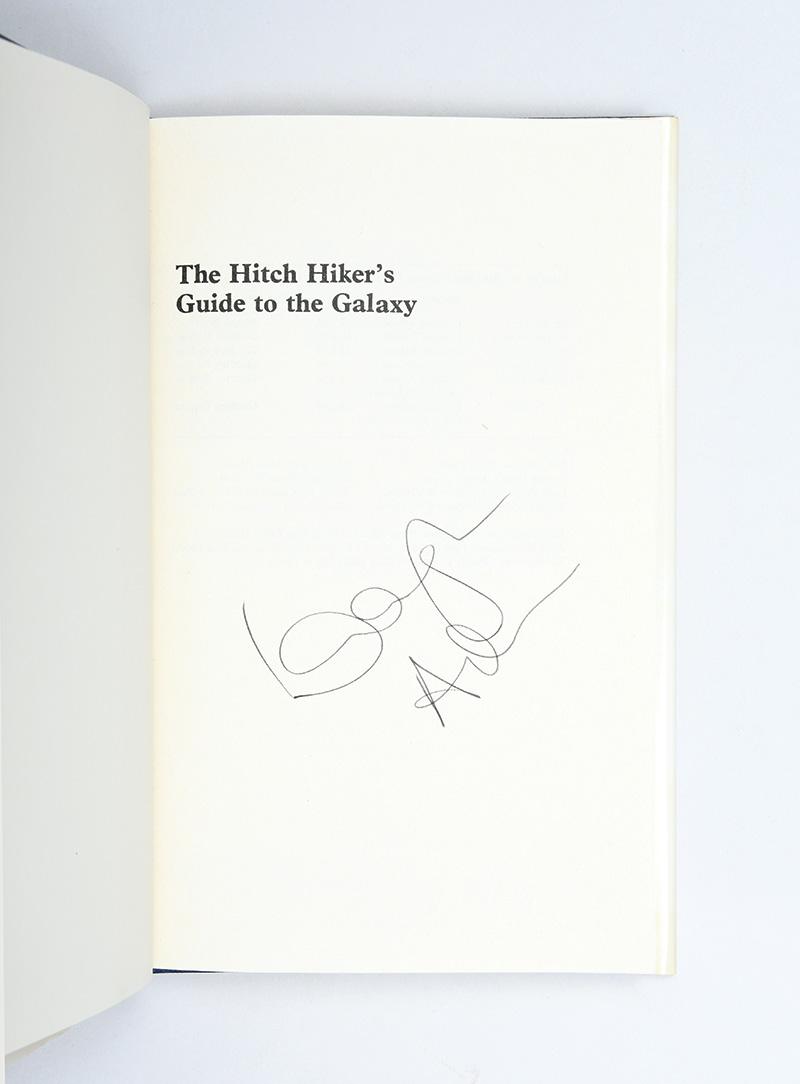
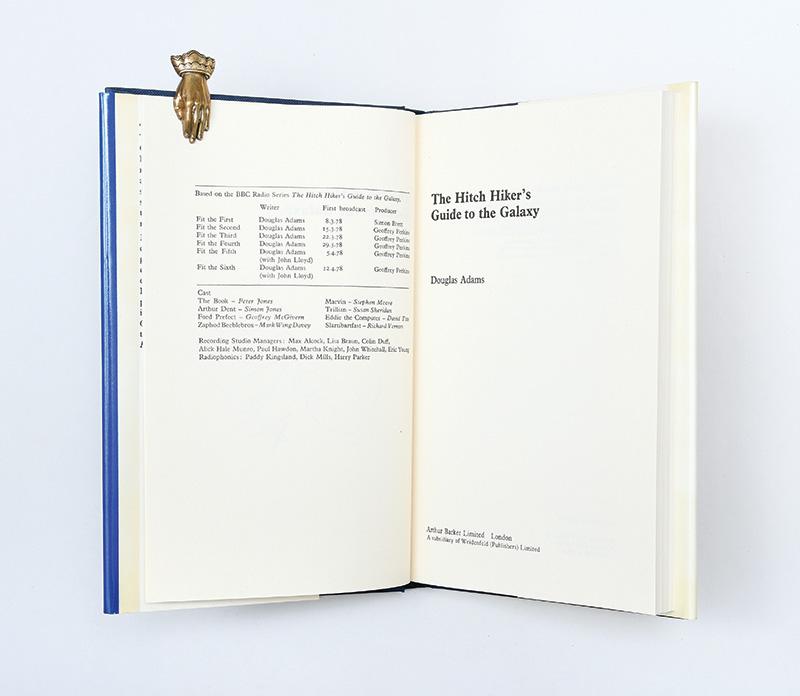
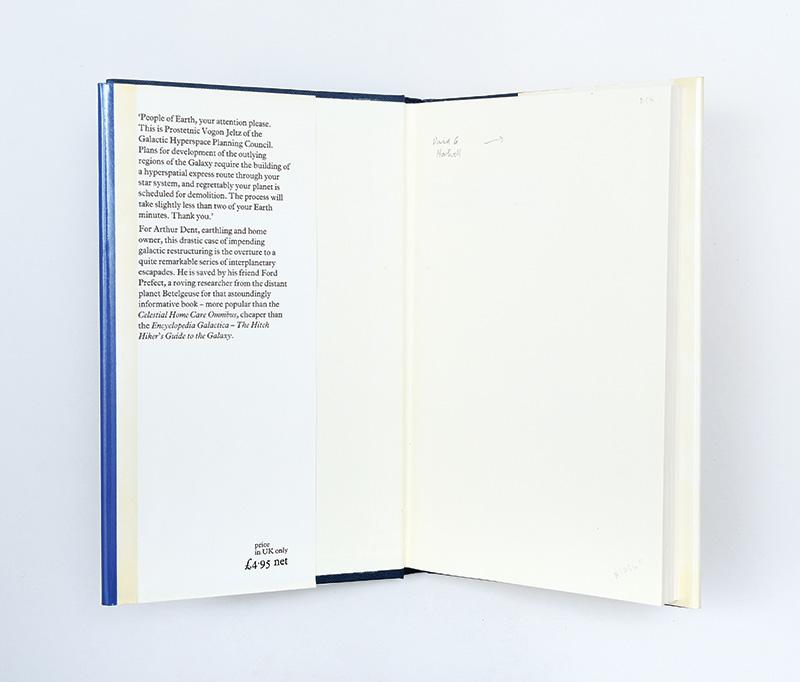
A signed first edition of Douglas Adams’ Hitch Hiker’s Guide to the Galaxy.
All images copyright Peter Harrington.
Meet the guest poster
Growing up, Andrew Knighton’s goal was to go on fantastical adventures in impossible worlds. When that didn’t work out, he started imagining the adventures instead, and a writer was born. He’s now the author of the Forged For Destiny and Executioner series, and his novella Walking a Wounded Land is a finalist for the British Fantasy Awards. He lives in Yorkshire with an academic and a cat, growing vegetables and striving for a brighter future, while still hoping that a magical portal will open between the broad beans. You can find more of him at andrewknighton.com.