The shortlisted works across all 13 categories of the British Fantasy Awards have been announced! Find out who’s in the mix over on our blog. Winners announced at Fantasycon in October.
For all things fantasy, horror, and speculative fiction
-
Announcement:
Meet Benjamin Adams
Every Friday, we meet a member of the BFS and peer deep into their soul (or, at least, a form they filled out). Want to be featured? Email us: online@britishfantasysociety.org
Name:
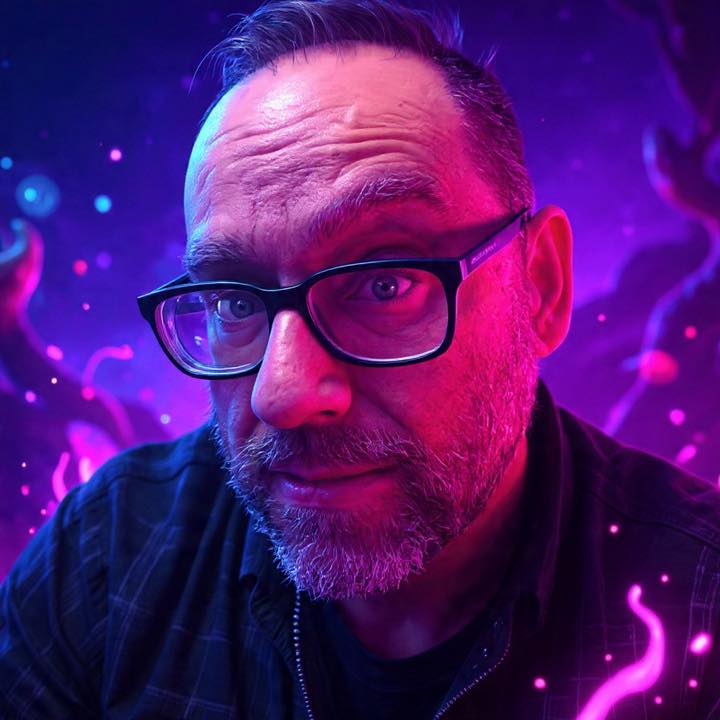
Benjamin Adams (he/him)
Which region are you based in?
I’m in the sprawling desert megacity of Phoenix, Arizona, USA.
If you write, which genre:
Sci-Fi, Fantasy and Horror
Are you drawn to any specific SFFH sub-genres?
I’m most drawn to quiet, uneasy, cosmic horror. When it comes to SF, I most enjoy space opera featuring megastructures and transhumanism. With fantasy, I enjoy street-level fantasy with a lot of humour, somewhere halfway between Hyperborea and Discworld.
Your influences
Tell us about the book/film/thing that got you into SFFH: What was it? How old were you? What impact did it have on you?
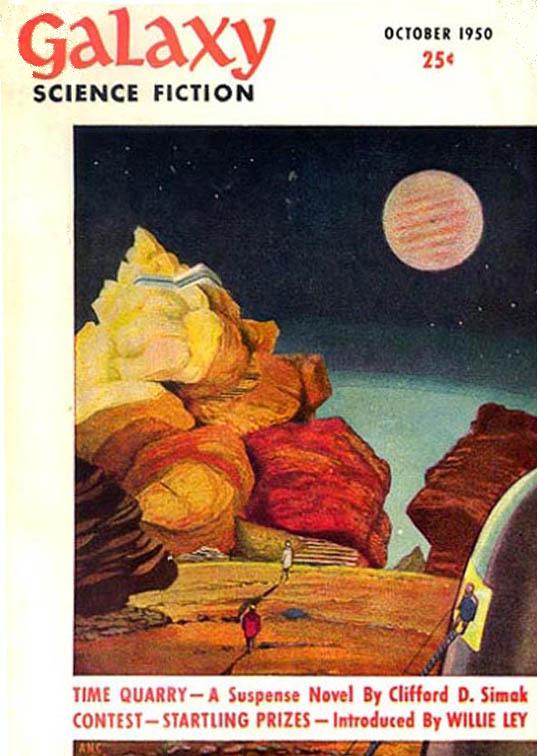
My very earliest memories of horror and SF are of Star Trek and Outer Limits episodes being re-run in the very early ‘70s. In 1973 I saw my very first Doctor Who on KCET in Los Angeles—episode two of “The Claws of Axos”—and absolutely fell in love with everything about it. I then transitioned to watching Tom Baker episodes as the ‘70s went on. And then the Year One of Space: 1999 was also a huge hit for me, but the less said about Year Two the better. Alongside these I started reading SF with the juvenile novels of Robert A. Heinlein and old Galaxy Magazine anthologies, fantasy with Tolkien’s The Hobbit, and horror with the brilliant “Alfred Hitchcock” branded short story anthologies edited by Robert Arthur, which were filled with fantastic horror and thriller stories from the first half of the 20th century. And after that I drifted into H.P. Lovecraft. All this absolutely had a huge impact on my tastes.
How does that early influence show up for you (in life/writing/agenting/publishing/editing/reading) now?
The Lovecraft influence was big in the beginning of my career and is still there—I’m a complete sucker for cosmic horror, and very often my characters are up against something much larger than they are, against which they have no hope (much like how living in America feels these days). When I write SF, I find myself thinking, “Would this be good enough for Galaxy?”, which likely does me little good as they closed shop decades ago. And my fantasy leans toward sword-and-sorcery, again because I can sneak in horror elements. Bizarrely, however, I recently sold a straight-up romantic fantasy story to Flame Tree. It’s like nothing I’ve ever done, and I’m stunned that they took it, to be frank… So that opens an avenue I’d never seriously considered.
Where do you draw your creative inspiration from?
The world around me. I literally read the headlines every day and look for headlines and stories I can put in my iPhone’s notes app, which I refer to as my “Commonplace Book” after old HPL. I listen for anecdotes and make use of those as well. And my own childhood and experiences have been the source of quite a few stories.
Who do you look to as a genre hero? Why?
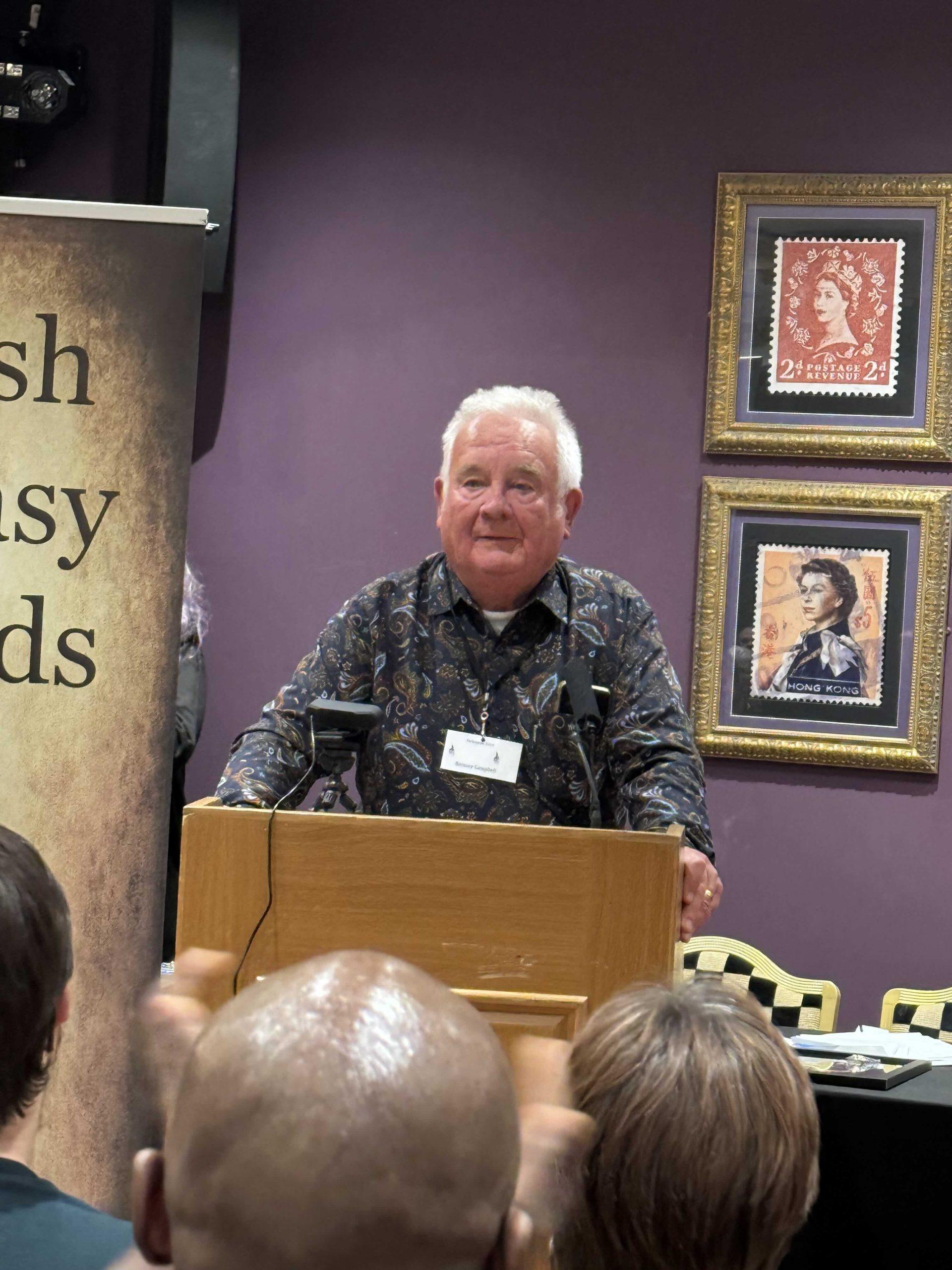
Above anyone else, it’d be Ramsey Campbell (pictured). He can wring more horror out of a single paragraph describing a piece of litter blowing down a Brichester alley than many writers can out of two pages of gore.
Your Work
You’re stuck in an elevator for 60 seconds with that hero, and they want you to describe your work. Give us the pitch.
As Ramsey has proven to be surprisingly friendly and approachable (he’s no diva!), I’d say, “My stuff tends to be quiet and ominous like yours, perhaps a bit satiric and moralistic like Rod Serling, but most of all I want readers nodding in appreciation when they’ve finished one of my stories. I feel lucky to be doing this.”
And then, because that wouldn’t take 60 seconds, I’d ask if he wanted to go grab a pint at the convention hotel’s bar and chat about movies.
What are you working on right now?
I’m currently doing a final edit of my piece for a project with Ruadán Books. I then have a novella about an apartment building that eats artists that I want to polish up a bit more before hopefully finding it a home.
Thinking about all the stories/work you’ve done, what sticks out most in your mind? Why?
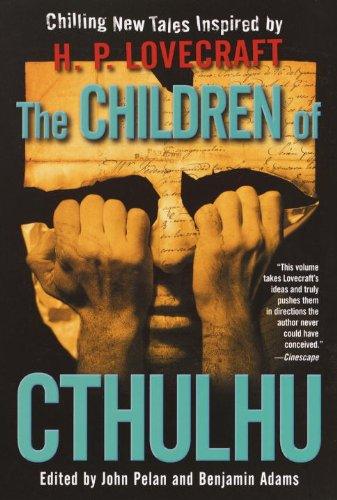
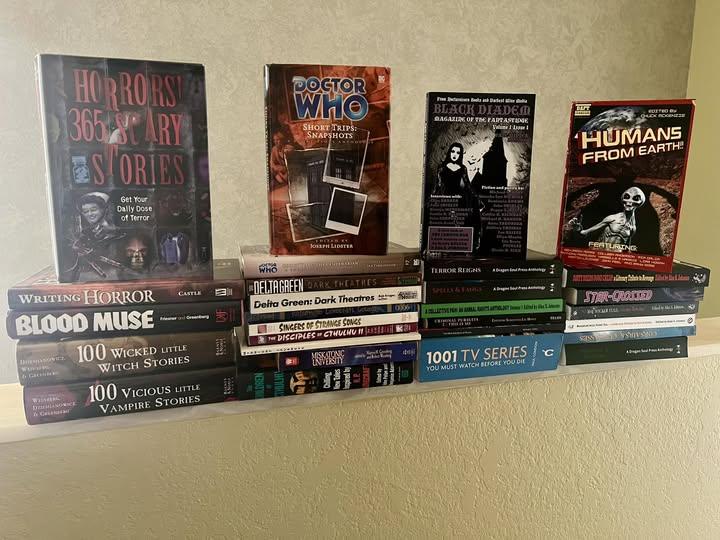
I’m still delighted that I had the chance to write two Doctor Who stories for Big Finish Productions’ line of Short Trips anthologies, but what stands out to me the most is the anthology I co-edited for Del Rey with the late John Pelan, The Children of Cthulhu. We were lucky enough to get some fantastic writers in there like Paul Finch, Tim Lebbon, Caitlin R. Kiernan, Poppy Z. Brite, Matt Cardin, Brian Hodge, Yvonne Navarro, Alan Dean Foster, and many more. It was a hell of an experience, and I wouldn’t mind doing it again. Hint, hint.
Where and when do you create/are you at your most creative?
As my eyes aren’t that great, I literally have a 36” flat screen telly at my work desk with the font size dialled up high. I find I’m most creative if I begin writing before noon and keep going until late afternoon. I very much dislike writing in the evening, as I’d rather spend time with my wife on the couch.
What’s the best advice you’ve received about creativity?
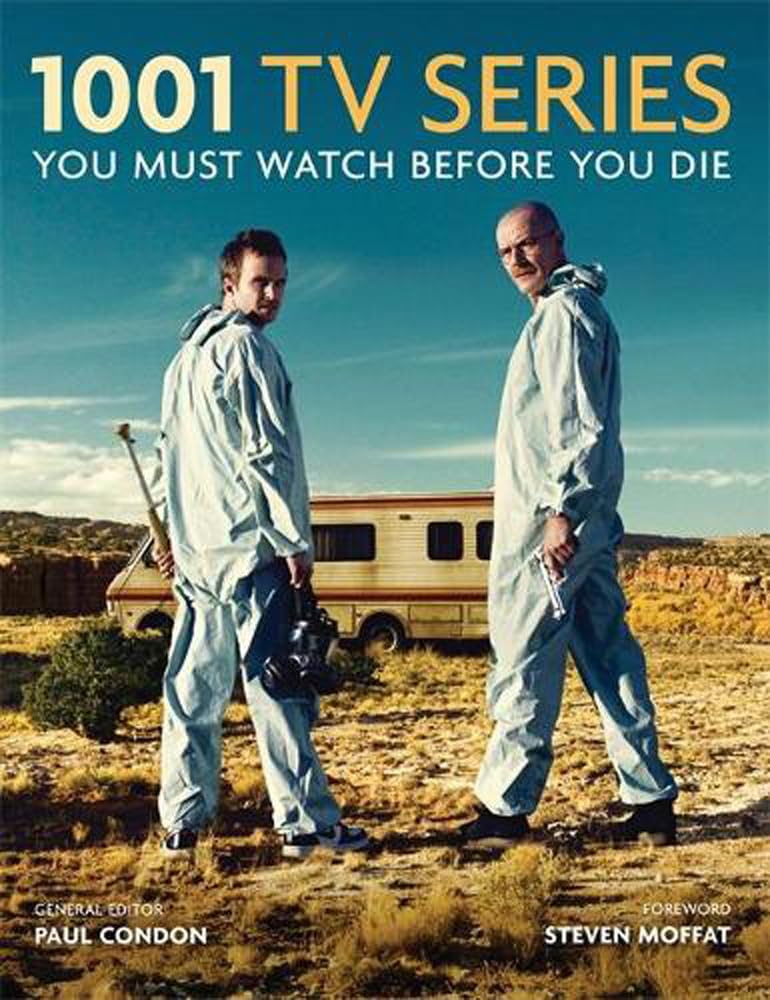
Write something every day, even if it’s just a sentence. It’s as simple as that. I’ve had an interesting journey with my writing—I was prolific back in the 1990s and early 2000s but then found myself with a late diagnosis of autism. This caused a horrible amount of second-guessing about myself, my relationships with other people, the world around me, and my own writing. I would ask myself, “Do I have the right to write about other people if I’m so different than them?” My fiction ground to a halt, although I continued writing non-fiction pieces for websites and books such as the late Paul Condon’s 1001 TV Series You Must Watch Before You Die. I also had a life-threatening illness around 13 years ago that threw me for a loop.
So, things dried up and I stepped away from the keyboard, having convinced myself I had writer’s block. Embarrassingly, I was invited to contribute to one of Paul Finch’s Terror Tales anthologies, and I froze. I was able to produce one paragraph and that was it. I had to back out. Then a bit over a year ago, Samantha Lee Howe invited me to do a piece for a cancer charity anthology, Criminal Pursuits 2: This Is Me. The theme was “identity,” and I realized I had a half-finished story from the 1990s that fit the theme. I dug it up, had a dismal but effective time getting it converted into a modern Word format, and found myself able to finish it. I breezed through it in a way I hadn’t been able to write in ages. And I haven’t been able to stop since. I’ve retired early at the age of 60, so this is now my “day job,” so to speak. (And, yes, not having to work for someone else has certainly made things much easier creatively.)
So, write something every day is the best possible advice. Don’t stop. Don’t let depression block your way. Just get something down every day. A sentence. Story fragments. Bits of conversation you heard. Just get something down.
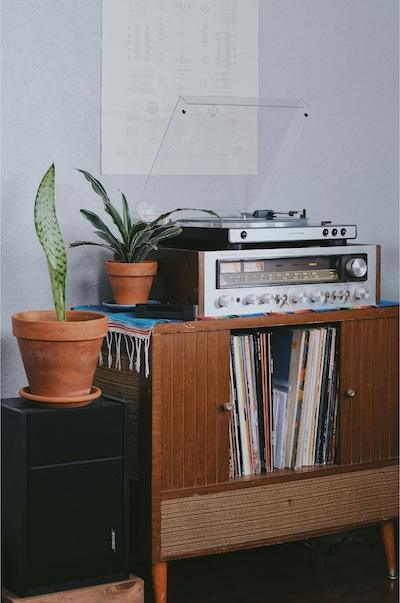
What’s your writing soundtrack?
Oh my. What a question. Pretty much anything besides modern country music or opera. I’m a huge music fan and used to manage record shops! So, I have a universe of different kinds of music in my collection, both physically and digitally. When I write, I play my digital collection through an app called Plexamp, which uses non-generative A.I. to create an ongoing playlist that flows together like a radio station which can literally travel from ‘70s punk, to Indonesian gamelan, to UK TV music from the ‘60s and ‘70s, to alternative rock of the ‘90s, to electronic music of today. It provides me a great flow.
If there’s a certain sort of scene I need to write, I’ll also play music that matches the genre. So, for a “noir horror” set in the early 1950s that I recently sold to Phantasmagoria Magazine, I played jazz from the period.
(Photo by Charlie Alcaraz on Unsplash)
The Quick-Fire Round
Sci-fi, fantasy or horror?
All of them.
Quiet or loud?
Quiet. “No alarms and no surprises, please.”
Dark or light?
Mostly dark but with some cracks, “that’s how the light gets in.”
Strict lines or genre blend?
Genre blend all the way. Nothing is strict in my world.
Awards or bestseller?
Erm. Sales most of all, then awards if I earn them. I’m not fussed about ever being a bestseller—my heart is in short fiction. I’ve written a couple of trunk novels but meh.
Fiction or non-fiction?
Fiction has my heart; non-fiction has my head.
Poetry or prose?
Prose. I wrote quite a bit of poetry when I was a teenager, and even now when I look at it I think it’s not bad—but these days if I have a poetic turn of phrase, it goes in a story.
Plotter or pantser?
A bit of both. I usually like to have an idea of the ending and then work toward it.
Reading or listening?
To fiction? I prefer reading, because then I can listen to music in the background. Audio dramas require my full attention. I enjoy them, and have quite a few friends who write them professionally, but overall I’d rather read.
Notebook or computer?
Computer, tablet, and phone.
Favourite SFFH book of all time?
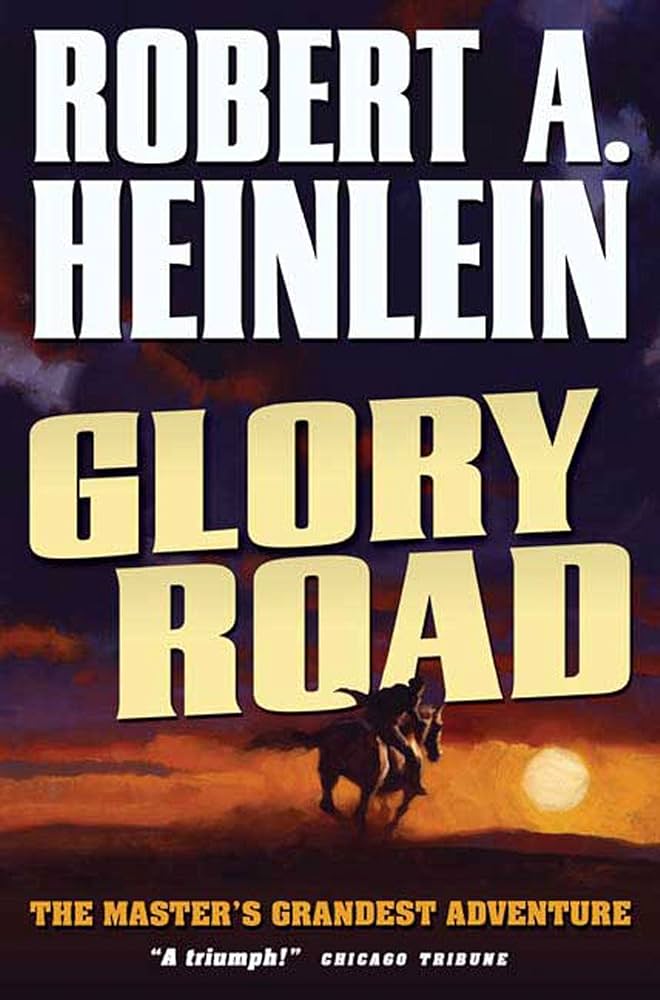
OK, this is going to be an oddball one, which I’d lay odds no one else has ever confessed to you. It’s Glory Road by Robert A. Heinlein. Yes, the sexism is egregious even by the standards of when it was written—one of Heinlein’s unfortunate flaws—but it’s a rip-roaring and smart adventure yarn that I’ve gone back to repeatedly since I was a teenager. But I don’t believe it has ever influenced my work.
Last book you read?
Cthulhu Cymraeg The Night Country: Lovecraftian Tales from Wales, edited by Mark Howard Jones. Huge fun—wait, I’m sorry—awful horribleness set in my favourite place in the world.
Any SFFH author on auto-buy?
No—unless it’s a collection of short stories by Ramsey Campbell. I most prefer anthologies featuring a multitude of writers, so it’s series that are auto-buys for me, like Terror Tales and Mark Morris’ Alphabet of Horror series. I do go out of my way to buy books by my friends, though. I just can’t afford every single one!
Favourite podcast?
I’m very fond of dipping into the Scarred For Life podcast every now and then, and I enjoy Kayleigh Dobb’s Happy Goat Horror and Paul Magr’s The Cosy / Cosy Bookish Show on YouTube. And then on YouTube there’s also Frank Duffy’s new Hungry Celluloid, which debuted with a lovely chat featuring Benjamin Unsworth and Trevor Kennedy.
The Home Stretch
What’s the best thing about being part of the SFFH community?
Knowing other people who have heads that think like mine—which makes things a bit rough as many of them are in the UK. However, my wife and I are making plans to get to Fantasycon in Glasgow this year, barring the interference of world events that could have and should have been avoidable.
Time to plug your stuff! Where can we find you and your work? What have you got coming up? Consider this your advertising space.
Children of Cthulhu is still available via Amazon, and I’m in quite a few anthologies out there. Unfortunately, everything from the ‘90s is out of print, as are the Big Finish titles I’m in. For recent work, I’d steer people towards the anthologies Humans From Space (Daft Notions), Corsairs and Cutlasses (Raconteur Press), Star-Crossed (Words by Edward), and Moondust Will Cover You (Nocturnicorn Books), all available from Amazon.
Coming up I have stories in Dreams Divine (Flame Tree Publishing), Summer in the City (Ruadán Books), Horror Library Vol 10 (Dark Moon Books), and Phantasmagoria Magazine.