The shortlisted works across all 13 categories of the British Fantasy Awards have been announced! Find out who’s in the mix over on our blog. Winners announced at Fantasycon in October.
For all things fantasy, horror, and speculative fiction
-
Announcement:
Meet Matthew Palmer
Every Friday, we meet a member of the BFS and peer deep into their soul (or, at least, a form they filled out). Want to be featured? Email us: online@britishfantasysociety.org
Name:
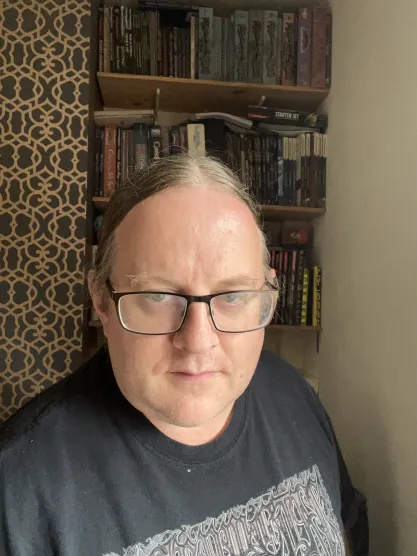
Matthew Palmer, writing as M S Palmer (he/him)
Which region are you based in?
Northwest (Merseyside)
If you write, which genre:
Fantasy
Are you drawn to any specific SFFH sub-genres?
I’m currently writing contemporary fantasy. I’m very drawn to stories about magic interacting with modern society.
Your influences
Tell us about the book/film/thing that got you into SFFH: What was it? How old were you? What impact did it have on you?
I’m going to be boring and say Star Wars! I was a kid growing up in the early eighties, and that’s what dominated pop culture. It was my first obsession and it served as an introduction to both fantasy and science fiction. We did a school project on Greek mythology in early primary school as well, which I found fascinating. Seeing those two things combined in Ulysses 31 introduced me to genre blending, which I also love.
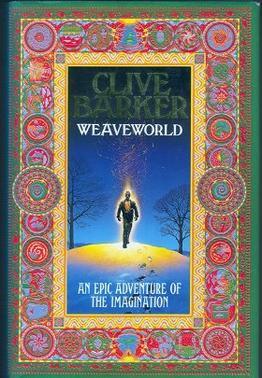
In terms of SFFH literature, I think I would point to when my mum bought me a copy of Clive Barker’s Weaveworld when I was 13 years old, which reignited a love of reading that I had lost in my early teens. I think it’s safe to say that she probably didn’t understand quite how explicit the content was, but I loved it and swiftly demolished all of Barker’s work at the local library, followed by the rest of their SFFH shelves.
How does that early influence show up for you (in life/writing/agenting/publishing/editing/reading) now?
If I was to draw a common line between Star Wars, Barker and my work, I think it would be about empathy and moral complexity. Fundamentally the conflict between Luke and Vader is resolved because he can’t believe that his father is completely evil, despite what his mentors say. In Barker’s work, his monsters always have human hearts, and his human characters are capable of great monstrosity. I hope that I can portray similar levels of complexity in my work.
Both also had very well conceived female characters that don’t fit into traditional roles. Generally I’m not interested in reading or writing something that doesn’t reflect the amazing diversity that humanity is capable of.
Where do you draw your creative inspiration from?
Current events if I’m honest. My debut novel, Lost Talent, draws a lot of inspiration from thinking about the hidden magical societies that are so common in contemporary fantasy and how they parallel modern political isolationism, such as Brexit. The current trend away from international co-operation is pretty disturbing, and I wanted to write about how much poorer we all are when we cut ourselves off from other people, and how that’s particularly bad for other young people.
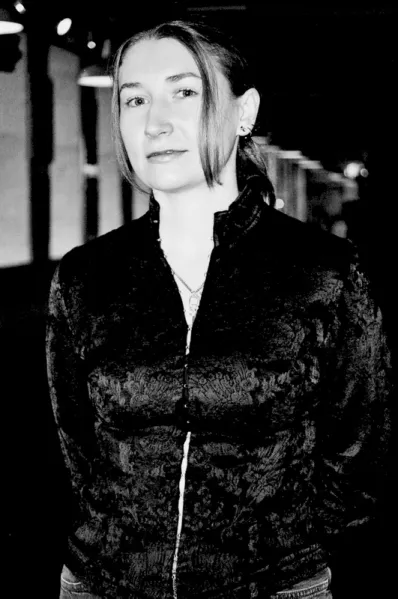
Who do you look to as a genre hero? Why?
My absolute favourite author of all time is Steph Swainston (pictured; source). Her Castle series was so different to what I had come to expect from fantasy—its strangeness, its grittiness and the moral ambiguity of its characters blew my mind. Her unreliable, drug addicted, immortal protagonist Jant is amazing and his cynical view of an epic fantasy conflict examines questions of ambition, desire, power and who gets to use it. It’s everything I want in a fantasy series, though it could probably do with some heavy content advisories if it was published today…
Your Work
You’re stuck in an elevator for 60 seconds with that hero, and they want you to describe your work. Give us the pitch.
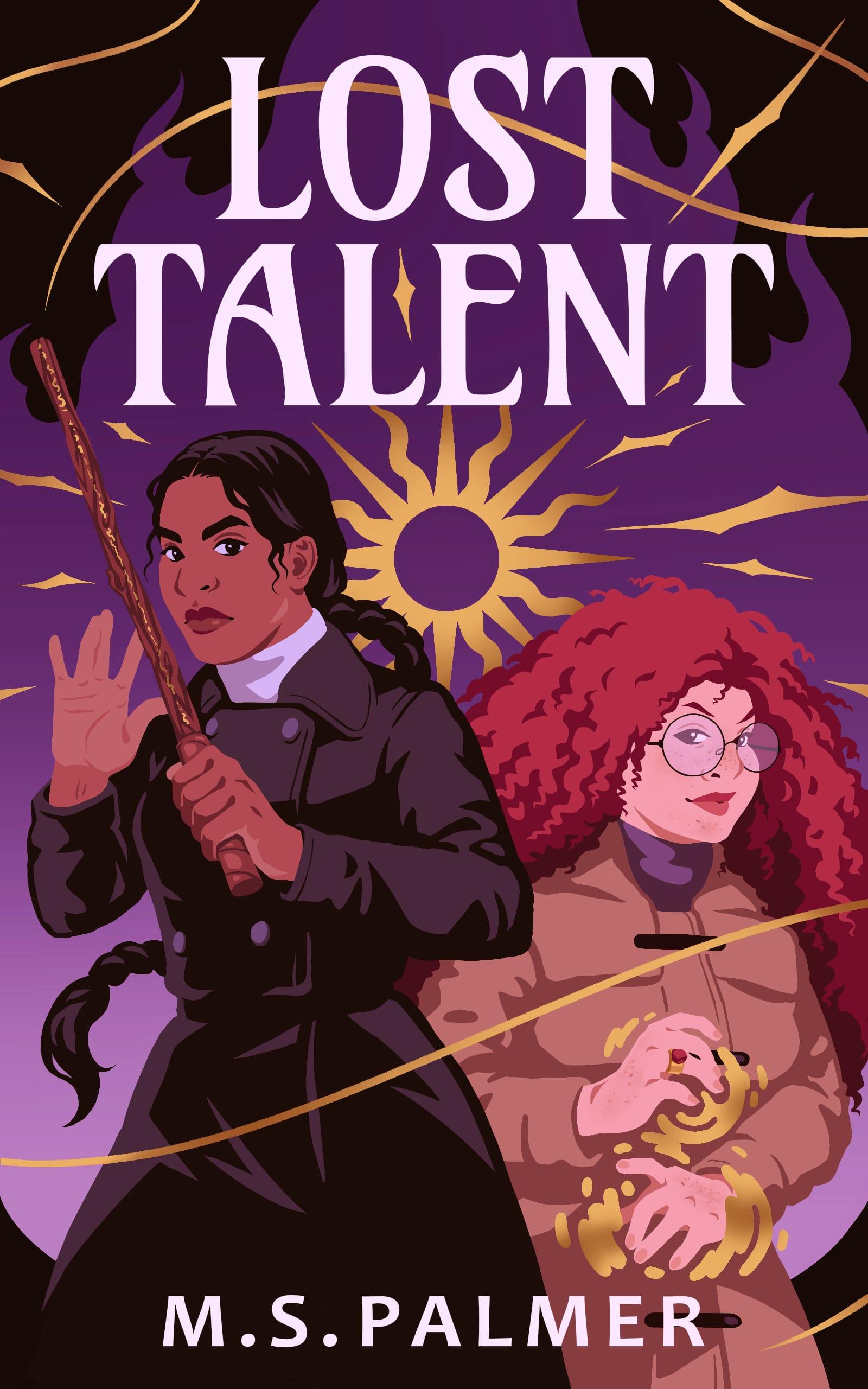
At Oakward Academy, Mina was told she was ‘a mage of no particular talent.’ After graduating, she is stuck working in Burgamont & Mandragora’s Arcane Emporium and wondering what happened to her childhood dreams.
Everything changes when one of her friends suddenly disappears, accused of smuggling magic to the ‘untalented.’ Mina and her friends have to scour Britain’s hidden arcane society in a desperate attempt to find him and clear his name before they lose him forever.
To succeed, Mina will need more than just magic—she will need to overcome the repressive lessons of magic school and the shadow that it continues to cast on her life.
What are you working on right now?
Putting the finishing touches to Lost Talent, which I hope to publish in April of 2026. I’m waiting for proofreading and my final cover design to come in.
Book 2 of the series, A Coven for Outcasts, is about to go to beta readers, as soon as I give it one last polish.
I’m also pushing through my first draft of Book 3, tentatively titled Magic School Reunion.
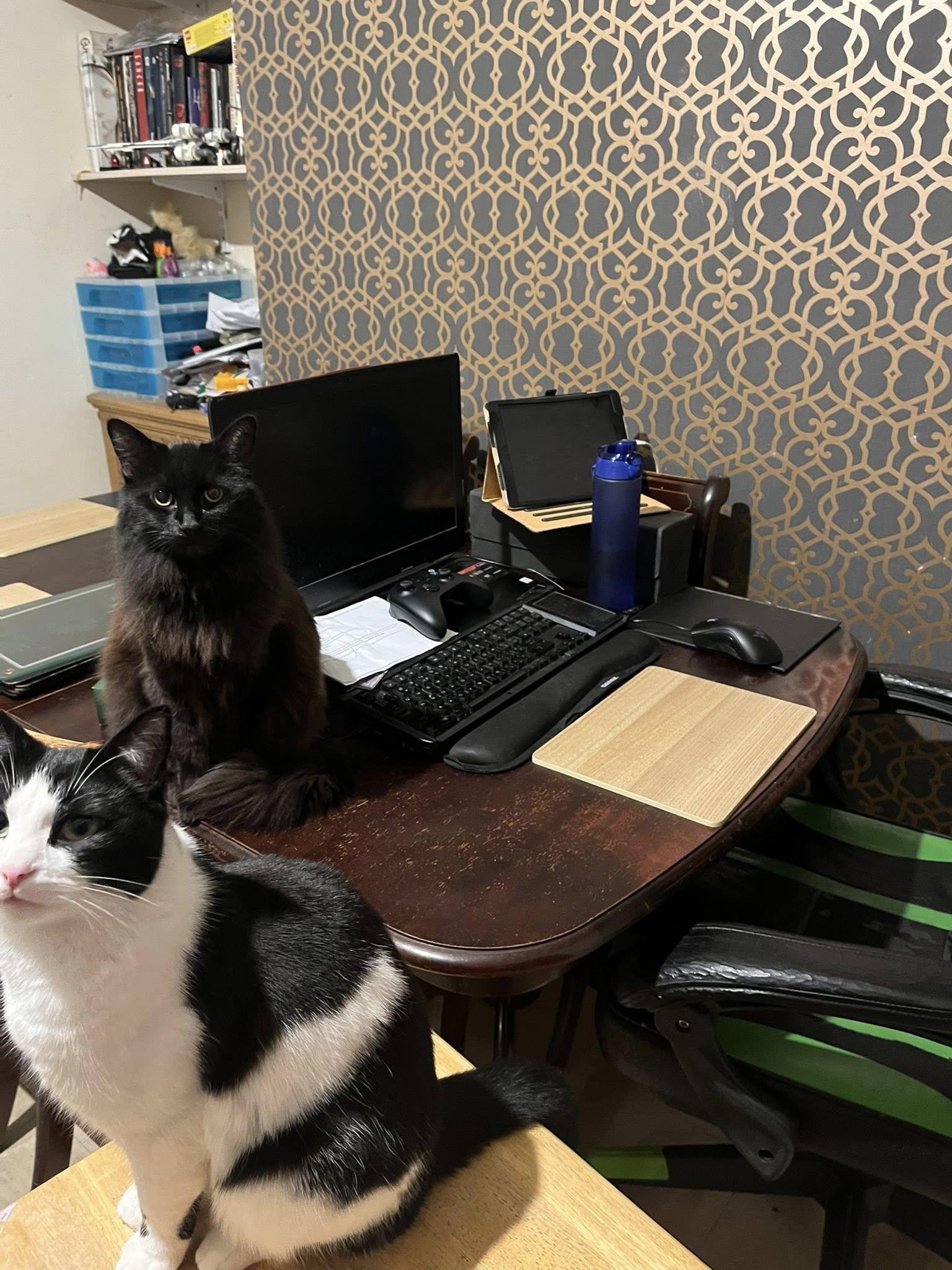
(Pictured: Matthew’s writing space, with bonus cat tax)
Thinking about all the stories/work you’ve done, what sticks out most in your mind? Why?
I still feel like I am starting out; the series that I am working on is my first serious project. What I really wasn’t prepared for is how my four main characters—Mina, Heidi, Solomon and Beryl—have come to life for me. They have really taken on a bit of a life of their own. I never understood writers anthropomorphising their characters until I started writing myself.
Where and when do you create/are you at your most creative?
In moments of stillness, when my brain is free of anxiety and can relax. That moment when I am lying in bed and just about to get up or go to sleep. Public transport is good, too. It’s all about finding moments when I can put all of my worries and concerns to one side and just let my mind float about until it lands on something.
What’s the best advice you’ve received about creativity?
Just write. You have to stop worrying about if you can do it or where your story is going, and just sit in front of a blank page and put the words on paper. You can worry about improving them later.
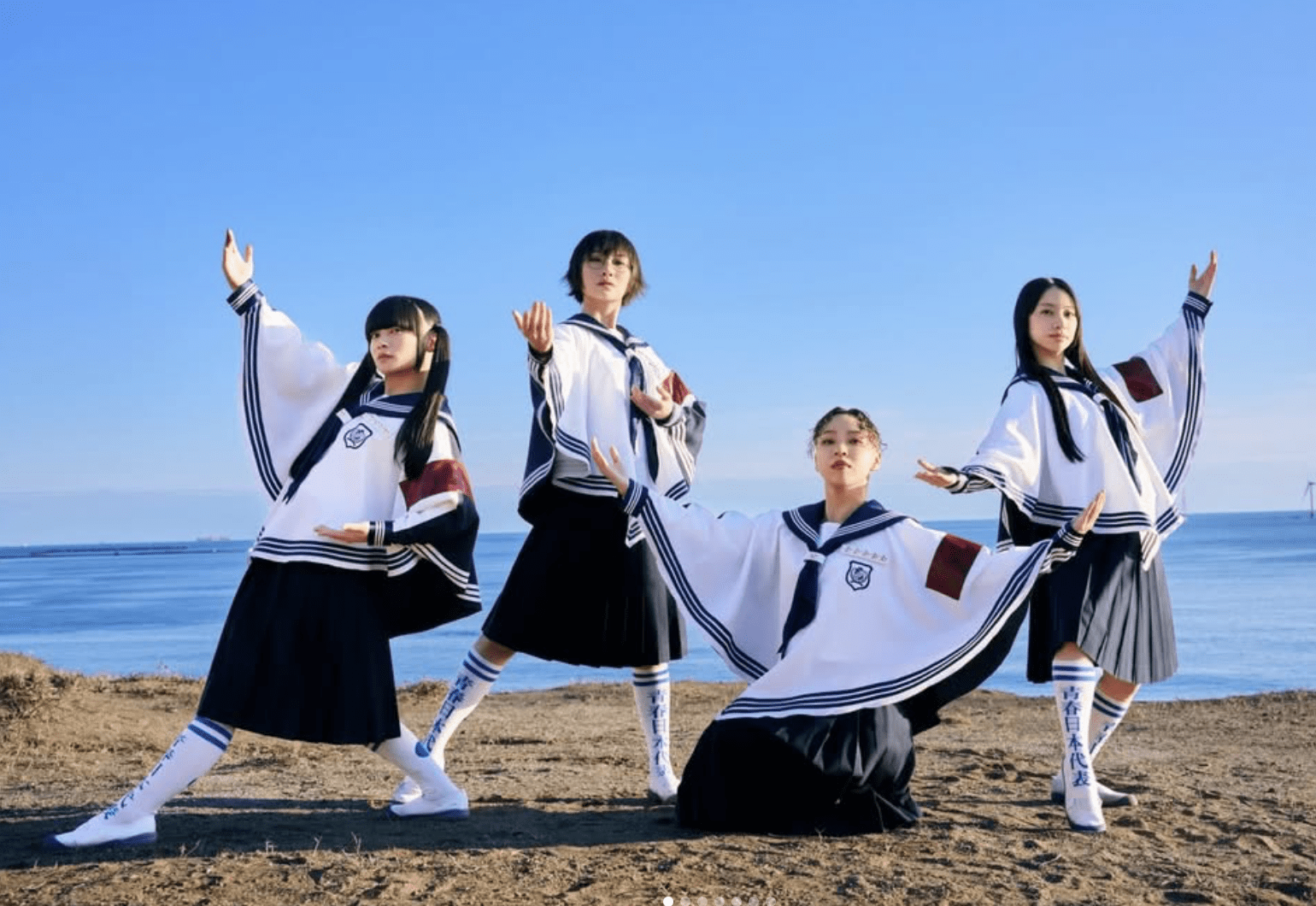
What’s your writing soundtrack?
Eclectic! I sometimes switch up soundtracks based on what I’m writing, but my general writing playlist at the moment is mix of alt pop, J-pop, retro 80s classics and heavy metal. For some reason Aurora’s music just puts me in the zone, so does Atarashii Gakko (pictured; source)! There is some Fleetwood Mac in there as well, alongside Placebo and Electric Callboy.
The Quick-Fire Round
Sci-fi, fantasy or horror?
Fantasy
Quiet or loud?
Quiet
Dark or light?
Dark
Strict lines or genre blend?
Genre blend all the way.
Awards or bestseller?
Honestly both sound like a lot of pressure. I’m happy with any readers I get at this point.
Fiction or non-fiction?
Fiction.
Poetry or prose?
Prose
Plotter or pantser?
Pantser
Reading or listening?
Reading
Notebook or computer?
Computer
Favourite SFFH book of all time?
Kushiel’s Dart by Jacqueline Carey
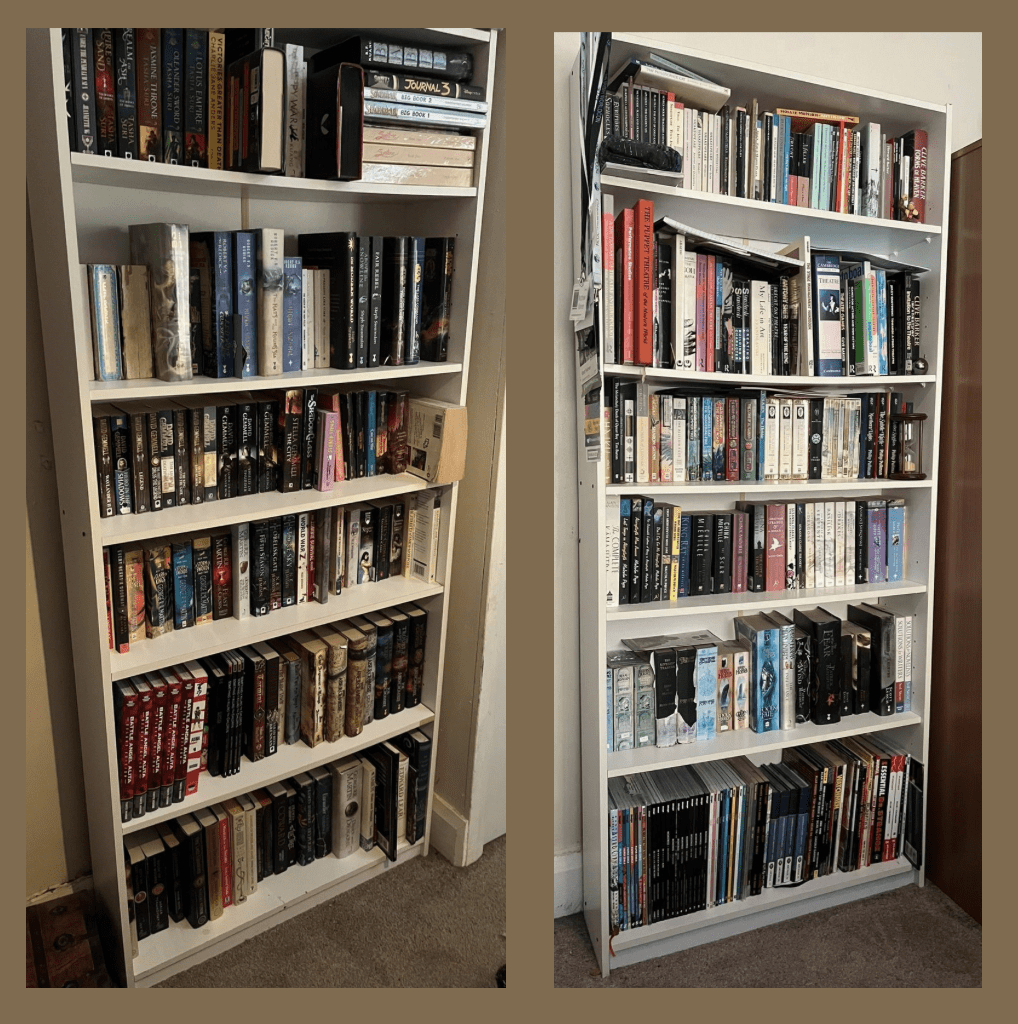
(Pictured: Matthew’s bookshelves)
Last book you read?
A Sword of Gold and Ruin by Anna Smith Spark
Any SFFH author on auto-buy?
Tasha Suri.
Favourite podcast?
Behind the Bastards, presented by Robert Evans. It is a guide to the worst people who have ever lived, both modern and historical. It reminds me that however bad can our villains in fiction it quite often pales in comparison to reality.
The Home Stretch
What’s the best thing about being part of the SFFH community?
Being in a community of writers makes it far easier for you to think of yourself as one. It’s the best way of fighting that imposter syndrome and the little voice that tells you that you can’t do it.
Time to plug your stuff! Where can we find you and your work? What have you got coming up? Consider this your advertising space.
So, Lost Talent is going to be releasing as an ebook on 3 April 2026. The first four chapters are available to read on my website. My cover reveal was posted last week!
You can also follow me via @matthewspalmer.bsky.social and @imwritingfantasies on Instagram for more updates and thoughts.