Voting is now open for the British Fantasy Awards. Voting period runs from 16 April to 3 May; members and Fantasycon ticket holders can vote. Full details in our blog.

For all things fantasy, horror, and speculative fiction
Announcement:

5 Tips For Kickstarting a Fantasy Book
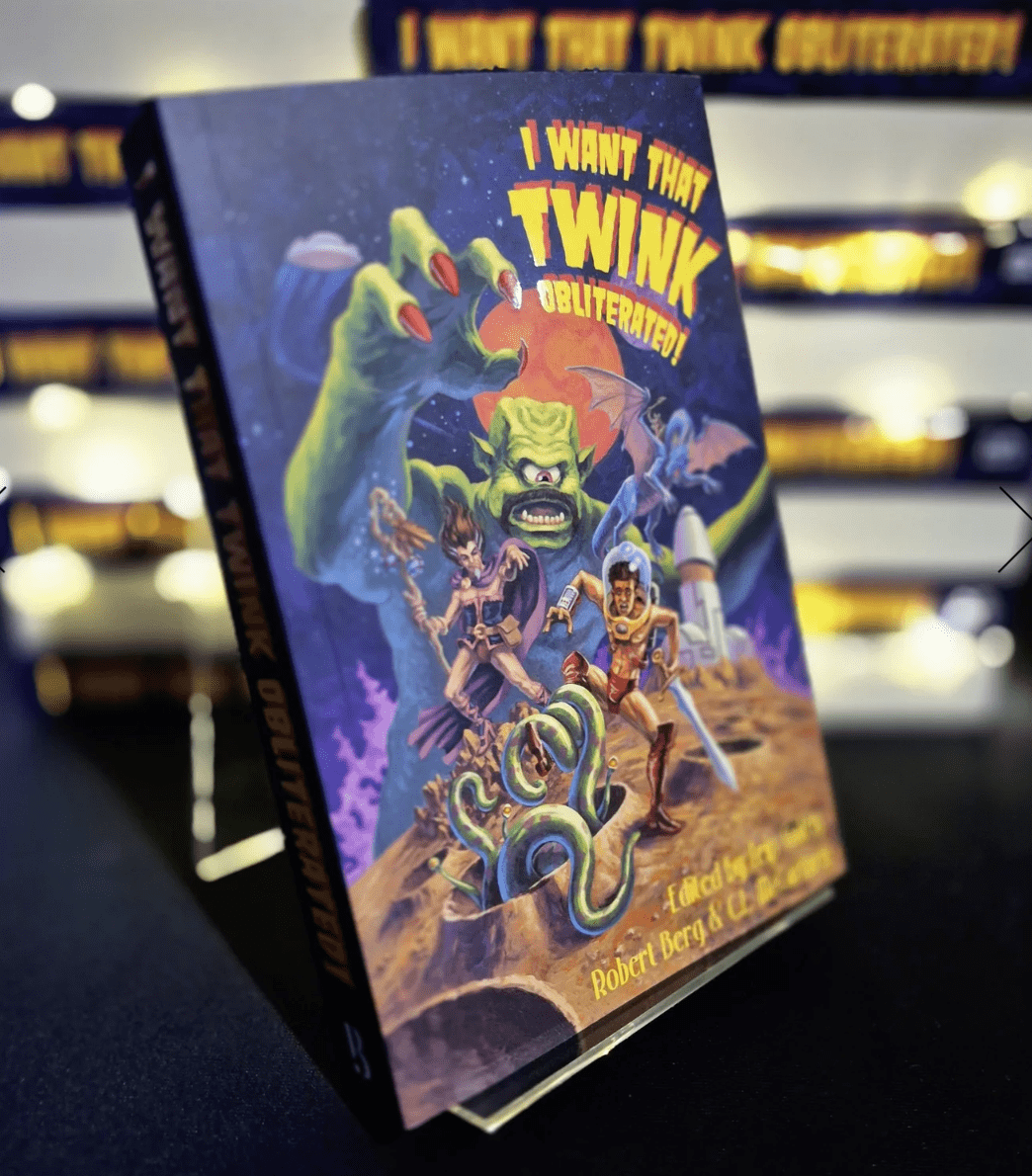
From one of the team behind the much-lauded I Want That Twink Obliterated comes another Kickstarter campaign aiming for fantasy glory: Trip Galey shares his top tips for crowdfunding as he seeks support for his queer SF family epic The Fall of the House of Valenziaga.
Hello! My name is Trip Galey and I’m going to natter on a bit about Kickstarting fantasy books today.
I am a traditionally published author, an indie author, and (unexpectedly) a small publisher (Bona Books!). I have direct experience running 4 Kickstarter campaigns—one a disastrous failure; one raising over £15k; one raising over £40k; and one that is currently in progress (03/03/26-28/03/26). These are my 5 top tips for funding a fantasy book via Kickstarter.
In no particular order…

Start Early!
Not only will production and most everything about the campaign take longer than you expect, the pre-launch stage of a Kickstarter campaign is key.
An active pre-launch page allows you to collect campaign followers (people who click Notify Me on Launch). These will be the most likely people to back your campaign, and you can expect about 1 in 5 to pledge. Compare this to 1 in 50 (or so) for people on your email list, or 1 in 1000 for people who see your social media posts about the campaign. The longer your pre-launch is active, the more followers you will collect (including from Kickstarter).
For I Want That Twink OBLITERATED! we did a 30-day pre-launch leading to around 100+ followers at launch (and ended with over £15k in funding). For Wrath Month we tripled that window and ended with 340+ followers at launch (and ended with over £40k in funding). Those extra followers were key in quickly meeting our initial goal and establishing campaign momentum.
Do Your Homework!
There are a lot of useful books, resources, and communities dedicated to running successful Kickstarter campaigns. And you will want to have very good estimates for production costs on all levels (don’t forget to price in the time you will spend packaging and shipping your completed books if you can—that is an easy cost to miss).
I would start with the Kickstarter for Authors group on Facebook. There is not only an active and helpful community there but also a lot of resources and information freely available. Successful campaign breakdowns are frequently posted, and group members are often generous with their time. But remember, it’s a community, so try to give as much as you can in return.
Next, take time to familiarise yourself with the successful campaigns currently being run on the site. You’ll see a lot of epic fantasy, romantasy, and cosy fantasy, but there is room as well for other genres (you may have to work a bit harder with these, though—as I am doing with my current project, a science-fantasy family epic). Seeing what works for others is a great way to find some ideas that might fit with your campaign as well.
Pace Yourself!
Kickstarter is alternating phases of marathon and sprint, and there are key times that will require your full attention—prepare for these in advance as much as you can!
Your first 24-48 hours, for example, are vital. Campaigns that fully fund in the first 24 hours are pushed out much faster and further by the Kickstarter algorithm (bringing you potentially more backers) than ones that do not. It’s worth your while to do a lot of prep for promo that all hits on Launch Day, for example.
Of course, you can’t just set it and forget it after you launch (well, you can, but it won’t help your final total). You want to have a variety of things to talk about throughout the campaign, to draw new eyes to it. Social media posts, blogs, and articles, stretch goals, and informal surveys—all of these are potential ways to keep the conversation going (and the pledges flowing!).
(Photo by Steven Erixon on Unsplash)

Clear And Regular Communication Is Your Friend!
This is true not only in the care you should take in designing your pitch and your Kickstarter campaign page (often called the Story Page), but also in the updates you should regularly send to your followers and backers.
Running fulfilment on a book is a complex process, and there are a lot of stages at which you can experience delays, unexpected costs, or other complications. It’s best to be honest and upfront with your backers and send out at least one update a month to keep everyone appraised of where the project is. Even if you think you don’t have much to say, trust me, you want to check in regularly. Share photos and stories. One of the great things about Kickstarter is the connections you make with people who want to read your words. Lean into it!
Finally, Don’t Forget To Have Fun!

Kickstarter is many things, and one of those is fun. It can be an incredible, incredibly rewarding, wild ride of an experience. It isn’t going to be a barrel of laughs the whole way through (unless you’re a particular brand of masochistic), but that’s just more reason to enjoy the process as much as you can, when you can.
Not only will focusing on having fun make the process more enjoyable as a whole, it will likely also help you connect with your backers. Part of the draw of Kickstarter is that connection to creators, and you having a good time with it and expressing that through your campaign (in updates, possibly in stretch goals or other campaign goodies, etc.) will only increase your odds of hitting that funding goal.
(Photo by insung yoon on Unsplash)
My Turn…
Right! That’s about all I have space for at the moment. If you want to learn more, check out some of the resources I mentioned, or follow the Kickstarter campaigns of excellent small presses like Zombies Need Brains, Neon Hemlock, or (if I do say so myself) Bona Books!
And hey, if you’d like to see some of these tips in action, check out my current Kickstarter for The Fall of the House of Valenziaga, a queer science-fantasy family epic in a city beyond the edge of space and time, where sorcery and super-science blend and merge into one monstrous, fabulous whole.

Meet the guest poster