The shortlisted works across all 13 categories of the British Fantasy Awards have been announced! Find out who’s in the mix over on our blog. Winners announced at Fantasycon in October.

For all things fantasy, horror, and speculative fiction
-
Announcement:
Ready For Submission: BFS Horizons
BFS Horizons publishes twice per year, with a new issue due out shortly. BFS member Karin J. Robinson sat down with the journal’s Editor, Robin CM Duncan, to find out more about what he’s looking for in submissions for the next issue, and to get his take on the landscape for short fiction now.
BFS Horizons is now open for submissions; get the details here.

Title: BFS Horizons
Editor: Robin CM Duncan; Jenni Coutts (art); Ian Hunter (poetry)
Looking for: short stories, artwork, poetry
Genre: Speculative in all its forms
Story length: 500-5000 words
Release schedule: Twice per year
Response time: 4-6 weeks
Payment: £20 per story, flat fee
“We’re Really Quite An Accessible Market”
KR: I would love to kick it off with finding out a little bit more about you and your life as an editor. How did you become the BFS Horizons Editor?
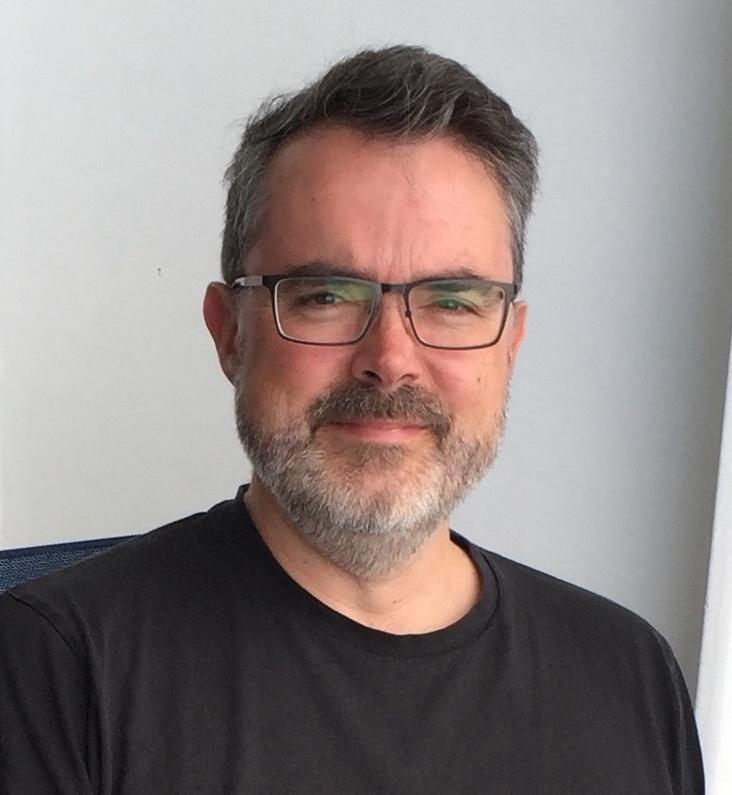
RCMD (pictured below): I volunteered initially to be a submission reader three or four years ago very much with the intention of trying to improve my short story craft by seeing what other people were doing, seeing the kind of mistakes other people made, and obviously seeing the things they did well in stories before they were edited. You know, you can read anthologies and learn a lot as well, but to see things in their raw form is very interesting.
But I got into managing the submission spreadsheet, because as an engineer by trade I love a spreadsheet. And so I kind of fell naturally into that and that really led to the assistant editor position, just because of having my finger on the pulse of the tracking of things and dates and what have you. So from there, yeah, it was kind of by osmosis, I suppose.
And I’m retired professionally, so I had lots of time. And that, of course, is an advantage with that sort of thing in a volunteer situation. So I went from there to reader to assistant editor. And then, because I was putting so much time into it, Pete [Sutton, the former Editor] decided that the co-editor would be more appropriate. So for Horizons 18, I was the assistant editor. For Horizons 19, the last one that’s out, I’m the co-editor. And then Pete had to step away for family health reasons, unfortunately. But I had an excellent mentorship from Pete, and when he stepped away, I stepped into that role.
Horizons 20, which is the one that will come out very soon, I hope, to members initially as an e-book [via the member newsletter email], will be the first one I have been the main fiction editor on. There is, of course, Ian Hunter, the poetry editor, and Jenni Coutts, the art editor, so it is very much a triumvirate effort. I’m very much looking forward to it coming out very soon.
KR: I’m so interested to hear you say that you originally started doing the slush pile read-in for the purpose of improving your own craft and your own storytelling. And the obvious follow-up question is, did that work? Do you feel, did it help?
RCMD: No, no, it didn’t work! Well, maybe that’s not fair. I’ve certainly placed a handful of stories probably since that time, variously in different places, not perhaps through the trenches of this submission pile. I’m still sort of battling through the trenches.
KR: But do you fee, that it informed your writing? Do you feel that that breadth of reading gave you a better perspective on your work?
RCMD: I think so. At its height, our submission pile had almost 400 stories. And if a story doesn’t have the stuff to drag you through and compel you to read it then, with the best will in the world, what is the point of reading to the end? When you already know that there are issues and especially when you have to get 400 down to 40 across the next two issues. So, I’ve definitely learned things probably more by osmosis, I think, than by necessarily pointing out particular things. But the stories that do engage you, you know [you’ll accept them] straight away—in the first page, generally.
KR: So let’s take a step back. We’ve been talking about the magazine, but let’s just give you a chance to pitch the magazine. BFS Horizons, of course, is the house fiction magazine of British Fantasy Society. But where do you see it fitting into the kind of whole landscape of short fiction in the UK?
RCMD: That’s a good question. So just to very quickly give everyone a picture of the thing: yes, it’s fiction. There are generally about 18 to 22 pieces of short fiction up to a limit of 5000 words.
But there are also poems. There’s usually an equal number of poems in each issue. And since issue 19, we now have art back in the magazine, so we had five pieces of art plus the cover art. There’s always cover art, but there are five pieces of internal art in issue 19. There are another 5 in issue 20 and those will be in colour.
So it’s there are different strands running through it. But yes, all stories are fictional. It’s about 200 pages. It’s twice a year. It goes to all BFS members whether by e-book or by physical copy. So there’s a roughly 1000 people getting it plus anyone who obtains it. It’s not the biggest circulation, I’m sure, but when you look back at the tables of contents since Horizons 1, you see some great authors that are published there.
It seems obvious to me that it’s an accessible magazine. Our acceptance rate is round about 8% on average. Now, I think that’s quite nice.
KR: Yeah, it’s a pretty sweet spot, right? It’s competitive, but still reachable.
RCMD: But still attainable, yes. If you go on Submissions Grinder or whatever, and you look at the acceptance rates of other markets, many of them are spectacularly lower than that. So I would like to think—and this is maybe something that doesn’t get out there, so it’s great to be able to speak about it with you for this article—we are really quite an accessible market. We can’t promise to give feedback on every single submission, that would be that would be mind-boggling; sometimes there’s just too much to do for us to do it, plus the other 20 stories that I’m working on. But I will sometimes reject something but say ‘if you reworked the ending’… And we try to give a bit of feedback, basically the things we liked about it, the things that didn’t work.
So how many stories do I do that with? I don’t know, let’s say it’s another 10%.
Maybe there’s a roughly almost 10% acceptance rate, and then maybe there’s another 10% who might get a bit of specific feedback on the stories.
Of course, we are here for the members. Everything is here for the BFS members and we hope to give them these opportunities. So we’re maybe a little bit more accessible than the raw markets out there, and we offer some encouragement. I hope, if that doesn’t sound kind of patronising, to give our members the benefit, hopefully, of the experience that we’ve got in the reading team. It’s a diverse reading team, and also we try and give that feedback, point out what maybe isn’t working.
(Photo by Alejandro Luengo on Unsplash)
KR: So talk me through what kind of things you are looking for, because obviously there are a lot of markets that are very specialist. They’re looking for a particular type of thing. But the BFS is quite a broad church. How do you know what kind of story feels like it’s a fit for the magazine?
RCMD: As I said, I’m selecting plus or minus 20 stories for each issue. BFS, of course represents fantasy but also horror and science fiction. And setting aside the lines and the debates about what’s fantasy, what’s science fiction, it’s all fantastical. We’re here for genre. I mean I have rejected one or two stories that were good stories but the fantastical element was just… really quite sparse.
We do need to be in the realm of being able to say confidently that something is fantasy. So where the genre element is quite low and doesn’t really play a significant part in the story, then we’re probably going to reject that. Again, I would give someone some encouragement to someone to say, ‘this is a great story, sell it somewhere else. It’s just not for us’.
On the horror side, again we’re happy to have horror stories. We’re very much here for horror stories. We get a fairly decent number.
Science fiction: I am a science fiction author myself, so I am pro science fiction as a thread within the wider fantasy bracket. I very much am looking for science fiction stories. And then there’s also slipstream and all the various sub-genres of fantasy.
So I will be sitting with the spreadsheet with maybe 30 stories I’ve accepted. Some of them will go into the next issue. I will start to balance the length of the story, because if all the stories are 5000 words, I’ve got a problem. I can probably only publish 15 of them or something or less. So I’m trying to mix up the length.
Our average story length submitted is about 2500 words. There’s a good range. We get some flash fiction and we get some of the upper range. So I can mix up the length.
And I’m looking to mix up the genre. In my spreadsheet, I will give it a wee label from my perspective of what genre it’s in and what subgenre and I can try to mix it up within a given issue; and then also within the ordering of the stories, I’ll be trying to have a flow so that the same length of story and genre of story are not all sitting together.
KR: So you’re thinking about a mix across story length, you’re thinking about a mix across genre. Would you ever have in mind things like a mix of theme or topicality? Might you think, ‘oh, we’ve had too many stories set in the ancient world and we want some modern stories’ or something along those lines?
RCMD: Yes, definitely. I think that’s the sort of thing that tends to stick out, when you’ve got two that don’t sit together because they’re too similar. And there’s an argument for putting two stories beside each other that are similar, that do have a similar theme, but which the authors have treated in different ways.
KR: So sometimes it’s nice to have some sort of underpinning thought or theme within an issue?
RCMD: Yeah, you might put two urban fantasy stories together if there was a good contrast between them, and I probably wouldn’t want two stories in the same issue if they were too close in theme. So you might push one into the next issue. But we get all sorts of different things, so in a lot of ways it’s quite easy to achieve that variation.
We do get stories that are similar in nature and probably, the ones that are a little bit too generic don’t get accepted in the first place. So by the time we get to 20 or 30 acceptances, it’s an easier job to get that flow and that variation.
KR: Interesting. And we talked about the fact that it’s not just short stories—you’ve got fiction, but you’ve got poetry as well, and artwork. It’s interesting to hear that actually more artwork is being brought into the magazine. Do you think about the stories when you’re picking artwork or does the art happen independently? I’m just curious where thinking about the art comes into the overall issue.
RCMD: The selection process is separate. So Jenni Coutts (pictured) will select half a dozen pieces of art. I wouldn’t speak for her in terms of how she goes about that. And I’m not quite sure even what, you know, what sort of volumes, what numbers of pieces she gets. I don’t think there are huge numbers of submissions on the art side, which doesn’t mean that we don’t have great art, of course.
KR: But they’re definitely not illustrative art? You’re not having a piece that would reflect a particular story, ever?
RCMD: I do remember thinking once, maybe twice, when there was an image sitting beside the story, I thought, ‘well, that’s actually too close’. So I did actually swap a couple of pieces over because something didn’t sit with something. I think I didn’t want it to look as if it was meant to be illustrative of the story. So that’s the only time I can remember myself specifically thinking that way.

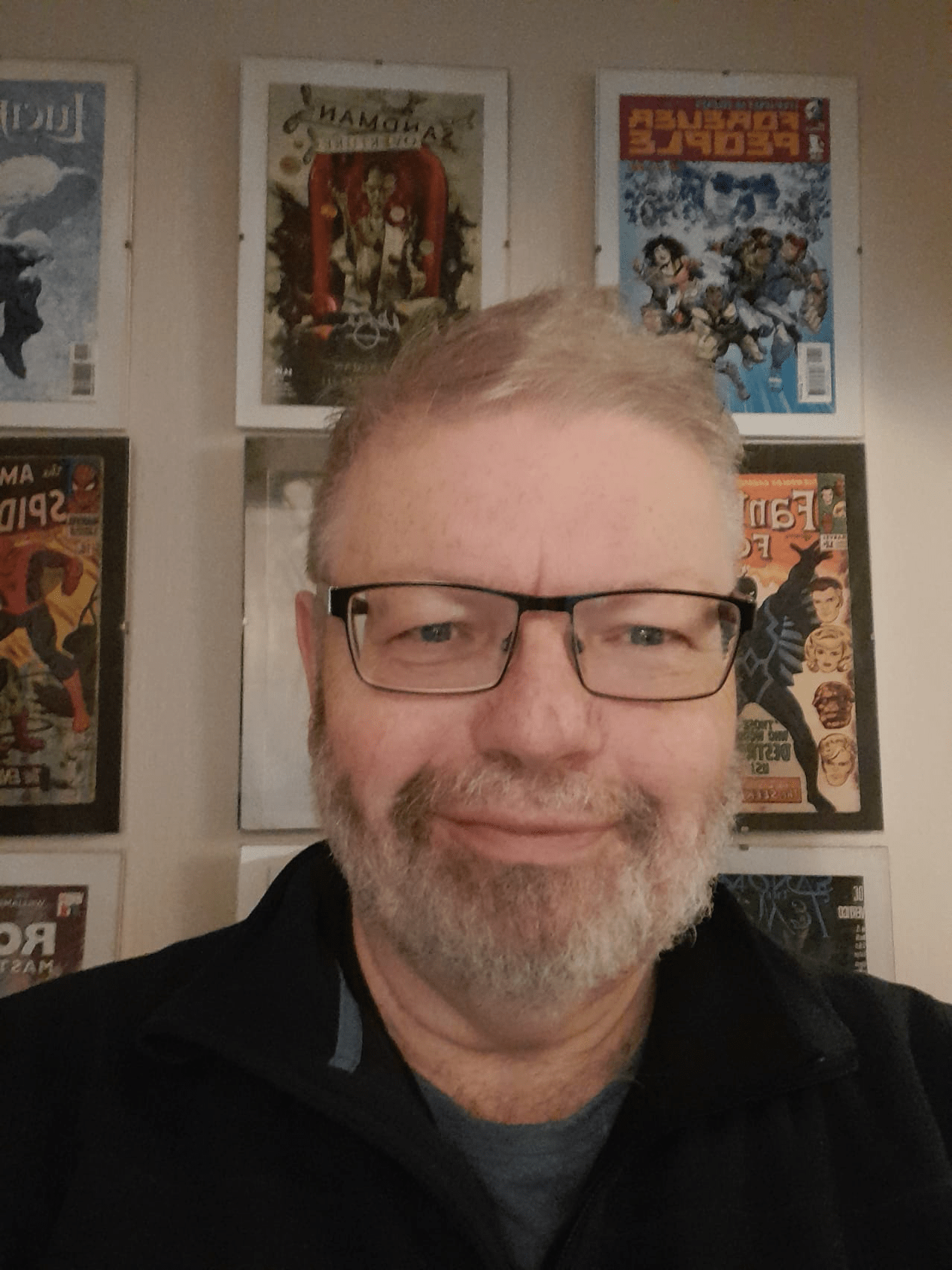
And in terms of the poetry, again, Ian Hunter (pictured) selects the poetry independently. He comes along with his 20 poems. He’ll put them in order. And then I will basically arrange them. Not quite alternately, because I think that would be a bit mechanical: poem, story, poem, story. But I do like to mix it up a little and have a couple of stories, a couple of poems. And just so it looks a bit more organic in terms of the order.
KR: So you’ve got Jenni doing the art editing, she’ll select the art pieces. You’ve got Ian doing the poetry selection. You choose the stories. And then it sounds like, if I’m understanding your description correctly, you’re the one who then looks at the whole thing as a piece and how it all comes together.
RCMD: Yeah. Exactly.
KR: Great. So let’s talk a little bit more about your selection process. You mentioned earlier you’ve got three readers reading every story before they’re selected? Or how does that work?
RCMD: So we have 8 readers in total, plus myself. However, not everyone reads every single story, yes. So I will generally not make a decision until I was maybe the third reader. There’s two other reads on a story before I read it.
But just by the way it works, sometimes we get three or four reads before me. I am generally the last person to read most of them just because when I read it, I want to be making a decision. So I want to know that the two other people at least have read it before me.
There’s one person who just blitzed the whole list and read every single story that was waiting, which was great. It was really helpful because at a very simple level, it meant I knew at least one other person had read every single story. But I do not expect everyone to do that. The whole point of having 8 readers is that people can take it at different levels and read as much or as little as they want. And everyone’s contributing.
Of course, because of the spreadsheet, the beauty of the spreadsheet is people can pick up stories—see that one’s only got one read, that one’s only got two reads, and that one’s got no reads. So they can pick out the one where reading matters the most.
KR: So you’ve got a live spreadsheet that you all go into. I’m just trying to picture this process. Do you assign out stories between them or do people pick and choose what they want to look at?
RCMD: No, people will literally just read whatever they want. I know that some people will sort the spreadsheet differently when they come in to choose some people might think, ‘well I want to read a particular story’ because of the title or maybe they even know the author, or know of the author. And other people might just start in date order and just take them as they come. I sometimes will read the shortest stories first and literally just get a feeling of having some momentum. You know, I can go in and read 10 stories in one setting and feel like I’ve achieved something. And it does mean, of course, that I then have the longer ones to deal with at the end. But then I feel I’ve got some momentum, so it’s a kind of psychological thing.
KR: So let’s say a reader reads a story and they think, ‘this is really good. I think this is amazing.’ What happens next? Do they flag it for someone else to read?
RCMD: We have a traffic light system. So basically the spreadsheet, as you can imagine, is a big matrix. It’s got all the sort of practical information, like the date submitted, the date added to the list, the story title, the author’s name, the author’s pen name, e-mail address, story length, etc. And each reader has a column, and they will just simply insert their comments in there. Sometimes the comment is ‘nope’. Or sometimes there could be a 50 words commentary ‘I like this because’, ‘I did not like this because…’
(Photo by Birk Enwald on Unsplash)
KR: And a ‘nope’ from one reader, is that it? Or do you still get someone else to come in and have a second read before you exclude it?
RCMD: So we have a traffic light system. Each cell is red, yellow, or green. So for example, if I see a story with a couple of reds this is kind of literally colouring my opinion before I open the file. So it’s not a blind tasting in that sense. But you know, it’s practicalities. I have to get through all these stories. So that’s the whole point of the reading, obviously, is to inform me of what other people think.
If a story’s got a couple of red boxes already, then it’s perhaps unlikely. But of course, I will still read it or start reading it. I won’t read the comments, but I’ll know from the colours that it’s going to be an uphill battle for it to convince me.
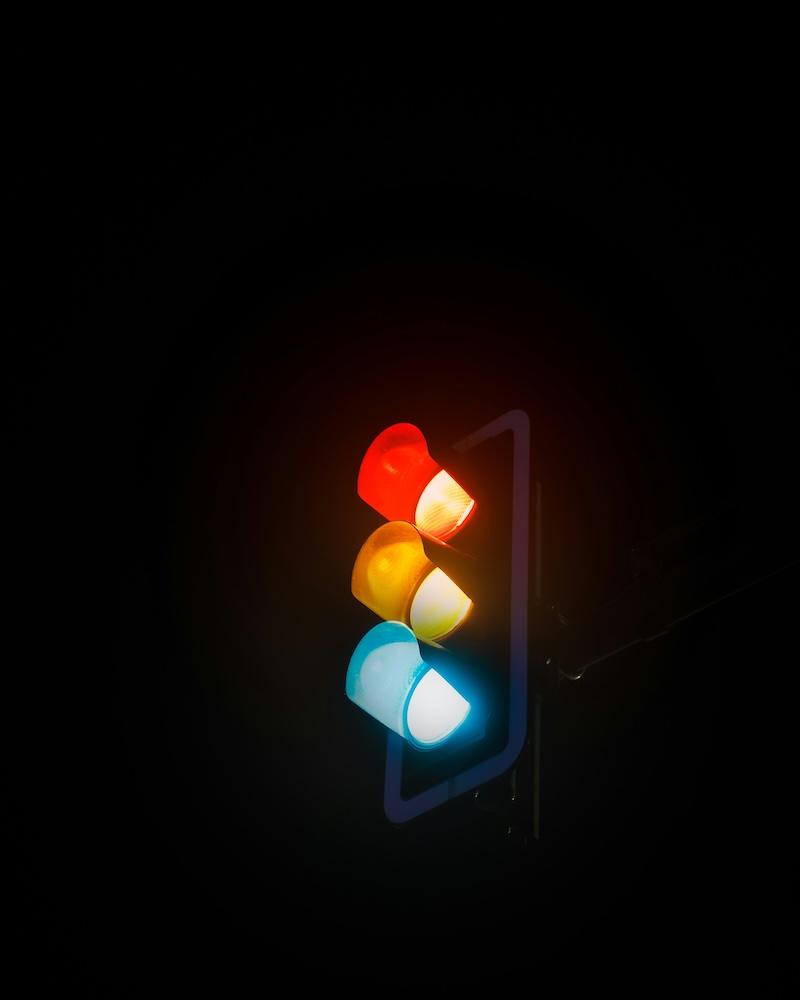
But I have gone against that. I wouldn’t want anyone to think that I wasn’t giving every story due diligence. I have turned around and accepted stories that I had a couple of red reads because I saw something different, or I didn’t have a problem with things that other people had.
KR: So at the end of what sounds like a very detailed process of winnowing down these 400 plus stories that you receive, you wind up with 20 stories that you love enough to put in the magazine. Your first issue as editor just came out a couple months ago in spring, issue 19. Would you tell me about some of the stories in that issue and what stood out for you? What made you want to include those?
RCMD: Well, I’ve got it in front of me, so let’s have a look. The first story in it, I do remember specifically putting that in first because it was what you might call a traditional fantasy. So that’s Valhalla for the Devoured by Akis Leonardos. I felt that was the voice that I thought, ‘this is a great way to open the book’. The voice I thought was so strong. I thought this is really going to grab people.
And by the same token, the last story, for me, finishing strong again was important—to leave the reader with a powerful impression. So issue 19 finishes with a story called Easter 94 by John Gauthier. And it’s a horror story. It’s told in… epistolary is not really the right word, but I guess it’s maybe a modern version of epistolary in the sense that it’s text messages and video call transcripts and police reports and things like that. So it’s a slightly longer piece and it’s quite dense in that sense of the format being different.
The formatting was a challenge. And I’ll admit, I was slightly pulling my hair out a bit and we went round on that one several times with formatting, and back and forth with the author, just to get it consistent. But you know, I like a challenge as an engineer. But it was a really interesting format and that it would make an impression at the end, on that basis, being something different, giving the reader something to think about as well as hopefully entertaining them.
Now the other thing I should mention about this particular issue, is that every second issue of Horizons has the top three stories in the British Fantasy Society short story competition in it. So, we have those three in this particular issue
KR: Got it. Any other stories you want to mention?
RCMD: There’s a particularly good story called Camelot by Angelita Bradley that’s very much more a science fiction story that I enjoyed. It’s a short piece but it’s powerful stuff and it cuts between several different scenes; there’s a kind of skipping rhythm to it as it as it progresses through various events, which I really enjoyed.
So yeah, there are lots of great stories and I think they are really varied. I think we’ve been very fortunate in that respect, the range of submissions that we get.
KR: Fabulous. Okay, I’d like to do a quick lightning round of short questions to get some key facts out there for people who are considering submitting. Your minimum and maximum word counts that you’ll consider for fiction?
RCMD: 500 words is the minimum, 5000 is the top.
KR: And how firm is that? If you’re at 5,100, would that be a non-starter?
RCMD: I’m glad you asked me that because previously we had a story that was 5,600 words, and I thought that it was not fair to publish that because it was so far beyond the limit. But then if you don’t tell people that, then how would they know that? So we did change the submission guidelines. We’ve added the qualification that stories longer than 5100 words will be rejected, just so that the people are under no doubt.
KR: Right. So if you’re at 5,200, cut 100 words and then send it in.
RCMD: Yeah, we’ve got to be quite strict about that. Otherwise, we don’t have control of the situation.
KR: Next question: you’re not currently open for submissions. Do you know when you expect to open?
RCMD: Yes, very soon. [Ed note: Horizons in fact reopened to submissions shortly after this interview!]
As I said, issue 20 is finalised. It’s with the exec for final approval, but it might literally come out to an e-book via the link to members with the next newsletter. I have enough stories for issue 21 as well, which will bring us to 2027. So I would expect to open very soon for submissions, which will be for autumn 2027—the issue that’s 12 months from now.
KR: Right. And in terms of eligibility, just to be absolutely clear, do you need to be a BFS member to submit? And can you submit from anywhere in the world or do you need to be UK? Are there any limitations on that?
RCMD: You do not need to be a BFS member. In fact, I would encourage more BFS members to submit because if anything, we’re a bit light on that. So I’d love to get more submissions from BFS members.
In that last submission window, if I call it that, with the 390 stories, we had stories from 36 different countries. So we are very much open to submissions from anywhere in the world. We’ve got a good, varied geographical perspective
KR: Fantastic. And you did say it’s a more accessible magazine. Out of interest, do you know how many debut authors you publish? Is it normal for you to be a debut publication for an author?
RCMD: That is not something that I currently track. It’s not something we ask people when they submit, but I know for a fact that issue 20 has one debut in it because the person said so in their author bio that it was their first publication. There may be one or two others that I just don’t know. But my impression is most of our authors are already published elsewhere.
KR: But debut authors are welcome?
RCMD: Oh, very welcome. At the end of the day, we pick the best stories.
KR: Do you typically read the author bio before you read the story, or is it something you would only come to afterwards?
RCMD: No, I would not. I would generally know if they’re a member because that’s a column in the spreadsheet. We do try and track that.
I do also log the geographical location just for reasons of interest. It doesn’t matter; it just interests me and I love to be able to see or to reveal to people how diverse our submissions are. But no, I generally do not read the bio before going in.
I think as a paying market it’s worth me noting that, as we do pay £20 per accepted piece of art or poetry, that attracts semi-pro or authors who are more business-like about submitting and resubmitting and getting their fiction out. And that’s great and we want to attract those authors. That’s part of the reason for making Horizons publicly available and also for paying a fee, which we didn’t always do.
(Photo by hannah grace on Unsplash)
KR: Fantastic. So paying market, 20 pounds per story, flat fee for any length of story?
RCMD: A flat fee, yes.
KR: And for authors who have who have submitted previously, and this might be a this might be a sensitive question, but… what are your expected response times?
RCMD: I’m very glad you asked me this because there’s been a bit of a flux in handover between me and Pete. There were also some technical issues before about access to software and the ability to do typesetting and things like that. So there’s some delays coming into the process. But this is my rather dithering way of saying that I must apologise to people because we have had some stories for a very long time. And I will hold my hand up and take the blame for that because partly it suffers from me having too many hats on with the podcast [Long Story Short, the official BFS podcast] and my own writing.
KR: You do a lot of things! For a retired man, you have a lot of jobs.
RCMD: I know, and I don’t know how I ever found time to have a paying job before because it must have been far too busy. I apologise publicly for the turnaround times which have been disappointing in the last year or so. But now we have got things in place that were in transition before and we have a good number of readers, I am saying now publicly that our response times when we reopen will be much, much shorter than they have been in the last year or so.
KR: So you’ve got your systems in place and I completely understand that you’ve had a transition and some technical problems. But you’ve been able to put in place all the systems that you need now. You’ve got your readers all lined up. So you’re good to go when the submissions reopen? It says on the website, I think four to six weeks for a response to submissions. Is that what people should expect?
RCMD: I think that I wouldn’t want to change that. I think that’s fair. I know there are some markets who you can expect to respond from in four to six hours.
KR: It’s okay. We can’t all be near Neil Clark [from Clarkesworld magazine, which has famously quick response times].
RCMD: We will never get to that. But yes, I think four to six weeks is fair. It’s reasonable and I would be perfectly happy if someone had put a story in and hadn’t heard anything in eight weeks with an e-mail saying ‘where’s my response’. I think that’s doable.
KR: And you are happy to take reprints and simultaneous submissions?
RCMD: Reprints, simultaneous submissions, yes. If I accept a story, we do ask people to remove it from submission elsewhere. But yes, reprints, simultaneous submissions are fine.
KR: So there you go. You heard that, everyone. Get your stories in!
We’re just coming to the end of the conversation. So I just wanted to expand back outwards a little bit and think about the place of short fiction in the overall landscape for speculative fiction. Because since the genre was coming of age, short fiction has been a really important way that writers built their craft, made themselves known, got out there into the marketplace. And I think more recently, we’ve seen a big shift to everything being about longer formats. But I still think the short story plays a really important role in the genre. So I’m curious how do you see the role of short fiction as part of an author’s career in this day and age? And indeed its role in building readership for the genre? How does this fit in in your mind?
RCMD: Yes, I think it’s very important. As you say, back in the Golden Age, that was the way you did it, wasn’t it? You published in magazines and then you got a bit of momentum and you got your name out there and then you wrote a novel and that was the way you did it. And nowadays, of course, there’s never been more avenues open to authors for getting their work out there.
But I think you just need to look at the awards—the British Fantasy Awards, the BSFA Awards, and the big ones, Hugos, Nebulas—and you look at the names who are winning short fiction awards as well. It’s obvious that established authors are still producing short fiction, and there’s still a very vibrant short fiction scene, which hopefully we’re an accessible part of. So I think that route is still very important.
Even though a short story should take, you know, several weeks to craft and to revise and to test it with people and improve it before you start submitting it, it’s still a far more immediate way to train yourself in writing and to achieve something. You get a piece that you have through your writing group or whatever and you’ve changed it and revised it and you send it out and Neil Clark rejects it in half an hour and then you send it somewhere else.
Short fiction just gives you that real intense training in craft and plot and pacing and idea development and all those things. Maybe you’re sitting there writing your novel as well, but I would encourage everyone to take a break from that and write some short fiction and get it out there, get it into good shape and then send it to BFS Horizons.
KR: There you go, that’s an excellent final pitch that we can leave it on that.
So just before I sign off, a final question for you. I want to give you the chance to pitch to me anything else that you’ve seen, read, consumed, come across recently that just made you stand up and go, ‘ Wow, that’s amazing’. What are you currently loving?
RCMD: This is a this is a kind of a backhanded self-pitch, but I am loving all the stuff that I read for the Long Story Short podcast, because I read books for the podcast that I don’t think I would read otherwise. I feel it’s important for me to read the book before having them on the podcast, in order to have the best level of informed discussion. So I’ve ended up reading romantic novels. And horror! I’m not a big horror guy. I’ve probably become more of one now. And I’ve read books that I just wouldn’t have got around to because there are so many books or genres or subgenres.
So… the books that I have read recently on the podcast that made me go, wow: Mahmud El Sayed’s (pictured; source) space opera. A science fiction novel set in a generation ship, but it’s very much about community and class. Song of the Safina is the name of the series. I loved his approach to it, written from the point of view of Muslim communities and the way he used language was incredible. I thought that was brilliant.
Another one that I read recently was a book by an author called Lex Croucher, which was The Unmagical Life of Briar Jones, which I think is out now. It’s dark academia. Again, class is a very important element of that, but a central element of that book. But the way that they handled the magic in that was just quite incredible. And the setting is everything you would want from a dark academia.

Joanne Harris has a new novel coming out, and that’s on my list to read. Hayley Piper as well is coming on the podcast. You heard it here first. So I’ve got her new novel to read.
KR: Exciting! Breaking news.
RCMD: And Nnedi Okorafor’s Death of the Author was a novel I read, which again, I might not have picked up, but it totally amazed me.
So I would encourage people to check out the podcast. If you’re not shy about getting your TBR exploded by all the books that that they’ve written, but also the other books that they talk about. It’s a real occupational hazard.
KR: Yeah. I literally just had to buy a new bookshelf because the TBR stacks on the side of my bed have become a hazard to life and limb, falling over and injuring our pets. Now that bookshelf’s full and things are stacked on top. So maybe I need another bookshelf for the new books.
RCMD: If you build it, they will come.
BFS Horizons is now open for submissions; get the details here.
Meet the guest poster