The shortlisted works across all 13 categories of the British Fantasy Awards have been announced! Find out who’s in the mix over on our blog. Winners announced at Fantasycon in October.

For all things fantasy, horror, and speculative fiction
-
Announcement:
From Pen to Print: Georgia Leighton on Maiden
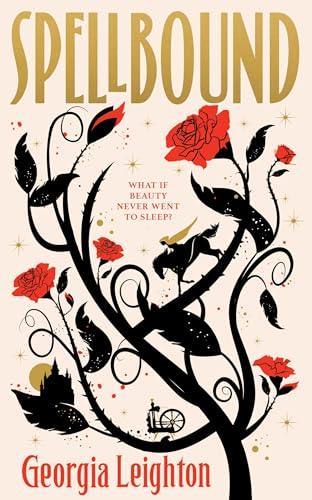
On the heels of last year’s debut novel Spellbound, which reimagined Sleeping Beauty, Georgia Leighton is back in the world of myth and legend with her latest, Maiden. This time, she was inspired by the Legend of St George and the Dragon, which means… lady knights!
Name: Georgia Leighton (she/her)
Based in: London
What genres/subgenres are you drawn to?
I adore fantasy retellings and epic fantasy, but I read very widely across all genres.
Is writing your full-time focus, or do you have a day job as well? What do you do?
Currently, writing is my passion project/side hustle. I also work in publishing during the daylight hours, in a marketing role.
The Book: From Pen to Print
What was the genesis of this book? Where did you get the idea from?
With my first novel, Spellbound, I reimagined the fairytale of Sleeping Beauty from the perspectives of five women, centering their agency and inner worlds. I enjoyed doing this immensely, building a fantastical world with which to weave in elements of the original fairytale. I wanted to do this again with my second novel, choosing a different country in the realm I’d created in which to set the story and a new cast of characters. I’ve always felt drawn to the Legend of St George and the Dragon, and I was excited about how this could be reimagined from the perspectives of women—lady knights! I grew up loving Tamora Pierce’s Song of the Lioness Quartet and Robin McKinley’s Hero and the Crown, and I think these influenced what Maiden became.
How many drafts did you go through? How long did that take you?
I wrote the first draft in just over a year, while I was on maternity leave with my second child. I squeezed micro writing stints into naptimes and daydreamed about lady knights, cunning princesses and ancient dragons the rest of the time. In that first draft, I’d created a split time narrative that jumped forward and backward in phases… but with three points of view in the narrative already, my editor rightly pointed out that this wasn’t working. So we had to overhaul the structure and rejig scenes along the way. This was daunting and took a further six months, but then, finally, Maiden was ready for print.
Did you work with beta and/or sensitivity readers? How did you find them? How did you incorporate their feedback?
My family always read my work and give me gentle but very honest feedback. My mum likes to point out when a metaphor doesn’t work, my sister likes to tell me the narrative needs more romance, and my husband interrogates my fantasy lore with laser-like attention.
What was your querying process like? How long did it take?
Maiden is the second novel in a two-book deal that I signed with my first novel, Spellbound. That querying process was surprisingly quick and I’m hugely grateful. Once I signed with my agent (the amazing Marina de Pass at The Soho Agency), we worked on Spellbound together for almost a year before it went out to editors. Then Transworld, a division of Penguin Randon House, pre-empted the book in 24 hours and the deal was done. I’ll never forget that phone call!
Once it was in the hands of your publisher, what was the process to get it ready for release?
From signing the publication deal for Spellbound to it being published took almost two years—things in publishing take time! I worked on the manuscript with the brilliant editor, Imogen Nelson, at Transworld for six months after it was acquired, then we went through the copy-editing process and proofing process before it was ready to make its way out into the world. Maiden was faster, but that still took over a year.
And now your book is unleashed on the world! How are you feeling?
Nervous! I felt the same way about Spellbound. You passionately hope that readers will enjoy your story and feel as entranced and invested in the characters and the world as you do, but it’s no longer under your control.
What would you like us to know about this book?
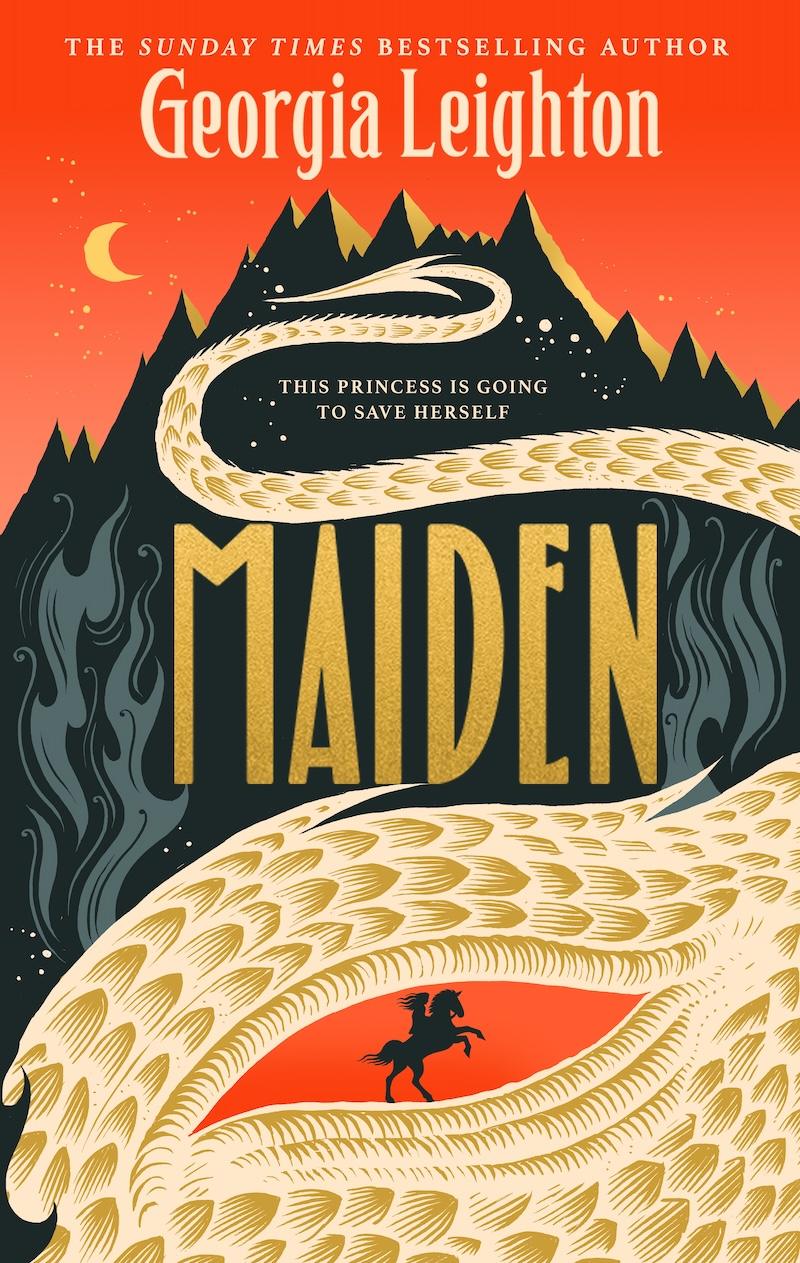
Maiden is set in the Kingdom of Calestra, a country built on blood. Every spring, when the snow melts in the mountains, one young woman is chosen by lot to be sacrificed to the Great Dragon.
And as the Maiden Sacrifice draws near once more, three women stand at the heart of its brutal ritual: Cressyda, desperate and trapped; Alinore, torn between duty and rebellion; and Maylie, whose secrets burn hotter than dragonfire. Together, they carry the power to shatter a treaty written in blood and ash.
Yet freedom comes at a cost, and first they must face the ancient fury of the Great Dragon.
The sacrifice is coming.
But this time, the maidens refuse to burn.
Prepare for…
- Ancient dragons
- Lady knights
- Cunning princesses
- Castle libraries
- Fierce fairy folk
- Forbidden magic
- And much more!
Who’s the ideal reader for this one? What sort of things do they like to read about?
If you grew up reading the work of Robin McKinley, Tamora Pierce and/or Juliet Marillier, then I think you’d like Spellbound and Maiden. The legendary Juliet Marillier actually gave me an endorsement for Maiden! I still can’t really believe it. She said: “Maiden interweaves the stories of three very different women. Rich in folkloric elements and full of surprises, this is a powerful tale of women finding their true selves. Highly recommended!”
Your Writing Process
Are you a plotter or pantser or somewhere in between? How do you do your first draft?
I think I’m somewhere in between. I’d like to be a proper plotter, but sometimes the characters/story take unexpected turns and you just have to go with it.
How do you approach writing? Are you the type of writer who needs to treat it like a job? Is there a particular time of day you find best for you to write?
With a day job and small children to take care of, I just have to fit writing in when I can. That means writing in naptimes at weekends, in the evening after the working day is done, or during my commute into work. It feels a bit chaotic, but every few hundred words here and there eventually builds into a finished story. And I genuinely love writing.

Geek out about stationery: do you use a notebook? A specific type of pen? Or are you computer all the way?
I mostly use a laptop but if I’m finding a scene or narrative point difficult, I’ll grab a notebook and try to scribble things out longhand. It feels less pressured and often unlocks something that I was struggling with on the screen.
Is any of that different for editing?
I only edit on a laptop—or that’s been the case so far. I’d love to have a huge, printed stack of papers. That feels very writerly. But at the moment I don’t have a printer, so that’s out. Maybe something for the future.
(Photo by Sincerely Media on Unsplash)
Where do you work? Do you have a comfy, creative space at home or are you someone who has to grab the moment wherever it comes?
I write whenever and wherever I get the time—in the car with a sleeping child in the backseat, on the floor of my daughter’s bedroom while waiting for her to fall asleep, etc. One day I’d love to have a dedicated writing space, but that’s the reality for now.
What’s your writing soundtrack?
At the moment, I’m writing book three (arh!) which is set in another country in the fantasy world I created for Spellbound and Maiden. The landscape is similar to the Scottish Highlands and Islands so when I need to get in the right headspace, I’ll listen to a selection of Celtic-inspired music.
Do you have a writing ritual?
I can write anytime and anywhere, but I prefer to have a hot beverage on hand. Particularly a strong cup of brewed loose-leaf tea.
Where can we follow you / find out more about your work?
You can follow me on Instagram @georgialeightonauthor where I make silly reel about books and writing. And you can find out more about my books on my website: georgialeightonauthor.com