The shortlisted works across all 13 categories of the British Fantasy Awards have been announced! Find out who’s in the mix over on our blog. Winners announced at Fantasycon in October.

For all things fantasy, horror, and speculative fiction
-
Announcement:
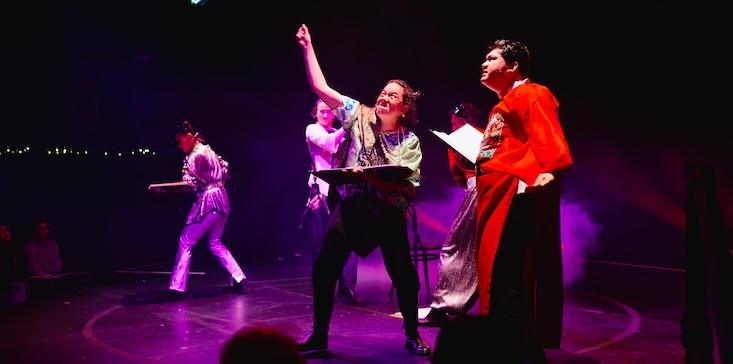
Asian Pirate Musical: Climate-Ravaged Queer Time Travellers Live In London!
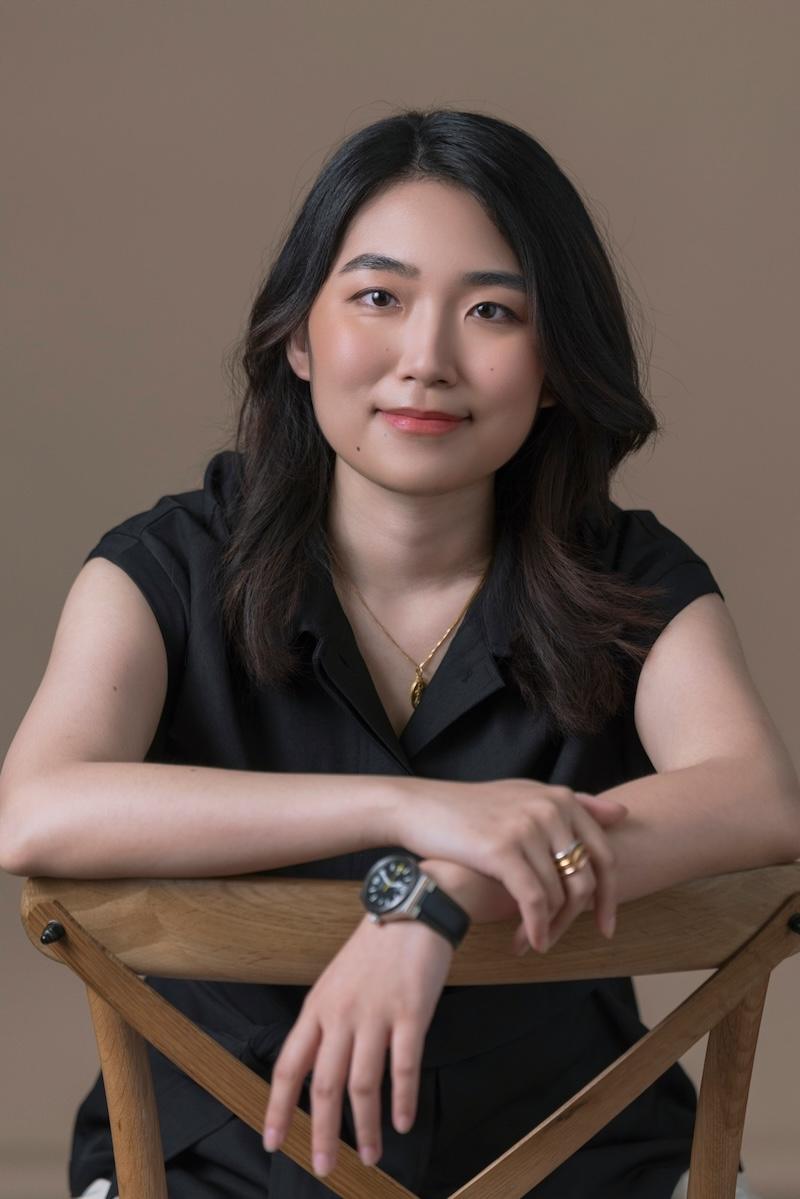
With the show in the midst of a London run, Asian Pirate Musical director and co-author Zhui Ning Chang answered Andrew Knighton’s questions about their creation.
Theatre doesn’t often offer anything for the sci-fi and fantasy fan, but with its heady mix of time travel, monsters, and music, Asian Pirate Musical brings genre fiction to the stage in spectacular fashion. Following a bickering ship’s crew as they struggle through a climate-ravaged world, it’s a story that combines the familiar with the bold and unexpected.
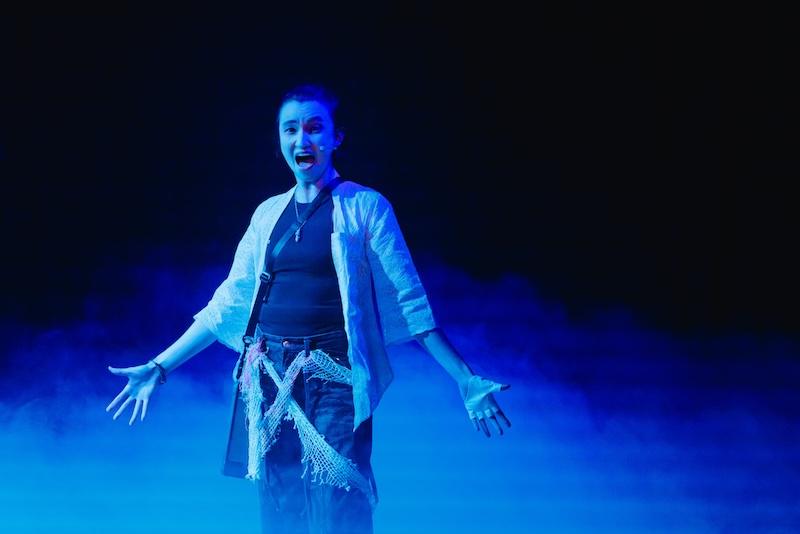
We spoke with co-author and director Zhui Ning Chang (pictured) to celebrate the show’s first theatrical run.
AK: The title “Asian Pirate Musical” pretty much sells itself, but could you tell us a bit more about what this show is and how it came about?
ZNC: Asian Pirate Musical is about queer time-travelling pirates from the past and future who crash-land on a ship in Southeast Asian waters in the near-future 21st century amid climate collapse, and now have to figure out how to become a crew and survive a dying Earth together.
An early seed of this story took root when I came across the historical pirate Sek Yeong (better known as Zheng Yi Sao). At that point in my theatre career, I was exploring various ways to stage the sea, and her history felt incredibly theatrical. But I didn’t want to do a straightforward retelling—I wanted to place her in conversation with a broader maritime history in Asia, including stories I grew up on like the famous Ming admiral Zheng He/Cheng Ho. And I deeply admired the queer and non-Western futures shaking up the SFFH landscape throughout the 2010s, and wanted to bring some of that sensibility—of the hope and insistence that these communities are part of space futures too—into my own storytelling.
Plus, I love grand musicals, the maximalist kind with richly dressed sets and costumes, an ensemble cast and a full orchestra, that the theatre industry can no longer afford nowadays. I wanted to create a show that reached for that scale and ambition, that would allow Asian actors (often relegated to stereotypical roles in musicals, or sidelined completely) to play fun, larger-than-life characters and explore a narrative and world close to my heart. As a speculative fiction nerd and musical theatre enthusiast, I combined my various niche interests into one story to see what happened. And we got an epic swashbuckling adventure out of it!
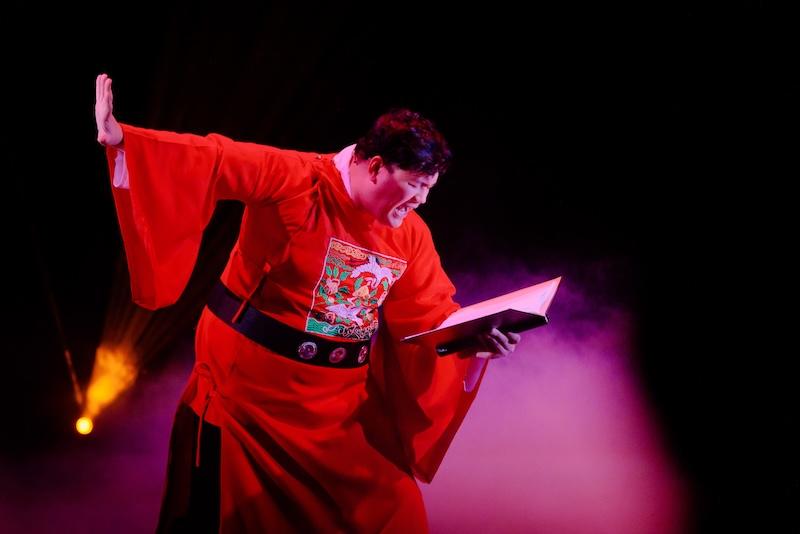
What drew you to pirates as characters for the play?
Growing up in Malaysia and Singapore, water is a common motif—monsoons, flooding, maritime histories, and some people still live in floating communities in boats or stilt houses on the water. Pirates are a huge part of that backdrop; we used to have semi-regular news coverage about pirates kidnapping tourists and harassing cargo ships on the Sulu Sea.
At the same time, I was drawn to fictional pirates and their associations with anarchy, freedom, and adventure. I started researching pirate scholarship which is mainly based on Atlantic/Caribbean pirates, and got curious about pirate life in Asia which is much less documented.
How does the Asian pirate tradition, and the future you’ve imagined for it, differ from piracy in other parts of the world?
Our story is set in an alternate near-future 2049, and much of that world is built from our projections of what might happen if climate collapse occurred sometime between now and then. We extended real-world situations to their worst-case scenario: What if the haze situation in Southeast Asia, caused by slash and burn land clearing, wasn’t just a recurring issue but permanently clouding the skies? What if Jakarta, which has been sinking slowly each year, goes fully underwater and so do a bunch of other cities? We drew on our own grief and rage about the current state of the world to imagine that future, and as we did much of that brainstorming at the height of the COVID-19 pandemic, it was quite dark and hopeless. Our question then became: what can we the common people do in the face of that despair, that is still meaningful to us?
On a worldbuilding level, we drew on very multicultural and multilingual Asian maritime traditions. For instance, our 19th century pirate Sek Yeong married into a pirate dynasty that had been involved in the early 1800s Vietnamese civil war, skirmished with the Portuguese and British navies, and raided around the southern Chinese coast while clashing with the Qing government. Our Ming dynasty admiral Zheng He, the only non-piratical character on the crew, had historically sailed as far as the Horn of Africa, and many of the routes he traversed were long established in the precolonial Indian Ocean maritime circuit. We wanted to preserve the fact that Asia has been trading and exchanging with each other way before colonialism and globalisation, and to project that out into the space futures that our futuristic characters came from too. We also wanted a sense of those fluid heritages and syncretic cultures reflected in the backstories and casting for our pirate crew, reflected in our majority Southeast Asian and mixed-race cast.
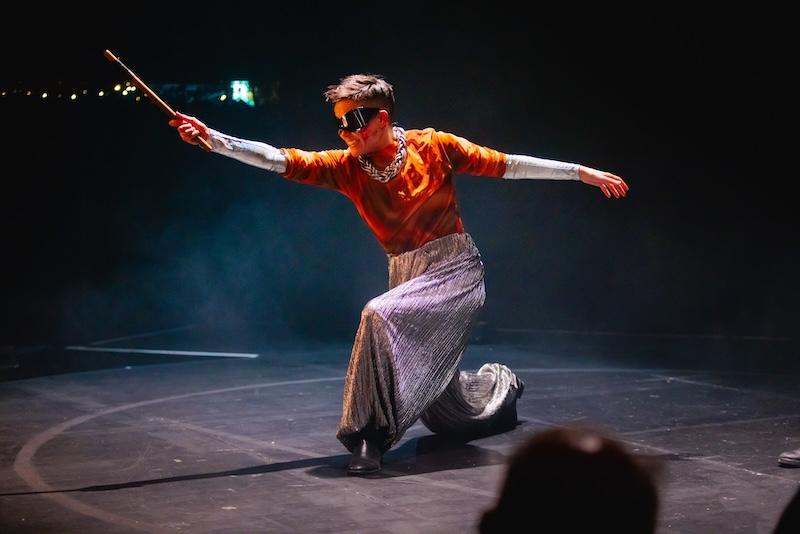
How did the styles of music you were working with shape the story, or vice versa?
It was a pretty organic, collaborative process. We have great composers in Jade Leamcharaskul, Sarita Lewis, and XANA who created a fantastic soundtrack. Jade, our lead composer, is also a professional taiko drum player and gamelan musician, with expertise in a variety of traditional Asian instruments. The overall soundscape is “what if traditional Asian instruments, but futuristic?”
Among the team, we have a taste for anime music, video games, and Asian dramas, so that played into how we shaped scenes narratively and sonically. The composers established distinct instrumental palettes for each character, and also flipped between Asian music theory and Western music theory depending on the needs of the scene. For example, Sek Yeong’s big solo number ‘Swallow The Sea’ uses a lot of microtonal and polyrhythmic composition elements, which we hope will be new and unique features for the audience to experience.
Asian Pirate Musical is set amid climate catastrophe, a setting that feels more urgent with each passing year. It can be difficult to balance horror and hope for the future when writing climate fiction, so how did you navigate those currents?
Lots of revision! Some of our earlier drafts were much more furious and horrified at the world, with the characters wanting to burn everything down. And it was very bleak to see some of our worldbuilding elements become real-life news headlines, like the red sky and red seas.
But the question that we kept coming back to was what we wanted to leave audiences with at the end of the show. That sense of apocalyptic misery and grimdark horror has its place, but we wanted our story to still offer hope, a sense of wonder and connection, even amid the world ending. We drastically changed the ending 3-4 times over the drafting period to find one that felt truest to us.
You’ve talked elsewhere about how you chose empathy over violence for the solution to one of the play’s key challenges. What challenges did you face in moving away from familiar narratives of overcoming others through confrontation and conflict?
Once we made the decision to change from a violent conflict to something more empathetic, the broad strokes of what needed to happen fell into place quite easily. But it took us a while to find the right balance in tone and sentiment.
Sometimes in musicals, the ending is a rather twee “we’re all in this together” or “we hand-wave all problems solved and now it’s a happily-ever-after” without addressing the underlying issues that created the problem in the first place. We didn’t want to end on that kind of note, which would be an unjust representation of the challenges in the world the characters were facing. We had to write a balance where these relationships are meaningful, and the messy struggle to build a better world is important and worth it, but not making it oversimplified or excessively sentimental.
It took multiple drafts and many, many conversations about what our core message was, what kind of journey the characters were on, what emotion we wanted to leave the audience with, to get to an ending that felt true to us.
Where can people find out more about you and about Asian Pirate Musical?
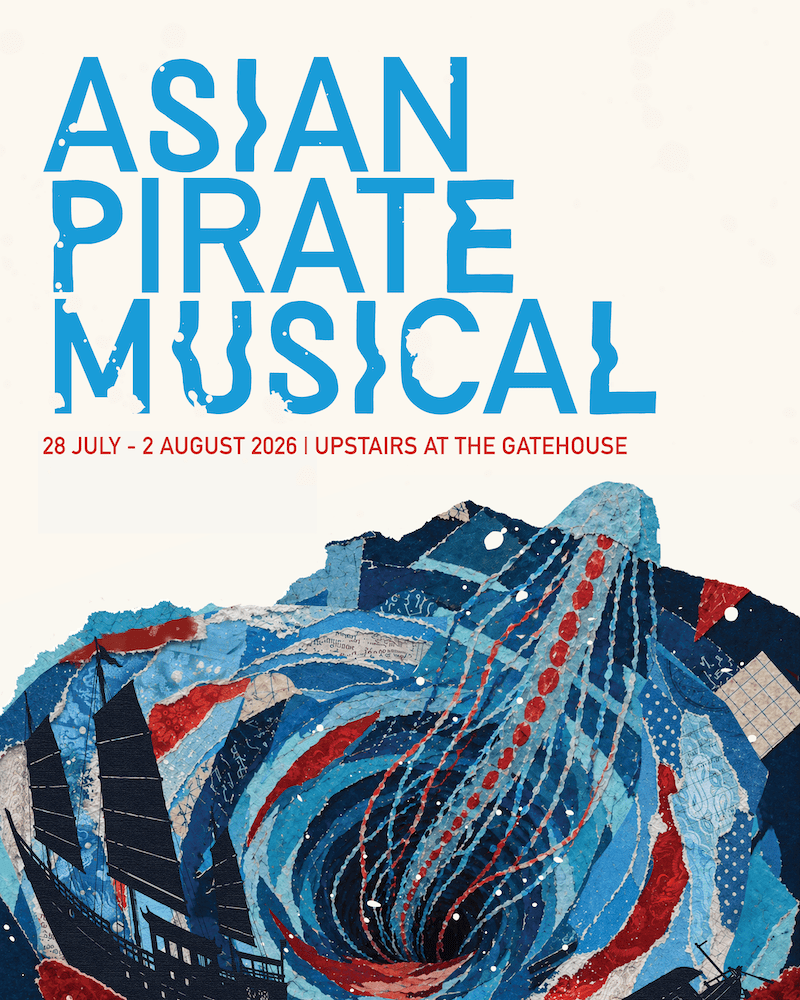
Come see our first ever production run at Upstairs at the Gatehouse at tiny.cc/APMgatehouse.
You can also listen to the studio album at linktr.ee/asianpiratemusical and follow us on social media @asianpiratemus.
Asian Pirate Musical runs until 2 August at Upstairs at the Gatehouse, Highgate.
Meet the guest poster