The winners of the British Fantasy Awards 2026 were announced at Fantasycon. Find out all the details on our blog.

For all things fantasy, horror, and speculative fiction
-
Announcement:
From Pen to Print: Stephanie Ellis on Mother’s Night: Rise of the Hare Witch
Stephanie Ellis returns to her Five Turns folk horror world with Mother’s Night, which she wrote when she couldn’t find the Yule book she wanted to read.
Name: Stephanie Ellis
Based in: Wrexham, Wales
What genres/subgenres are you drawn to?
Folk horror, gothic, historical horror, post-apocalyptic/sci-fi
Is writing your full-time focus, or do you have a day job as well? What do you do?
I have been lucky enough to start writing full-time in recent years (with my husband’s support and a small pension), but I also edit, proofread and format books.

The Book: From Pen to Print
What was the genesis of this book? Where did you get the idea from?
I wanted to read a folk horror set during Yule and couldn’t find any; as I love folk horror and wanted to return to the world of my Five Turns novels, I decided to write the book I wanted to read. This involved reading up on Anglo-Saxon and Celtic traditions of this time of year (historical periods I love studying) and using them as the ‘ritual’ basis. It helps that what most people regard as tradition is something that usually has a fleeting mention in one ancient document and then nothing more, which left me free to make things up! Mother’s Night is on the winter solstice and becomes the first night of Yule; dates are slightly disputed in some places but I’ve taken it as this. The only mention of Mother’s Night (or Modranicht) is in Bede’s work.
And being Yule, it meant I could incorporate more recent ideas, such as the Holly King and Oak King, and play with carols (you can even sing along as you read!). The other main idea, one which becomes more apparent as references to the Hare Witch as Grandmother appear, is that it is a book celebrating the Crone. Dismiss them at your peril!
How many drafts did you go through before you felt it was ready to query? How long did that take you?
My process, being a pantser, is generally three drafts. The first can take a while as my initial chapter one shifts to halfway in the book, then I move on, then I go back. It’s convoluted but it works. The second draft is reading through and shifting things around if need so that the timeline is cohesive, and I also copy edit and proof at this point. Then I leave it, not for the 6 months or more some people do but for about a week. Then I read it again and catch any remaining glitches. I always seem to get a sense that the book either works or it doesn’t at this point and I never wait any longer.
Did you work with beta and/or sensitivity readers? How did you find them? How did you incorporate their feedback?
Prior to sending to Brigids Gate Press, I sent it to one beta reader, Kev Harrison. He is familiar with my work and the Five Turns world and I just wanted to see if it worked for him. I was happy with it myself but wanted other eyes on it, just in case. From what I remember, he made a few suggestions for clarity which I agreed with and was able to easily incorporate.
What was your querying process like? How long did it take?
I actually finished it and queried Brigids Gate Press a couple of years back as they had the other Five Turns books. They said yes, but there have been delays in seeing it come to fruition which were slightly frustrating—but that is the world of indie publishing.
Once it was in the hands of your publisher, what was the process to get it ready for release?
There was an edit from Somer Canon done a few months back which was relatively straightforward, and then I formatted it ready for publication. (Note this is not something authors usually do but I requested it as I actually format for Brigids Gate anyway and it allowed me control.)
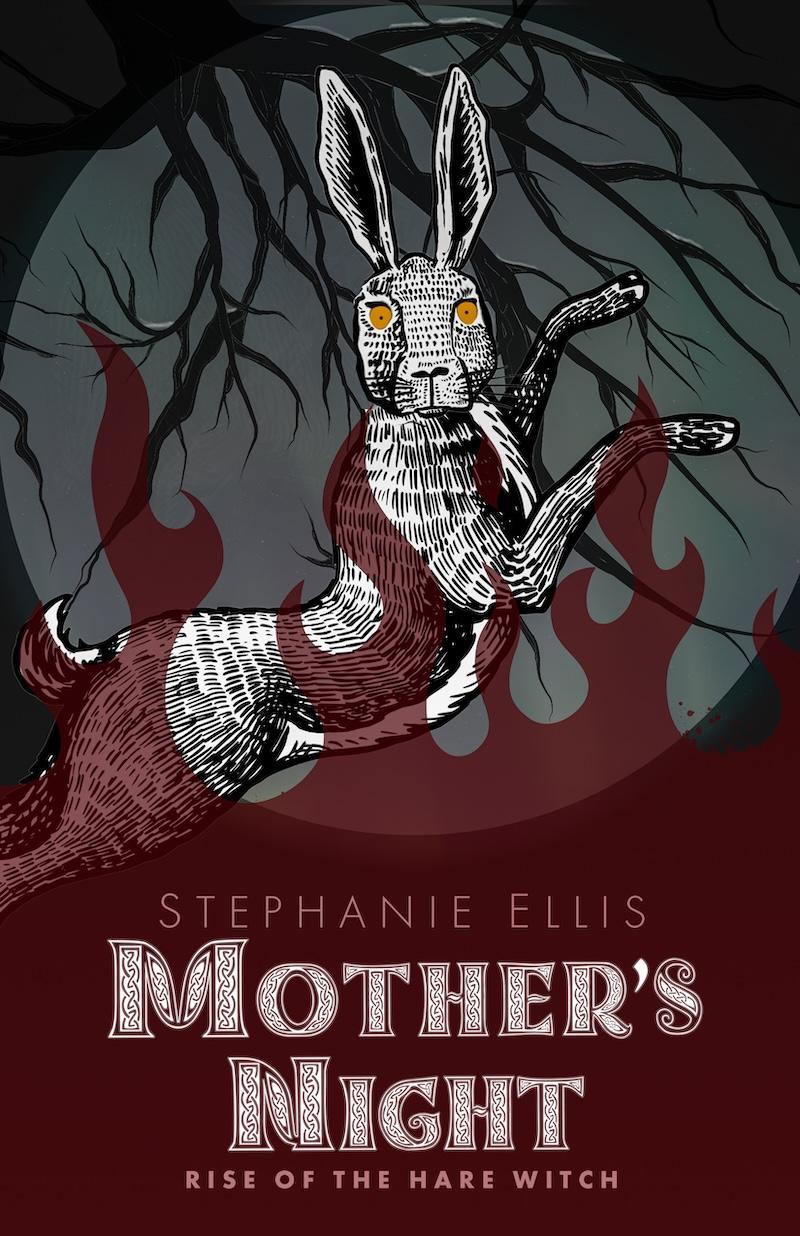
There was also a request from Brigids Gate as to what I would like on the cover. I gave them a few ideas and then they introduced me to Ruth Anna Evans. She created a first look, I asked for a few slight tweaks and it was done! I am delighted with how it turned out.
And now your book is about to be unleashed on the world! How are you feeling?
I am quite excited about this one as I love how it turned out and I have waited so long! I approached some people for blurbs and the feedback has been great. I just want people to enjoy it as much as I enjoyed writing it, and perhaps have a singalong with the carols when they come to them.
What would you like us to know about this book?
When storms and unrest sweep the country, Cara Harewick accepts Jessie Wheelborn’s invitation to stay with her in a remote village of Northumbria. But when she arrives, her cousin is not there. Despite this, the village provides her a haven with its quaint stories and customs, until events take a darker turn. Villagers go missing and it is her mysterious neighbour, Fen, who recounts the history of the place, of her family’s part in it and their link to the disappearances. As Mother’s Night approaches, Cara learns what it means to carry the blood of the Wheelborn. What will she sacrifice to the Hare Witch?
This is Yule as only the Folk know how to celebrate. This is a return to the world of the Mother and her sons. Come join the Dance once more. The Folk are waiting.
Who’s the ideal reader for this one? What sort of things do they like to read about?
Anyone with a love of folk horror or folklore! It would also appeal to those who have an interest in old mythologies as it brings in elements of Norse and Anglo-Saxon myth. It is also perfect for someone who just wants a Yule read to satisfy the longing for a snowy landscape whilst curled up safe and warm on the sofa!
I would like to say that it doesn’t matter if you haven’t read the previous Five Turns books. This is a standalone and is easy to read without that background.
Your Writing Process
Are you a plotter or pantser or somewhere in between? How do you do your first draft?
As mentioned above, I am a pantser. During my first draft I’ll start, then think of a new chapter one, add that in, carry on, go to the end, go back to the beginning. What I call dot-to-dot writing, joining things up. Somehow that works for me.
How do you approach writing? Are you the type of writer who needs to treat it like a job? Is there a particular time of day you find best for you to write?
I’m supposed to write full-time but that doesn’t always pan out as the greatest enemy of a writer is procrastination and going full-time gives you more time to procrastinate! But I do make the effort to go to my desk around 10am and work until early afternoon. Sadly, being indie means that time for writing often gets eaten up by promo on social media etc.
Geek out about stationery: do you use a notebook? A specific type of pen? Or are you computer all the way?
Oh, I always start with pen and paper and then move to computer once it gets going BUT in light of AI issues I’ve tried to do more on paper before I shift to laptop. We shouldn’t have to prove that we wrote something but it’s a just in case for the moment.
I will say that writing on paper actually focusses me better than working on laptop.
I love nice notebooks but I don’t like messing them up with my writing scrawls and crossings out. What I have done for the nicer ones I’ve been given is use them for specific purposes. One is now my research notebook so I jot down all sorts of things I’ve researched online or in books and I’ll go there to look things up again. An attempt to keep away from the computer a bit more. Another is one I’m using as a ‘bible’ for a cosy rural/folkloric crime series I’m attempting so I can keep track of geography, people etc.
I use any pen to hand. I do have some nice pens I enjoy using—when I remember where I’ve put them!
Is any of that different for editing?
Editing is always on computer. Printer ink is too expensive to justify printing it all out. Although if I was self-publishing something, I do make sure I have a proof copy and go through that with a pencil. You do see more mistakes on paper than on the screen. (Never ever self-publish without looking at the proof!)
Where do you work? Do you have a comfy, creative space at home or are you someone who has to grab the moment wherever it comes?
For many years I only had a corner of the sofa to work from (surrounded by family). The move to Wales has permitted me space for a desk in a corner of the bedroom. This is a massive improvement for me as it makes it feel more workmanlike, but when I can’t ‘get into’ something, I’ll often find that taking a notebook back downstairs and sitting on my corner of the sofa gets me going again!
What’s your writing soundtrack?
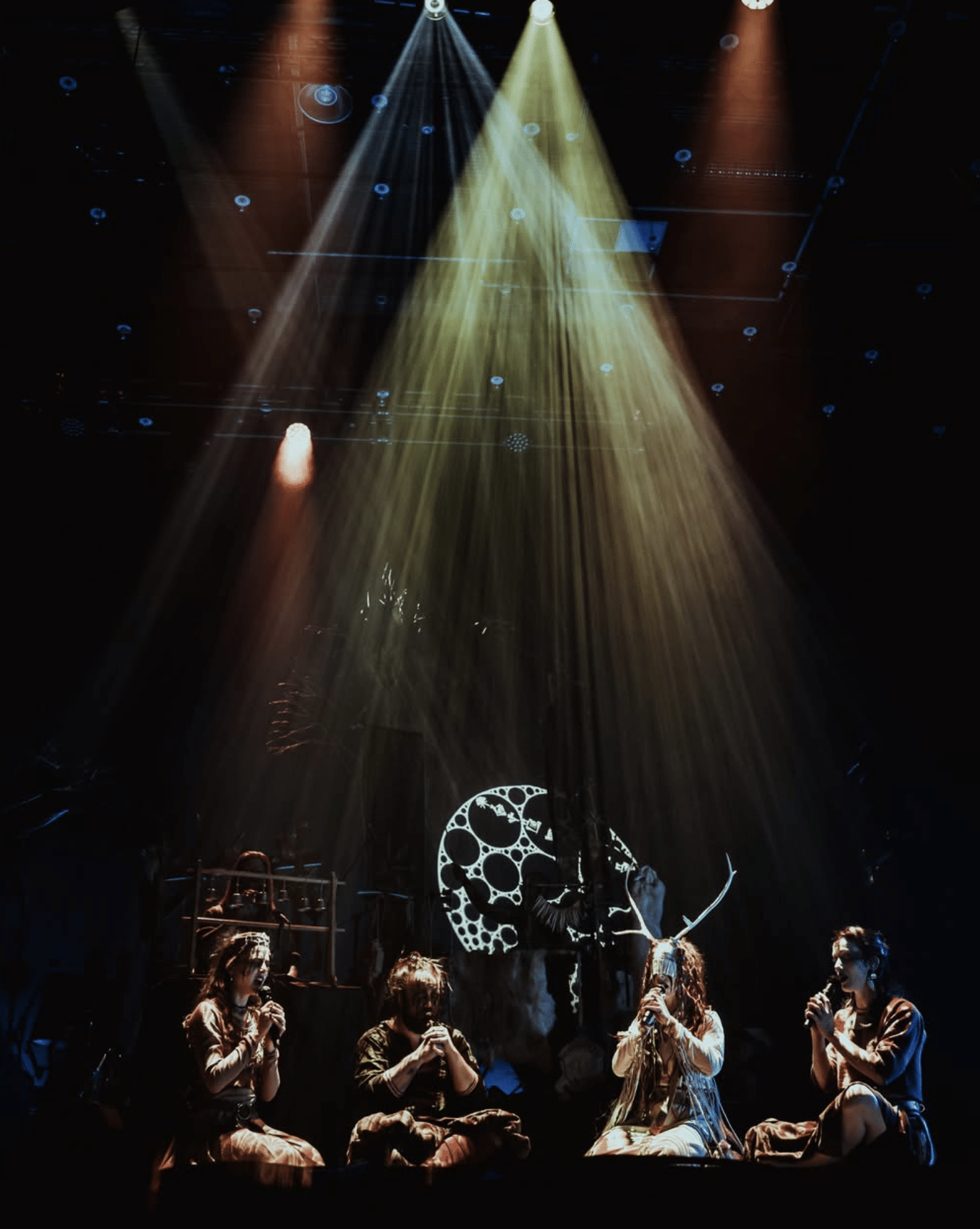
It depends on what I’m writing. For this one, being folk horror, I’ve been listening to Heilung and Wardruna as these very much give the pagan vibe I am trying to create. They also work for historical horror. For post-apocalyptic writing it tends to be metal/industrial metal. Strangely, I don’t have one for gothic; that tends to be similar to my editing music. Speaking of which, I only have to put on Poets of the Fall, Skunk Anansi, or Kate Bush and I’m in work mode for that particular aspect!
(Image of Heilung live taken from the band’s Instagram)
Do you have a writing ritual?
No. I like the idea of having one but it would only take time away from doing the work. The main one is making sure my desk starts off tidy so I can appear like the imagined ‘proper’ writer—which lasts for almost five minutes and then books open and lie in piles and, well, it can get a bit chaotic. But that is me as a ‘real’ writer!
Where can we follow you / find out more about your work?
- Website: stephanieellis.org
- Bluesky is my main platform: @stephellis.bsky.social (especially Wednesdays at 7pm for #HorrorWritersChat!)
- You can also find me on Instagram and Facebook.
Leave a Reply